
PlayStation 6 Tech Aims to Redefine Next-Gen Gaming
The long relationship between Sony and AMD shows that the basis of PS6 is in radiance cores, universal compression, and neural arrays.
News by Nusrat Choity on Dec 19, 2025
Long before launch windows and spec sheets made big news, Sony had been slowly getting ready for its next-generation console. According to the sources, this was made possible by a lot of work with AMD over the last ten years, starting in 2013 with the PlayStation 4.
Instead of using readily available PC parts, the two companies have worked together for years to create gaming-focused hardware. This shared goal is now known as Project Amethyst within both companies. In this shared project for research and development, the goal isn't to make small improvements but to rethink how console hardware uses data, power, and silicon.
.jpg)
As more information comes out, it's clear that the PlayStation 6 is being made with technologies that focus on speed and are meant to improve performance without just raising the numbers.
Sources say that Project Amethyst has already led to noticeable gains in PSSR, FSR, and other upscaling technologies. This is because Sony shared training data with AMD, which used the information to make its own tools better. But these software wins are said to be just the opening act.
The main point is that neural arrays, radiance cores, and universal compression are all hardware-level technologies that are being worked on together. These aren't optional features or fixes that come out after a product launches. They're basic systems that will affect how the next generation of games are rendered, lit, and streamed. Each one fixes a long-standing problem in current graphics pipelines.
Together, they show that people are moving away from chasing raw power and toward maximizing performance that can actually be used.
Neural arrays are being called a big step forward in the way that GPUs do machine learning tasks. Right now, AI jobs like upscaling, denoising, and frame generation are done inefficiently, with many small computers working separately on tiny data sets. According to the sources, neural arrays make this model better because they let multiple compute units work together on bigger AI tasks at the same time.
This approach improves the way data is handled and cuts overhead costs. As a result, machine learning jobs are done faster and with more certainty. In practice, this means that picture rebuilding is smoother, motion handling is better, frame generation is higher quality, and more power isn't needed for any of this.
Also, handling AI tasks more efficiently frees up GPU resources for shaders, lighting, and geometry, which gets back speed that would have been lost otherwise. Because neural arrays depend on processor behavior and software optimization, it has been said that some benefits could come to the PS5 and PS5 Pro through future firmware and SDK updates.
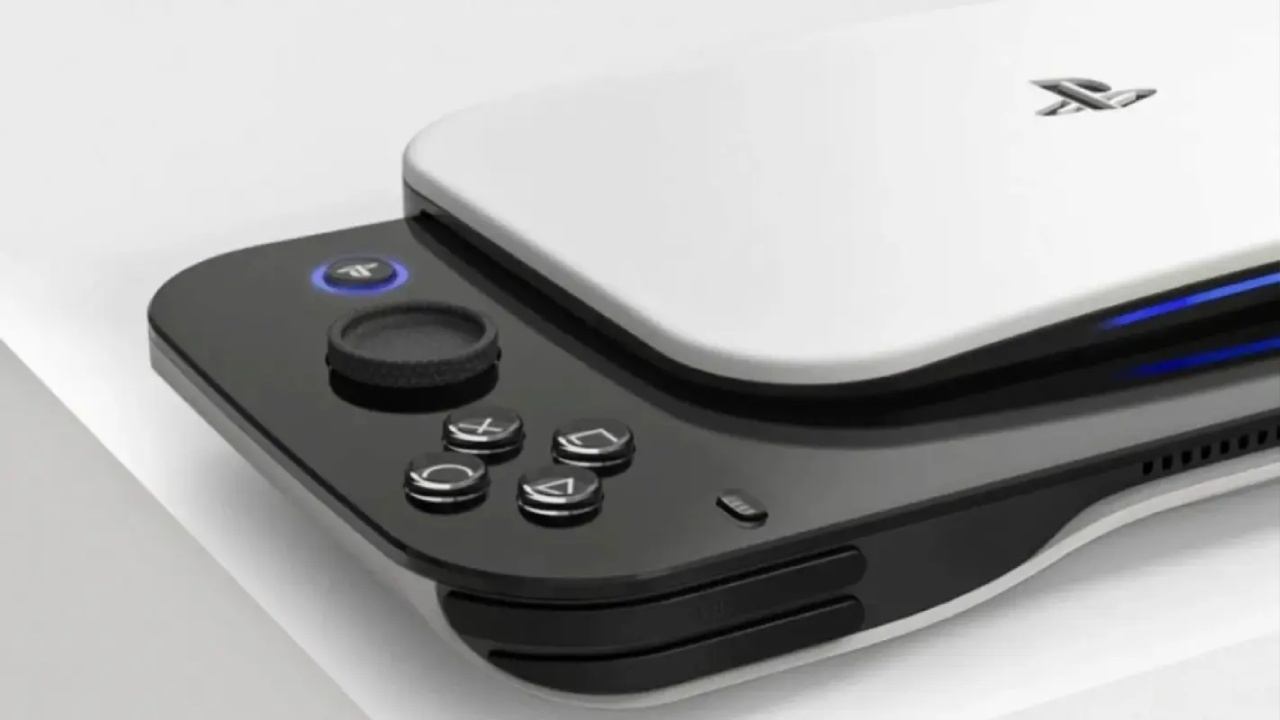
Radiance cores are another important part of the PS6 vision. They work on ray tracing, which is one of the most difficult effects to create in current graphics. On hardware that is built on AMD, ray tracing calculations are done by general-purpose compute units that are also in charge of rendering, shaders, and effects.
This shared job often causes performance slowdowns. Radiance cores are, according to the sources, hardware units that are specially designed to handle path tracing, ray traversal, and complicated lighting calculations. Based on neural radiance caching ideas, these cores take care of ray tracing jobs without using general compute units at all.
The result is a big boost in performance that lets frame rates, detail levels, and lighting all be high at the same time instead of having them fight with each other.
Radiance cores are said to be a hardware-level feature that only works on newer systems, but cross-generation games could still work better with simpler lighting models on older devices, keeping the benefits to visuals without having to calculate everything in real time.
Universal compression is called the least flashy but possibly most important technique in Project Amethyst. In today's game systems, memory bandwidth has become an important limiting factor that affects how fast data can be sent to and from the GPU, memory, and storage. Delta color compression on present hardware is Sony's first step to solving this, but it mostly only works on textures.
According to the sources, universal compression broadens this idea by analyzing all data that the memory bus carries in real time, such as models, textures, shaders, and other assets. This lets more data pass through the same bandwidth, and it doesn't matter if the actual memory capacity isn't increased.
This is an especially important benefit because memory is getting more expensive across the industry. The benefits are faster streaming, higher resolution, bigger worlds, and more stable performance. High resolution is possible with advanced upscaling instead of brute force rendering.

These tools are especially important because they can work together. Neural arrays make AI tasks more efficient, universal compression raises the amount of data that can be used, and radiance cores take over costly lighting calculations. According to these sources, this combination doesn't just improve speed; it doubles it by cutting down on wasted silicon, power, and thermal headroom.
This mindset of putting efficiency first allows cooler operation, lower power draw, and fewer thermal constraints.
All of these are important when making game consoles at a global scale. Rather than driving up costs by demanding the most extreme specifications, it seems that Sony is focused on balance so that developers can aim for hardware that is powerful, predictable, and efficient.
None of these systems has been called finished or ready for consumers. According to the sources, the technologies are still being tested through simulation, and there aren't yet any hardware releases or public displays. But companies don't usually talk about these kinds of things freely unless they get good results in the beginning.
As the field gets closer to the limits of visual gains from just raw power, Project Amethyst offers a different way to move forward, one based on smarter resource use instead of just making things bigger. If this way of doing things defines the age of the PlayStation 6, could it be that the next big thing in gaming is efficiency instead of excess?
Contributor, NoobFeed
Related News
No Data.