
City Hunter Review
PC
City Hunter: A retro gem reimagined for modern consoles.
Reviewed by Asura Kagawa on Mar 04, 2026
City Hunter, which came out on the PC in 1990, has always been an interesting piece of game history. It was the only console version of the famous City Hunter manga and cartoon series, developed by Sunsoft and released during the height of Japanese pop culture.
Other titles from the time aimed to appeal to people of all ages when they came to the West, but City Hunter adopted a more mature, stylish, and sassy tone. Its unique mix of action, comedy, and mild raunchiness helped it stand out in both manga and anime, and it's still a popular show today, with Netflix versions and loyal fans.
.jpg)
Even though City Hunter was very famous, there wasn't much video game history for it.
International fans couldn't get the Japanese PC Engine version for decades. There wasn't an official English translation until 2026. This new version, now on Switch, PlayStation 5, and Steam, brings the game to more people. It includes improvements like an English translation, new game modes, and collector's editions. It's clear the team loves the source material; they treated what could have been a simple emulation as a premium package.
The story of City Hunter is simple, but it works. Players take on the role of Ryo Saeba, a private detective for hire who is classy and eloquent. He takes on cases that no one else will touch. In each task, you have to save someone, catch criminals, and find your way through cities full of NPCs, dangers, and secret rooms. Some of Ryo's charm can be seen in sprite movements and cheeky fan-service moments that, while mild by today's standards, stay true to the original series' humor.
There are three main missions in the game, each set up like an episode of the anime. After the other three missions are finished, there is a fourth goal that wraps up everything. The story isn't very important to the game; it's mostly there to help you figure out how to fight and explore. Players talk to non-player characters (NPCs) to get items, hints, and access to new areas.
This sets off a series of tasks that remind me of adventure games from the late 1980s and early 1990s. The story isn't very deep, but it sets the scene for the action and keeps the player interested as they progress through the building levels, uncovering secrets and special weapons.
.jpg)
City Hunter is a side-scrolling action-adventure game with some light platforming. Exploration and combat in multi-room building settings make up the main gameplay loop. To move forward, players have to go up and down floors, open doors, and talk to non-player characters (NPCs).
At first, the structure may feel like a maze, but it actually helps players learn to pay close attention and remember things, since some areas can't be reached until certain items are collected or events occur.
This design can get boring or confusing after a while, but it also adds to the tension because players don't know what they'll find in each room—an enemy, a helpful NPC, a nurse to fix them, or sometimes nothing at all. Exploration is a big part of what makes the game fun. City Hunter is different from many side-scrolling games because it rewards players for paying attention to where halls, doors, and rooms are placed.
People often go backwards because a key item or piece of information from one room can help them move forward in a place they've already been to. The levels that look like mazes aren't too high, so even if players get lost at first, they can usually find their way if they pay close attention.
The fighting in City Hunter is simple, but fun for an old game. Most enemies are simply bad guys who can be killed with a single shot from Ryo's pistol. For stronger foes, you'll need to use heavier weapons like the rocket launcher or bazooka.
The game also adds new types of enemies, such as cyborg-ninjas with grappling hooks, ninja ladies who jump at the player, and sometimes mini-bosses. Some design choices, like enemies appearing just outside doors to surprise the player, are a nod to older branded games. They add a small challenge, though they can feel unfair at times.
The enemies act a little differently in the enhanced mode. They are more active and try to position themselves in a "smarter" way. Even though this change was meant to make things harder, enemies can attack right away when they enter a room, making battles feel more annoying than strategic.
.jpg)
On the other hand, Hard mode only makes enemies stronger and more active, which creates a more typical difficulty spike without changing how the game works. If you played the original PC Engine version, the enhanced mode is mostly the same, with a few small balance changes. For veterans who want a bigger challenge, the hard mode is available.
Some fights can be easy with Ryo's weapons, like the bazooka, which lets players shoot while moving and kill enemies before they even appear.
This strategy makes some parts of the game surprisingly easy, demonstrating a balance between difficulty and ease of use common in 1990s games. Even though the combat isn't very deep, it goes well with the focus on exploration and keeps a steady beat throughout each task.
City Hunter lacks traditional experience or leveling. You make progress by finishing tasks, getting things, and opening doors. Weapons like the bazooka give you a small boost in how well you fight, which makes you want to explore. Instead of giving you experience points or making you grind, the game focuses on strategic discovery, timing, and movement. This might sound like a bad thing for modern gamers, but it's great for the PC Engine's simplistic design and style.
The game also features meta-progression, with different game modes, a gallery, and a jukebox. There is a subtle reward loop outside of battle that makes replaying missions more appealing by allowing players to collect art and listen to the soundtrack. People think of this version as a premium package rather than a simple copy because it comes with these extras.
City Hunter looks excellent, especially for a game using the PC Engine. The sprite work is authentic to the anime and very detailed and expressive. Ryo's personality comes across in the fan-service scenes and the way he moves.
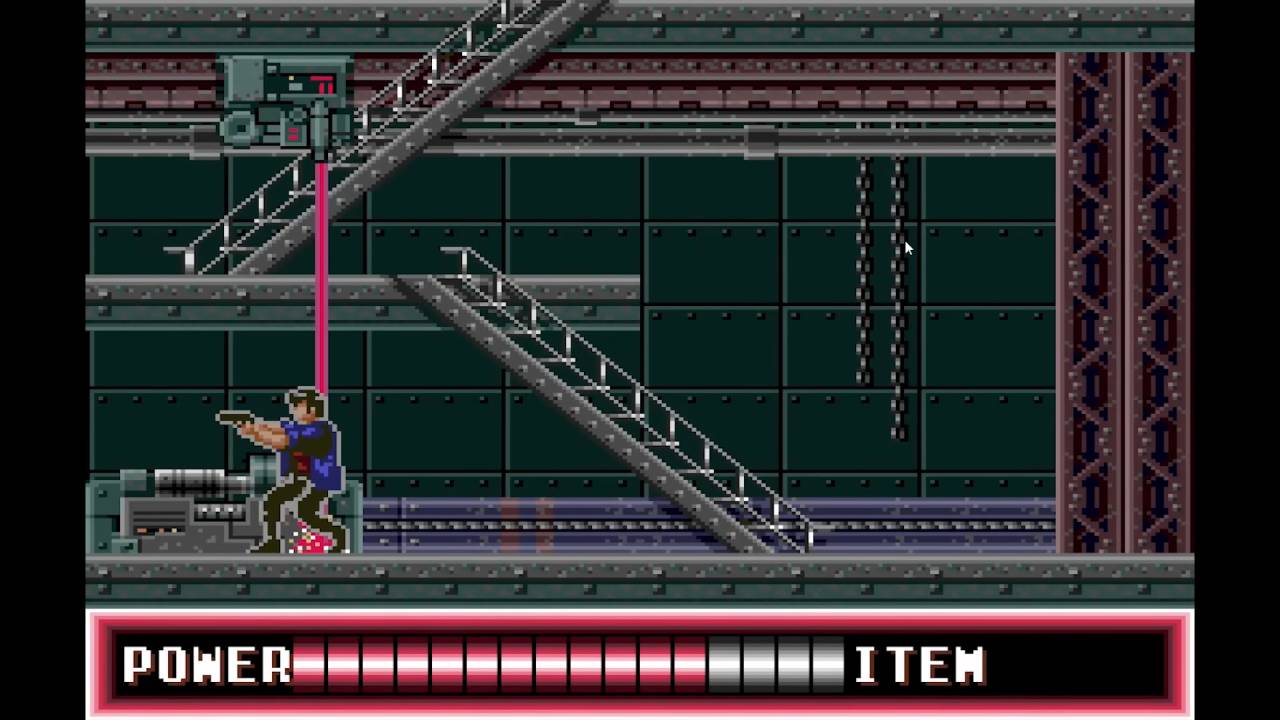
The ambient design is minimal yet works well.
The rooms and halls are easy to see and stay clean even after using the same textures over and over. The backgrounds are sometimes pretty dull, but the character sprites and animated scenes are very well done, showing off the best parts of the original hardware.
In the new version, you can change the aspect ratio and use CRT effects. Most players will probably stick with the 4:3 ratio to keep the visual experience as realistic as possible, but the enhanced mode makes the camera move more smoothly by keeping the figure closer to the center of the screen as they move.
This small change makes it easier to play without sacrificing the old look. Overall, the graphics are a good mix of nostalgia and clarity, keeping the spirit of the original PC Engine game while making it easy for current gamers to play.
The music in City Hunter is one of the best parts of the game. It has an anime feel from the late 1980s and early 1990s, and the lively, bass-driven music goes well with both exploring and fighting. The fact that the re-release includes a jukebox with the full soundtrack shows how much care was put into this version.
The sound effects work and are loud enough to add to the arcade-like feel of the battle while staying true to the source material. The dialogue has been fully translated into English, yet it retains the same fun and personality as the Japanese version. However, some small details may have been lost in the translation.
Overall, the sound enhances the experience and turns the game into a small time capsule of the era's style and tastes. City Hunter is an interesting mix of old-school style, accurate adaptation, and modern presentation. The gameplay isn't anything new—it's a side-scrolling action game with some light platforming and exploration—but it's still easy to get into, interesting, and surprisingly fun.
Exploration and combat work well together, with a few small quirks that are more due to the style of the time than to technical problems. Fans can play the game again and again in enhanced and hard modes, but the original version remains fully playable and rewarding.
.jpg)
The presentation of the re-release is great.
The gallery and jukebox add depth, the menus are polished and stylish, and the physical editions, which come in special and collector versions with keychains, steel cases, and digital HuCard simulations, show a real love for the source material. The graphics and sound are both good because they use the best parts of the original PC Engine hardware while adding small improvements that make them clearer and easier to play.
In the end, City Hunter is neither a new game nor a perfect game. But it's a good attempt to keep it alive, letting new people enjoy a unique piece of PC Engine and anime history. Fans of the series will enjoy spending time with characters they know, and retro gamers will enjoy a good-looking action-adventure game with some light puzzles and fun fighting. The game is short, easy to understand, and a great example of how to create a PC Engine game in the late 1990s.
If you're thinking about buying it, this game is a love letter to fans, a celebration of PC Engine gaming, and a reminder of how creative and fun Japanese action games were in the early 1990s.
Staff Writer, NoobFeed
Verdict
City Hunter is a charming retro action game with simple shooting, exploration, and strong anime presentation. While gameplay can feel repetitive, the music, style, and preservation effort make it enjoyable.
82
Related News
No Data.