
Fighting Force Collection Review
PC
How two very different '90s Brawlers, misleading marketing, and nostalgia collide on modern hardware.
Reviewed by Mahi Araf on Feb 06, 2026
When you boot up the Fighting Force Collection for the first time, you are not just launching two old games. You are stepping straight into a very specific moment in gaming history. The late 1990s were a chaotic time, especially for developers who were trying to move established 2D genres into the new world of 3D. Everything had to be polygonal.
Everything had to feel "next generation," even if the technology was not quite ready. Fighting Force was born in that transition. Developed by Core Design, a studio riding high after the massive success of Tomb Raider, the game was originally pitched as a sequel to Streets of Rage.
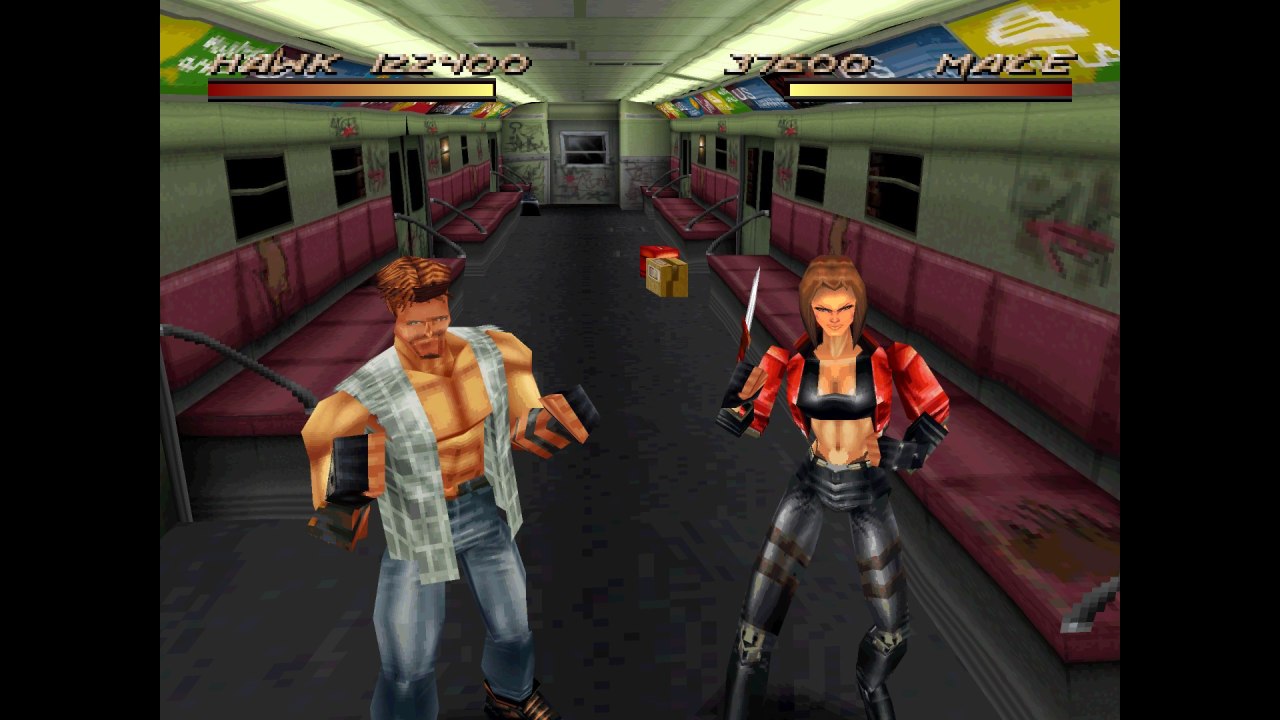
Sega passed on the idea, and instead of abandoning it, Core Design reworked the project into its own original IP. The result was Fighting Force, a fully 3D beat 'em up that tried to capture the spirit of arcade brawlers in a new format.
When the original game was released, reactions were mixed. Some players were impressed by the destructible environments and freedom of movement. Others criticized the stiff controls and repetitive design. Still, it sold well enough to earn a Nintendo 64 port and eventually a sequel. That sequel, Fighting Force 2, would later become infamous for abandoning the series' roots.
Limited Run Games brought both games back to life in the Fighting Force Collection decades later. The news made people excited, especially those who remembered renting the original from Blockbuster and playing it nonstop for a whole weekend. But a poorly made reveal trailer made the collection look like a blurry, lazy port, which made a lot of fans lower their expectations.
Once you actually play it, you realize the story is far more complicated than that.
The Fighting Force series has never been about deep storytelling, and it does not pretend otherwise. The narrative exists mainly to justify punching hundreds of enemies across multiple locations.
In Fighting Force 1, you choose between four characters: Hawk, Mace, Ben, and Alana. Each has a slightly different personality and fighting style, but a common goal unites them. You are trying to take down a criminal organization led by Dr. Dex Zang. Your journey takes you through city streets, subway stations, parks, military facilities, and hidden bases, all leading toward a final confrontation.
The plot unfolds in simple ways. You move from area to area, defeat bosses, and slowly dismantle the organization. There are no long cutscenes or emotional story beats. It is pure '90s arcade-style storytelling.
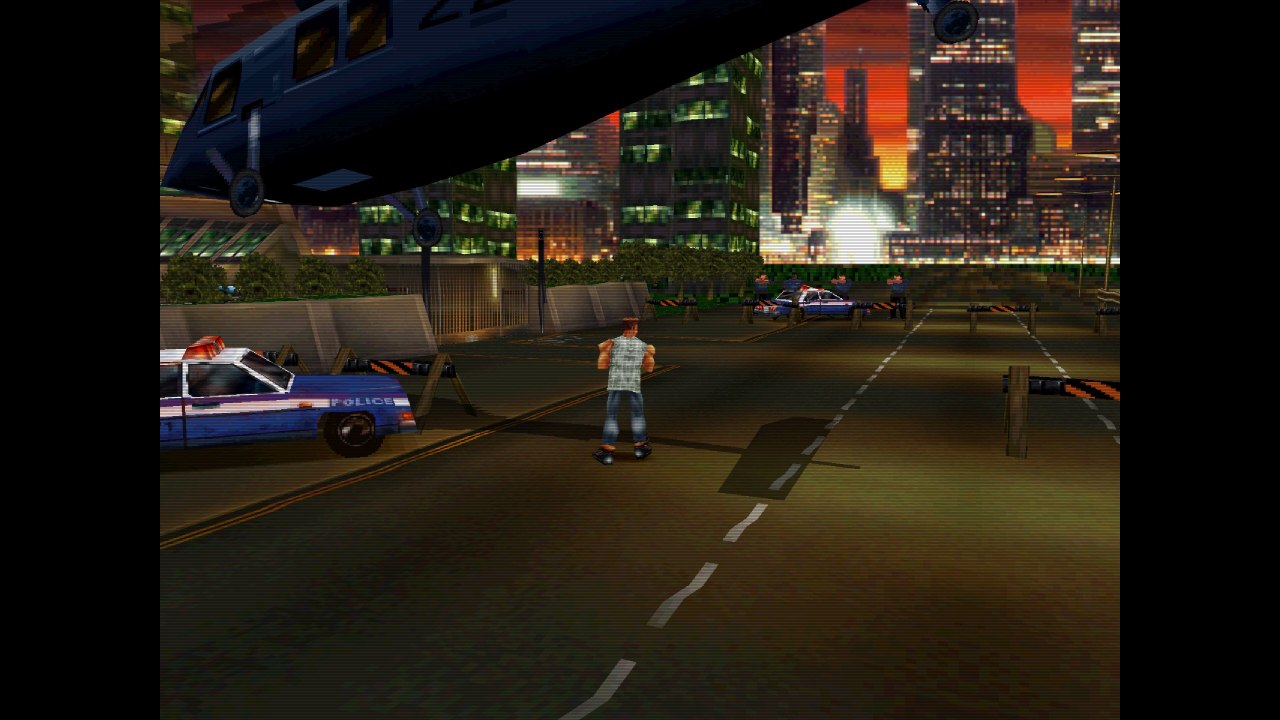
Fighting Force 2 attempts to expand the story but does so awkwardly. Instead of letting you choose between characters, the sequel focuses entirely on Hawk Manson. You follow him as he infiltrates an evil organization through stealth-style missions inspired by games like Metal Gear Solid.
While this sounds interesting on paper, the execution is weak. Hawk is given more focus, but he has very little personality. The story feels generic, and the missions lack the tension and polish found in better stealth games of the era. Rather than enhancing the franchise, the narrative shift ends up weakening it.
Overall, the story in this collection is functional but forgettable. It exists to move you from one fight to the next, and nothing more.
At its core, Fighting Force 1 is a 3D beat-'em-up built around movement, environmental interaction, and simple combat. You move freely around semi-open levels, fighting groups of enemies while using anything you can find as a weapon.
You walk, run, punch, kick, grab, throw, and perform special moves. You can pick up pipes, bats, knives, and guns. You can smash cars, walls, and vending machines. You can use explosions to damage enemies and then throw debris at survivors. The game constantly encourages you to interact with the environment.
Each character feels different. Hawk hits hard. Mace is quicker. Ben is slow but powerful. Alana relies on speed and kicks. These differences give the game strong replay value, encouraging you to complete multiple runs.
The level structure is mostly linear but includes branching paths and optional areas. You sometimes choose different routes at the end of stages, which adds variety. Over time, however, the enemy types repeat, and the gameplay can feel worn down near the final quarter.
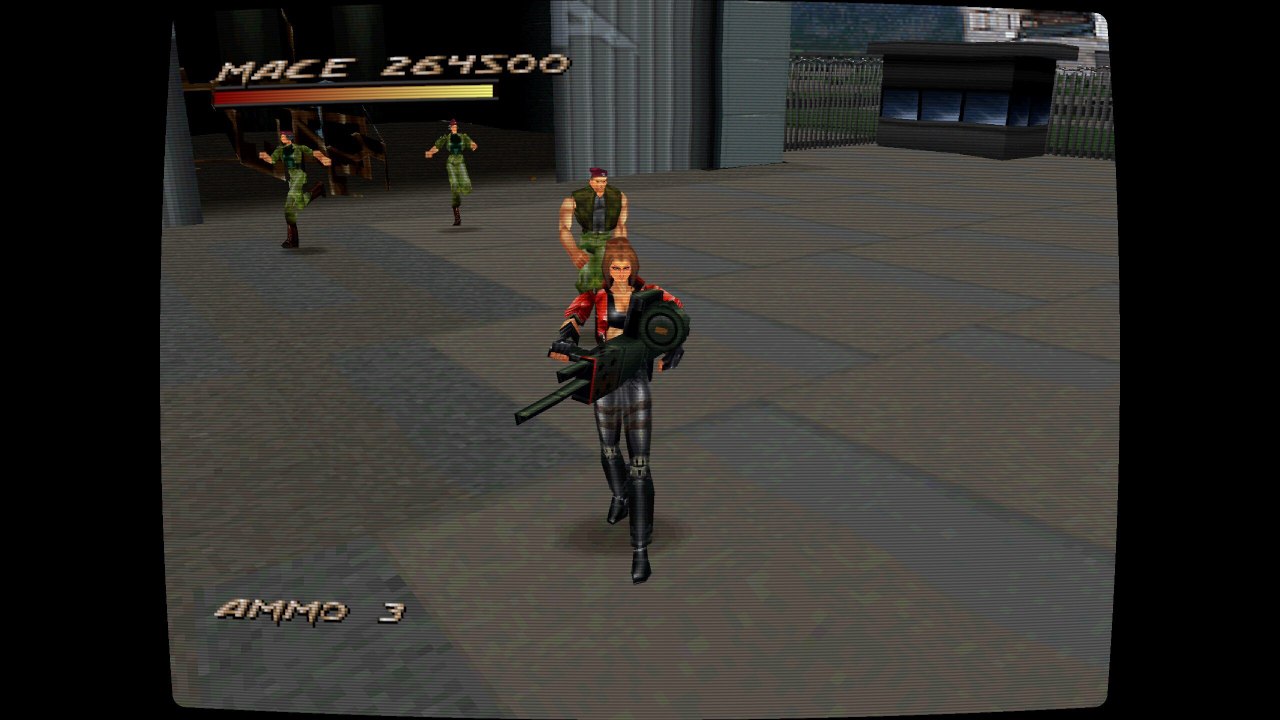
Fighting Force 2 changes almost everything. Instead of cooperative brawling, you get a single-player action game focused on stealth, gadgets, and gunplay. Levels are more enclosed and emphasize exploration and keycard collection.
Movement is slower. Combat is more restrictive. You rely on weapons and gadgets instead of fists. Platforming sections are added, often with frustrating results. The flow of the original game is completely gone.
As a result, the second game feels disconnected from the first. It does not build on its foundation. It replaces it.
Combat in Fighting Force 1 is straightforward and accessible. You combine punches, kicks, and grabs to defeat enemies. You can throw opponents into walls or other enemies. You can perform running attacks for extra impact. Each character has a special move that damages nearby enemies at the cost of health.
Grabs are especially fun. You can perform different throw combinations, and they always look brutal. These mechanics give the game a satisfying physicality that many early 3D games lacked. The camera is usually close to your character, sometimes too close. It can block your view, but it also makes characters feel larger and more powerful. There is a zoom-out function that lets you quickly scan the area and plan your next move.
The game is not easy. Enemies swarm you. Bosses hit hard. Mistakes are punished. You will likely die multiple times before mastering each level. However, this difficulty encourages replay. You slowly learn enemy patterns and improve with each run.
Puzzles are minimal. Occasionally, you need to find keys or destroy certain objects to progress, but the focus is always on combat.
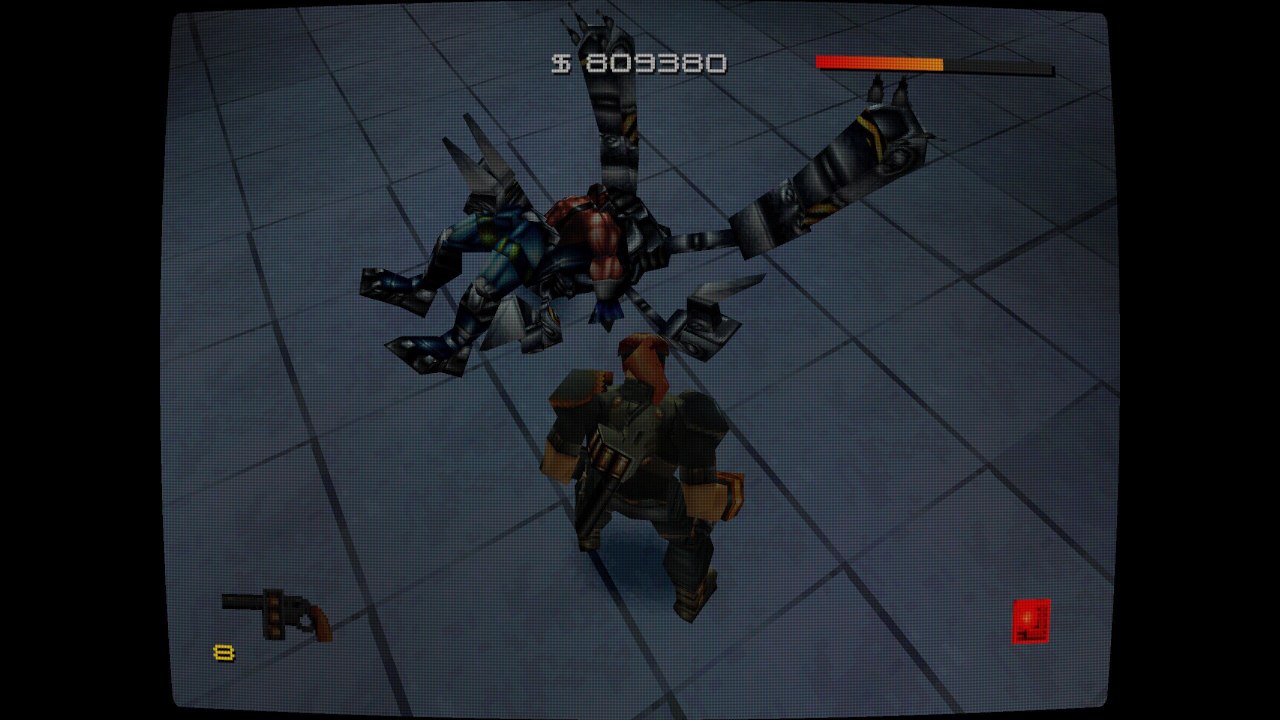
In Fighting Force 2, combat is severely weakened. The game uses tank-style controls similar to early Tomb Raider titles. Movement feels imprecise, and attacks lack weight. The camera constantly fights against you, especially during platforming.
Gadgets and guns replace brawling, but they are not fun to use. Enemies have poor AI, and encounters often feel messy rather than challenging. Instead of feeling empowering, combat in the sequel feels frustrating.
The greatest strength of Fighting Force 1's combat is its physicality. Every hit feels impactful. Every throw feels satisfying. Environmental interaction keeps encounters fresh. Different characters encourage experimentation.
The main weakness is repetition. Enemy types repeat frequently, especially toward the end. Levels become more predictable. Controls, while serviceable, are stiff by modern standards.
There is no traditional XP system. Progression comes from player skill rather than stats. You improve by learning enemy behavior, mastering character moves, and understanding level layouts. This old-school design makes victories feel earned. The absence of grinding is refreshing. You are not forced to farm enemies for upgrades. You get better.
Fighting Force 2 lacks these strengths. Combat feels floaty. Controls are clumsy. There is no satisfying progression loop. Instead of learning and improving, you often feel like you are fighting the game itself, and that's a big fat bummer for what is supposed to be a nostalgic walk down memory lane.
The sequel's mechanics rarely reward mastery. They mostly test patience.
Visually, the Fighting Force Collection tells two stories: the original technology and the modern enhancements layered on top. On the surface, these are PlayStation 1-era games. Characters are blocky. Textures? Textures are simple. Environments are made of large polygons. Objects sometimes flicker or pop into view. They are outdated, of course, but a deliberate choice from the devs to invoke nostalgia.
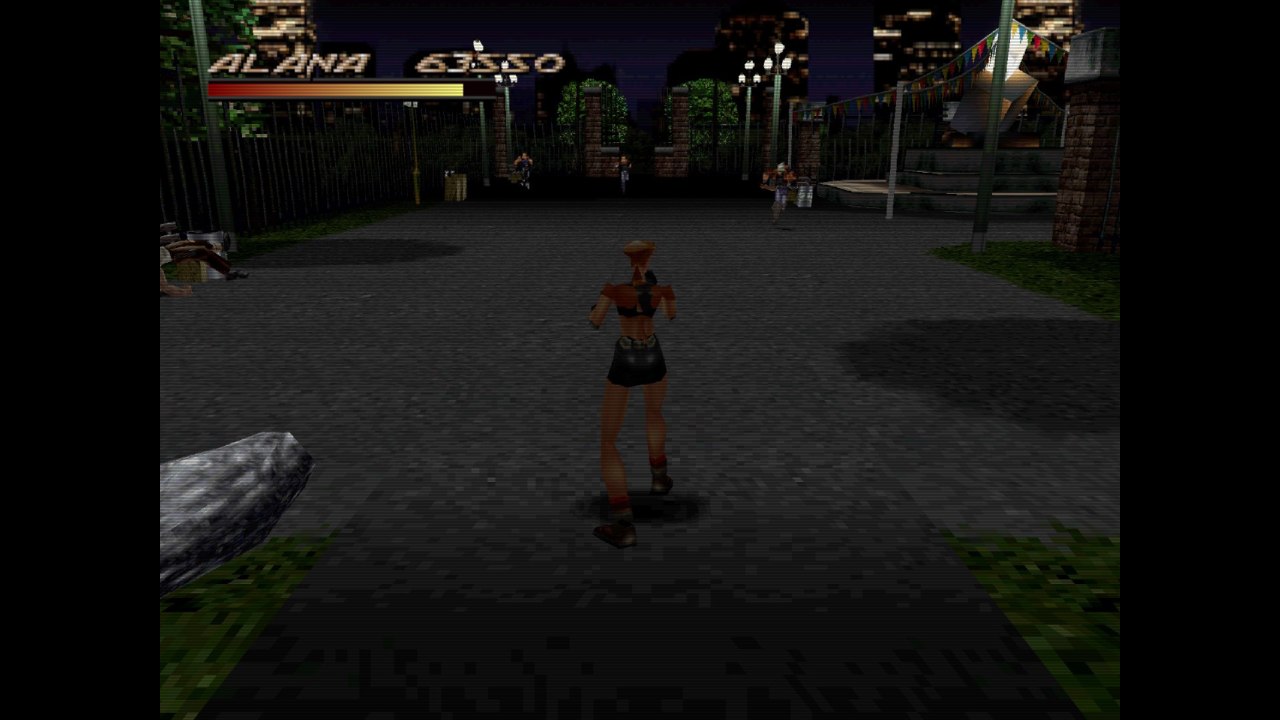
However, Limited Run Games includes several visual options. You can enable an upscale mode that smooths edges and applies anti-aliasing. You can use CRT filters. You can play in the original resolution. You can mix and match settings.
With the upscale mode enabled, the game looks far better than the reveal trailer suggested. It remains retro, but it becomes clean and readable on modern displays. Fighting Force 1 benefits more from this than the sequel. Its environments are colorful and varied. Streets, parks, and industrial areas feel distinct. Enemy designs, though simple, are recognizable.
Fighting Force 2 is dominated by gray factories and military facilities. The lack of visual variety makes it dull to look at. Overall, these games have not aged gracefully, but the available options make them more tolerable.
The sound design in the Fighting Force Collection is simple but works well. Punches, kicks, and hits all have weight. Every hit feels good. When the environment is destroyed, there are crunchy sound effects that add to the chaos.
Music fits the era. It is energetic, albeit sometimes repetitive, but appropriate for a brawler. It keeps you moving without becoming too distracting. Voice acting is minimal and unremarkable. Dialogue, too, is forgettable, to say the least.
In Fighting Force 2, sound design remains competent, but it cannot save the gameplay. Weapons and gadgets lack impact, making combat feel weaker. Overall, audio does its job without standing out.
The Fighting Force Collection is a strange, emotional experience. It is part nostalgia trip, part reality check.
Fighting Force 1 remains an enjoyable, if flawed, 3D brawler. Its interactive environments, varied characters, and satisfying combat still hold up in spirit. With modern features like save states, rewind, and upscaling, it becomes far more playable than it would be otherwise.
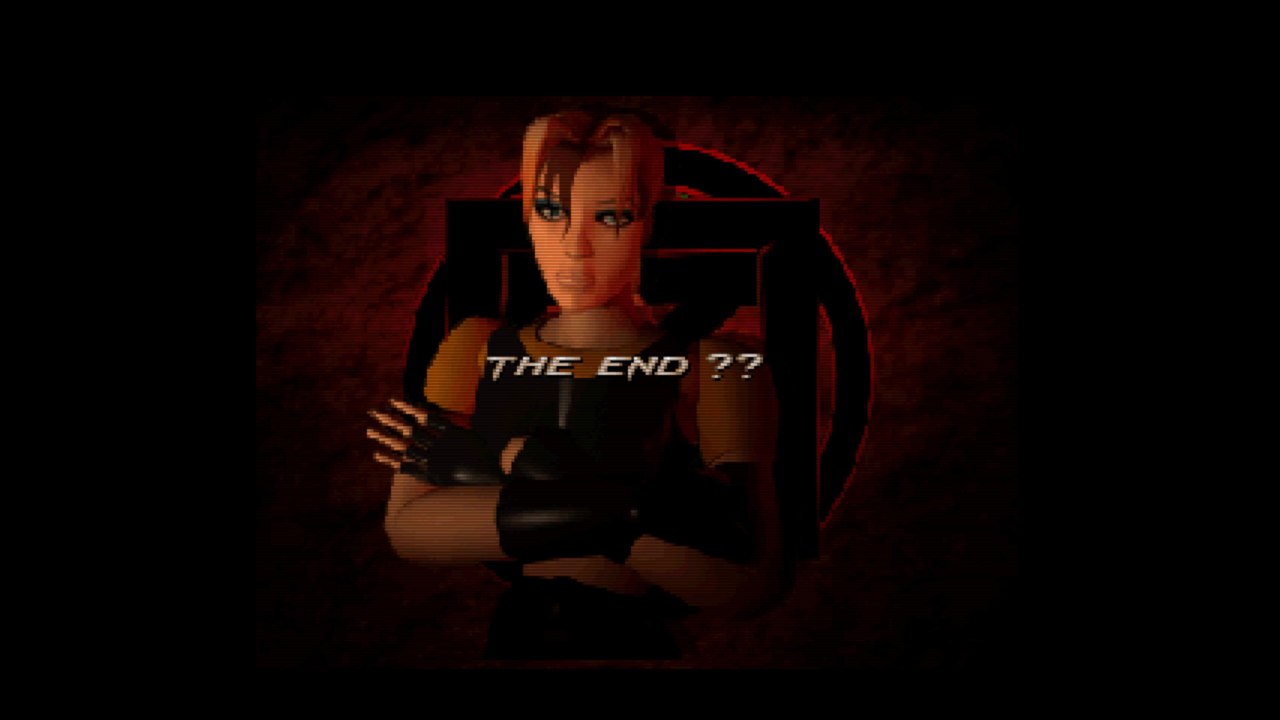
On one hand, Fighting Force 2 is a major disappointment. Even with nostalgia, it is difficult to defend. Its clumsy controls, dull environments, and frustrating design make it feel unfinished and sloppy.
The collection itself is barebones. There are no developer interviews, no documentaries, and few extras beyond the gallery and technical features. It feels more like preservation than celebration. Marketing also did the collection no favors. Many players skipped it because of a misleading trailer.
In reality, there is more effort here than it first appeared. At around $20, the value of Fighting Force Collection depends on your expectations. If you love the original game, this is a respectful re-release. If you are new to the series, you may struggle to see its appeal.
Senior Editor, NoobFeed
Verdict
A faithful but uneven collection. Fighting Force 1 remains fun with modern conveniences, while Fighting Force 2 drags everything down. Best suited for nostalgic fans who know exactly what they are getting.
69
Related News
No Data.