
inKONBINI: One Store. Many Stories Review
Nintendo Switch 2
A slow, reflective slice-of-life experience inside a 1990s Japanese convenience store.
Reviewed by Asura Kagawa on May 06, 2026
inKONBINI: One Store. Many Stories is a narrative-driven slice-of-life set in a Japanese rural convenience store in the early 1990s. It starts out as a simple management sim where you stock shelves and serve customers, but it quickly shifts the focus to story and character interaction rather than systems and strategy.
The developers, Nagai Industries Incorporated, don’t try to build a complex business system with layered mechanics or long-term progression. Instead, they lean into atmosphere, storytelling, and character interaction. There is a foundation of simulation here, stocking shelves, handling customers, and managing small tasks, but it’s intentionally light.
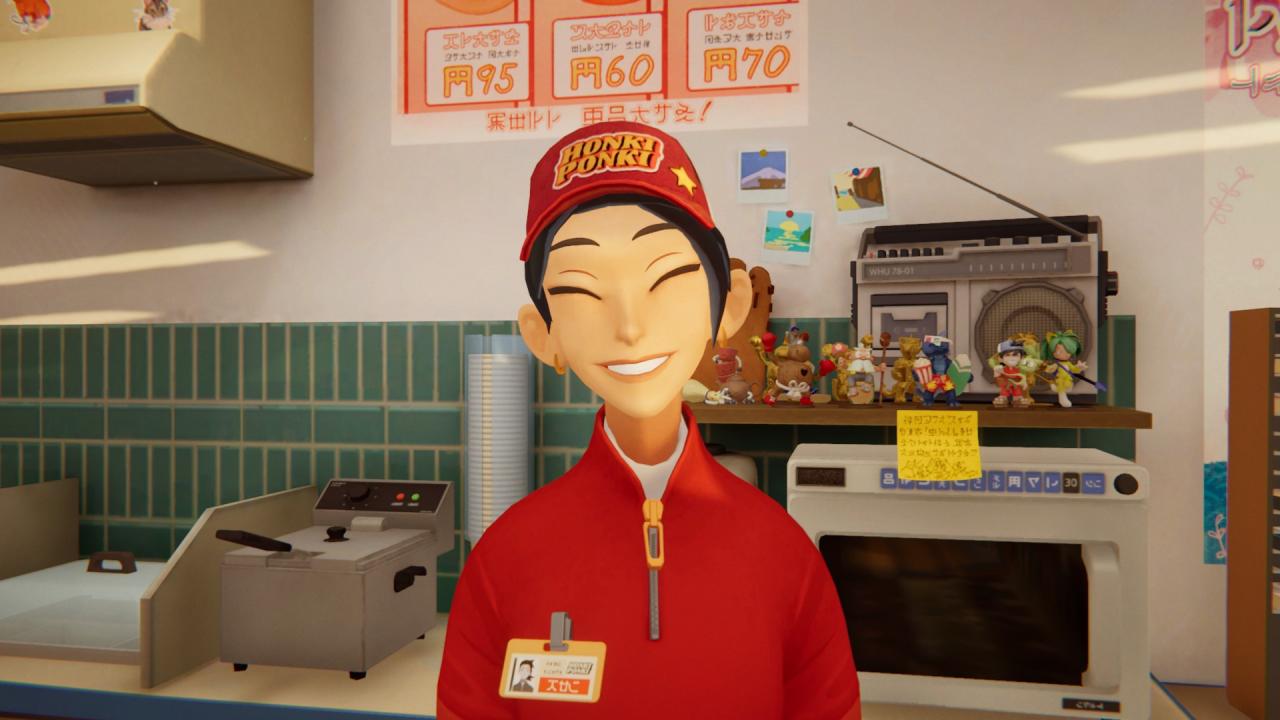
The goal isn’t to turn you into a business manager; it’s to place you inside a quiet, lived-in space and let you experience it. Across different versions, including Nintendo Switch releases, the game maintains the same design philosophy. Even where performance or resolution differs slightly, the core experience remains unchanged.
A short, contained slice-of-life journey where everyday routines become the main structure of play.
It’s not trying to simulate the complexities of retail. It’s trying to simulate presence. From the moment you begin, the game signals that it is less about systems and more about mood. You are stepping into a space where small interactions matter more than efficiency and where the passing of time is the real structure holding everything together.
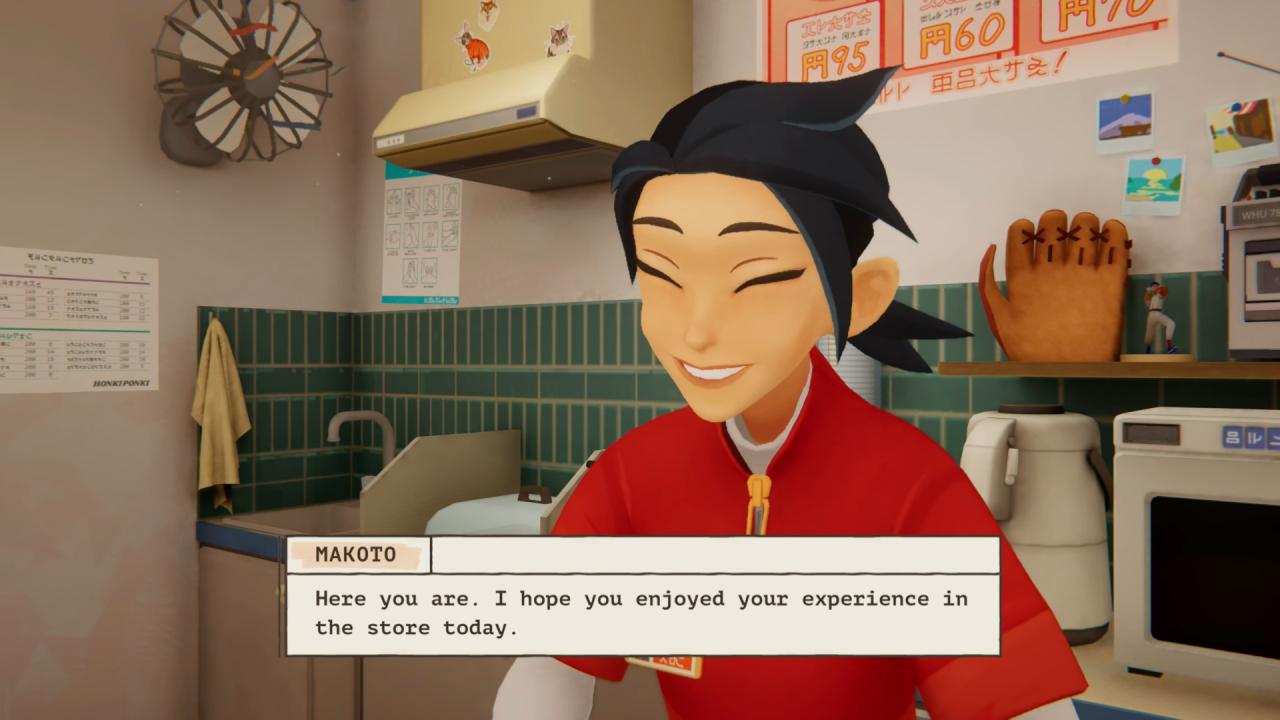
You play as Makoto Hayakawa in inKONBINI: One Store. Many Stories, a college student who spends the summer helping her aunt run a small convenience store in rural Japan. The setting is deliberately put in the early 1990s, in particular the summer of 1993, and the period dictates everything from the technology to the design of everyday objects.
The store itself is like a snapshot of that time. You see old packaging designs, landline phones, and just a feeling of slower communication. Nothing is as modern or polished as you might expect in modern retail environments.
Makoto isn’t just temporarily working here; she’s stepping into a space that already has history. Her aunt is uncertain about continuing the store, and that uncertainty ties to your presence. Over the course of 7 in-game days, you help maintain the store while also indirectly supporting her aunt’s decision-making.
Most of the story unfolds through dialogue, with the majority presented as on-screen text. Early sections have some voice acting, but soon turn to text-heavy storytelling. This choice keeps the emphasis on reading and thinking, not on performance or cinematic presentation.
The storyline focuses on the customer.
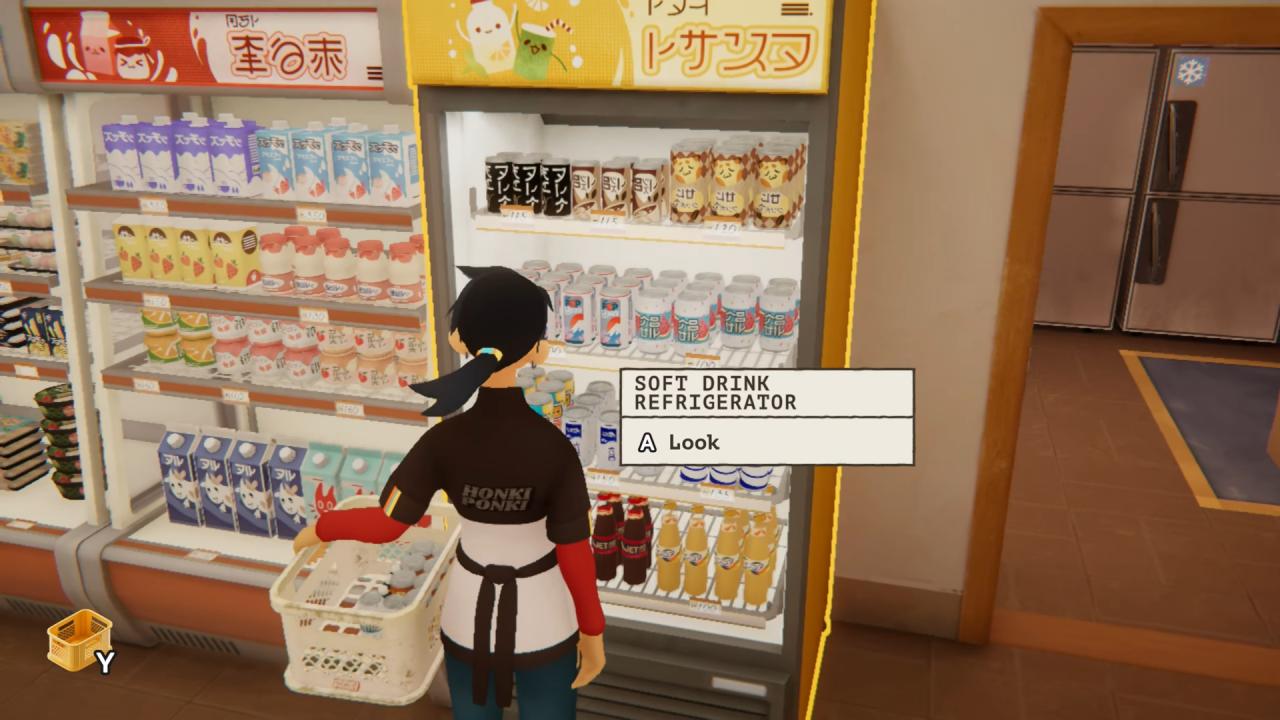
Everyone walking into the store is part of a larger whole. You meet regulars, strangers, and one-off visitors who appear once but make their presence felt. Over time, these interactions begin to take on a pattern, and you start to see emotional threads weaving in and out of various characters.
Some stories are simple, while others have more emotional impact. You meet people facing personal uncertainty, quiet frustration, or small life transitions. Young customer shows entrepreneurial curiosity and excitement about collecting toys.
You are talking to someone without saying anything. You have to interpret the behavior, not the words, but the intention behind the behavior. Another character, called Chief, starts talking slowly about his connection to your aunt and his life.
Makoto herself often thinks back on these interactions. Sometimes she advises, sometimes she just looks on. Some comments miss the mark, and some reactions seem ungrounded, but that inconsistency lends itself to the feeling that she is still a young person trying to establish her place in this environment.
What holds the narrative together is its focus on small human exchanges. Nothing dramatic happens in a traditional sense. What gives it meaning is repetition, routine, and the conversation that builds up over time.
inKONBINI: One Store. Many Stories revolves around working the night shift at a convenience store. Each shift is a predictable loop that is somehow soothing. You start by reviewing notes from the day staff, which are usually just basic tasks or reminders.
You walk from the storage area to the shop floor and back.
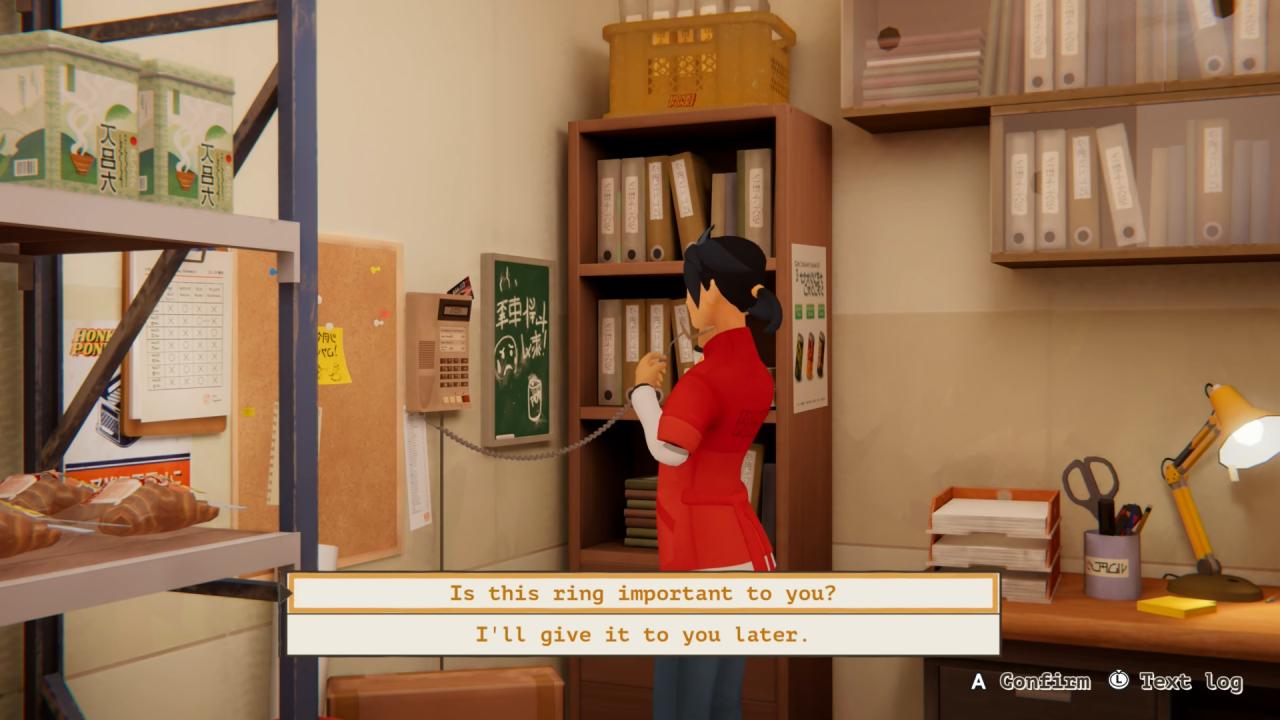
You put them away. Items are placed in a basket and physically taken to the shelves. It’s a simple process, but it’s tactile on purpose. It gives weight to even small actions like placing a can or rotating a product.
The store itself is highly interactive. Almost every object can be examined. Shelves, products, equipment, and background details all respond to your presence with small bits of commentary from Makoto. This encourages exploration, even though the space is relatively small. Customer flow is intentionally slow.
There are often only one or two customers an hour. It reduces pressure and keeps the focus on interaction rather than efficiency. There is no need to herd the masses or juggle systems. You are waiting, watching, and responding as needed. People come in sometimes and ask for help finding things. The requests are usually complex.
They don't name products; instead, they vaguely describe them or offer contextual hints. Next, you wander around the store, reading labels and figuring out descriptions to identify the right thing. The checkout process is simple and first-person. You ring things up, you calculate change, and you handle transactions.
If you do get it wrong, the game just resets the interaction without penalty. There is no failure state attached to customer service, which further bolsters the relaxed structure. Occasionally, customers may order items that are not currently available. You can call in your order, but it will not be delivered immediately.
This entails that requests are not always delivered in real time, which creates a small disconnect between the management system and customer needs. There are simulation mechanics, but there is no deep economic system. Inventory tracking is minimal, and stock placement has no effect on sales performance. The gameplay loop is more about narrative pacing than about strategic decision-making.
The movement is deliberately slow, and this pace shapes how you move through the store.
While it supports a calm tone, it can also make back-and-forth tasks feel monotonous. inKONBINI: One Store. Many Stories' deliberate pacing is also aided by the need to carry a basket at all times, even for small actions, which some players might find restrictive.
There is no combat in the classic sense, and puzzles are rare; they often integrate into mundane tasks rather than serve as distinct challenges. You don’t fight or solve complex systems, but have interpretation-based interactions. The most consistent puzzle element comes from customer requests. Items are often described indirectly, so you interpret the meaning rather than follow explicit directions.
A customer may refer to a product by description, emotion, or context instead of by its name. You need to look at shelf labels, read packaging details, and hunt for clues in the environment. Additionally, recognition is part of the challenge, as some text is stylized or language-based. You are not solving puzzles with rules, but rather with observation.
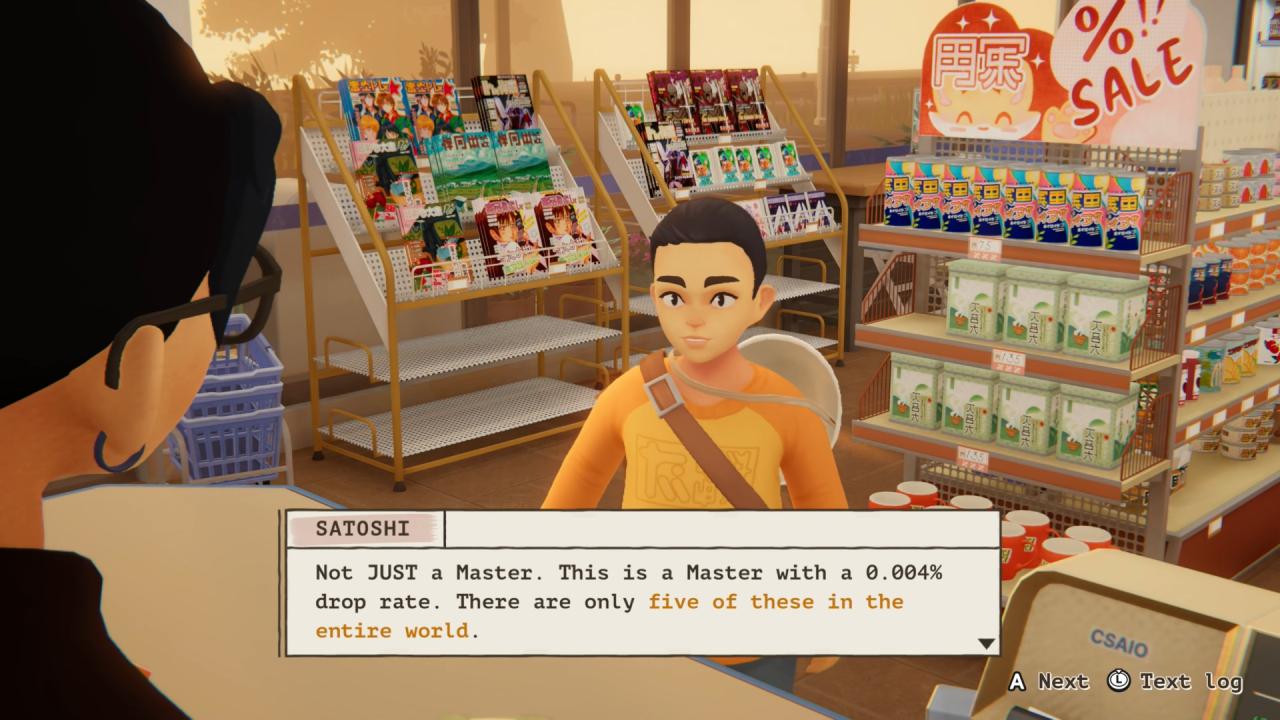
Some characters add more complex interactions. For example, a non-verbal customer will require you to ask the right questions in the right order to understand their needs. These are simple moments, but they emphasize the game’s focus on patience and attention. There’s also a dictionary or a log system to track conversations and key details.
This is a support tool, not a puzzle system, and it helps you to avoid confusion during longer play sessions. It becomes especially useful when characters mention small details that matter later on. These systems are not difficult. They are powerful because they immerse you. They are less about testing your problem-solving skills and more about keeping you in the habit of noticing details.
They gently push you to stay attentive to your surroundings instead of rushing through tasks.
No XP, no leveling, no progression through gameplay success. Progression, however, is all narrative-based. The story progresses with every shift you complete, not mechanical upgrades. This keeps the focus entirely on experience rather than reward systems.
The art style of inKONBINI: One Store. Many Stories is soft and restrained, prioritizing atmosphere over realism. The convenience store feels lived-in enough to be complex, but not overly so. Everything is designed to accommodate quiet exploration and readability. The 1990s Japan setting is established through environmental design rather than exposition.
You see old packaging styles, simple electronics, and rural settings that help reinforce the time period. Nothing seems exaggerated but quietly true. And lighting plays a big role in the mood. Night shifts are particularly quiet, with the interior lighting giving a soft glow to the stillness outside. This sense of isolation fits the game's reflective tone.
The sound design is one of the strongest elements.
Every interaction has audio feedback, from the chimes of the doors to the hum of the refrigerators to the beeps of the scanners to the noises of the packaging, making the experience feel grounded and almost ASMR-like. These sounds are satisfyingly repetitive and routine. The music is soft and atmospheric, and it should support the scene rather than take over.
It encourages a slow pace and helps to fill out the meditative rhythm of the game. There is some early voice acting, but only in small doses. Most of the dialogue is presented in text form.
inKONBINI: One Store. Many Stories is less of a traditional simulator and more of a narrative experience built around everyday routines. It’s about people, conversations, and little interactions, not systems or optimization. You spend a short week in a convenience store. But it is meant to make that time feel meaningful with repetition and observation.
The characters you meet, the things you do, and the slow pace contribute to this being a reflective structure. There are constraints. Movement is sluggish, systems are shallow, and there is little replay value. When the story ends, there is no other mode or extended simulation to keep the experience going.
This makes it feel both purposefully contained and a little restrained. But inKONBINI: One Store. Many Stories does manage to establish its tone. It asks you to slow down, observe, and find meaning in routine interactions rather than structured goals. This is not about mastery or progress. It’s about being present.
Staff Writer, NoobFeed
Verdict
inKONBINI: One Store. Many Stories is a slow, story-driven convenience store experience that prioritizes atmosphere and character over gameplay depth. A short but memorable slice-of-life journey about routine, people, and quiet human connection.
78
Related News
No Data.