
Midnight Murder Club Review
PC
A shooter that thrives in the dark but struggles in the spotlight.
Reviewed by Adiba Manha on Sep 01, 2025
Velan Studios has followed a unique route in the video game industry. Although the studio's artistic abilities are indisputable, it hasn't exactly achieved the level of widespread acclaim that other developers of its quality have. Although it didn't become wildly popular, their debut game—a mixed-reality Mario Kart spin-off—was a clever experiment that attracted attention.
Knockout City, a multiplayer dodgeball game that received a lot of accolades and even a rare 10 out of 10 from some critics, was their follow-up. Velan has stayed relatively unknown despite such audacious efforts. The studio aims to establish a distinct niche in a saturated market with Midnight Murder Club.
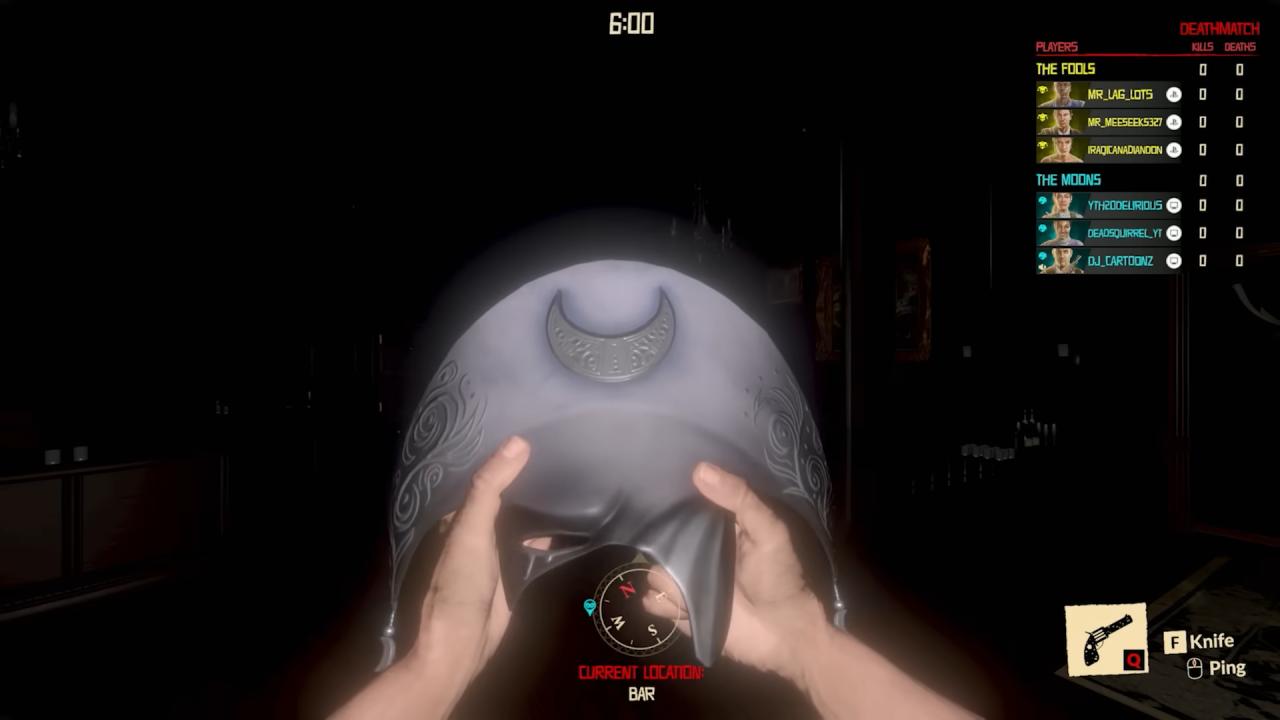
With Midnight Murder Club's one-hit-kill revolvers, lack of aiming down sights, and simple armament, this online multiplayer shooter is purposefully retro in many ways, bringing to mind GoldenEye 007's aesthetic. But with its distinguishing feature—every game is played in total darkness—it also ventures into uncharted terrain.
You are placed into a large, two-story mansion that is completely dark, rather than a bright battlefield with gaudy cosmetics and unlocks. What initially seems like a fresh encounter turns into a tense, methodical one that makes you reconsider your strategy for dealing with online shooters.
The narrative isn't really strong here. With no overall narrative campaign to serve as a foundation, Midnight Murder Club is solely a competitive experience. Wormwood Manor, the location, is the closest thing to lore. The setting for each game mode is a huge mansion, featuring a courtyard, several staircases, and winding passageways.
With its masquerade-style imagery and subtle noir undertones, the atmosphere evokes a murder mystery setting reminiscent of Clue. Even though there isn't a plot to follow, the spooky atmosphere of the mansion makes up for it and creates the perfect atmosphere for tense, suspenseful matches.
Fundamentally, Wormwood Manor is where Midnight Murder Club sends up to 12 players. They all have the same tools: a flashlight, a handgun, and their cunning. The twist is that Midnight Murder Club's most crucial component is darkness.
Navigating the twisting hallways requires your flashlight, but the instant you turn it on, you risk revealing your location. Every choice you make is defined by this ongoing trade-off. Do you risk becoming an easy target by flipping on the light beam to get your bearings, or do you remain in complete darkness and fumble through the passageways based only on sound?
This careful equilibrium is the foundation of the matches. Since your footsteps can be used to identify you, and your opponents can see your flashlight beam before you do, it is usually suicidal to run wildly from room to room. Doors that can be opened or closed to block sightlines or set traps divide many rooms. Another risk-reward mechanism that prioritizes awareness over UI dependence is the fact that your minimap only functions when your flashlight is turned on.
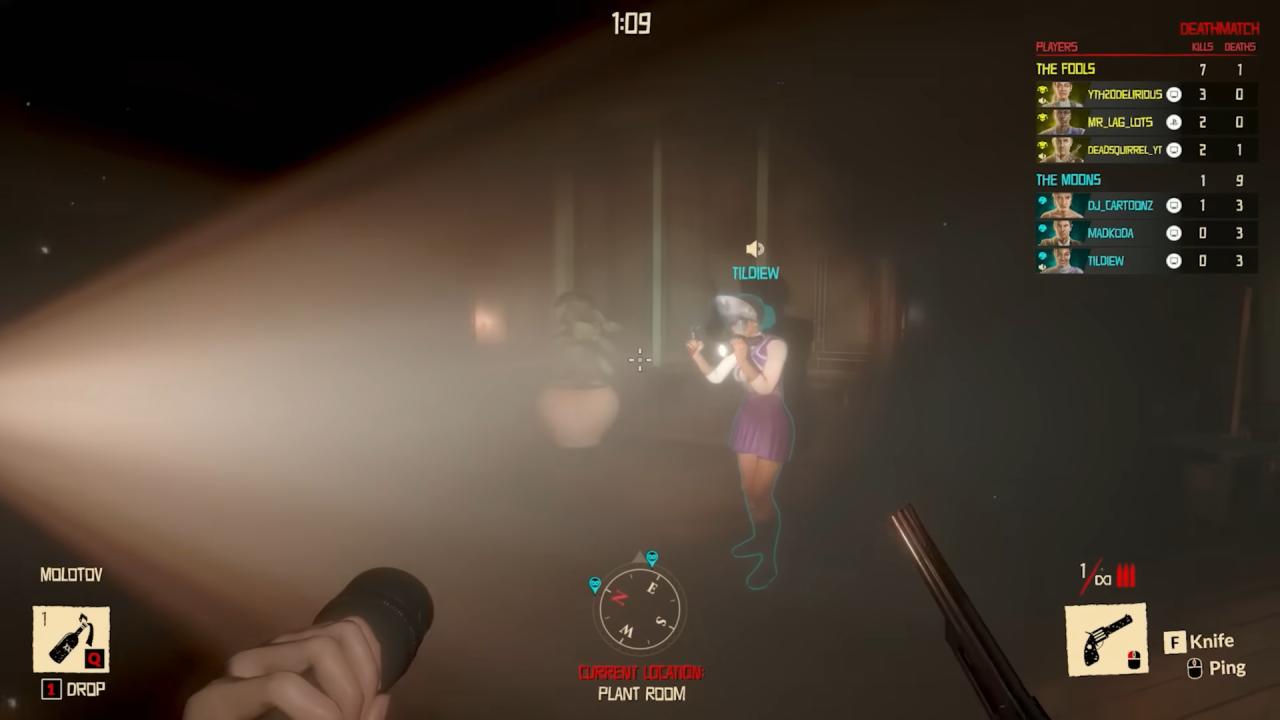
Movement seems responsive and purposeful. Despite its simplicity, shooting is precise and close. Here, accuracy is crucial due to one-hit kills, and lengthy reload times; "spray and pray" strategies are not an option. Coordination can frequently make or break a match in team-based variants, where the ability to revive downed teammates adds a more tactical aspect.
The combat in Midnight Murder Club is both its greatest strength and one of its biggest hurdles. On the one hand, it delivers a type of tension that few shooters capture. The simple revolver mechanics put everyone on even footing, meaning skill and awareness decide matches rather than loadouts or unlockable gear.
On the other hand, the lack of weapon variety may feel limiting over time, especially for those accustomed to the progression systems of modern shooters. There is the greatest variety to fight in the Wildcards mode. At the beginning of a match, each player selects a modifier card, which has the power to fundamentally change the way Midnight Murder Club is played.
Some make it fatal to stand motionless, some eliminate all entrances from the map, and some make players shrink when they are shot, making them run around the mansion in tiny retaliation. The normally simple gunplay is given a new dimension of mayhem and enjoyment by these mechanics.
Not every experiment is a success. The PvE game Graveyard Shift, in which you and a companion collect relics while fending off waves of Revenants, soon gets monotonous. It works well as a diversion, but it isn't deep enough to keep interest. There are bot matches accessible, but they are restricted to Wildcard and Graveyard Shift, so there isn't a thorough method to practice the basics without diving right into actual battles.
The accessibility around the combat, rather than the actual combat itself, is the main disadvantage. There is no tutorial in Midnight Murder Club, and you have to bumble through real games by trial and error, aside from getting lost in bot battles. This hurdle might be annoying for beginner players. Additionally, the absence of onboarding feels like a lost chance because success depends on mastering awareness and light management.
There isn't an XP grind like there is in RPGs or service-based shooters. Leveling up does not grant you access to new perks, cosmetics, or weaponry. Those who dislike prolonged battle passes might find this absence refreshing, but it also means there is little long-term advancement. Matches are exciting with friends because the entire focus is on the moment-to-moment gaming, but they might not be sustainable for players who seek consistent rewards.
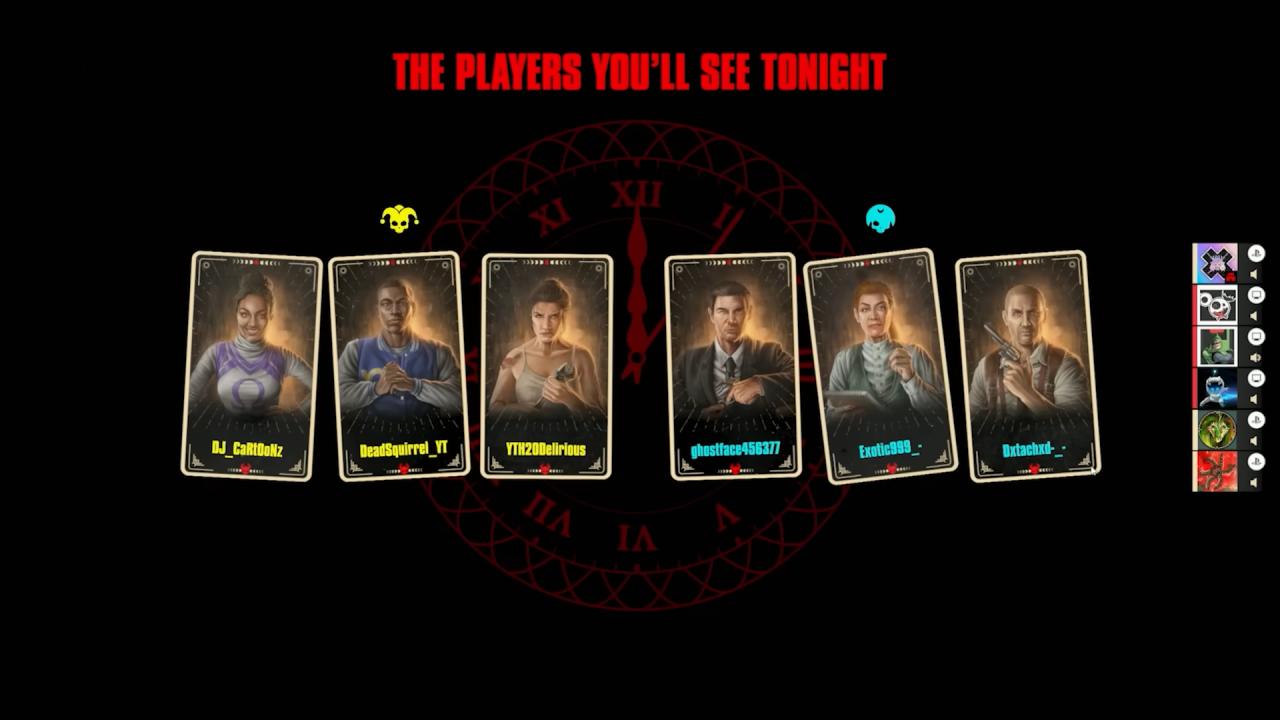
Midnight Murder Club's aesthetic successfully blends humor with ominousness. Wormwood Manor's design combines black elegance with Clue-board charm. The actors' masquerade-style attire adds flair, and the setting, which is reminiscent of the 1950s, is both eerie and vintage. However, Midnight Murder Club's use of light is what's most amazing.
Stunning moments are produced by the flashlight beams, illuminated doorframes, and sporadic flashes of light from Wildcard modifications. A collapsing chandelier illuminates the scene with a blaze of fire, and a disco ball modifier adds dazzling colors to the dim hallways. What may otherwise seem like an unduly gloomy game is elevated by these moments. Even though there is only one mansion in the heart of every play, the randomness of room layouts in different modes keeps things interesting.
Here, sound design is essential, and it succeeds. Due to the limited visibility, audio cues frequently make the difference between life and death. A distant gunshot, the crash of a door, the creak of a wooden stairway, or footsteps reverberating down a hallway can all be used as tracking and anticipating cues.
In fact, Midnight Murder Club is enhanced by the lack of compelling music. You can concentrate fully on the noises of your surroundings because there isn't much music to divert you. This automatically heightens the tension and elevates every interaction. Although it isn't very eye-catching, the audio is essential to the gameplay loop and complements the game's main concept perfectly.
One of the most unusual shooters in recent memory is Midnight Murder Club, but it's also a frustrating one. On the one hand, Velan Studios has produced something radically different: a competitive game where awareness is more important than twitching reflexes, where light and darkness are weapons, and where chaos is maintained by modifiers.
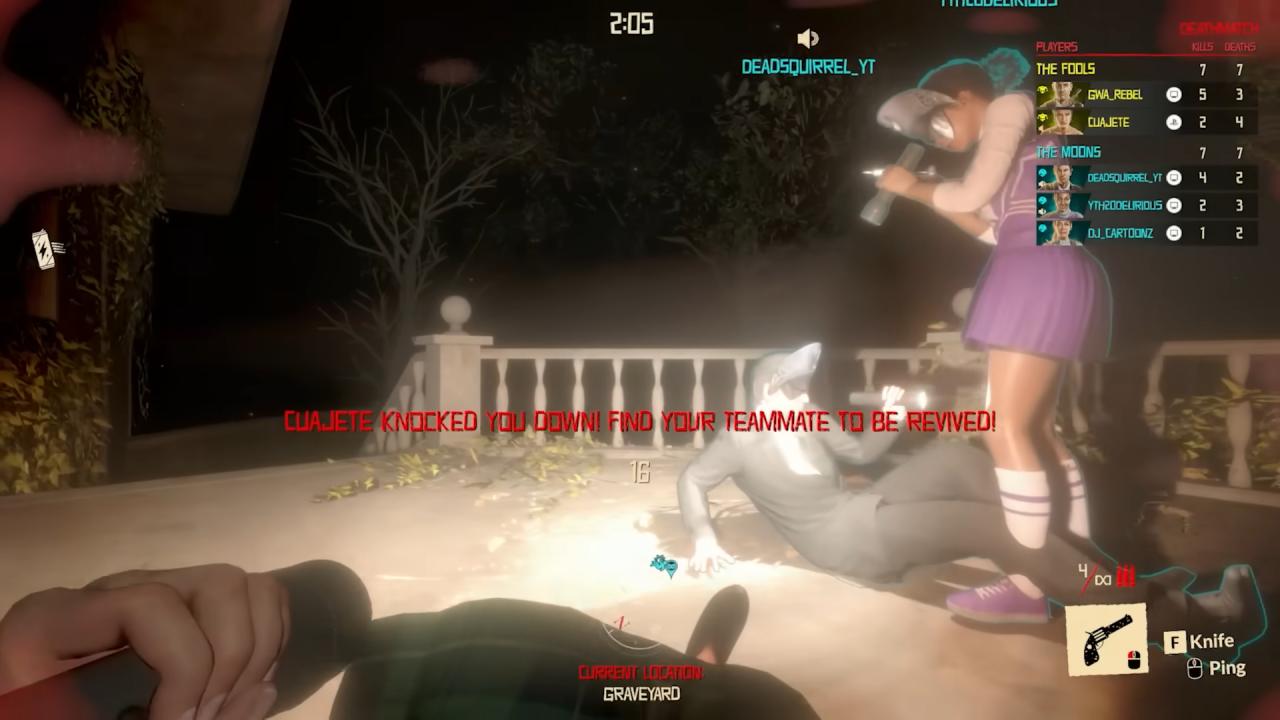
Thanks to Midnight Murder Club's Guest Pass feature, which makes inviting others simple, playing with pals can be enormous fun. However, its shortcomings are difficult to overlook. The single-mansion arrangement restricts diversity, and the absence of tutorials makes the learning curve higher than it should be.
The only PvE option, Graveyard Shift, seems like an afterthought, and bot battles are too limited to be effective training. Most importantly, the whole experience is weakened by the small player base. It's challenging to suggest unless you already have a group to play with, due to the lengthy matchmaking waits and erratic lobbies.
Editor, NoobFeed
Verdict
Midnight Murder Club could grow into something far greater, but for now, though, it sits in a peculiar space. It's genuinely thrilling sometimes, but its underbaked elements and lack of accessibility prevent it from reaching the audience it deserves.
65
Related News
No Data.