
MIO: Memories in Orbit Review
PC
A melancholic metroidvania that dares to drift in familiar space.
Reviewed by Azfar Rayan on Jan 19, 2026
The developer of MIO: Memories in Orbit is Douze Dixièmes (DooDM), a company that was known for Shady Part of Me, a smaller but more style-conscious project that focused on mood, atmosphere, and emotional restraint. With MIO, the company moves into a much busier genre: the modern Metroidvania.
There are so many great games in this genre that it’s impossible not to compare them to each other, and standards are through the roof. When MIO was first shown, it immediately drew comparisons to games like Hollow Knight and its long-awaited sequel, both in terms of structure and tone, movement, and visual ambition.
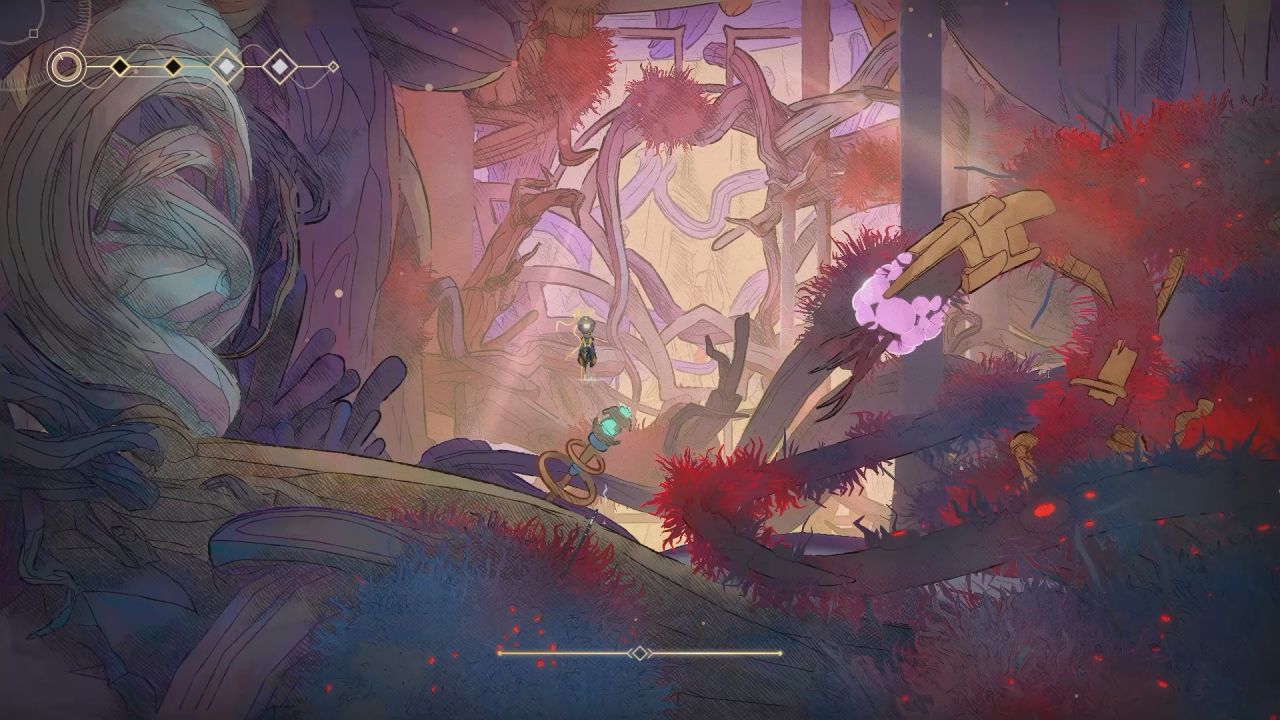
But MIO doesn’t come along claiming to change the genre. Instead, it aims to improve, remix, and make unique familiar ideas by having a strong visual personality and making a few unusual mechanical choices. Focus Entertainment publishes MIO as a high-end but easy-to-get-to experience that relies on mood, smooth movement, and steady challenge over shock or spectacle.
This game was made with confidence in how it looks and feels, even if that confidence sometimes runs into design choices that people don’t agree with.
You wake up as Mio, a small robotic android whose background is unknown, inside a huge spaceship called the Vessel. The ship, which used to be a sign of hope and desire, now just floats through space like an old, broken-down relic, filled with invasive plants, broken machinery, and silence.
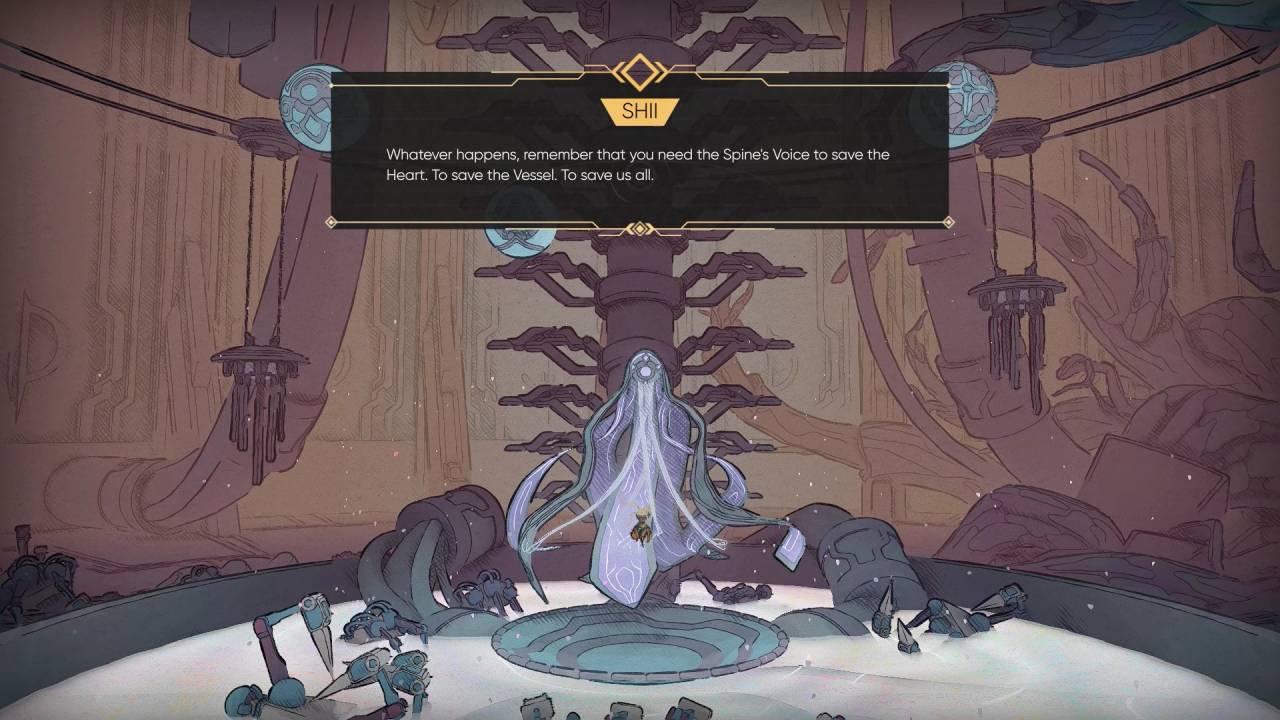
The Heart and its five controlling voices—the Breath, the Spine, the Hand, the Blood, and the Eye—have stopped talking to each other. The Heart was the Vessel’s main brain. Your reason is slowly shown to you through exploration instead of exposition. Mio starts to figure out what the Vessel was, what it failed to become, and why it is now heading toward death by getting in touch with these voices again and putting back together their pieces.
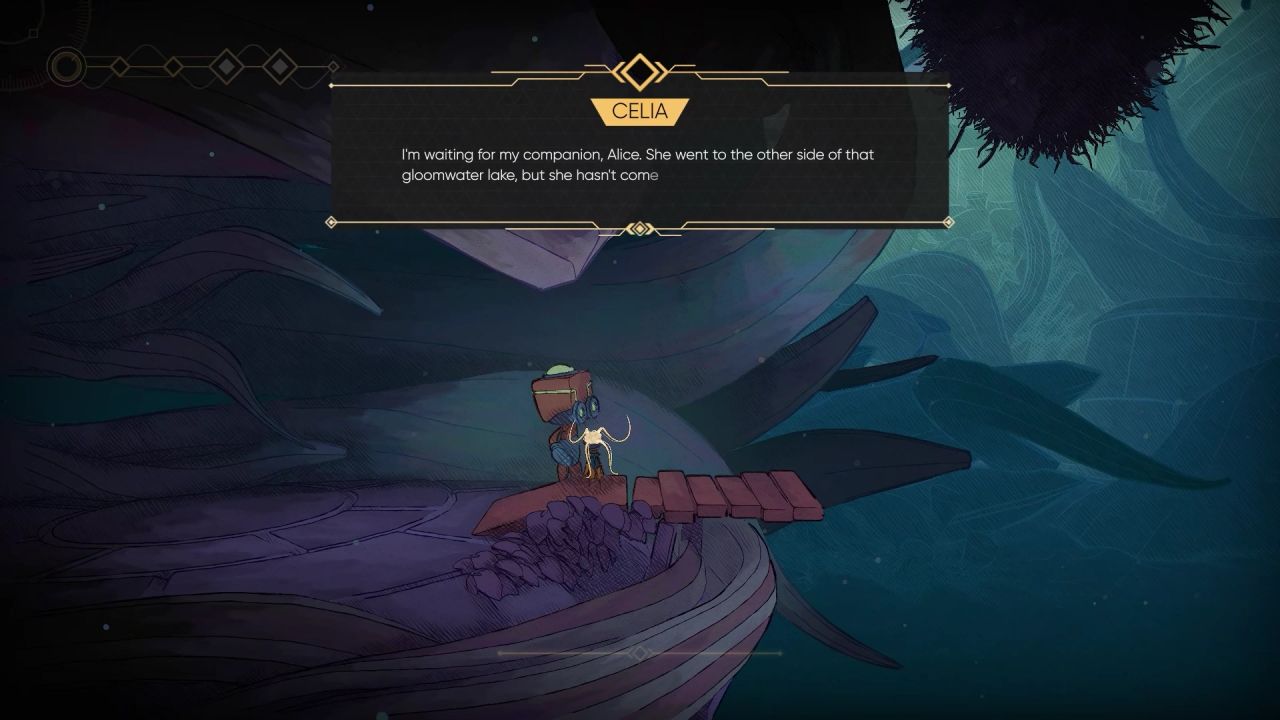
The story is told in the classic Metroidvania style, with short dialogues, stories told through the surroundings, and scattered data logs left by people who used to live on the ship.
This careful method helps keep the pace right, but it costs something. A lot of the characters, especially the voices, don’t feel fully developed, even though they are very important to the story. Their stories end too fast, leaving you feeling like they could have been more emotional.
You meet side figures in the Vessel who give you advice, light explanations, or small tasks, but they rarely do anything else. Mio's inner monologues are also mostly about hints rather than changes, and they don't happen often enough to have a permanent effect.
The story of the Vessel is still interesting. The settings tell stories of falling apart and being left behind more clearly than the words ever could. Broken robot shells, overgrown hallways, and empty workstations all give the impression of a society that lost control of what it made. The story might not stick with you for long, but the mood it creates always works.
Moving around is a big part of MIO: Memories in Orbit. You start out with tools that feel quick and accurate, like the ability to jump, double jump, climb walls, glide, and grapple. Later, you get more specialized skills, like spider-like traversal that lets you move along walls and ceilings. Verticality is very important in this game; even though it’s a side-scrolling game, it makes you think in three dimensions.
One of the best things about MIO is the mid-air battle. When you’re in the air and hit an enemy or item, your jump is refreshed. This lets you chain attacks and stay off the ground for longer. This one design choice gives you a surprising amount of freedom, combining fighting and moving around into a single flow.
Moving well is expressive and beautiful when everything is working as it should. It prefers accuracy and awareness to force.
With each new skill that comes out, there are often stylized, stripped-down lessons that make it look like Mio is getting new software. These parts are good for both the story and the way they look because they support the idea that Mio is always changing and keep the explanations short and to the point.
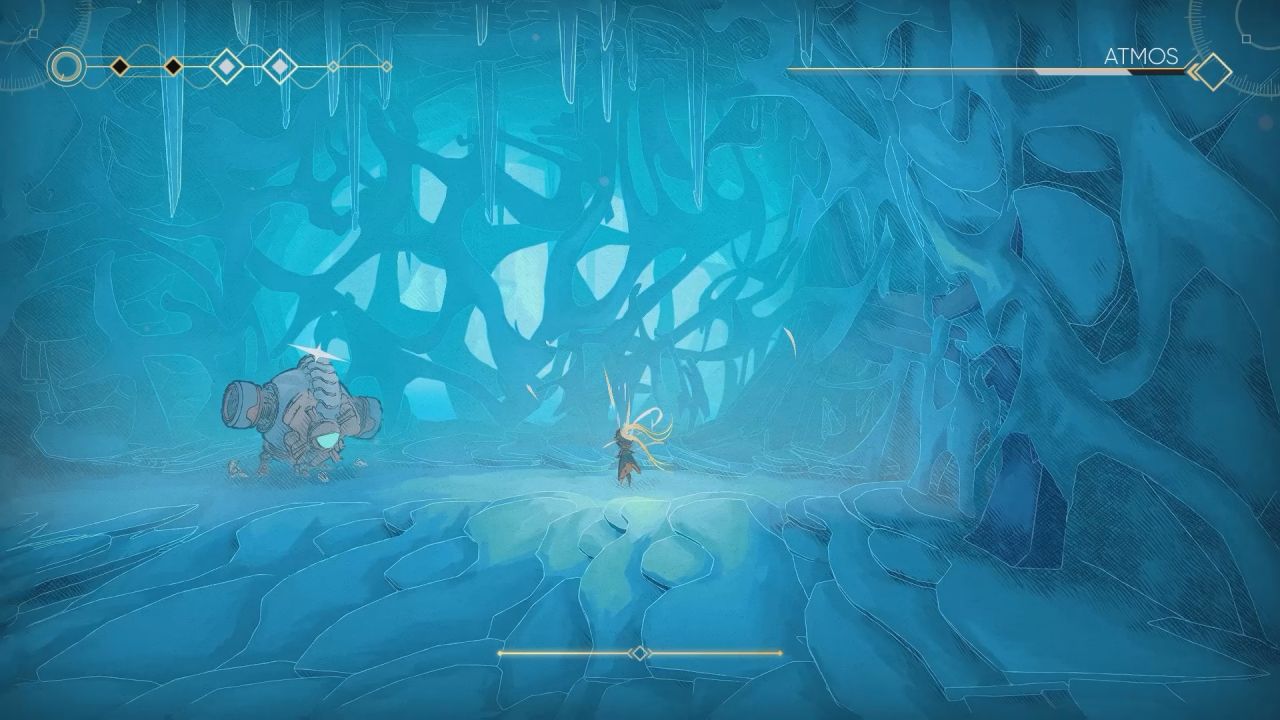
Combat in MIO starts out easy and stays pretty focused the whole time. You use close-range attacks, attacks from above, and a move that looks like a dodge but is more of a time tool than a normal dash.
Even though enemy patterns are easy to figure out and bosses are well thought out, there isn't much difference in the battles. There aren’t any sub-weapons or very different ways to play to try out. Depth comes from where you stand, when you move, and how well you control your movements.
Meet-ups with bosses are a pleasure. Good bosses don't make things too hard for you. Instead, they show you how to do things. They make it easy to learn rhythms while you fight because you can see when they're going to hit. You can beat a lot of them on the first try if you plan ahead, which makes wins more enjoyable than tiring.
However, depending on what they were expecting, the overall challenge may be easier than usual for the genre. The energy system is used a lot in platforming tasks; sliding, grappling, and advanced traversal all use up energy. You can get it back by landing, bouncing off enemies, or hitting certain things in the world.
In theory, this method encourages routing and rhythm that are well thought out. In real life, it often calls for strict application. One mistake can set you back seconds or even minutes, making you repeat long steps over and over again. When paired with sometimes random issues in the grappling range or bounce physics, these parts can feel more frustrating than fun.
The level of environmental puzzles varies. Some cleverly use movement physics or require you to work with lifts and other machinery, while others feel like extra stuff that’s meant to slow you down. The best tasks keep you in the flow, while the worst ones break it.
To move forward in MIO, you need to do a mix of fixed upgrades and modular changes. You can spend the shards you find while exploring to raise your base stats, such as your health or damage.
These changes are clear and rewarding. These upgrades are important for character growth and make early-game characters much less vulnerable. Memory pieces that can be slid into Mio’s internal system let you make it your own. These have passive benefits like doing more damage in some situations or making combo finishes stronger.
In a cool twist, you can get rid of parts of the HUD, like enemy health bars, to make room for bigger modules. The idea behind the system is smart, but it doesn’t really push people to try new things. Because many modules have high encumbrance costs and small returns, they don’t feel necessary, and you can finish the game using only the core principles.
Losing XP when you die makes things more tense, but being able to save resources makes things less frustrating. Fast travel is possible, but it’s tied to certain overseer figures instead of open checkpoints, which means that sometimes you have to go back a long way. The map system becomes clear and useful over time, showing you unexplored ways without being too much. However, its slow introduction may test your patience at first.
The graphics in MIO: Memories in Orbit are very impressive. The landscapes in the game are fully three-dimensional and are rendered in a way that makes them look like they were painted by hand. They have parallax depth and dynamic lighting. As you move through passageways and open rooms, the environment’s layers change in small ways that add to the sense of scale.
The animations of the characters are smooth and expressive. Mio’s hair-like tendrils respond easily to movement and momentum. Science fiction, decay, and nature are all mixed together in the color scheme, which has a balance of muted industrial tones and bursts of organic growth.
Sometimes it’s hard to see because the foreground and background parts blend together too much, but these times are rare compared to how consistent the art direction is overall. The Vessel doesn’t feel like a bunch of levels; it feels like a place. This is one of the best things about the game.
The music is what keeps you there after the pictures draw you in. The music alternates between sad background sounds and light electronic beats, keeping a calm tone that goes well with the game’s sad mood. There are different moods in some songs, like in the game "Risk of Rain."
It sounds like life is going on, even though bad things are happening in some songs with softer, almost happy tunes.
The music doesn't make things more tense; it just makes them seem more real. It doesn’t ask for much attention, but people remember it long after lessons are over. The sound design is also simple but effective, with hums from machines, echoes in the distance, and sounds from the surroundings grounding the experience.
MIO: Memories in Orbit is a sure bet as a Metroidvania that loves mood, smooth movement, and having its own look. It takes a lot from classics in the genre, which can be a bad thing, but it stands out through design and feel.
It’s not really great because of bad design choices in how to handle energy, limited combat options, and storylines that aren’t fully explored. Still, as a whole, it’s a rewarding trip that respects your intelligence and patience, giving you a memorable experience at a good price.
Senior Editor, NoobFeed
Verdict
MIO: Memories in Orbit is a stylish, moody Metroidvania with great movement and design, but it is let down by uneven gameplay and a limited story. If atmosphere and flow are more important than new ideas, this is a good pick.
84
Related News
No Data.