
Modulus: Factory Automation Review
PC
A calm yet deep factory simulation that makes you build from scratch.
Reviewed by Mahi Araf on Apr 06, 2026
Modulus: Factory Automation comes from the Belgian studio Happy Volcano, the same team behind You Suck at Parking and The Almost Gone. Unlike many games in the factory simulation genre, Modulus: Factory Automation isn’t just about connecting ready-made machines and watching things run.
Instead, it asks you to make the machines yourself from raw materials, which adds a personal touch and strategy to the familiar logistics and production lines. It's different from Factorio, Satisfactory, or even Shapes in ways that set it apart. It's clear right away that the developers wanted this to be more than just another game in the genre.
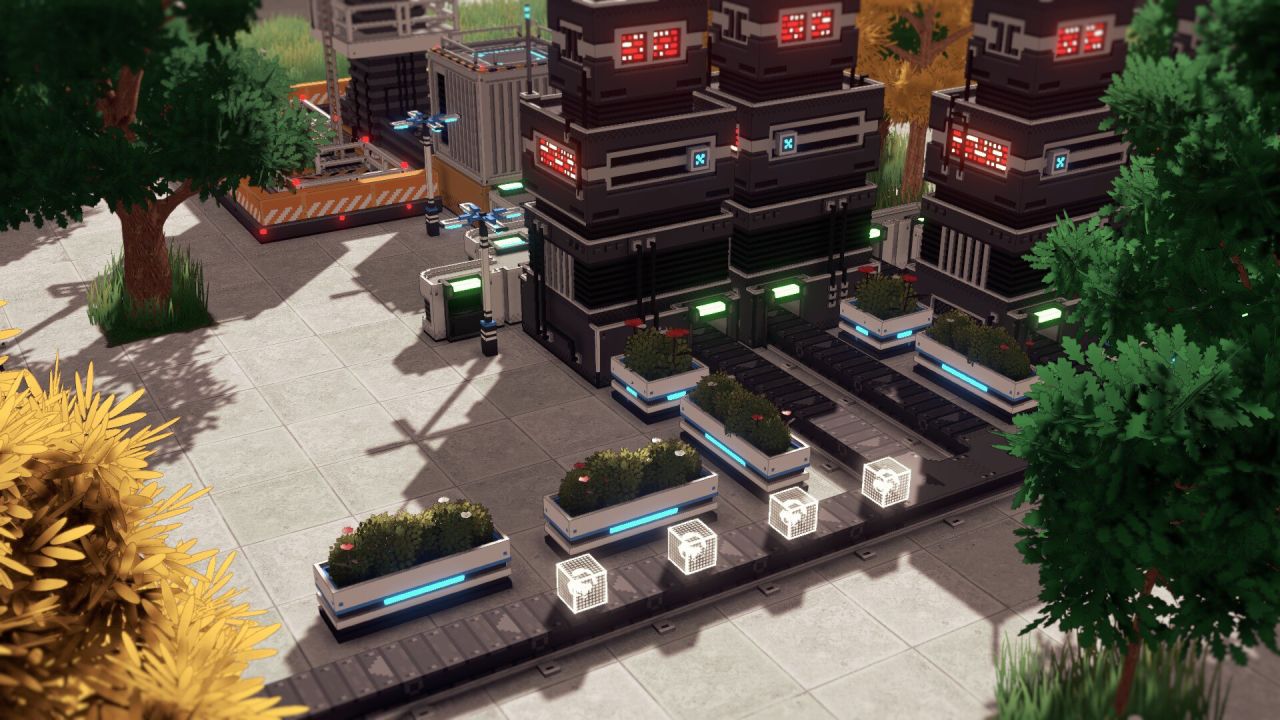
You play as a robot in the game who has to take care of a colony, make droids quickly, and eventually respond to a strange signal from a huge neural network in space. You need to build complex structures called neuromonuments in order to do this.
The story isn't the main point, but it's there enough to give you some background and help you get started. Atlas, the operational robot, walks you through objectives in story mode, making sure you’re not entirely lost while setting up your first modules. The narrative is slow and calm, never feeling overwhelming, letting the construction mechanics take center stage.
Gameplay in Modulus: Factory Automation is all about modules, which are the building blocks for your factories. Unlike other factory games where machines come ready-made, here you cut, shape, paint, and assemble each module yourself. Each module starts as a raw block, and you decide exactly how it will be processed, flipped, or cut.
At first, I skipped the tutorial because I thought I could figure it out on my own. This left me confused at first, but once I got the hang of it, it was very satisfying. You know what shape you want to end up with, but how you get there is up to you. A cutter, combiner, and stamper let you configure everything manually, and early mistakes mean going back to fix the line—but when it clicks, there’s a quiet satisfaction in seeing your modules flow correctly without intervention.
The game world is composed of islands in voxel space, each offering new resources and logistical challenges.
As your factory grows, simple conveyors won't be enough. Cargo ships are eventually needed to move goods between islands, which means you have to think about more than just one area and how to spread production across several zones. In story mode, you also have goals, like building certain structures that need certain modules.
The level of difficulty goes up slowly, adding new mechanics to what you've already learned. You can unlock new tools and upgrades by making the resources you need, because the tech tree works in parallel. A bottleneck is usually what slows down production, which is why it encourages planning and optimization without being too pushy.
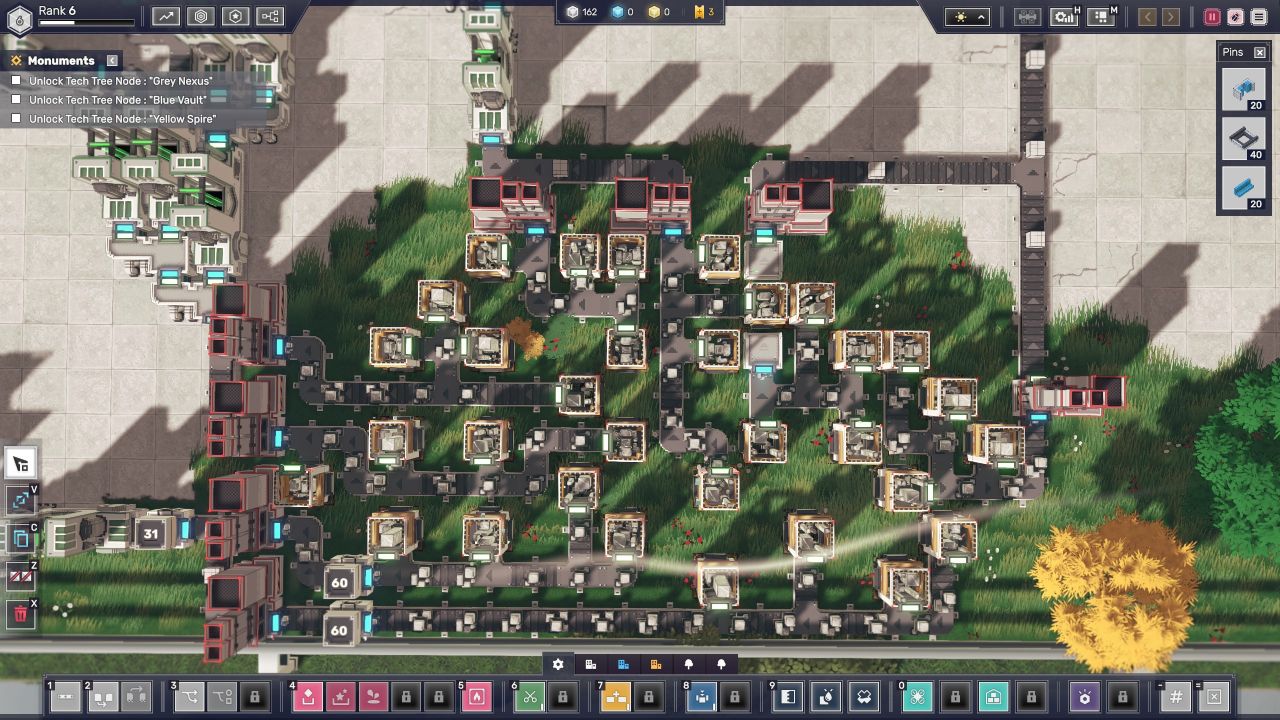
There are optional module challenges as well, which serve as smaller side tasks. You deliver specific blocks to a target, and these challenges provide extra resources for the tech tree. They’re short, satisfying diversions that break up the larger construction projects and give you more reasons to experiment with module design.
Controls feel natural and intuitive on keyboard and mouse. You can quickly copy and move entire sections of your factory, and conveyors can cross paths or run through tunnels, giving you greater freedom in planning your space. It's easy to clear jams, and most of the quality-of-life features are already there.
You can even play in creative mode if you want to try things out without any goals or limits on resources. I spent some time in this mode just messing around with modules, testing production setups, and making designs just for fun. It's surprisingly relaxing.
When it comes to graphics, Modulus: Factory Automation keeps things clean and minimal.
The aesthetic is clear and functional, exactly what you need when dealing with dozens of modules across multiple islands. The sounds are subtle and supportive—the audio doesn’t distract you but still provides useful feedback, like clicks or beeps when modules are processed, or milestones are unlocked. Everything runs smoothly, even with complex setups, which is impressive for a game that can become CPU-intensive at high production scales.
The puzzle part of Modulus: Factory Automation is that you have to set up each module by hand. Before you can use it, you may need to cut a block into smaller pieces, put it together with another block, or paint some parts of it. At first, it felt like a puzzle game and a factory simulator at the same time. I had to change and fix lines many times to get everything to flow right.
Once you get the hang of the setup, it's less about trying things out and more about making things work better. Throughput is important; you need to process enough modules at the right speed to keep up with production, but the game isn't too hard. You can take your time, and progress is measured by the number of units you make, not just how fast you make them.
The modular building system is the best part of the game.
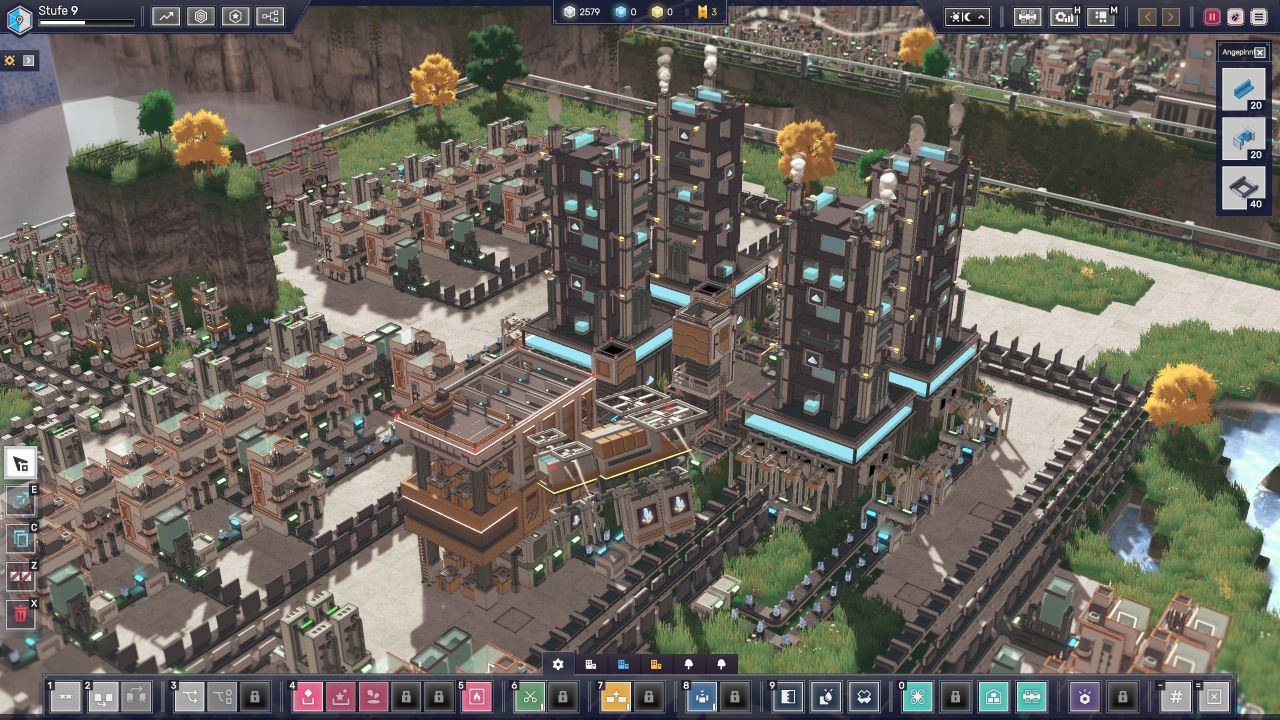
You can pin recipes to your screen, which is very useful, and set up parallel lines that you can copy and paste. Once you know how to set it up correctly, it's easy to increase production. It's a system that rewards careful planning and testing, and it's nice to see a complicated line run smoothly after a few hours of tweaking.
The sense of ownership is stronger than in many other factory games because you literally built the machines that run your factory. I found the tech tree and progression particularly clever. New islands unlock more resources, and shards produced by your factory can be used to upgrade buildings.
Delivering the correct modules and producing resources efficiently directly influences your upgrades and factory growth. The challenge scales naturally, and there’s no sudden spike in difficulty. You gradually learn the mechanics as you build a functional, efficient factory.
Modulus: Factory Automation is calmer and more planned than other games in the same genre.
It doesn't try to scare you with constant threats, huge 3D worlds, or quickly growing challenges. It isn't as complicated as Factorio or as big as Satisfactory, but it does give you a unique sense of satisfaction through creativity, planning, and problem-solving. It feels meditative when you want it to and challenging when you dive into optimization.
The modular design mechanic is unique and makes you engage with every part of the production chain, rather than treating machines as black boxes. For someone new to factory simulators, Modulus: Factory Automation is a gentle introduction without being overly simplistic.
For experienced players, it’s a fresh take on the genre, forcing you to think differently about construction and efficiency. The story is light, there are no multiplayer or social features, but if you like building and optimizing, the gameplay alone can keep you busy for dozens of hours.
I spent a few hours figuring out how things work, testing different module configurations, and improving production lines. The game never crashed, ran smoothly, and everything behaved as intended. Small touches like switching day/night cycles, clean UI, and subtle audio cues all contributed to a polished experience. It’s clear the developers put thought into quality-of-life improvements without overwhelming you with constant notifications or pop-ups.
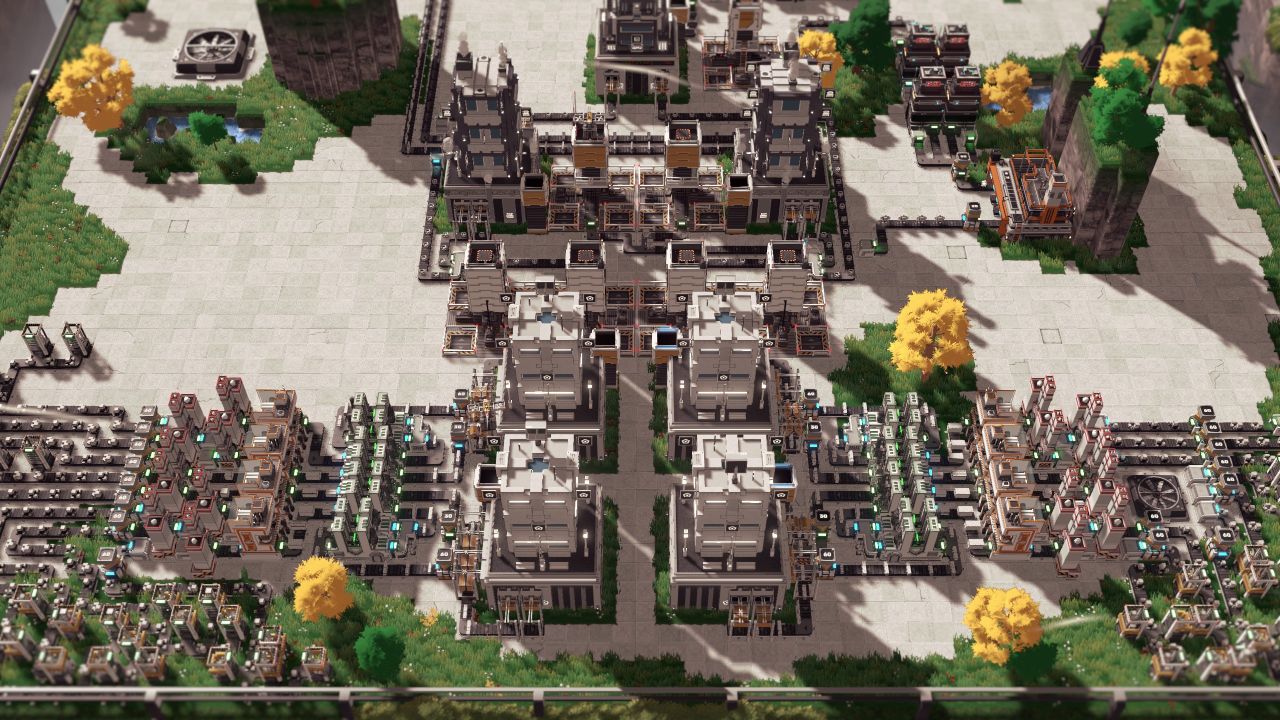
The price reflects the game's scope: around $14 on sale and $17 full price. For what it offers—creative freedom, deep modular systems, and calm yet engaging gameplay—it’s worth the cost. You get a polished, unique factory simulation experience that’s unlike anything else out there, with enough depth to keep both casual and dedicated players occupied.
Modulus: Factory Automation isn't trying to directly compete with Factorio or Satisfactory.
Instead, it makes its own niche by letting you control the machines and build things from scratch. The best part is seeing your custom-built modules move through the production lines. The game does a great job of making you feel accomplished with every working setup. It's not just about speed or size; it's also about careful planning, trying new things, and the quiet joy of making something that works just the way you wanted it to.
In the end, Modulus: Factory Automation is for people who like to plan and mess around. This factory game is calm and methodical, rewarding patience, creativity, and attention to detail. This game is for you if you like the satisfaction of a well-oiled machine and the challenge of designing it yourself.
Senior Editor, NoobFeed
Verdict
A well-made and well-thought-out factory sim where you build machines from the ground up. It is calm but deep, and it rewards planning and creativity. It's worth it for people who like to build factories methodically for $17.
75
Related News
No Data.