
Necrophosis: Full Consciousness Review
Xbox Series X|S
Necrophosis: Full Consciousness is a stunning yet frustratingly slow walk through a living nightmare.
Reviewed by Elme Dhee on Jun 13, 2026
Waking up inside a rotting, broken body with absolutely zero memory of who you are or how you got there is a rough way to start a game, but that’s exactly how Necrophosis: Full Consciousness greets you. This isn’t your typical first-person horror game. Instead of relying on cheap jump scares or making you run for your life down dark hallways, it forces you into a heavy, deeply unsettling psychological experience.
From the second you take your first steps, the game drags you through decaying, rotten environments that honestly feel like a living nightmare brought to life, focusing entirely on pure atmosphere and abstract mystery. The indie team behind this project is Dragonis Games, and they are published by PQube. If that name sounds familiar, it's because these developers previously made The Shore, a game heavily steeped in Lovecraftian cosmic dread.
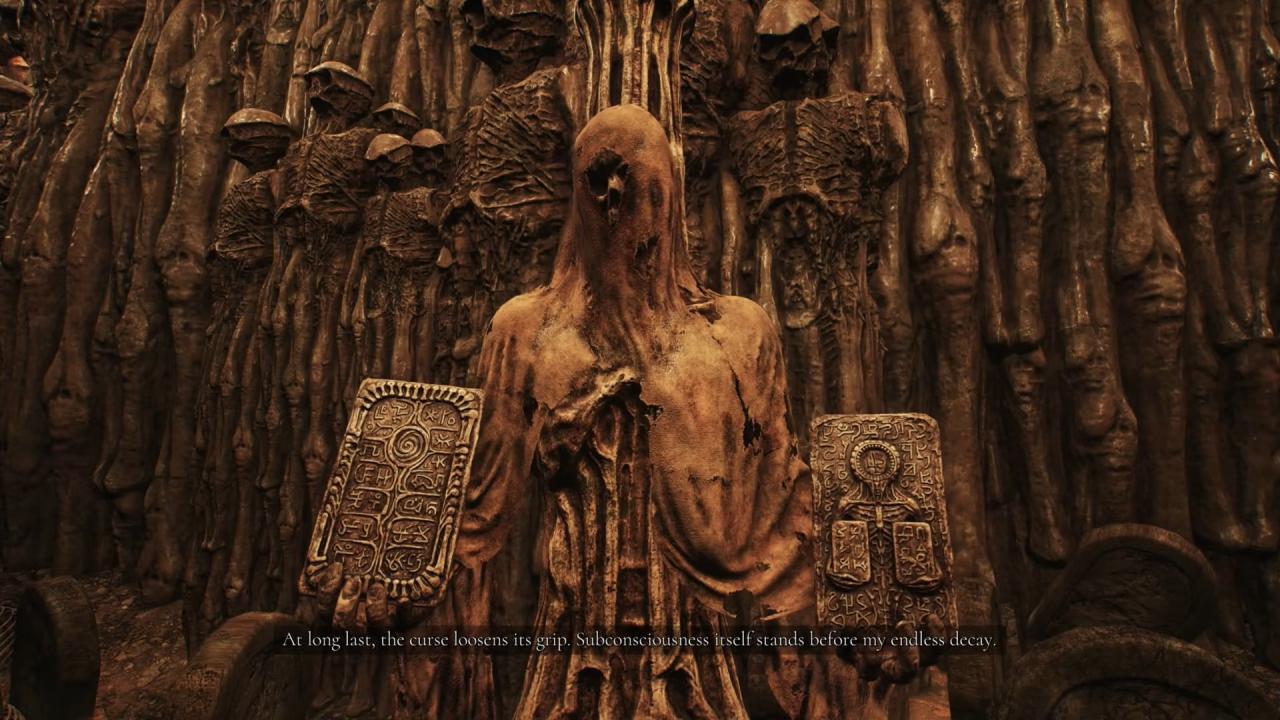
Even though the studio itself hasn't been around forever, the people working there clearly know how to build massive, overwhelming worlds that make you feel tiny and isolated. You can feel that exact same design philosophy bleeding into Necrophosis, showing off their talent for making players feel genuinely uncomfortable just by looking at their surroundings.
Instead of trying to copy mainstream survival horror titles like Resident Evil or Silent Hill, this game does its own thing. The art style clearly draws on extreme horror and dark fantasy, giving off major Zdzisław Beksiński vibes, to create a world that feels completely unnatural. This definitive edition is less of a traditional video game and more of an interactive piece of art. Because of that, don't go in expecting to manage an inventory, shoot monsters, or get caught up in high-speed chase sequences.
The whole goal of Necrophosis: Full Consciousness is to bring back a slow-burn, abstract style of horror while giving you just enough mechanical weirdness to keep your brain turning. By bundling the original game with the mind-bending Subconsciousness expansion chapters, you get a much bigger, multi-layered journey into a mental collapse. Right from the jump, the game leans hard into slow exploration, cryptic poetry, and a constant feeling of dread that completely takes over.
The abstract storytelling relies completely on environmental codes and imagery.
There is no traditional plot here, and the game definitely doesn't hold your hand with direct dialogue or clear answers. Instead, the story is incredibly abstract. You play as a fragmented consciousness trapped in a decaying vessel, and the game uses total confusion, isolation, and fear to build its narrative. As you move forward, you have to piece things together yourself, hunting for tiny clues about what happened to this place and who you actually are.
The journey feels like a literal walk through a broken mind. Instead of watching standard cutscenes, you read cryptic wall writings, look at strange symbols, and find pieces of dark poetry scattered on the ground. Because the game rarely gives you a straight answer, a lot of the lore is left totally open to interpretation. Some players will love trying to decode the mystery, while others might find it a bit too vague to actually connect with.
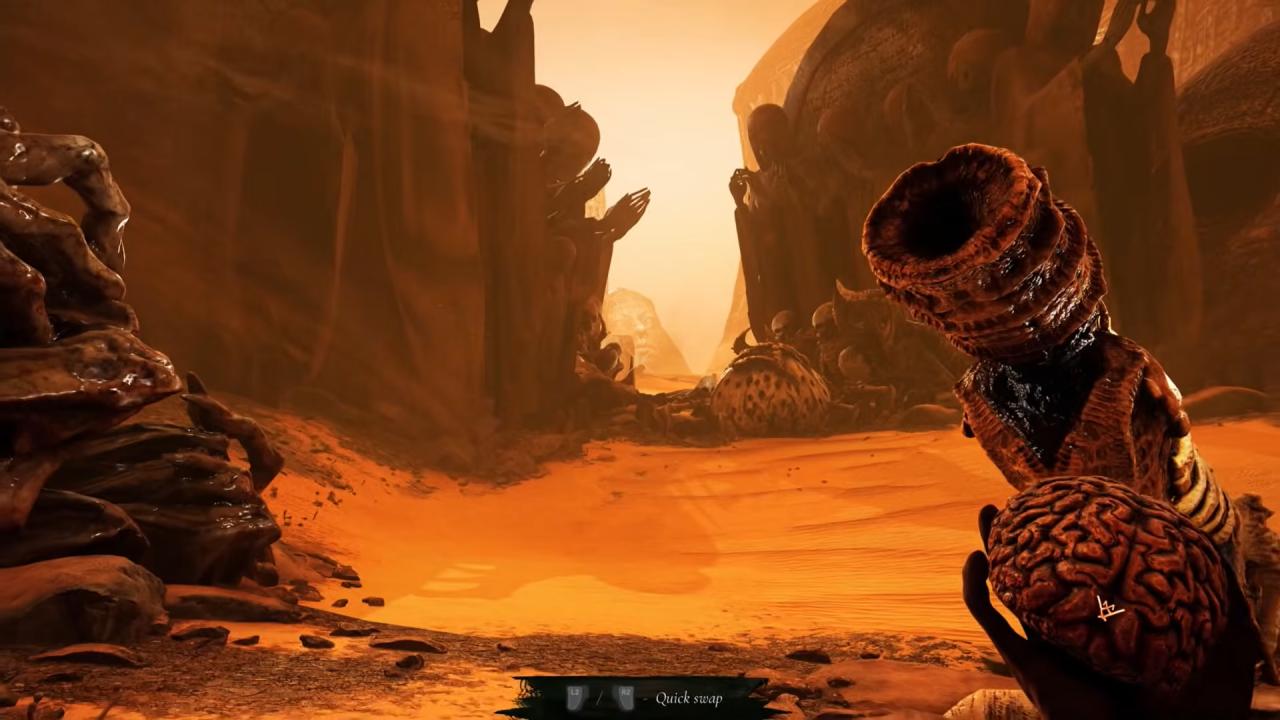
The early areas start you off in a dark, cellar-like dungeon before spitting you out into massive, sandy courtyards that look like ancient, dead temples. This setup instantly makes you feel isolated. The included Subconsciousness DLC expansion pushes the envelope even further by taking you past the physical ruins and diving straight into the deeper layers of the subconscious mind.
The expansion's content includes new twisted creatures and an emphasis on mental collapse, and it really makes the narrative feel much more chaotic as environments actively distort around you, shifting from cold stone walls to collapsing realities made of melting flesh. The shifting environments keep the theme of decay front and center, even as the actual plot remains a mystery.
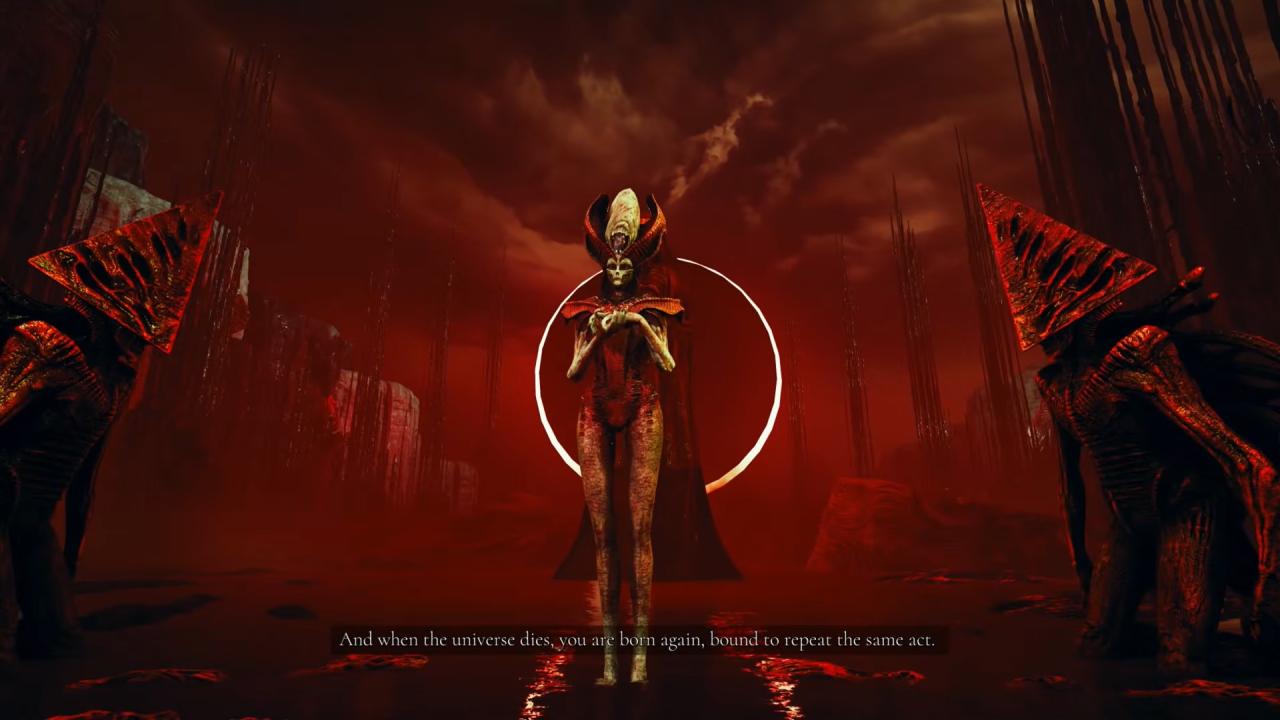
One minute you're walking through a massive skeletal wasteland, and the next you're facing down a supernatural entity waiting to seal your fate. By the endgame, the harsh reality sets in, and you realize you just have to accept your fate. It’s a very specific style of storytelling meant for people who love deep symbolism over direct explanations.
The gameplay moves at a slow, meditative pace.
The actual moment-to-moment gameplay is a massive departure from most horror titles. There are no real weapons and very little combat; instead, you spend almost all your time walking through disturbing areas, solving puzzles, and interacting with the ecosystem. The controls themselves are pretty simple: you walk around, inspect things, and interact with objects, but the progression gets pretty wild once you start using the game's unique consciousness separation mechanics.
Every area forces you to slow down and really look at your surroundings to figure out how to move forward. Some zones are huge courtyards where clues are hidden among hundreds of scattered corpses, while others are narrow, linear walkways that require your full attention. It really feels like you're trapped inside someone else's nightmare.
The coolest mechanic in the game involves separating your consciousness from your physical body. This lets you possess alternative biological forms to interact with objects you couldn't normally reach. For example, one puzzle requires you to turn into a small spider to crawl through hidden wall spaces, while another forces you to pilot a giant insect to open up a locked entrance.
The mechanics of the investigation get pretty graphic, too. Progression usually involves interacting with the dead, whether you're harvesting glowing soul cores, gathering eyes for blind creatures, or physically pulling brains from skinless bodies. When you get stuck, the best rule of thumb is to look for a brain on the ground.
Luckily, Dragonis Games included a nice feature that highlights objects of interest when you get close, which saves you from completely losing your mind trying to find a tiny item. The movement physics are built to feel heavy and dream-like rather than smooth or realistic.
Walking and interacting feel very deliberate, which matches the weight of the decaying body you're piloting. While this slow pace is awesome for building tension, it also means there isn't much gameplay variety. After a few hours, you'll definitely get caught up in a repetitive cycle of walking, exploring, and solving puzzles.
Abstract puzzles focus heavily on macabre design logic.
You don't have to worry about aggressive monsters chasing you down, so traditional combat isn't a thing here. The creatures you meet are passive and functional, more like creepy set dressing or puzzle pieces. They exist to create tension. They keep you on edge, even when nothing is happening.
Since you don't fight, your defense is entirely based on your awareness. If you miss a highlighted object or don't understand the layout of a room, the game can become frustratingly vague as it rarely explains what you're supposed to do. It forces you to think outside the box and experiment with consciousness separation to get past obstacles.
When the puzzles do come, they are very inventive and tied to the horror theme in distinct ways. It’s really satisfying to work out how to use a particular biological key, to possess a small spider to clear a tight gap, or to find a secret mask to move forward, because it requires understanding the warped logic of this nightmare world.
The downside is that with no mechanics for action or stealth, the entire game hinges on these intangible puzzles. The route is very linear, so there’s not much to break up the long walks. This can make the game feel dragged out during longer play sessions, especially if you get stuck on a vague puzzle that completely kills your forward momentum.
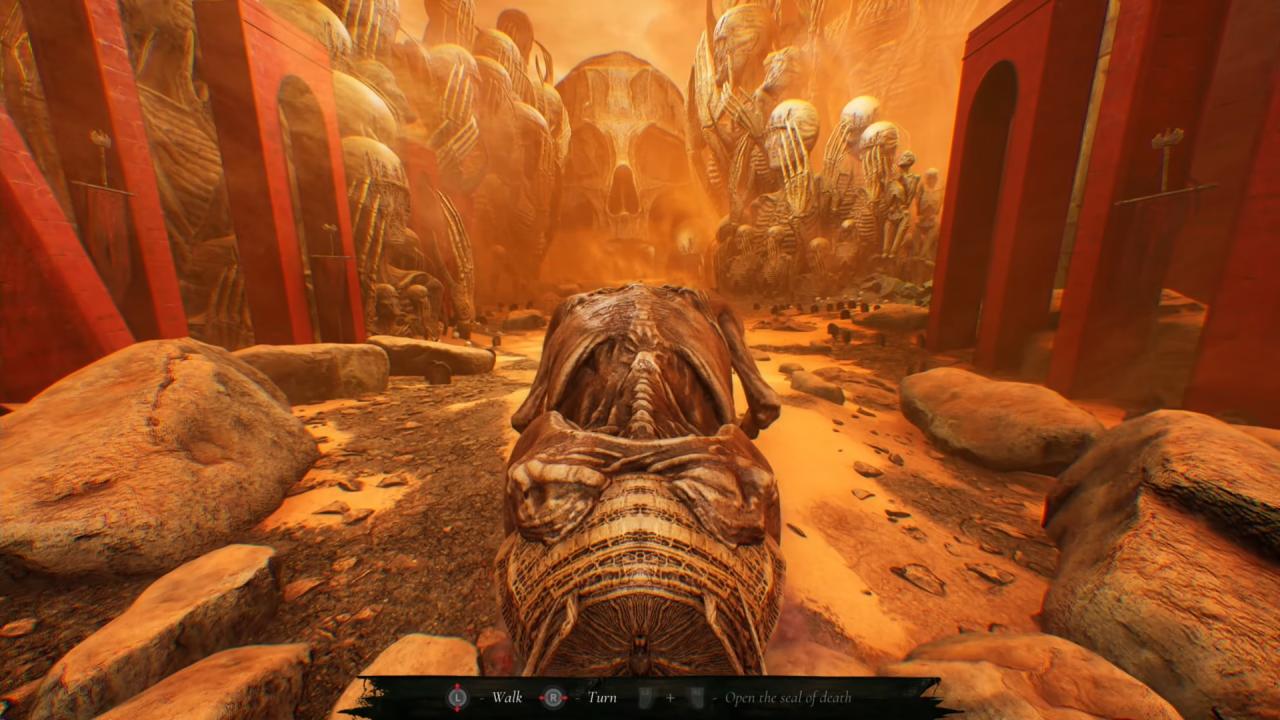
Progression depends entirely on environmental observation and linear loops.
Progression is all about your willingness to look closely at the world and solve the linear trials in each area. Every chamber you clear rewards you with a little more environmental context and opens up the next disturbing landscape. The game keeps you moving through a strict loop where finishing a set of tasks is the only way to advance.
Your success is tracked by how the world changes around you. Solving puzzles unlocks new progression items, like a ceremonial mask, and gives you access to the final areas. The game forces you to pay attention to the ground beneath you, as the clues needed to drive the story forward, like locating a stray brain or a hidden sigil, are often hiding right in plain sight.
The Full Consciousness package keeps things fresh by putting the Subconsciousness DLC content right alongside the main game. These bonus chapters are a direct follow-up to your journey and throw even stranger puzzles and areas at you. It gives the game a clear sense of progression, moving you smoothly from physical ruins into the deepest, darkest corners of the mind.
There are zero microtransactions or paywalls here; everything has to be earned through pure gameplay. This makes the progression feel completely tied to your own effort. It also adds a ton of value to this definitive edition, since you get to earn your way through both the base game and the expansion chapters just by immersing yourself in the atmosphere.
The stylized visual textures build a highly disturbing world.
The presentation is easily one of the most memorable parts of the entire experience, but it definitely won't appeal to everyone. The visuals are dark, gross, and sometimes genuinely uncomfortable to look at. The art style creates a world of crumbling structures and nightmare landscapes, and nails the unnatural vibe the developers were going for.
The lighting choices are super interesting, especially considering a good chunk of the game is played out in broad daylight. Seeing hundreds of corpses leaning against headstones under the bright sun gives off a really unique, exposed feeling of dread. Other areas shift to a dark, deep reddish tinge that looks like distorted flesh.
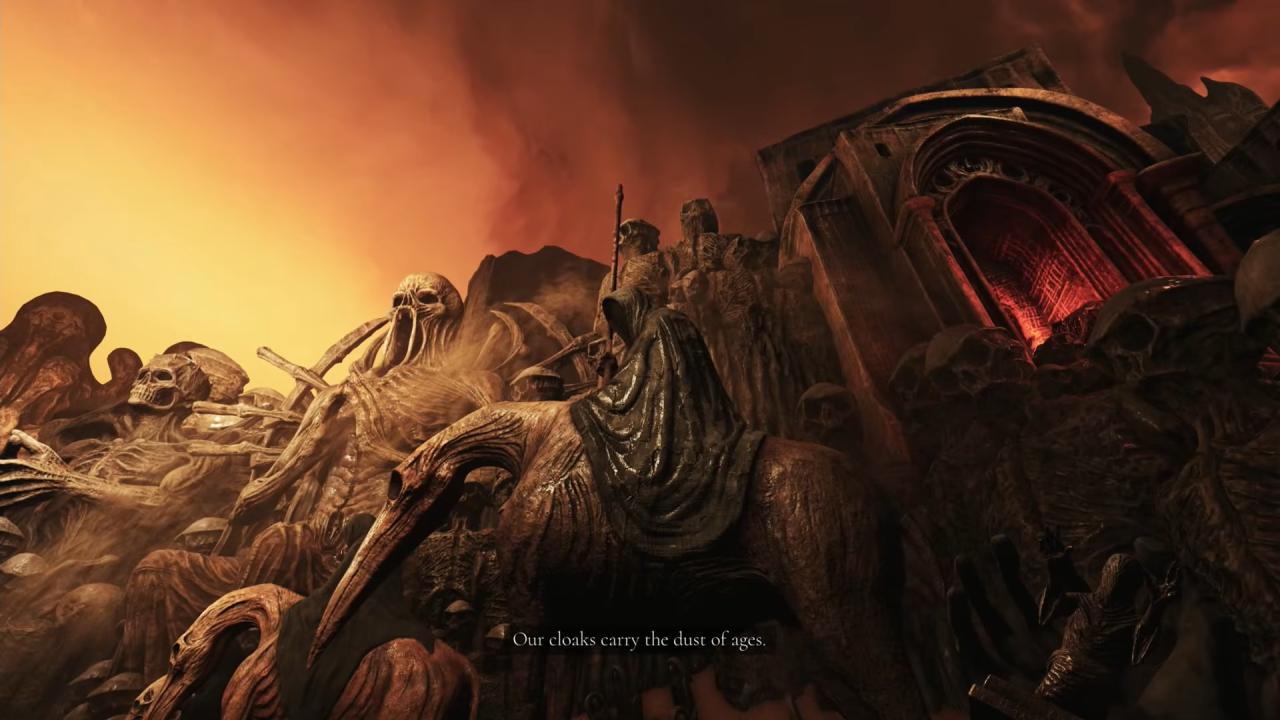
On the Xbox Series X, the game runs at a mostly stable 60 frames per second, keeping exploration smooth, even if some character animations look a bit stiff and clunky.
The sound design is arguably the strongest part of the whole package. The soundtrack is super minimal, basically just silence, low ambient hums, and crazy industrial noises rather than actual music. You are constantly surrounded by faraway whispers, echoes, and strange groans that build an immense amount of tension, making you feel like something terrible is about to happen even when the screen is totally empty.
The technical performance favors responsiveness over hyper-realistic graphics, which is a smart choice for a game that relies so much on its atmosphere. Even if you run into a few clunky animations or visual quirks, the stable frame rate ensures the horrifying visual style shines through without annoying performance drops.
Editor, NoobFeed
Verdict
Necrophosis: Full Consciousness is a masterclass in cosmic horror visuals and dread, but its clunky controls, slow pacing, and vague puzzles make it a hard sell for players who want action.
75
Related News
No Data.