
Wardrum Review
PC
A tactical rhythm roguelike where combat only works if you can keep the beat
Reviewed by Tahmid Mahi on May 07, 2026
Wardrum steps out as a tactical rhythm roguelike that doesn’t just borrow ideas from strategy games but reshapes them around timing and musical input. You take control of a warband known as the War Drummers as they travel through a fantasy world being consumed by dark sorcery called "riven magic."
Instead of building on an existing franchise, the game presents itself as an original idea from Mulville Games, published by Team17, a publisher known for supporting experimental indie projects. The result is a game that blends turn-based strategy with rhythm mechanics in a way that constantly forces you to stay engaged with both timing and tactics rather than relying on one system alone.
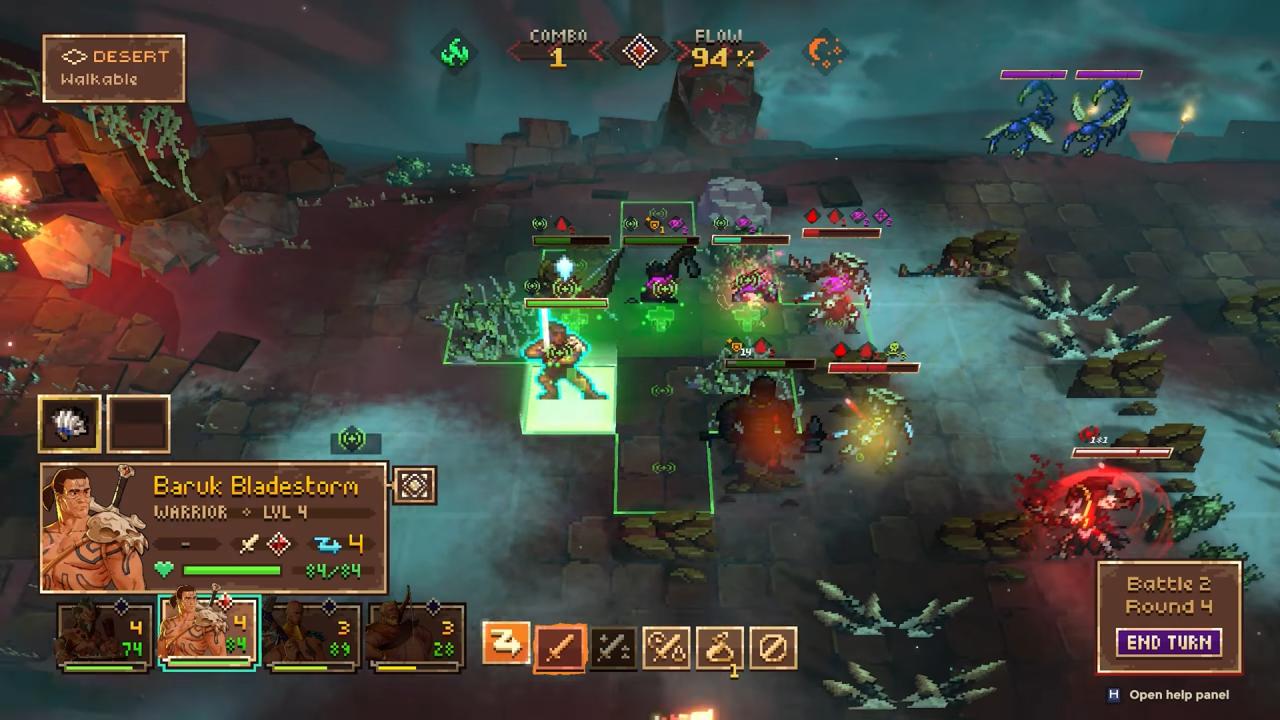
You command a warband moving through lands that are being actively corrupted by dark magical forces.
Neither safety nor stability exists in the world. The spreading sorcery touches each region you pass through in different ways. As you move around the map, you are not only fighting battles but also finding loot, random events, and exploring deeper into more dangerous territory. The journey is built around progression through hostile biomes rather than a fixed linear story.
Each step forward is another layer of the world crumbling under the influence of Riven magic. The War Drummers themselves are a coordinated group. The story isn’t really about individual backstories but about the concept of unity and rhythm as survival. As you advance, more party members are slowly unlocked, but only a limited number can actively fight in battles, naturally making you think about team composition and long-term strategy.
The feeling of moving forward isn’t driven by dialogue-heavy storytelling as much as it is by the way the world reacts to your presence. Every place you go feels more and more unstable, and the encounters you face are reflective of that growing corruption. Wardrum's gameplay is divided between a world map layer and a tactical combat layer.
The world map consists of tiles that you move across, each representing a different type of encounter. Skulls mean battles, chests give loot like trinkets and equipment, and question marks trigger random events. This architecture provides you with a fundamental level of control over risk and reward as you choose where to go next, but it never completely removes uncertainty.
The moment you enter into combat, the game switches to a grid-based battlefield. Before the fight, you enter a planning phase where you position your units on a yellow grid. This setup phase is important because you can decide spacing, formation, and tactical positioning before the enemies start their turn cycles.
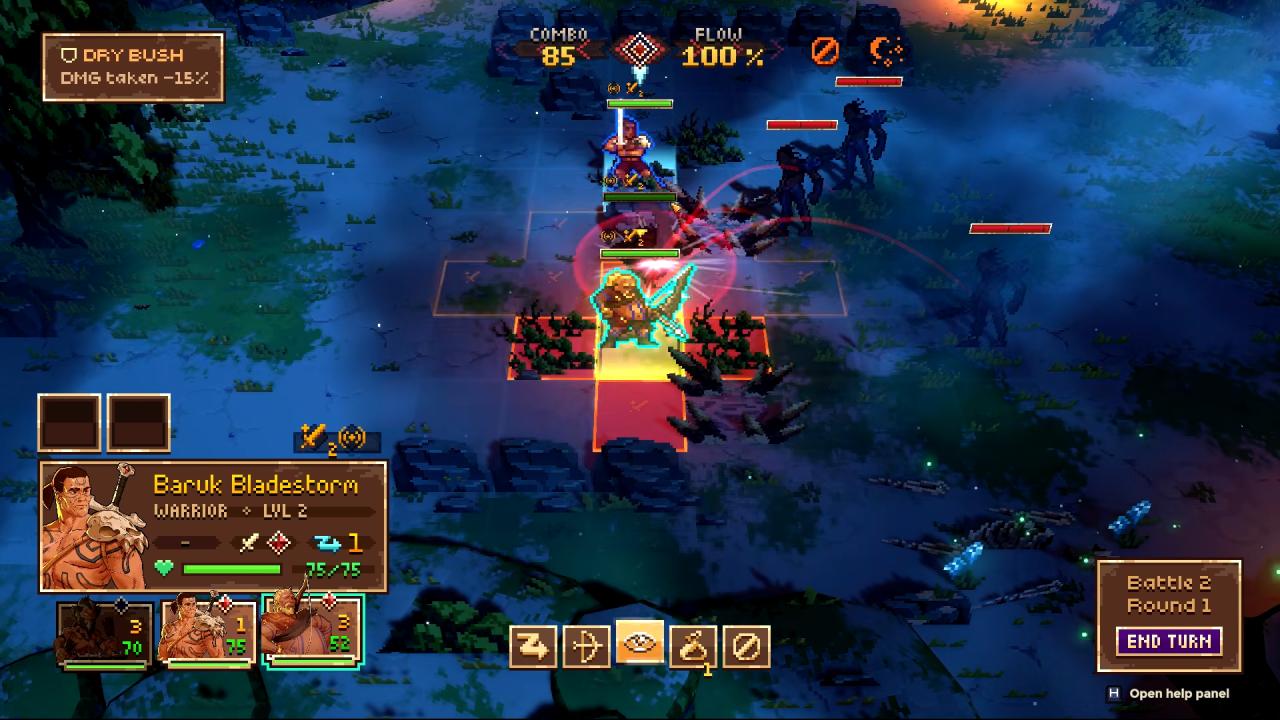
In this phase, you can also look at enemies and see their movement range, attack range, health points, and abilities. This information will be important later, especially when you are fighting stronger enemies or attacks with multiple targets.
When the fighting starts, the game adopts a classic turn-based system in which both sides take turns. Each character can move and attack within a specific range on their turn. Movement isn’t just about looking good; your positioning affects your ability to safely engage enemies and your ability to properly support allies.
What makes the system even more layered is how abilities and timing are linked.
Instead of just picking actions, you are always thinking about when and how to do it based on battlefield conditions. There are also things like healing consumables or explosive shells that come into play, giving you more options in tough fights. Used correctly, these tools can change momentum, but they are limited enough that you can't always count on them.
This forces you to think carefully before using them, rather than relying on them as a safety net. As a result, every item used feels like a deliberate decision rather than a fallback option. Wardrum's combat revolves around a rhythm-based input system atop tactical turn-based gameplay. Every time you attack or use an ability, you have to enter commands to the beat.
The better your timing, the stronger the effect. If your timing is off, your actions lose effectiveness, which can quickly change the outcome of a fight. Each character has abilities tied to specific rhythm patterns. One of the key support units in your warband is Yelder Strongwrist, the Wardrummer.
Their ability, Rhythm of Power, increases allied damage for two turns and also transforms the Wardrum aura into a field that boosts damage for nearby units. This means positioning and timing are equally crucial, as you need allies to be within range to get the most out of the effect. A little miscalculation can spoil the whole effect of your strategy. Also, it requires you to constantly adjust your formation as the battlefield shifts.
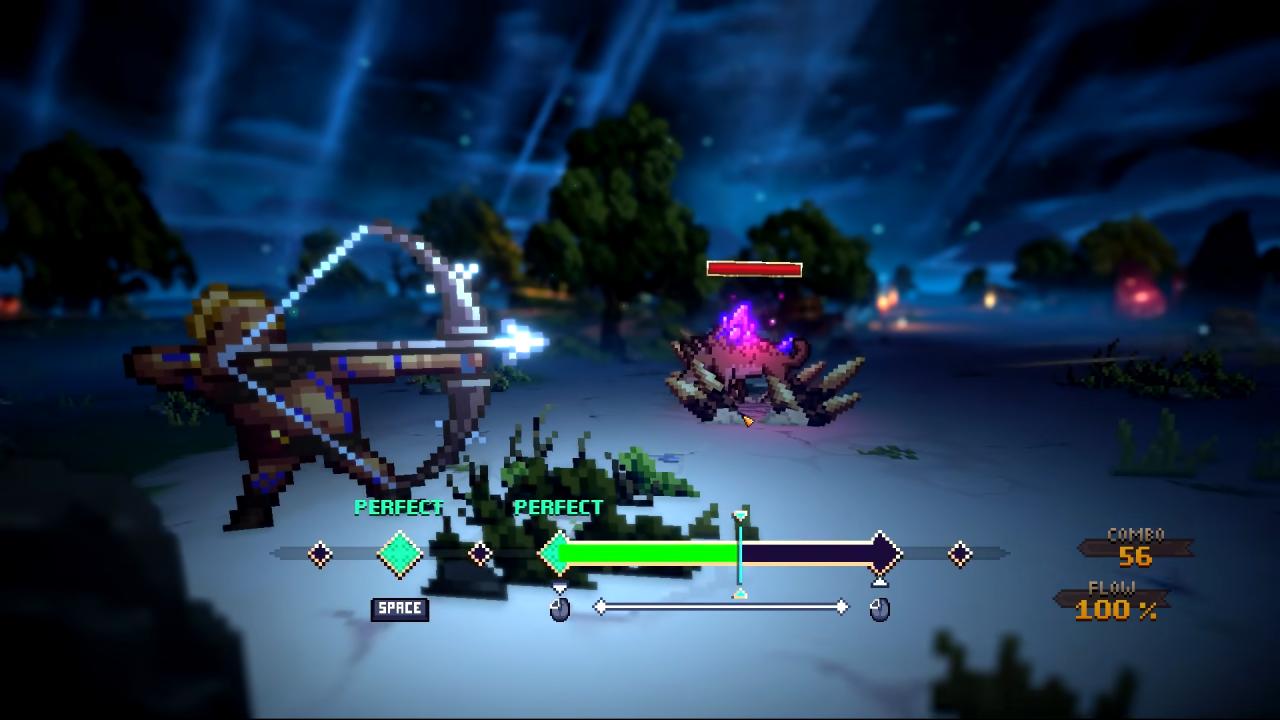
Another core ability is Heartbeat, which allows you to heal a single target two times. After use, it becomes a regeneration field, healing small amounts of health to nearby allies at the end of each turn. This gives a constant healing effect, which helps in longer fights.
Offensive rhythm-based abilities like Loud Banging require inputs to be repeated in the correct timing to increase damage output. This skill also applies the marked status effect, which causes enemies to take extra damage from future attacks.
Rhythm of Weakness is another utility skill that increases the damage enemies take for a limited time and also changes the aura to weaken any enemy within its range. It makes positioning more important since enemies caught inside it become significantly more vulnerable. This means you can concentrate fire and get rid of harder targets faster.
Take It From the Top is one of the strongest and most dangerous abilities. When used on an ally, it ends that ally’s turn and lets them take another action immediately. But it has a cost, as the ally you target takes damage based on how well you do during the rhythm sequence.
The best thing about Wardrum’s combat system is the rhythm mechanics combined with tactical decision-making.
You’re not just responding to enemy turns or choosing abilities from a menu. Instead, you are actively timing inputs while thinking about position, movement, and enemy behavior. This makes combat more interactive than your standard turn-based system. The rhythm layer creates tension for all the action. Even simple attacks need timing attention, so you can’t just ride on repetition or passive decision-making.
It makes you mentally engaged throughout every turn, especially in longer fights where several abilities and effects overlap. On the flip side, this system can also be pretty demanding, depending on how familiar you are with the mechanics of rhythm. It can be a lot to keep track of movement, enemy positioning, and timed inputs, especially in fights with multiple enemies applying debuffs or changing the tempo.
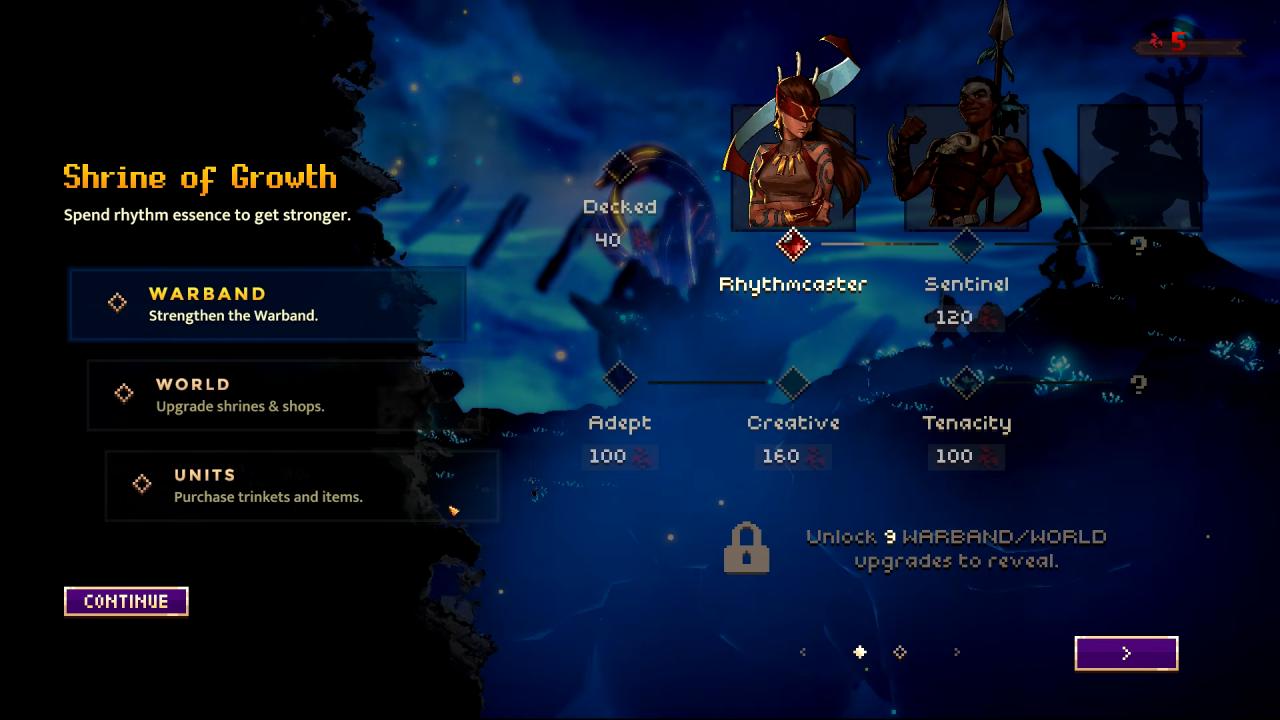
The keyboard and mouse controls work, but the system is more natural with a controller, especially when you get into the more complex sequences of abilities that require sustained timing accuracy. After every battle, you earn experience points to level up your characters. You can level up to learn new abilities and upgrades, and for some of them, you may choose between development paths.
This opens up a progression system where each unit slowly turns into a more specialized role based on how you want to build your team. Each character has a detailed progression screen as well, where you can see their stats, abilities, and growth options. There are a ton of party members in the game, but you can only have a few fighting at the same time, so you are constantly deciding which characters are worth investing in.
The progression system also connects to combat effectiveness. Stronger characters can not only do more damage or give better support, but they also handle rhythm inputs better via upgraded abilities. That means progression is not just based on numbers; it also impacts your ability to perform in combat scenarios.
It has a direct bearing on how well you can handle rhythm inputs in more complex skills. Your characters get stronger, so your execution gets smoother and more forgiving in the harder fights.
Wardrum features a rich pixel art style that changes based on location and biome.
Battlefields are built on a grid-based structure, with environmental features such as rocks, barrels, spears, and terrain differences. Each environment does have a slightly different feel to it, whether you're fighting in villages, forests, or nighttime areas lit by torchlight. During combat, clarity of the battlefield design is also important. Tiles you can move to are highlighted in blue. Attack ranges are highlighted in red when applicable.
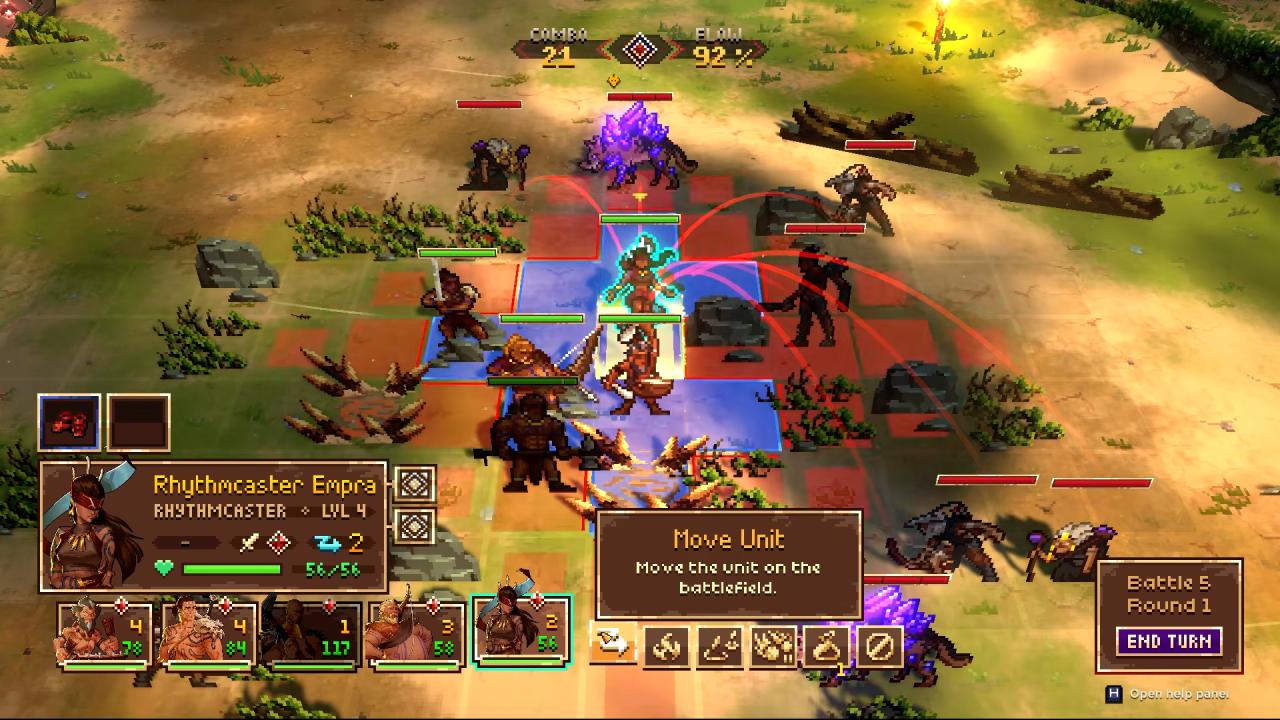
It’s a visual system that makes it easier to understand positioning during fast-paced turns, especially with multiple characters and enemies active at the same time. Sound design is an important component of supporting the rhythm system. Each attack and ability has audio feedback. The sound of weapons hitting is sharp, and there are heavier impacts and magical effects.
Atmospheric environmental audio, like rain, doesn’t take away from gameplay. The rhythm mechanic itself is very sound-based, using timing cues and musical changes to emphasize the importance of staying in sync with the beat.
Wardrum blends tactical strategy and rhythm-based gameplay, requiring both planning and precise execution. It creates a combat loop, and the level of success is dictated by how well you can control positioning and stay in sync with the musical inputs. This makes each battle more active and demanding, rather than passive or automatic.
Editor, NoobFeed
Verdict
Wardrum is a rhythm-tactical roguelike that blends turn-based strategy with timing-based combat, creating a challenging system where every move requires both planning and pressure-filled execution.
71
Related News
No Data.