

Wartorn Review
PC
A bold roguelite–RTS hybrid that's intriguing, uneven, and still finding its footing.
Reviewed by Arne on Nov 26, 2025
Real-time strategy games have always lived on the edge of calm and chaos. One moment, you are sitting there planning things, and the next moment, everything is on fire, and you are contemplating why you spent four hours building the perfect lineup only for them to be crushed within minutes.
The appeal is the same whether you're in charge of large fronts or small teams; your choices matter, and boy, do you have a lot of choices. In the RTS genre, the experience is defined by quick thinking and clear systems, and even minor changes can revitalize a well-known formula.
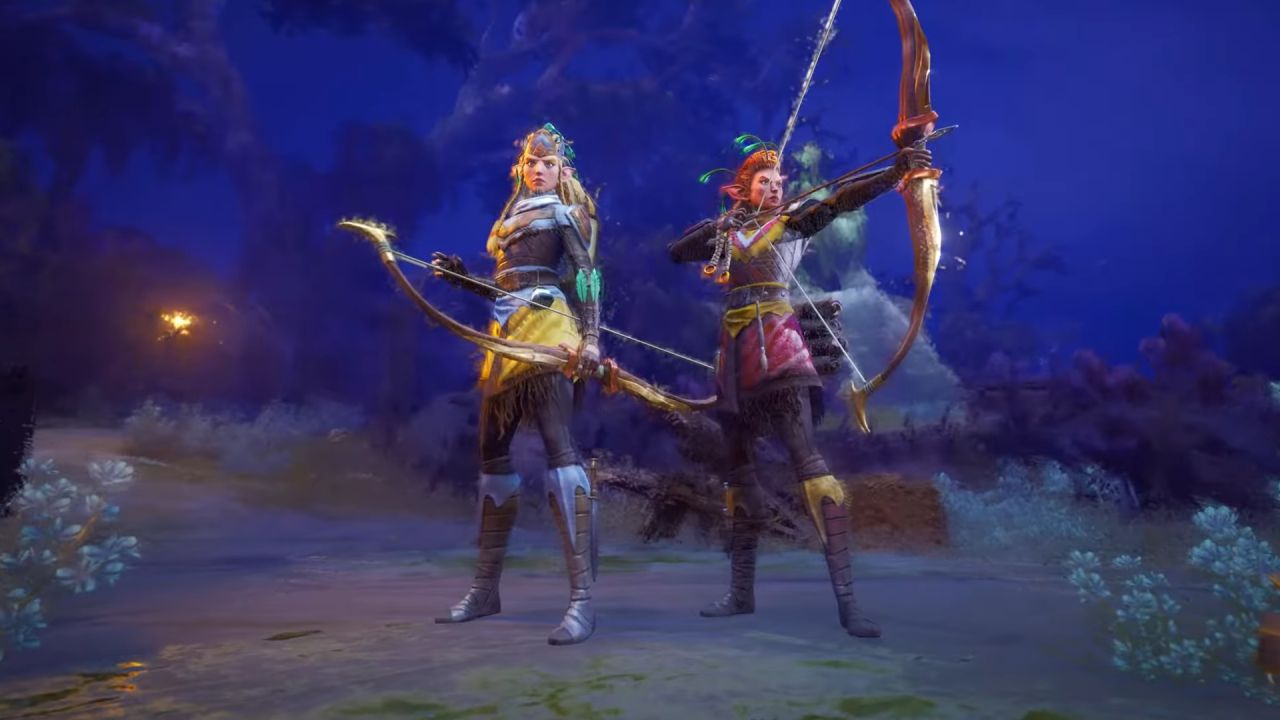
Wartorn is a bold blend of real-time tactics and roguelite design from Stray Kite Studios. The game places players in control of two sisters, Yara and Elani, as they travel across the war-torn Isles of Talaur in search of their ancestral home and family.
In Wartorn, you're guiding and leading a caravan that serves as your base. You recruit squads and go around a small map, killing the enemy or completing certain objectives. The roguelite structure means each run has its risks, and if you fail, you must start over.
Wartorn, like many games of the genre, starts very quietly and then drops you on the deep end. The opening hours act as a soft tutorial before tossing you into a hopeless first battle, and it is one you're meant to lose. Only afterward does the game unveil its core loop: every time you die, the world resets under the watchful eye of a mysterious cosmic stranger.
Even the pause button gets an in-world explanation, framed as an enchanted hourglass gifted by this entity. It's a clever touch that sets the tone early: narrative and mechanics are very tightly linked here.
Once Yara and Elani retreat to their besieged villa and quickly realize that standing their ground is pointless, the real journey begins. The heart of the game revolves around Hope, a shared resource that represents the pair's emotional stamina. Let it hit zero, and the cosmic stranger yanks you back to the villa, resetting the run. Its roguelite structure meets story-driven desperation, and it works surprisingly well.
When the caravan phase opens up, the game shifts gears into light base and resource management. A new interface introduces food, gold, refugees, and other essentials you'll need to keep your people moving. As your caravan grows, so do the decisions: who to bring, what to prioritize, and how far to push before Hope runs too thin.
Combat itself revolves around squad-based battles. Each squad is a small group of units with their own quirks, and you can only deploy a limited number for each scenario. Yara and Elani form their own squad, but you'll slowly unlock or recruit others as you progress.
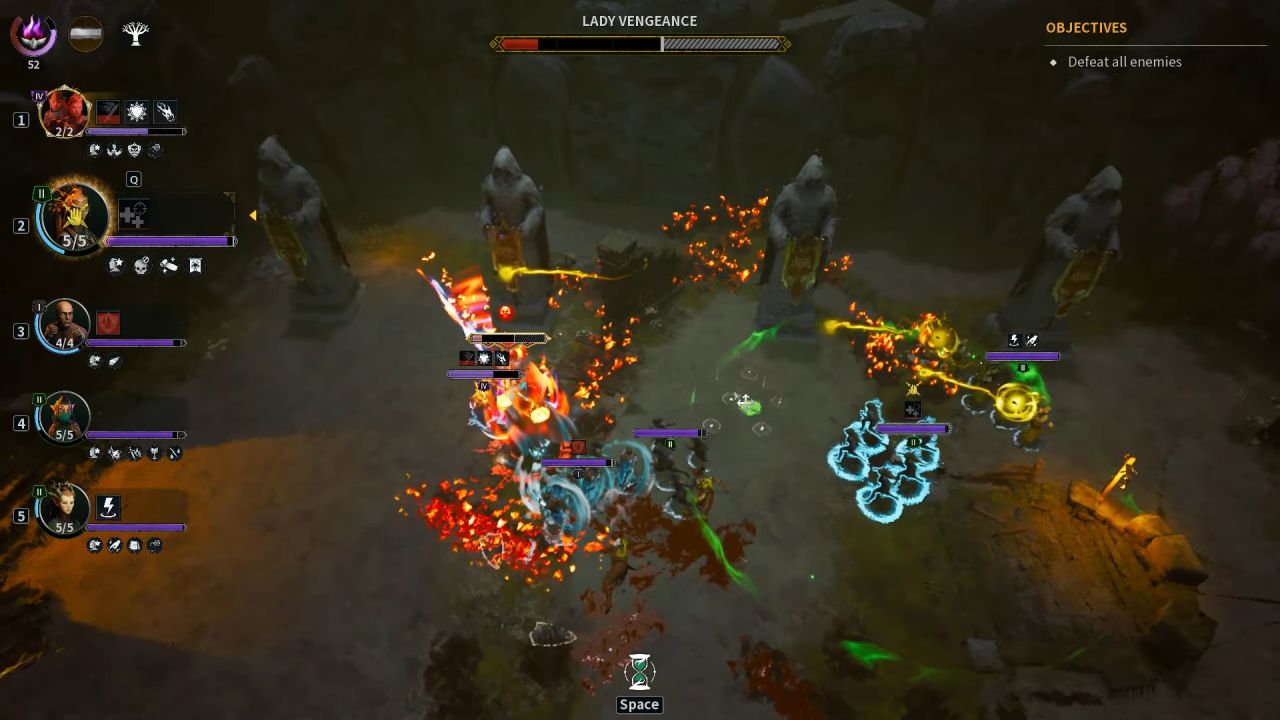
The game relies heavily on elemental interactions that combine in conventional ways. Each 'school' and power type has its specific effects, and some counter each other. The system is simple, but somewhat deep at the same time.
Your runs will slowly build momentum. Victories let you choose from three new squads or passive items. Story missions revolve around tracking down Yara and Elani's scattered family members. These family members expand the narrative and also serve as grand heirlooms that linger through your numerous runs. Even failed runs give you something, whether it's new upgrades, abilities, or knowledge of safer (or more dangerous) routes.
Events and encounters slow things down and either give you rewards or take away your resources. And because the caravan route splits up, you don't often follow a straight line. The squads you bring, the decisions you make, and whatever the route throws at you all mold each run into a brief journey.
Wartorn bills itself as a roguelite–RTS hybrid, and when the two halves click, it's genuinely engaging. But this is also where the game's biggest problems sit, because both systems lean heavily on one another, and not always in a healthy way.
The largest issue is meta progression. As expected in a roguelite, you're meant to grow stronger over repeated runs, but Wartorn ties far too much of your overall power to long-term upgrades. Progress feels slow to the point of stagnation; it can take ten hours or more before you notice even a slight improvement. Since survival on each run depends so heavily on these permanent buffs, balance starts to feel skewed.
Worse, the grind undermines the roguelite decision-making the game tries to encourage. Runs present you with choices, but because meta progression materials are the only things that consistently matter, everything else becomes secondary.
Combat has its share of frustrations as well. Pathfinding can get wonky, and you will have to constantly pause to correct things. Some missions are also simply broken. Enemies can often attack you from inaccessible terrain while your squads run around like headless chickens.
Several missing layers of tactical depth make things feel even flatter. There's no armor, no cover, no defense values; just HP bars, raw damage, and healing. Battles become a matter of "I hit you, you hit me," which feels especially limited when you're fighting uphill against swarms of enemies.
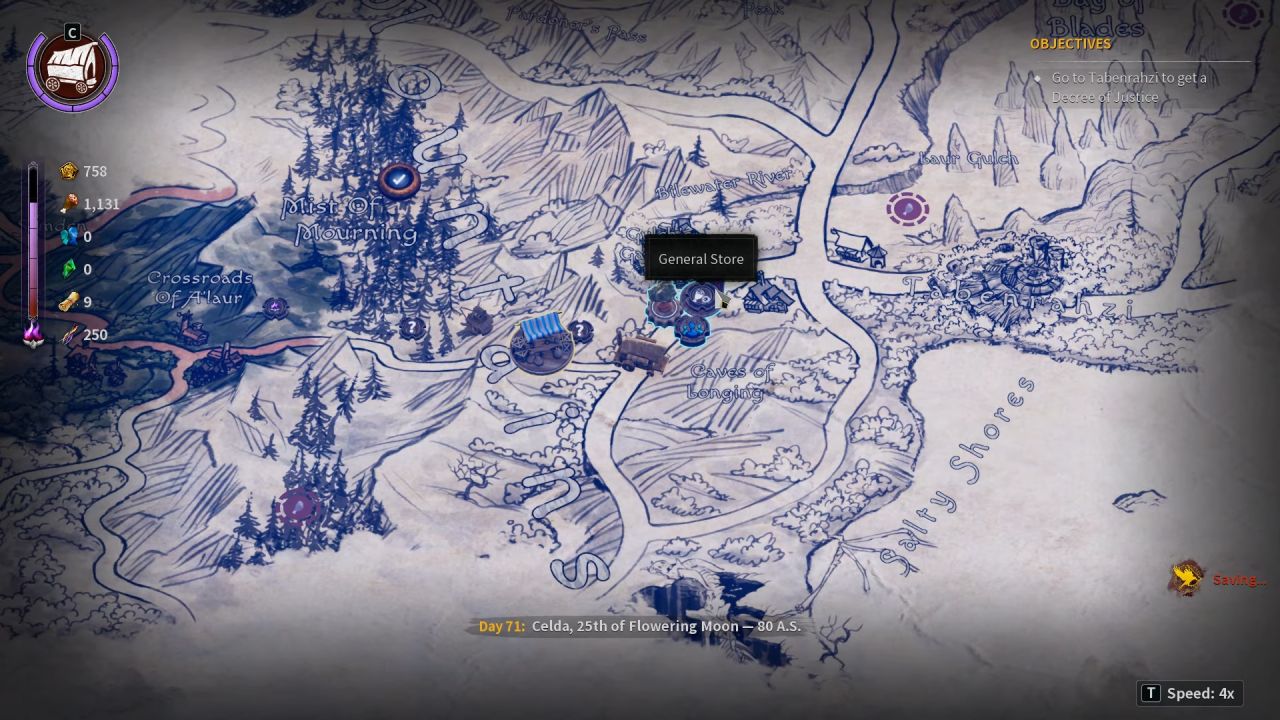
And it's not uncommon to be thrown into wildly unfair situations, like 16 enemy squads rushing your caravan while you can field only five. Combined with early-game events that can permanently remove squads from your roster before you've even built momentum, runs can feel doomed for reasons outside your control.
All of these things mainly contribute to making Wartorn feel like a game that confuses difficulty with attrition. Wherein, the game forces you to micromanage a lot and grind your way through progression, until numbers finally bend things in your favor.
It's not unplayable, but the mix of grind-heavy progression, lopsided difficulty spikes, shallow combat stats, and unreliable AI keeps the game from reaching its full potential. Wartorn's presentation lands somewhere between functional and uneven.
The game has a clear visual style, with harsh landscapes, caravans that move about, and battlefields always full of people. All of these things make the scene of a world under siege seem real. The art approach is more gritty than showy, which fits the tone, but it also means that several environments start to seem the same after a time. Everything looks fine; however, some terrain and unit designs start to feel a little too similar after a few runs.
The UI is in the same group. It's useful, easy to read, and simple, but not very creative. You will know where everything is and what the buttons do, but the interface doesn't make the experience much more memorable.
Given how often you pause and micromanage, the UI mostly does its job—but it also feels like it could have used a little more personality or refinement, especially for a game that expects players to live in menus between battles.
Audio fares better. The soundtrack leans towards being melodic. It adds a sense of tension and weariness that fits the game's vibe. Combat sounds punch through well enough, too, though after a while, they do get noticeably repetitive. The voicework in the game is limited, but the narration carries much more weight.
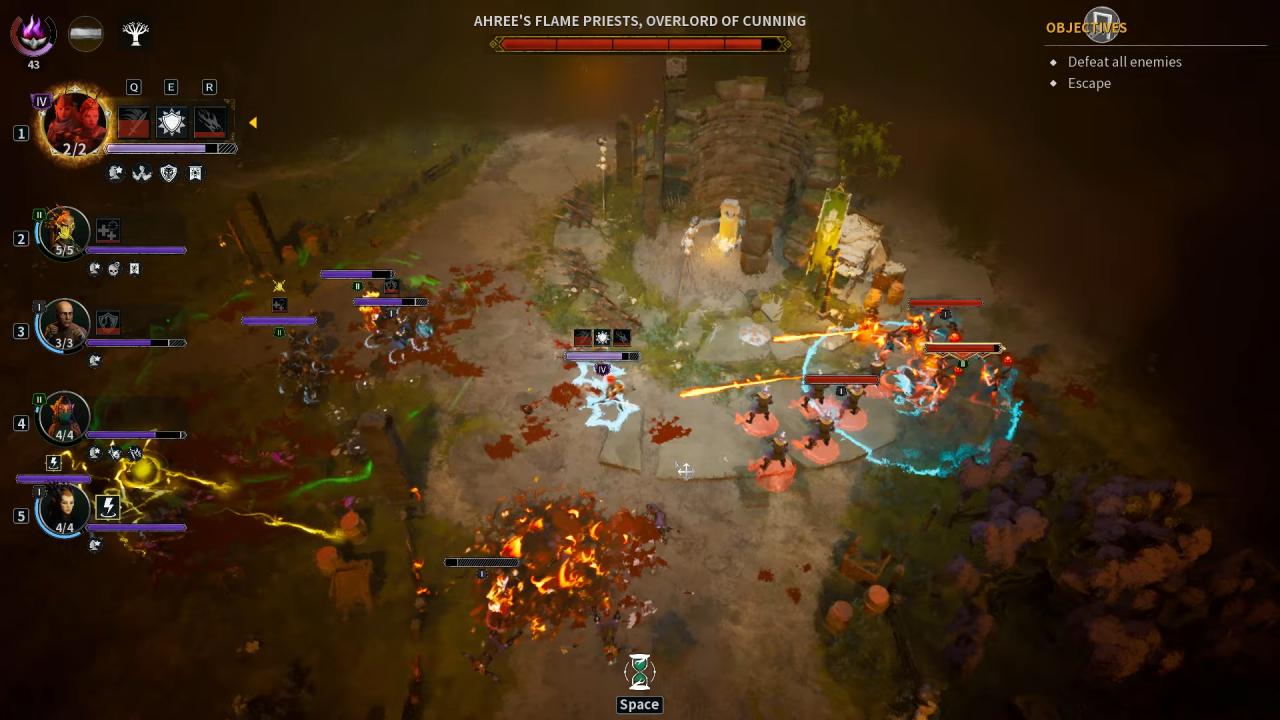
Overall, Wartorn's presentation is… fine. It never really gets in the way, but it doesn't push the experience to new heights either. The atmosphere is consistent, and the look and feel support the gameplay well enough, but you can't help but wish for a little more flair.
It could also make do with a sharper visual identity, a more polished UI, and audio that does more than just fill space. It works, but it isn't the part of the game you'll remember. Wartorn itself is a classic case of a great idea meeting uneven execution. The roguelite structure, the elemental combat mechanism, and the whole "caravan on the run" scenario are all very unique.
This is new and exciting in some way. It is very close to being a decent roguelite and a decent strategy game, but not really both at the same time. Progress relies too much on grinding; battles can be chaotic because of bad AI, and some maps seem more annoying than hard. You catch glimpses of something special, but it still feels like the game is trying to find the balance its ideas deserve.
Contributor, NoobFeed
Verdict
Wartorn has smart ideas and a fantastic atmosphere, but the battle isn't always fair, and the development is too slow. If you like strategy games that are a little out there, you might want to check this one out.
60
Related News
No Data.