
Guild Wars 2 Beginner's Guide | Gameplay Tips & Tricks
A complete, reader-friendly roadmap to servers, races, professions, UI, levelling, and what to do at 80.
Game Guide by Faviyan Mustafiz on Oct 10, 2025
This beginner-friendly Guild Wars 2 guide walks you through the first steps in 2025—from choosing a region and race, to understanding professions and elite specializations, navigating the interface, leveling efficiently, and diving into endgame modes like Fractals of the Mists, Raids, Strike Missions, Structured PvP, and World vs. World.
You will see how everything fits together, what to unlock when, and how to set up a character that feels great to play long-term.
Server Selection
Server selection is simple compared to many MMOs. Choose the Europe or Americas data region. You cannot play cross-region between these two. Historically, the main limitation was World vs. World (WvW), but recent world restructuring changes now group worlds differently within each region.
Playable Races
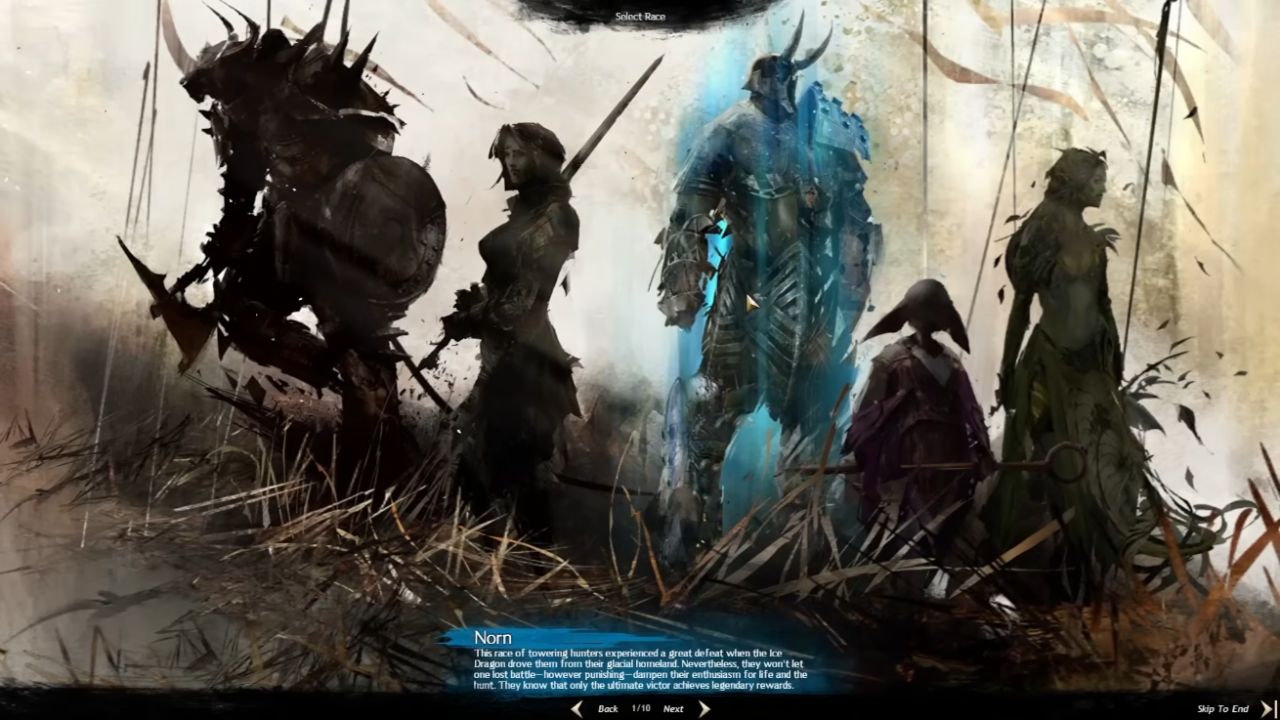
Race choice affects story flavor in the early levels and the look of your character, not performance. You can choose Charr, Human, Norn, Asura, or Sylvari.
Some races have unique racial skills, but profession skills outshine them quickly. The early personal story branches by race and converges into a centralized plot later, so pick what you enjoy visually and thematically.
Classes (Professions) and Elite Specializations
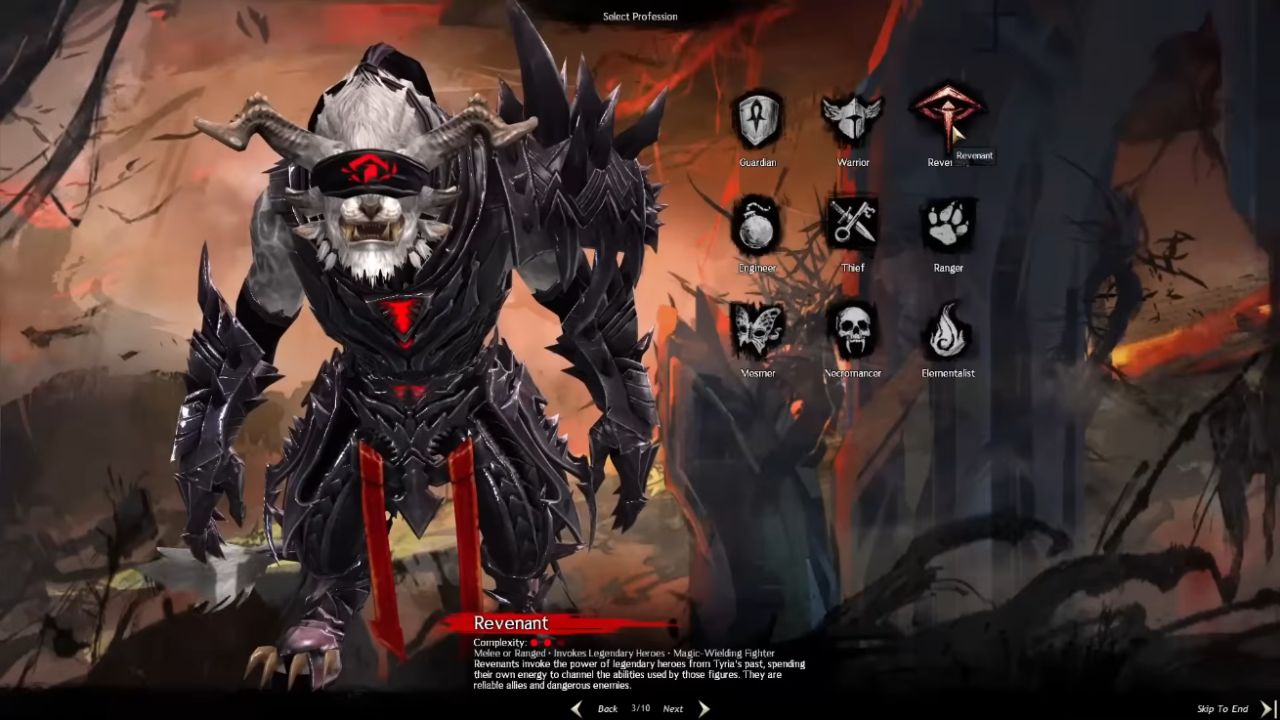
Profession choice dramatically changes gameplay. There are nine professions across three armor weights, and each has three elite specializations unlocked through expansions.
Soldier professions include Guardian, Warrior, and Revenant. Adventurer professions include Engineer, Thief, and Ranger. Scholar professions include Mesmer, Necromancer, and Elementalist.
The Guardian is a melee-leaning group support with burning and strong defensive options. Elite specializations are Dragonhunter, Firebrand, and Willbender.
The Warrior is a high-tempo melee combatant with shouts and adrenaline-fueled burst skills. Elite specializations are Berserker, Spellbreaker, and Bladesworn.
The Revenant requires an expansion and channels legends for power, managing energy, and stances. Elite specializations are Herald, Renegade, and Vindicator.
The Engineer wields kits, gadgets, and explosives for remarkable versatility. Elite specializations are Scrapper, Holosmith, and Mechanist.
The Thief excels at stealth, mobility, and outplays, using initiative instead of cooldowns for weapon skills. Elite specializations are Daredevil, Deadeye, and Specter.
The Ranger commands a pet and mixes ranged and melee tools; it is forgiving and strong solo. Elite specializations are Druid, Soulbeast, and Untamed.
The Mesmer manipulates clones and illusions to confuse and control. Elite specializations are Chronomancer, Mirage, and Virtuoso.
The Necromancer leverages Death Shroud, minions, and conditions, with big forgiveness and power. Elite specializations are Reaper, Scourge, and Harbinger.
The Elementalist swaps among four attunements—Fire, Water, Air, and Earth—to adapt moment to moment. Elite specializations are Tempest, Weaver, and Catalyst.
Each elite specialization is tied to an expansion—Heart of Thorns, Path of Fire, End of Dragons, Secrets of the Obscure, or Janthir Wilds—and requires Hero Points to unlock once at level 80.
First Login and User Interface
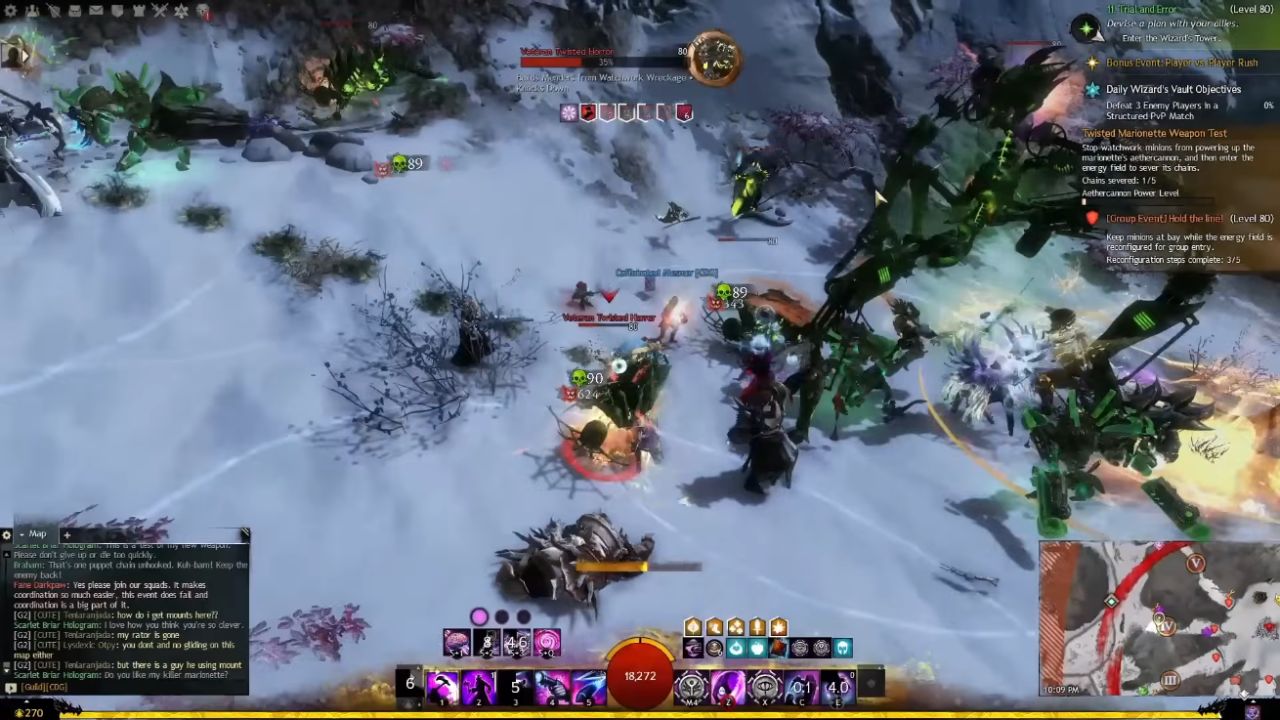
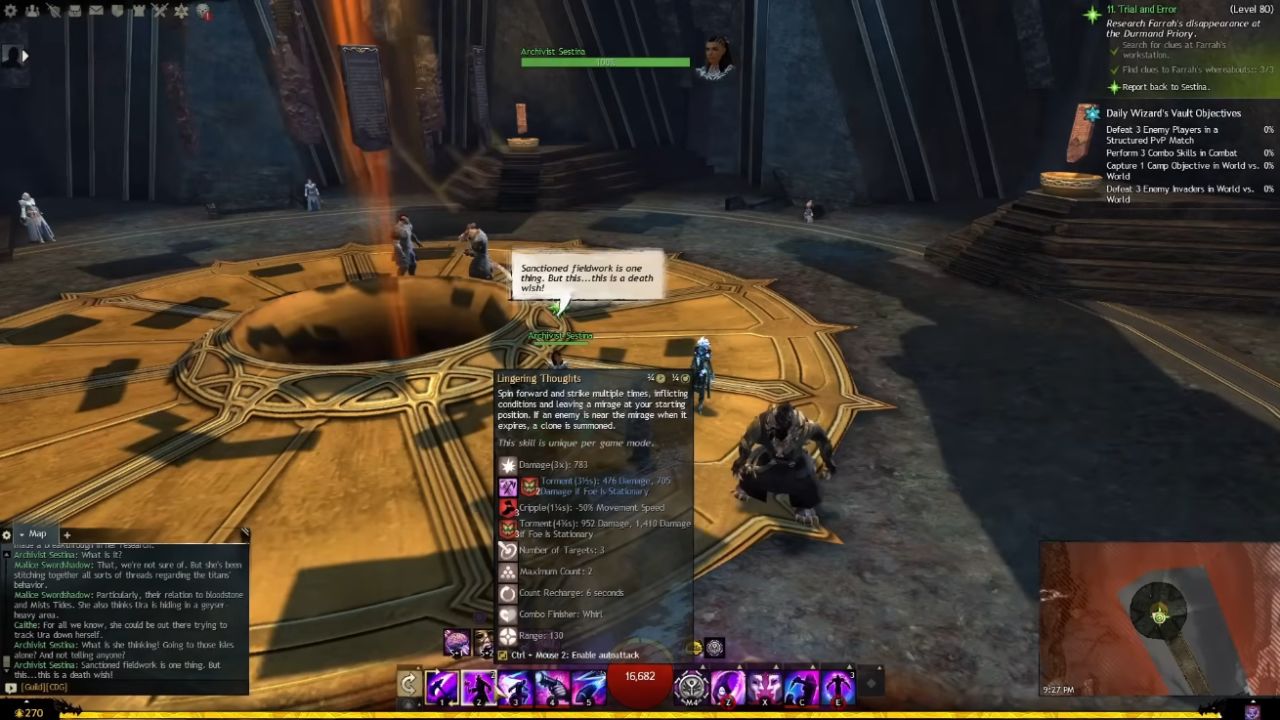
After logging in, look to the top left for the main menu and party information, and to the top right for your active story step (highlighted in green), tracked achievements, and bonus events.
The bottom left houses chat; the bottom right contains the minimap. Along the bottom, the hotbar shows profession mechanics, weapon skills, utility slots, mount toggle, health, endurance, and an experience bar that becomes a mastery track at max level.
Main Menu Overview
The Game menu lets you log out, exit, tweak options, and get support from ArenaNet. Contacts show friends, Looking For Group categories per zone and activity, followers, and blocked accounts.
The Hero Panel and Character Progression
The Hero panel contains everything: equipment, build templates, elite specializations, story, crafting, achievements, masteries, and more. Equipment displays what you are wearing and any inventory items that fit your profession.
The Wardrobe and Outfits let you change appearances; wardrobe changes use Transmutation Charges, while dye changes are free. Glider skins tie to Gliding (from Heart of Thorns), and Mounts show all nine unlocked creatures and their skins.
Fishing and Skiffs arrive with End of Dragons. Novelties include chairs, instruments, handhelds, and permanent tonics. The Jade Bot (from End of Dragons) adds helpful open-world functions. Miniatures are cosmetic companions. Finishers are animations to eliminate downed foes. Mail Carriers reskin your incoming mail.
Building, Training, and Templates
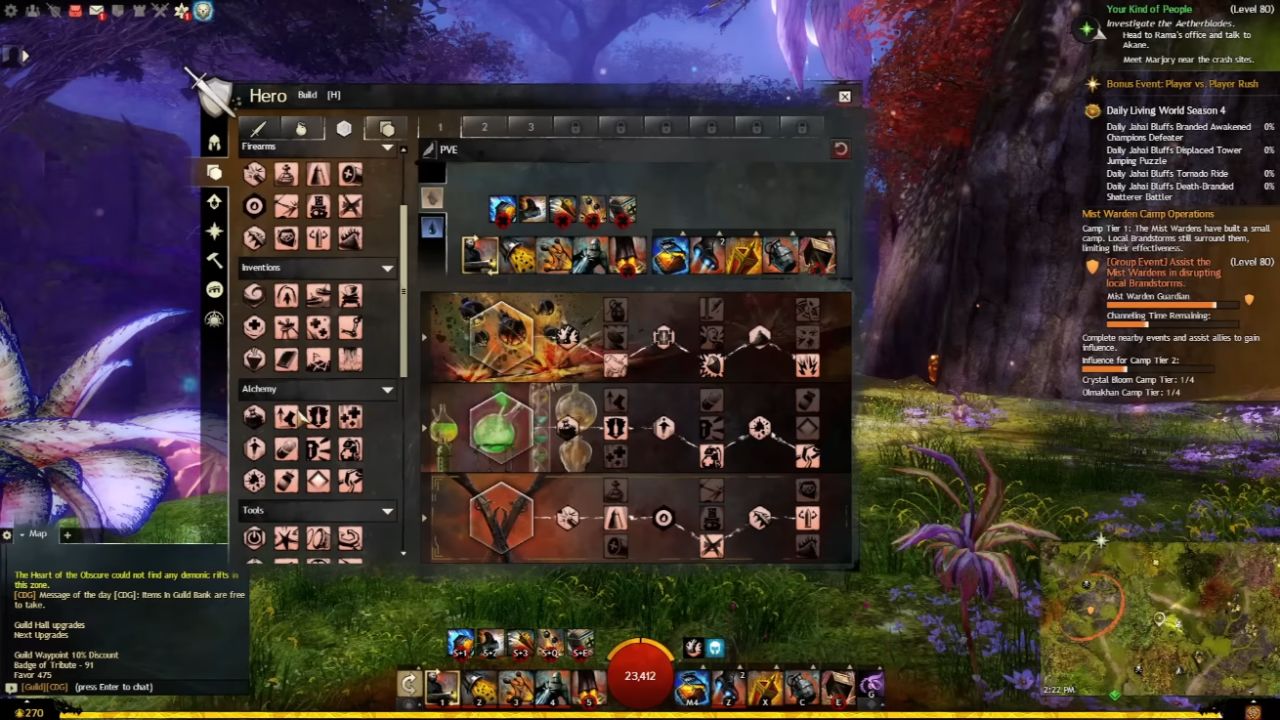
The Build tab covers weapon skills, utility skills, trait lines, and build storage. Some weapons are tied to elite specializations unless you have Weaponmaster Training.
At 80, you have full core trait lines plus one elite specialization at a time. Training lets you spend Hero Points earned as you level or from open-world Hero Challenges. Experiment to find a playstyle that feels right.
Story Journal and Expansions
The Story tab lists Personal Story, Living World Seasons 1–5 (The Icebrood Saga), and expansions—Heart of Thorns, Path of Fire, End of Dragons, Secrets of the Obscure, and Janthir Wilds.
Once owned, stories can be played in any order and replayed at will. Watch for frequent expansion sales and bundles; for instance, Heart of Thorns plus Path of Fire together grant Gliding and Mounts in one purchase.
Crafting, Achievements, and Masteries
Crafting is efficient for leveling and essential for many endgame Legendary items. It can be pricey early on, but it pays off for account-wide flexibility. Achievements range from points and titles to gear and legendary components.
Masteries are account-wide progression tracks after level 80 and unlock powerful traversal and utility; you must earn Mastery Points and train each region's track in its corresponding maps.
Inventory, Mail, and Guilds
Inventory includes a currency panel. Shared Inventory Slots at the top let you pass items among characters easily. The Mail tab shows messages from other users and ArenaNet. In the Guild tab, you can join multiple guilds and swap freely; this is where you access guild information.
PvP and WvW Access
After finishing your opening instance, you unlock Structured PvP (sPvP) and World vs. World (WvW). In WvW, huge groups fight over objectives across several maps; you earn a separate WvW rank with perks like gliding in WvW maps.
In sPvP, you enter a lobby and play normalized 5v5 matches in ranked or unranked modes, with rewards including currencies and even legendary gear from the leagues.
Wizard's Vault and the Black Lion Trading Post
The Wizard's Vault is the modern daily/weekly system that awards Astral Acclaim for completing tasks. You can buy cosmetics, gold, and starter legendary kits here, with legacy items rotating in over time.
The Black Lion Trading Post includes the Gem Store for account upgrades and cosmetics, the currency exchange (gold ↔ gems), and the trading market to buy and sell items quickly.
Your First 10 Levels
After the introductory story instance, you are dropped into your starting zone. There is no green story step until level 10, so explore to progress. Map completion activities—Renown Hearts, Hero Challenges, waypoints, vistas, and Points of Interest—all grant experience. Dynamic events occur in real time and scale with participation.
As you level, more of your weapon and utility bars unlock, and your profession mechanic opens up. Check the Character Adventure Guide in Achievements for easy early XP milestones.
Leveling to Max
You do not have to finish every story beat while leveling. If exploring and doing events is fun, you will naturally outlevel zones quickly. It is efficient to move to maps that match your current level for better XP and updated gear. Downscaling makes your stats fit lower-level maps while keeping your full kit. Playing the game organically will get you to 80 fast.
Endgame Overview
At 80, the game opens in many directions. You can pursue story episodes you own, unlock elite specializations, and choose activities that fit your preferences. There is no traditional gear treadmill; once you obtain top-tier stat sets, you are set, and account progress often benefits all characters.
Open World Meta Events
The open world is a standout strength, with large-scale meta events and world bosses firing off on timers across Tyria. You can jump into epic encounters for loot, achievements, and fun cooperative play.
Dungeons
Dungeons remain accessible for cosmetics and uniques, scaling you down when revisiting. They are less populated than other modes, but still worth doing for collections and nostalgia.
Fractals of the Mists
Fractals are bite-sized endgame instances with scalable difficulties, special modifiers, and the Agony condition at higher tiers. You mitigate Agony with Agony Resistance via infusions. Fractals are excellent daily gold and gear sources once you learn the rotations and mechanics.
Raids
Raids are fights between 10 players that were added with additions like Heart of Thorns, Path of Fire, and Janthir Wilds. They need to work together and have equal responsibilities. Emboldened mode changes every week and gives groups small buffs after wipes to help them move forward.
Strike Missions
Strikes are single-boss 10-player instances tied to the story and daily rotations. Challenge Modes exist for End of Dragons and onward. Strikes are quick, rewarding entries into organized PvE with currencies for gear.
Structured PvP (sPvP)
sPvP delivers normalized 5v5 combat where builds are crafted via amulets, runes, and relics rather than PvE gear. Ranked unlocks at PvP rank 20 and awards unique currencies and skins, up to legendary components.
World vs. World (WvW)
In WvW, you battle across borderlands and Eternal Battlegrounds for territory control. With world restructuring (as of mid-2024), you are placed into teams intended to balance populations, with matchups rotating periodically and Alliances planned further ahead. WvW grants ranks, titles, gear, and chaotic, large-scale fun.
Other Endgame Activities
Beyond the big modes, dig into RP, mount races, achievement hunting, legendary crafting, Homesteads (added with Janthir Wilds), gold farming, fashion and collections, Convergences, and more. Tyria is designed to keep you busy without pressure to log in daily.
Expansions and Story Arc
There are five add-ons. You have to fight the Elder Dragon Mordremoth in the Maguuma Jungle in Heart of Thorns. The Path of Fire takes you to Balthazar through the Crystal Desert. End of Dragons takes you back to Cantha to finish the Elder Dragon story. Secrets of the Obscure looks into the Wizard's Tower and the dangers that lie beyond the veil.
Janthir Wilds sends you north at the behest of the tower's wizards to address an existential danger. Interwoven Living World seasons add zones, systems, and story between these releases.
New Player Tips
Treat Guild Wars 2 as a game you can enjoy at your own pace. There is no mandatory treadmill, and account unlocks often benefit your alts. There is no single correct way to play—explore, experiment, and gravitate toward the modes and professions you enjoy most.
Also, check our Guild Wars 2 Review and other guides below:
Contributor, NoobFeed
Latest Articles
No Data.