
WWE 2K26 Guide | How to Master MyGM Mode
Here's a guide on how to master MyGM mode in WWE 2K26.
Game Guide by Rubaiyat Shihab on Apr 07, 2026
In WWE 2K26, MyGM puts you in the role of a general manager. You draft a roster, book weekly shows, manage rivalries, handle superstar morale, and try to build the most popular brand by the time WrestleMania closes out the season.
You can play solo against AI opponents, compete locally with friends, or go head-to-head online with up to four players at once. The goal isn't just winning the ratings war. It's also about earning Hall Of Fame trophies by completing seasonal challenges and career achievements.
One thing to know before going online: Online MyGM sessions disable Custom GMs, Custom Rosters, and the ability to play or spectate matches. Keep that in mind if you plan to play with friends remotely.
This entry pushes the mode further than previous ones. Seasons now run 50 weeks, budgets go up to $7M, and a new Immortal difficulty setting sits above Extreme for players who found the old ceiling too easy.
How To Set Up A MyGM Season
Picking Your GM And Brand
Your starting choices matter more than they might look. Each of the 20 General Managers comes with an exclusive Power Card, and each brand has its own as well. Finding a GM and brand whose cards work well together gives you a real early edge.
The three new GMs added in WWE 2K26 are Bobby Heenan, Stacy Keibler, and the Anonymous General Manager. There's also a fully customizable slot. GMs who have playable in-game movesets, like CM Punk, can now be drafted onto your active roster, so you can run Punk as your GM and still have him compete in matches.
Here's what each brand starts with. Raw gets This Is War, which blocks three rival superstars from being booked the following week. SmackDown gets Birth Of Legends, which boosts six random roster superstars by six popularity points. NXT gets Fighting Champion, giving a large rating boost to all title matches that week. NXT 2.0 gets Fresh Meat, which cuts 50 percent off the next three free agent signings. WCW gets Classically Trained, extending all legend contracts by three weeks. ECW gets Extreme Rules, blocking three rival champions from appearing the next week. NXT Mutiny gets Ruthless Terms, which collects the full contract price for the next three superstars released.
Season Settings Worth Adjusting
The default season runs 50 weeks, which is a jump from previous entries and gives more room for long-term storytelling. Budgets run from $3M to $7M, with $5M as the starting point. Larger budgets support rosters of around 20 to 35 superstars per brand, which opens up more booking options each week.
A few settings are worth thinking about before you start. Immortal Difficulty is a new tier above Extreme for players who want a harder challenge. The Power Card Store Toggle lets you turn off direct card purchases, so every card has to be earned through goals and challenges. Booking Timer Pause is now on by default, meaning the week timer doesn't start until you manually trigger it, giving you time to check emails and roster health first. The Win Condition can be set to Fans or Hall Of Fame Trophies, which changes how you approach your season goals. If you want to earn cards the hard way, disable the Power Card Store at setup. It makes every boost feel like it was actually earned.
How The Draft Works
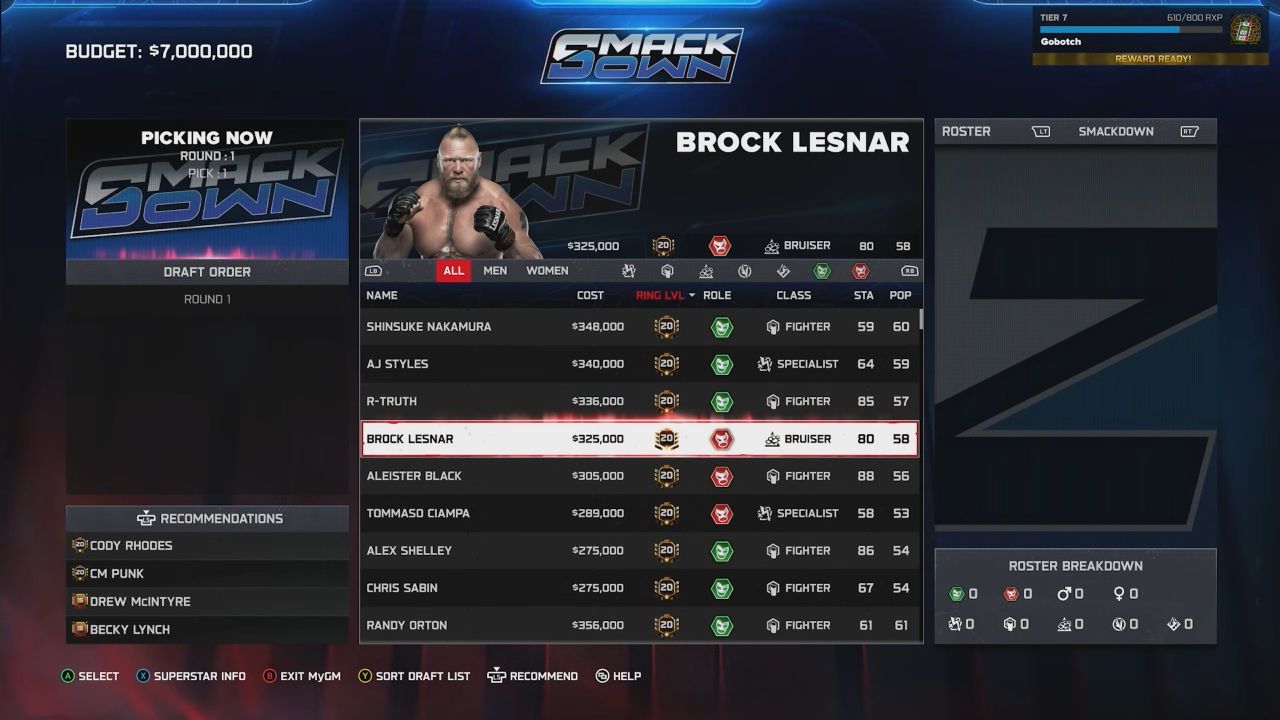
The draft runs for a minimum of nine mandatory rounds. After that, drafting is optional and you can stop whenever you want to preserve budget for show operations. Drafting more superstars than you can afford to book is one of the most common early mistakes, and it locks you into standard matches for the first several weeks.
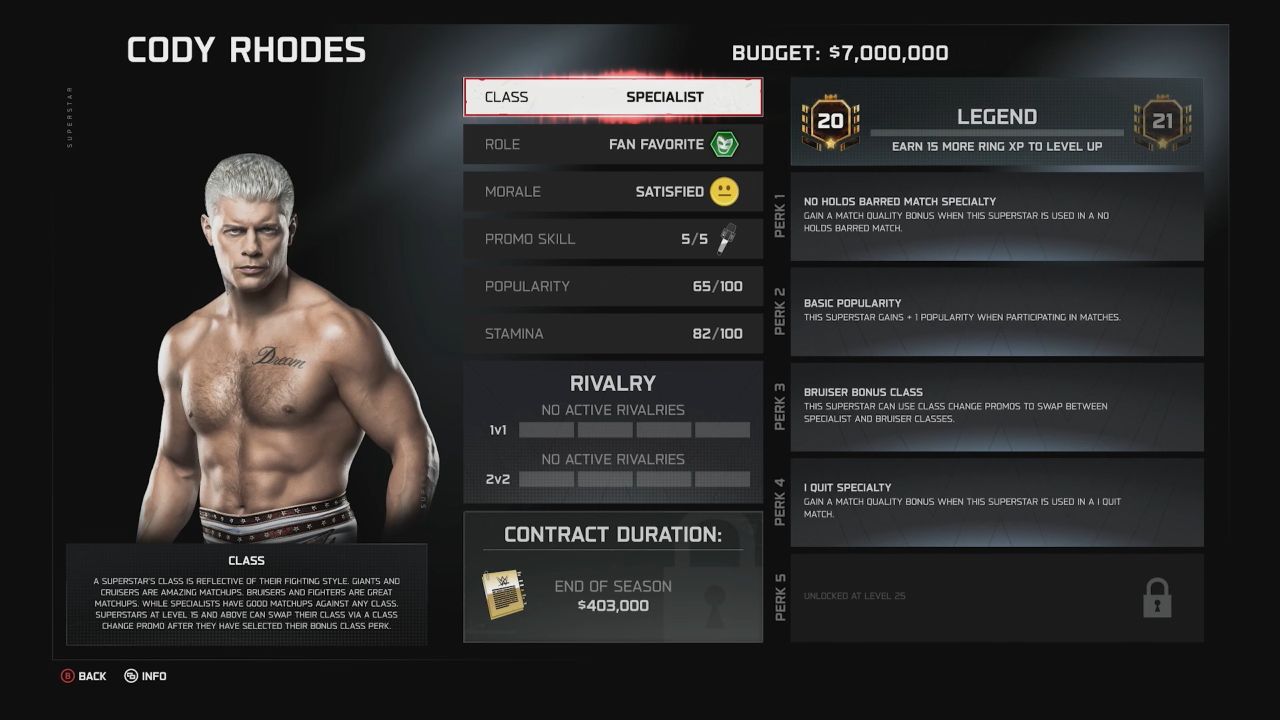
When you're evaluating picks, pay attention to class matchups. The game gives better ratings to matches between complementary classes. Giants against Cruiserweights, Fighters against Bruisers, and Specialists tend to work well against almost anyone. Booking a Face against a Heel also improves match ratings. Stacking both factors at once, like a Face Cruiserweight against a Heel Giant, pushes ratings even higher.
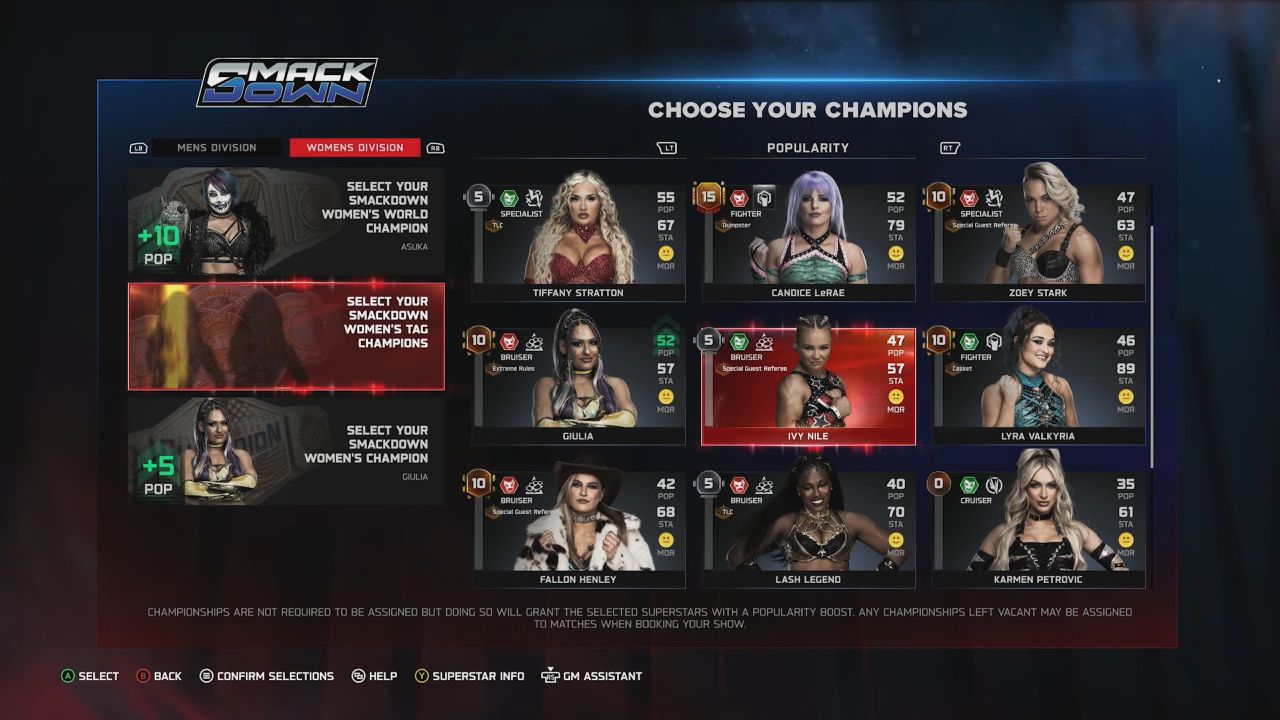
After the draft, you pick your starting champions. Title matches come with a built-in rating boost and champions get a popularity bump, so choose titleholders based on strategy, not just who has the highest overall rating.
New Match Types And Stipulations
WWE 2K26 adds more match types to MyGM than any previous entry. You're no longer capped at four-way matches. Five-way, six-way, and eight-way matches are now supported. So are three-versus-three and four-versus-four formats, Triple Threat Tag and Fatal Four Way Tag, and handicap matches in one-versus-two, one-versus-three, and one-versus-four formats.
New stipulations available to book on a weekly basis include Ladder Match, Battle Royal, Bloodline Rules, I Quit, Inferno, Dumpster, and 3 Stages Of Hell. The Elimination Chamber is exclusive to its own dedicated PLE. Intergender matches are fully supported and come with a small additional booking cost. Custom championships are available for offline play, including women's titles assigned to men's divisions or fully custom-created belts.
Special match types cost more in both budget and superstar stamina. Injury recovery times have been extended to match the longer 50-week season, so burning out your top stars early with back-to-back high-stakes matches will cause problems later in the season.
How To Book The Best Shows
The Drama Curve
Every weekly show is measured against an expected drama curve. You want a strong opener, a slightly lower-quality second match, escalating quality through the middle of the card, and your best match saved for the main event. Matching that curve as closely as possible is what drives your show quality score up.
The number of matches and promos you can book depends on difficulty. On Easy, a weekly show supports three matches and two promos. On Normal and Hard, it's four matches and three promos. On Extreme, it's five matches and four promos. Go Home Shows allow one additional match and promo slot at each difficulty.
Booking Promos
Promos aren't just filler. They build rivalries, shift superstar roles, and bring in money. A Self-Promo costs $2,500 and adjusts popularity based on mic skill. A Call-Out costs $3,000 and starts or advances a one-on-one rivalry. A Tag Team Call-Out also costs $3,000 and does the same for tag rivalries. Training costs $5,000 and increases a superstar's Ring XP. A Role Change costs $10,000 and flips a superstar's face or heel alignment. A Class Change also costs $10,000 and switches a superstar's class to their bonus perk class. A Charity promo costs $10,000 and provides a fan bonus along with a potential popularity boost. Advertising is free but carries a popularity risk if the promo performs poorly.
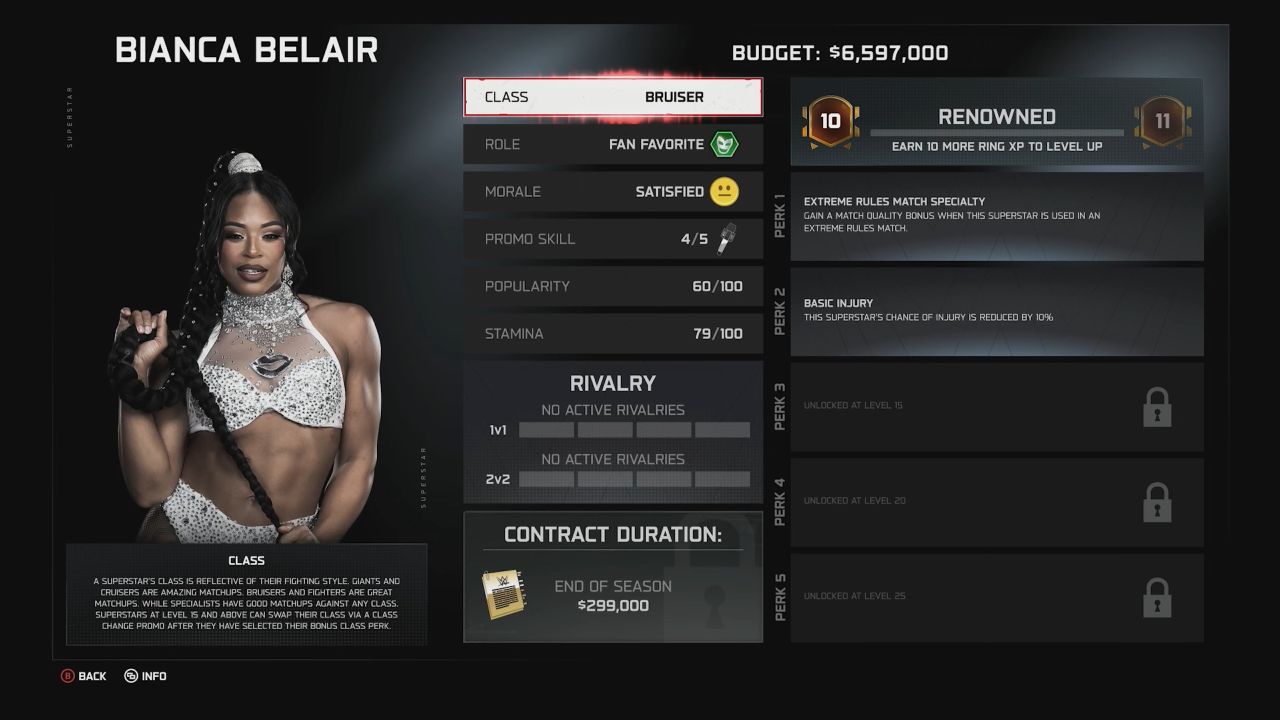
The new Invasion Promo is one of the most useful tools added this year. Sending a superstar with strong promo skills to attack a rival brand can pull fans directly away from them. A weak promo performer doing the same thing can backfire and send fans the other way, so choose carefully.
Booking a superstar for both a promo and a match on the same show is now possible, but it comes with a stamina penalty. If that superstar gets injured before the promo slot, the promo is automatically canceled and all its effects are lost.
Managing Rivalries
Rivalries run from Level 1 to Level 4, and higher levels produce better match ratings. You build levels through run-ins, call-out promos, and repeated matchups. Steel Cage matches give a 50 percent chance of advancing a rivalry level, though they resolve the rivalry once they end.
Don't drag a Level 4 rivalry on longer than it needs to go. Fan interest drops and match ratings follow. Save the Level 4 payoff for a PLE or a Go Home Show to get the most out of it.
PLE And Season Structure
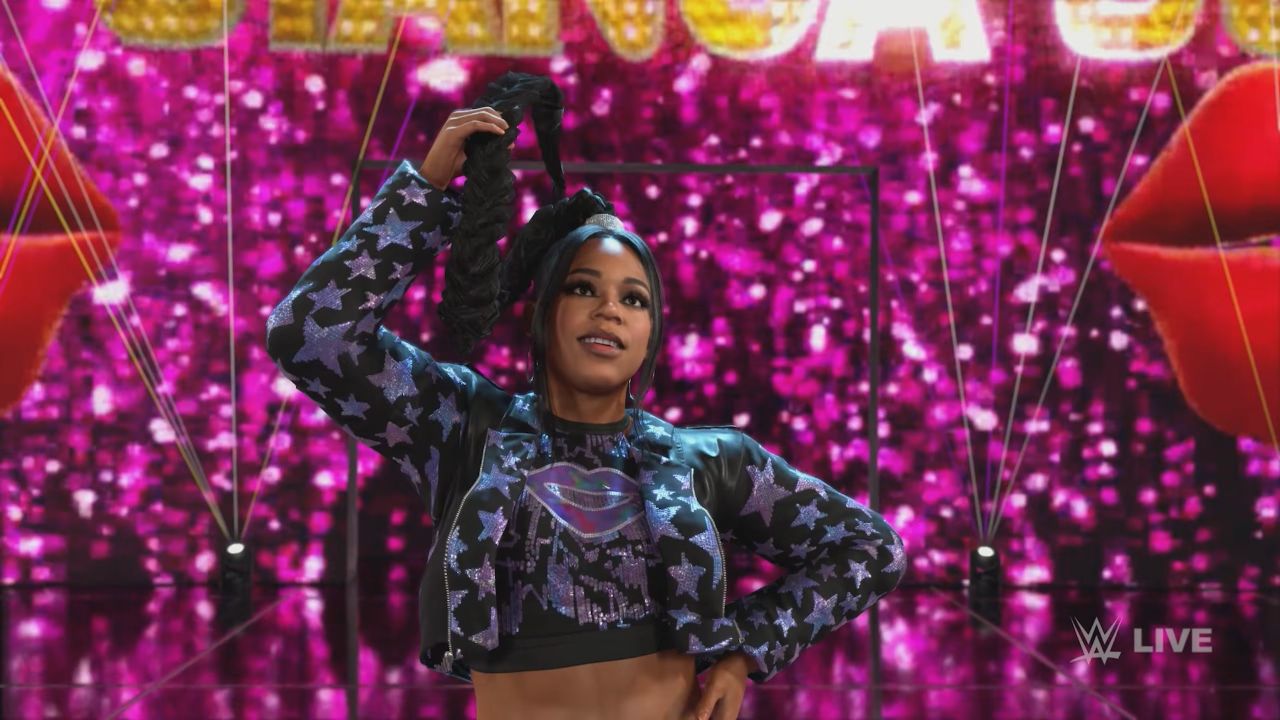
The 50-week season includes 16 PLEs in total, with 11 new events joining five returning ones. The returning events are Backlash, Hell In A Cell, Money In The Bank, SummerSlam, and WrestleMania. The new additions are Clash At Paris, Crown Jewel, Battleground, Evolution, Great American Bash, Halloween Havoc, Night Of Champions, No Mercy, Worlds Collide, Survivor Series: War Games, and Elimination Chamber.
PLEs are pulled automatically from a pool that fits the right time in your season calendar. Cross-brand PLEs now support six-way and eight-way matches. At Week 25, each brand can select up to six superstars to receive a major boost to both stamina and morale, which is designed to get your top stars ready for the stretch run to WrestleMania.
How The Superstar Journey System Works
Superstars earn XP through matches and training promos and move through six career ranks: Rookie, Established, Renown, Icon, Legend, and Immortal. Each new rank gives you a choice between two permanent Perks that provide passive benefits to the superstar, your show, or your brand.
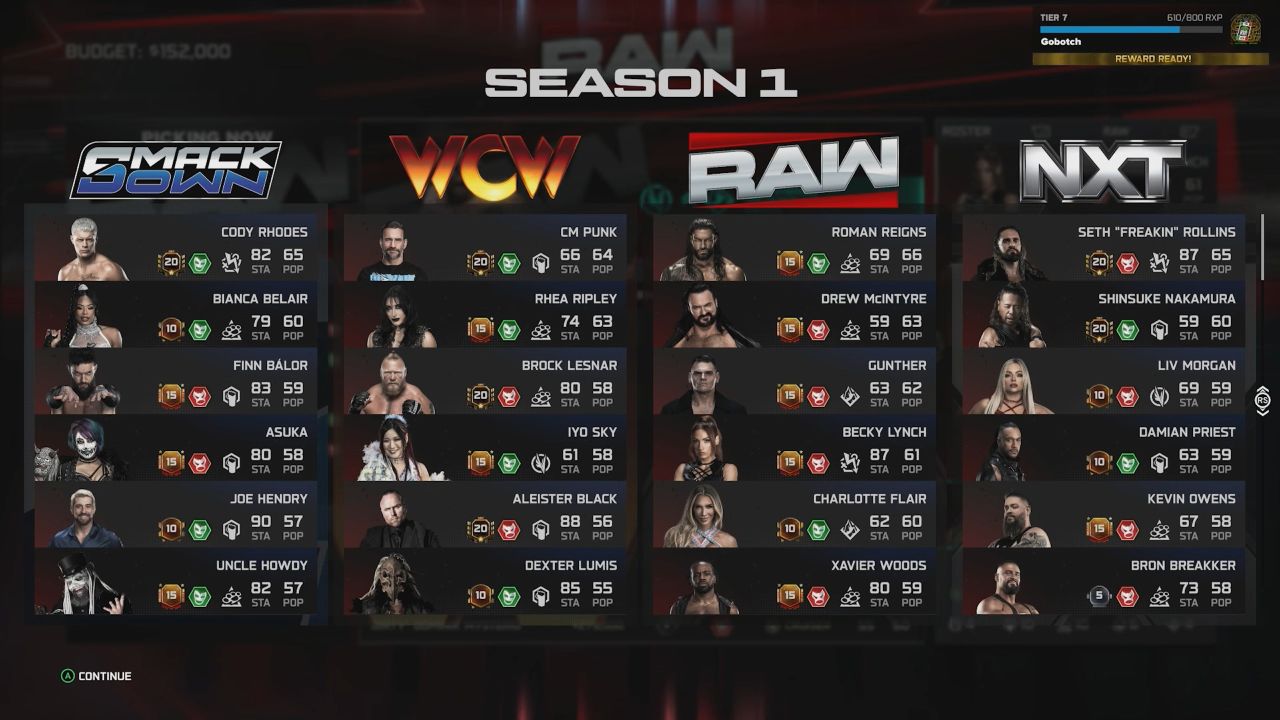
Perks are permanent once you select them and they travel with the superstar if they get traded. That means a rival GM can inherit the Perks you built up if you let a superstar go. Think carefully before releasing developed talent, and think twice before picking a Perk since you can't change it after the fact. Consider whether a superstar is a long-term piece of your brand or someone you might trade away before committing.
How To Win The Hall Of Fame
Every five Seasonal Challenges you complete earns a Hall Of Fame Trophy, and there are up to 20 challenges available per season. The Hall Of Fame induction triggers when any GM hits the required trophy count, at which point all GMs are ranked by the selected win condition, with cash as the tiebreaker.
Career Achievements also build your long-term legacy across saves and seasons. Key milestones include reaching 10,000,000 total fans, earning $100M in lifetime revenue, and finishing 10 seasons in second place or better.
Arena And Show Logistics
Show Logistics directly affect your weekly Show Quality score. Arenas range from a free High School Gym with 2,000 capacity and a $1.50 ticket price that adds five percent to show quality, up to a Colosseum with 50,000 capacity, a $4.00 ticket price, and a 20 percent show quality boost. Larger venues cost more upfront but bring in far more ticket revenue once your brand is generating consistent income.
Balance what you spend on logistics against what you have left to spend on matches. Putting everything into a Colosseum while only affording standard matches is not a winning formula early in a season.
Power Cards And Trade Week
Power Cards can be bought weekly from a rotating store of three random options, earned through Commissioner Goals, or obtained through seasonal challenges. In WWE 2K26, two of the five trade slots during trade weeks are now set aside specifically for Power Cards, so you can swap strategic boosts with rival GMs alongside superstar trades. In multiplayer sessions, a Power Card the other player wants can become a piece of leverage in deal-making.
Also, check our WWE 2K26 Review and other guides below:
Editor, NoobFeed
Latest Articles
No Data.