
AMD Zen 6, 24-Core Ryzen and Radeon 10000 Leaks
NVIDIA updates DLSS 4.5 while AMD reveals AM5 support, Zen 6 plans, and next-generation Radeon GPU developments.
Hardware by Naheyan Tahmin on Aug 27, 2026
Gamescom brought new hardware announcements from NVIDIA and AMD, including updates on AI rendering, ray tracing, future Ryzen processors, and next-generation Radeon GPUs. NVIDIA introduced DLSS 4.5 Ray Reconstruction, while AMD revealed platform support details for upcoming processors and continues developing new technologies for future GPUs.
NVIDIA has announced DLSS 4.5 Ray Reconstruction. The update moves Ray Reconstruction to NVIDIA's new second-generation transformer model, changing how ray-traced and path-traced games reconstruct missing visual information. Ray Reconstruction basically replaces the traditional denoiser used in ray-traced and path-traced games.
NVIDIA Releases DLSS 4.5 Ray Reconstruction
These games cannot trace an unlimited number of rays per frame, so they must reconstruct missing information. NVIDIA uses AI to handle that reconstruction. According to NVIDIA, the new model improves lighting accuracy, stability over time, and detail in motion. A key part of the update is that DLSS 4.5 Ray Reconstruction isn't locked to the RTX 50 series.
It works on every GeForce RTX GPU, meaning everything from the RTX 20 series through Blackwell gets the new model. Right now, you have to opt in to early-access updates through the NVIDIA app, then select the new Ray Reconstruction model through DLSS override. NVIDIA says the normal release is coming in September, while the override currently works in around 30 games.
NVIDIA also confirmed that 007 First Light is getting path tracing and DLSS 4.5 Ray Reconstruction on September 15. Control Resonant is also getting full path tracing. Gears of War E-Day is adding NVIDIA's RTX Mega Geometry technology, which is designed to make highly detailed geometry significantly easier to ray trace.
NVIDIA also showed off several other upcoming DLSS 4.5 games and announced new RTX remake updates, including a Morrowind RTX project. The company also confirmed more support for its upcoming RTX Spark PCs. There were no announcements for a new GPU, but Gamescom was still used to highlight NVIDIA's upcoming rendering technologies and hardware support.
AMD Confirms Next-Generation Desktop Support on AM5
AMD has also revealed details about its next-generation desktop platform through new entries in its technical information portal. The company now lists both Olympic Ridge and Medusa 1. Olympic Ridge has been leaked as AMD's next-generation desktop Ryzen platform, and the listing shows support for AM5. That means the next generation will be supported on the current platform.
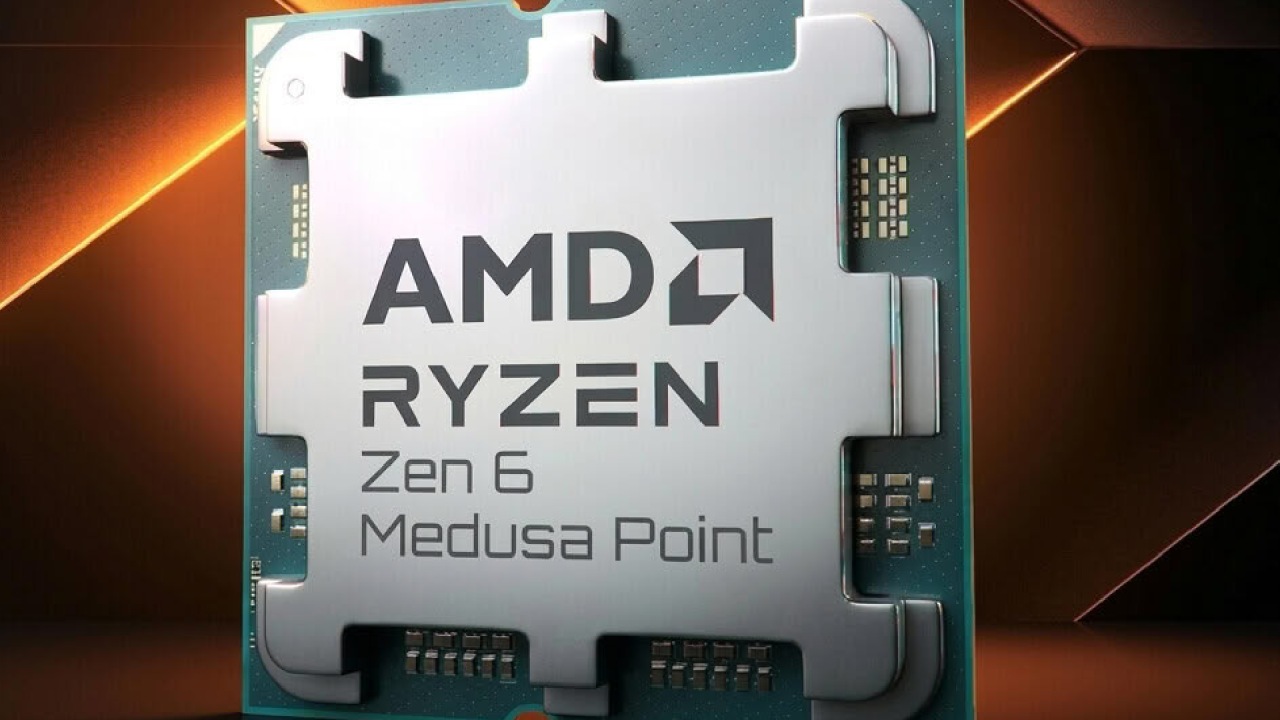
Medusa 1, also known as Medusa Point, is set to be AMD's Zen 6-based mobile processor platform. It will be supported on both FP10, the mobile socket, and AM5. This points toward next-generation desktop APUs coming to the platform. AMD has not announced motherboard compatibility, so it is unclear whether every existing model will be supported.
2027 is shaping up to be a year focused on AMD's next-generation desktop CPUs and gaming GPUs. Ryzen 10000, or whatever the processors end up being called, is based on AMD's next-generation Zen 6 architecture, which is confirmed to be built on TSMC's 2nm node. That represents two node jumps from Zen 5's 4nm process.
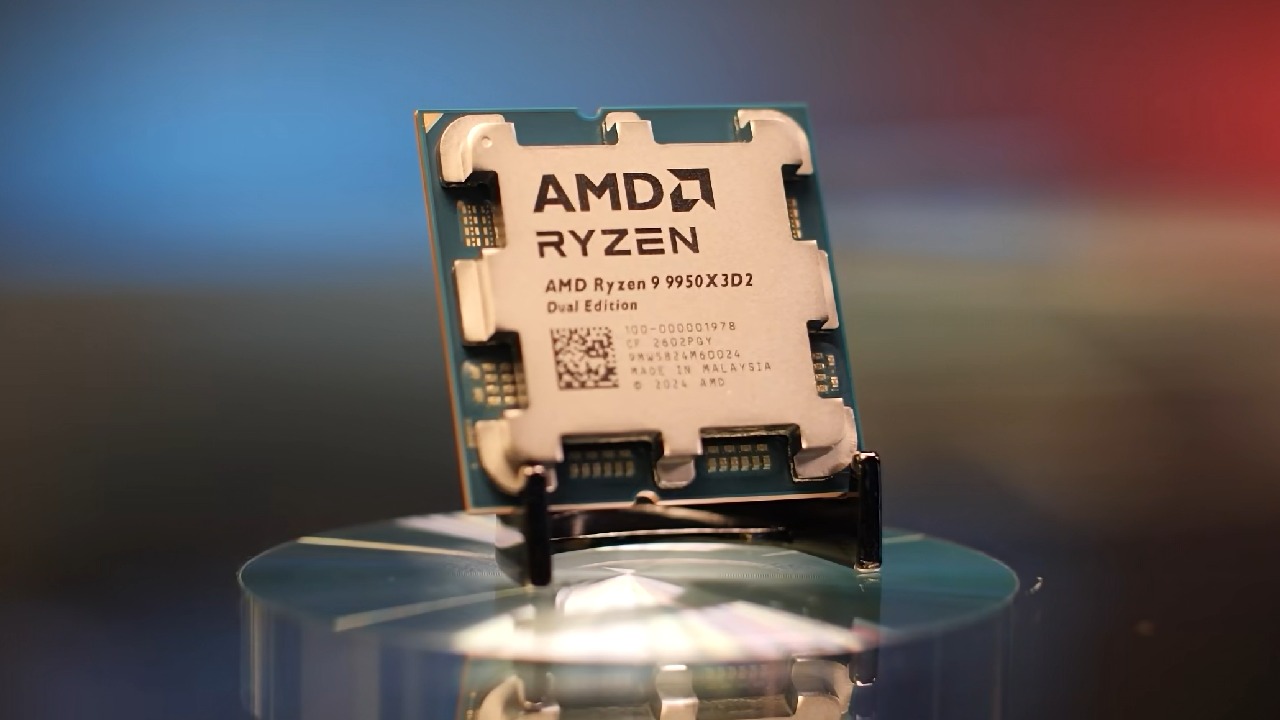
Leaks are pointing to a 10%+ IPC increase over Zen 5. That would boost performance, but higher clocks could add another part to the gain. Moore's Law Is Dead has claimed that AMD could push Zen 6 processors to as high as 7 GHz. A source has also claimed to have seen documentation indicating that eventual qualification samples reached that clock speed.
Zen 6 Could Bring More Cores and Higher Clocks
If accurate, 7GHz would be 23% faster than Zen 5's 5.7GHz and would be the largest clock-speed increase since Ryzen began. The core count could also increase. Multiple leaks claim Ryzen 10000 will have more cores, which would be the first time in 8 years AMD has added cores to desktop Ryzen.
The highest-end chip could reportedly receive a 50% increase, reaching up to 24 cores. More cores are also expected throughout the product stack, as the chiplets that make up the CPUs are reportedly increasing in number. The changes could also affect AMD's X3D processors. The next generation could allow up to 12 cores on a single chiplet.
Cross-CCX communication can introduce higher latency, so more cores communicating on the same chiplet could help. Zen 6 X3D is also expected to feature up to 96 MB of L3 V-Cache instead of 64MB. Multiple leaks also claim that AMD is working on new technologies to improve 1% lows in games on next-generation Ryzen processors.
Moving to GPUs, AMD's RX 10000 series is expected to be based on RDNA 5 or potentially UDNA, representing AMD's upcoming unification of its RDNA gaming architecture and CDNA compute architecture. One leak claims that RDNA 5 is based on UDNA with additional changes for the PS6.
The architecture may still be called RDNA 5, but according to the leak, it would still be based on UDNA.
The leaked chip is identified as AT0, which is the actual die that makes up the GPU. Another well-known leaker, Kepler, has claimed that if the AT0 die is released, it will be released to consumers. The same leaked information points to a GPU with 36GB of GDDR7. A Radeon GPU with that configuration could potentially challenge NVIDIA's 6090 at the high end.
AMD has also confirmed technologies from Project Amethyst that will appear in future hardware. One of them is a new dedicated hardware block called the Radiance Core, designed specifically for ray traversal. That could significantly improve ray-tracing performance in future Radeon GPUs. AMD is also working on neural arrays for neural rendering and universal compression.
These technologies suggest AMD is reworking how its next-generation GPUs handle ray tracing, AI, and memory bandwidth. If the current leaks and AMD's confirmed technologies align, 2027 could be a major year for AMD's CPU and GPU hardware.
Editor, NoobFeed
Gaming Hardware Updates
No Data.