
Dragonkin: The Banished Review
PC
A muscular action RPG with fierce combat, inventive buildcraft, and a strong endgame hook, weighed down by generic worldbuilding, overstretched maps, and a surplus of systems that sometimes smother its own momentum.
Reviewed by Zahra Morshed on Mar 16, 2026
Dragonkin: The Banished is an isometric action RPG from Eko Software that clearly builds on the company's earlier work on hack-and-slash games, but it feels more secure, ambitious, and focused on sales than some of its other games. It's clear where this game comes from, from the loot-driven loop to the crowd-pleasing show, but it's not just a copy made from old games in the same genre.
The game knows the basic dream of power, escalation, and building obsession, and then changes that formula by putting it in a dragon-corrupted world that is meant to feel mythical, oppressive, and always on the verge of breaking apart. Even though Dragonkin: The Banished doesn't change the action RPG genre, it does understand why people still love them.
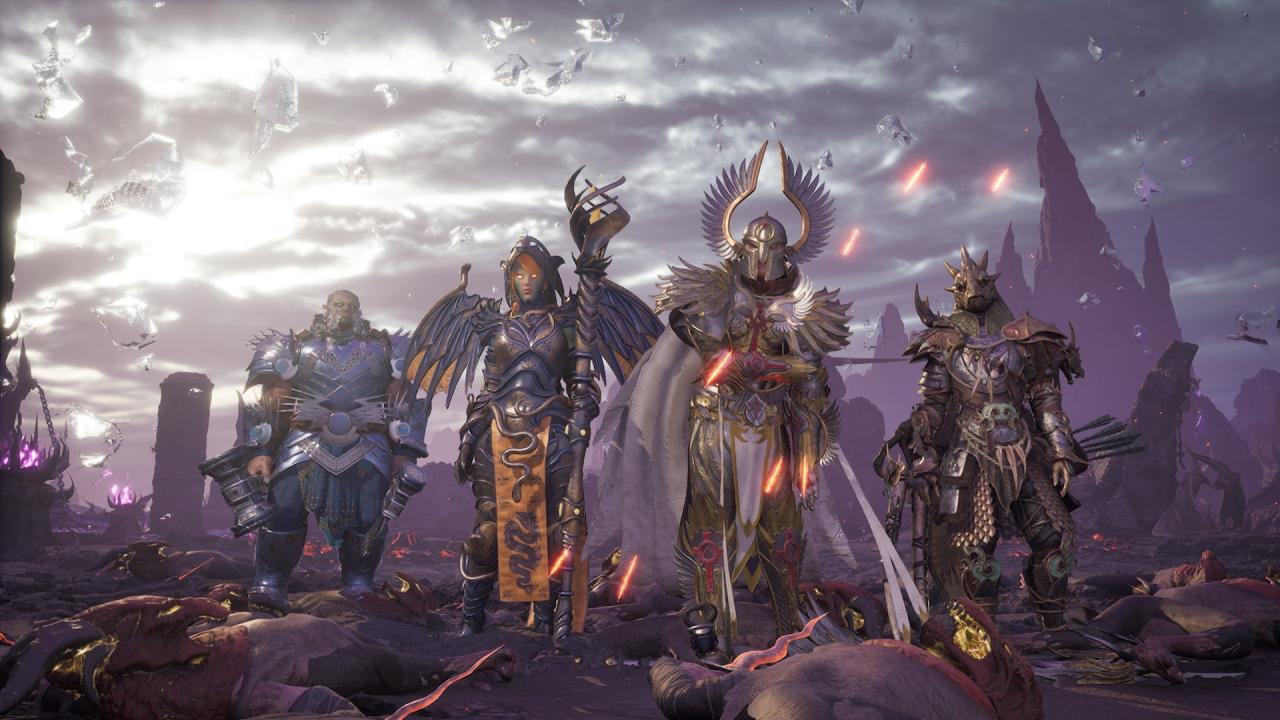
The premise makes the game's beginning stronger than what the writing about the story says at first.
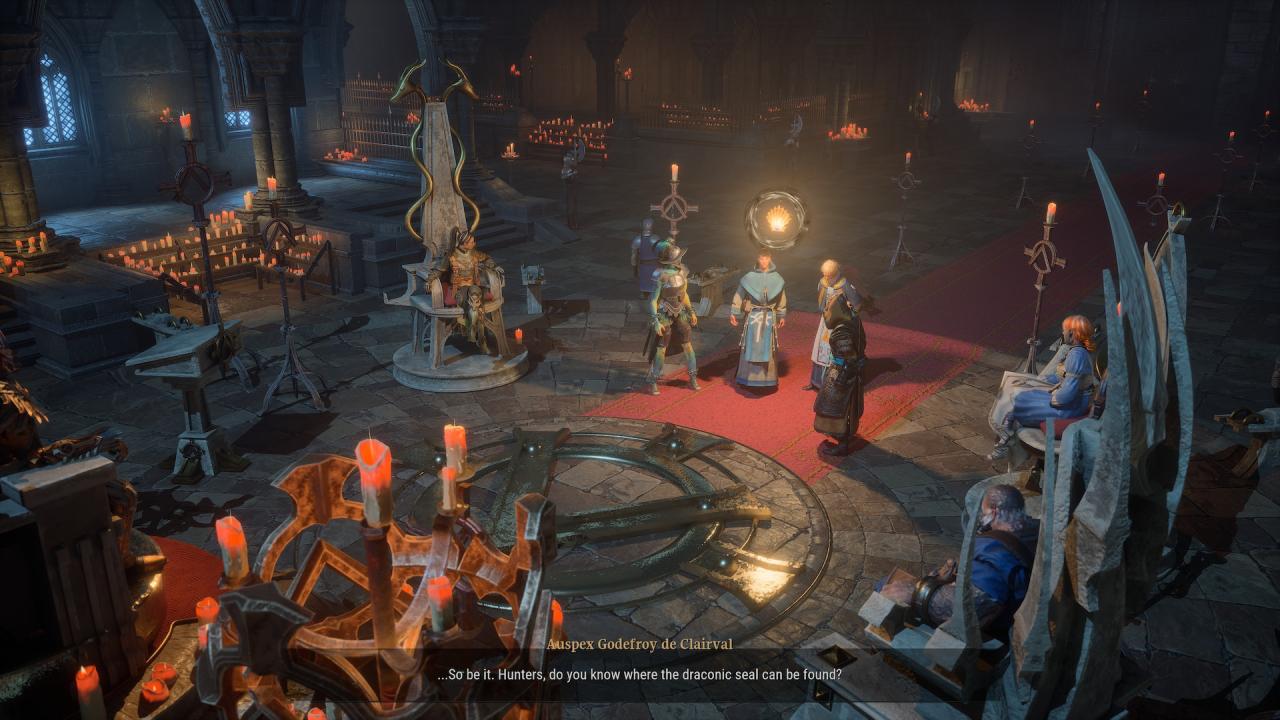
Once-banned dragons are bringing evil back into the world through the land, beasts, cults, and desperate minds. To restore balance, a council of strong survivors sends a new champion. Even though the setup is big, exciting, and easy to sell, the prologue is what really sells the fantasy because it gives each class a chance to feel totally free before the real campaign starts.
Dragonkin: The Banished introduces its size, its manner of battle, and the kind of fully realized power that each chosen hero is meant to become in a single, elegant stroke. The story is stronger than in many games in this genre because the main character has a goal that goes beyond just chasing loot or following destiny.
A new member is brought into a struggle for a cause bigger than their own survival. They rise in the eyes of a tense council and go from being an outsider to an important tool, eventually becoming the so-called Dragon Tamer. Along that line, the campaign feels like it's under some helpful upward pressure, and the disagreements among the council members add a welcome dramatic contrast.
The most interesting parts of Dragonkin: The Banished are when duty, pride, disagreement, and anguish all come together in the leadership circle. These scenes give the world at least a trace of personality beneath all the proper words. But the story doesn't always confidently turn its raw materials into efficient rewards.
Ancient rites, locations, holy history, dragon lore, and ritualized language are all talked about in dialogue, but a lot of it comes before you have a reason to care, making the exposition feel heavy instead of immersive. Later in the game, things get better, and things do build up to a satisfying ending, but the path there isn't always smooth, and things are often explained too much.
Dragonkin: The Banished talks too much like epic fantasy before it's close enough or clear enough to be epic fantasy land. The supporting characters do better than the main characters because their personal edges and goals are made clearer. An ordinary warrior like Jorn stands out because of his vanity and desire for fame.
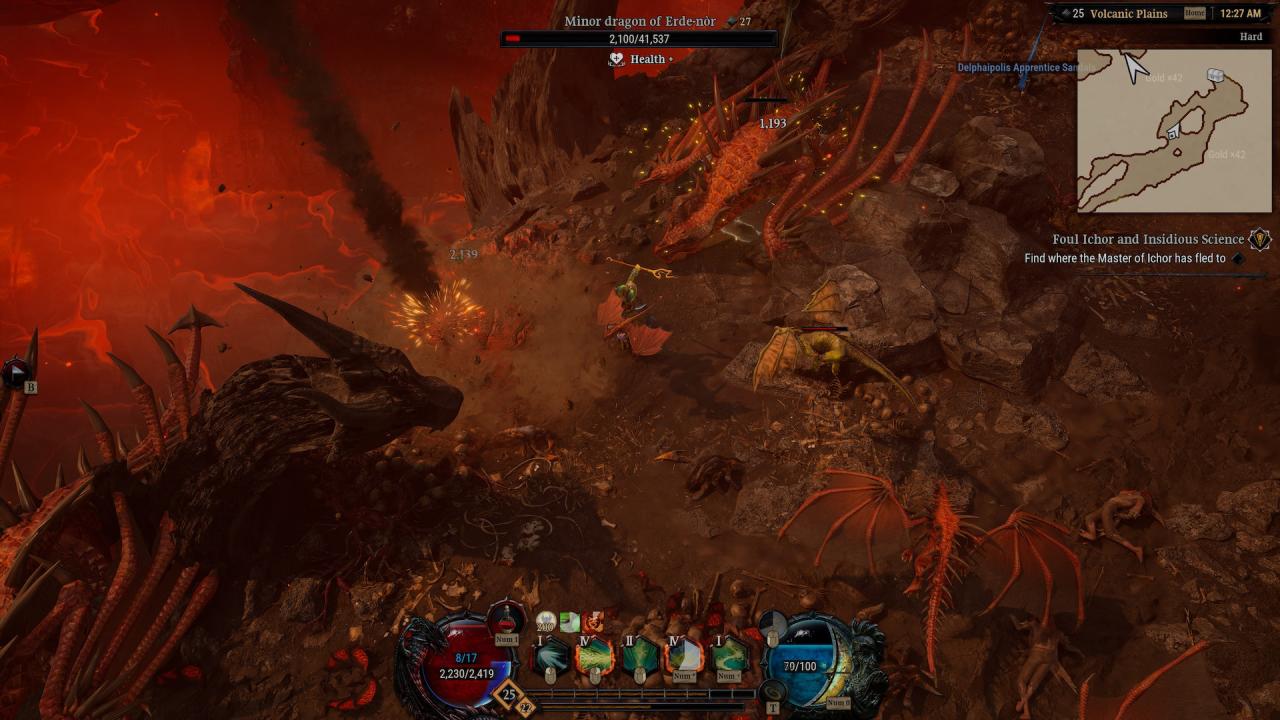
These traits make him more human than the other characters in the story.
Missions that pair you with side characters often have the best storylines because the action and the characters' personalities finally start to flow together. These parts of Dragonkin: The Banished give the story a tempo that its worldbuilding doesn't always have, which suggests that the writers are better at convincing readers with real people than with myths.
The main character, who is so important to the story but seems oddly empty, is the biggest plot hole. The character serves a purpose, but they don't come alive when they talk or act. They don't have many conversation options, their personality isn't very developed, and they don't seem to have much of an inner life beyond serving other people's needs.
It becomes clearer that this is missing as the game asks you to care about accusations, political division, and big issues while never giving their character much real control. Dragonkin: The Banished knows how enticing it is to become powerful, but it has trouble with the equally important dream of being a part of its personal story. Getting through zones, getting loot, unlocking portals, harvesting resources, upgrading gear, improving consumables, and slowly taking control of chaos are all part of the game's mechanics.
Enemies, side paths, relics, materials, and just the right amount of optional content keep exploring tied to progress in forests, swamps, jungles, mountains, and corrupted strongholds. A lot of these maps are very big, which isn't always good for the game, but it does make it feel like the world is under attack by dragons. In real life, Dragonkin: The Banished is about moving through huge battlefields and turning each fight into fuel for a bigger machine that moves things forward.
One of the best system-level ideas in the game is that the bigger machine is based in Montescail, which is the center of the city. As you move around the city, it gains levels. These levels affect how quickly a character advances by unlocking and improving alchemy, gear services, training centers, and other specialized outlets. This is a rewarding loop because progress isn't just for the hero; it affects the whole community. This makes progress feel both personal and public.
In Dragonkin: The Banished, the hub is no not simply a pretty menu, but a place where you can move forward in the story. This adds a welcome layer of long-term investment to the campaign. What's wrong is that the game keeps adding new systems after the main loop has been tested and shown to work.
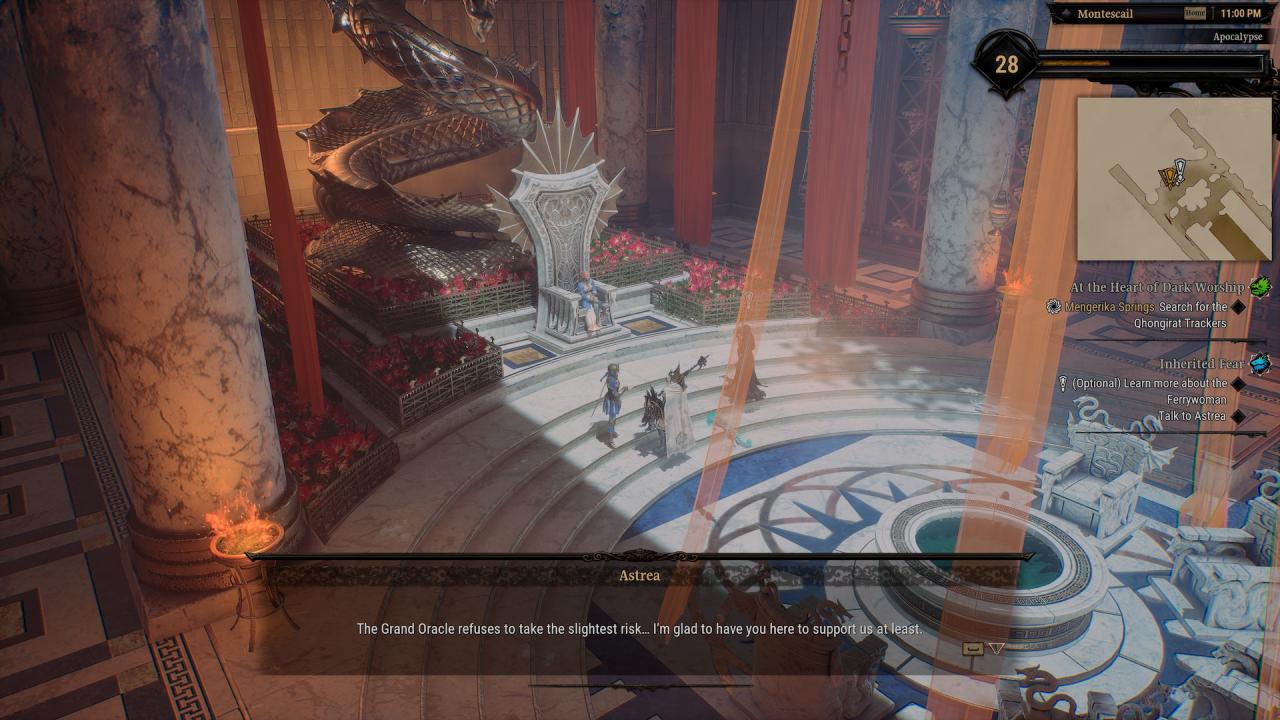
People in the game grow, as does the city, the wyrmling companion, and the ancestors.
Talents stack, tributes open bonuses, gear always changes, and active abilities come as loot fragments instead of simple skill tree nodes. A lot of these ideas are interesting or even smart on their own, but when put together, they can make it hard to see what's important because there are so many options.
Dragonkin: The Banished often gets density and difference mixed up, as if adding another subsystem, grid, or layer of incremental decision-making would solve the problem of genre familiarity. One problem stands out because it goes against the idea of player control.
For how complicated the game's build system is, there isn't much that can be done to change how a character looks. You have to pick a hero that has a fixed identity and there are no scales, gender options, or other real ways to change that avatar's look besides gear. That is an odd thing to leave out in a genre built on the pleasure of written development. It is very ironic.
Even though stats can be changed endlessly, the hero never feels truly unique. This is one of the main problems with Dragonkin: The Banished: it's hard to fully connect with the characters on an emotional level. The best part of the game is the fighting. Whether you choose a spear-wielding knight, a frost-raging barbarian, a ranged tracker, or a more magical spellcaster, each class has enough style and strategy differences to make early testing really fun.
The attacks are really powerful, the enemy groups explode under constant pressure, and the general rhythm captures the great feeling of getting more deadly by the hour in action RPGs. Sometimes Dragonkin: The Banished does exactly what the genre promises: it's a sharp, sparking loop of pressure, release and getting more and more control over impossible situations.
The Ancestral Grid, a built-in interface that looks like a honeycomb, is the best part. It turns skills into modular loot pieces instead of set unlocks. The shapes, sizes, bonuses, and affinities of the attacks and modifiers that fit into the grid are all different. This means that the same core abilities can grow in very different ways based on what you drop and how you arrange it.
This makes BuildCraft feel more hands-on and discovery-based than just planned, which is one of its best features. A lot of Dragonkin: The Banished's outer structure comes from games like Diablo, but this method is unique enough to make the game stand out more.
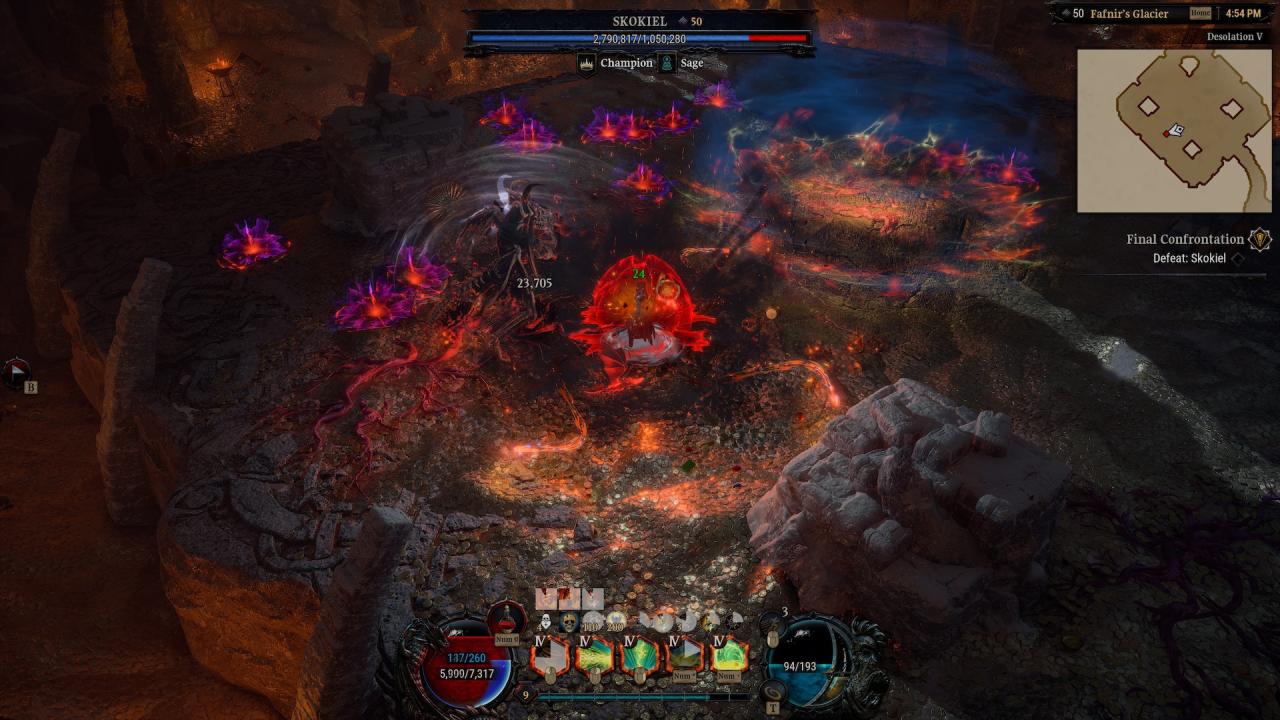
Boss design also makes the experience better, especially when the dragons take over the screen.
With their spectacle-driven transitions, multi-phase fights, and unique monster silhouettes, these fights are on a whole other level than normal enemy mobs, and they often feel like a real reward after clearing a lot of people. When a big creature forces you to read patterns, move quickly, and make the whole build work, the game is at its most alive.
Dragonkin: The Banished stops feeling like a good entry in the genre and starts feeling like a game with real claws when it hits that note. Puzzle aspects are there, but they are clearly not the main focus. They often feel like minor distractions rather than important parts of the design. The marching rhythm is broken up by some environmental tasks that involve beams, lantern cleaning, or pattern activation, but they never grow into the kind of complicated puzzle language that would really change the experience.
They're best used to clean the mouth. That won't kill you, but it does make it seem like Dragonkin: The Banished is at its best when enemies are flooding in, and numbers are flying, not when you have to slow down and think about where things are. The fastest combat method is the best thing about it.
Because of crowd control, elemental damage, cooldown timing, and positioning, the player can quickly turn the battlefield in their favor. Classes feel unique, and even normal fights can have a satisfying sense of effect. Because of this strong feedback loop, the game stays interesting even when the storyline shifts.
On the other hand, there is too much repetition too soon because some settings use the same types of enemies over and over again, and the big maps make comparable battles last longer than they need to. The feeling of power is right in Dragonkin: The Banished, but the pace of the story isn't always good. Some methods also feel like they aren't fully explained or are hard to understand because of bad communication.
Ancestors and talents, for example, can give you useful passive bonuses and ultimate power, but the game doesn't always make it clear how they work when they first become important. A problem with usability, not a puzzle, is when you can play for fifteen hours without noticing a system that becomes important later on.
It gives the development model a bit of a sloppy look, like the design knows what depth it wants but isn't always sure how to present that depth in the best way.
It's better for Dragonkin: The Banished to give you choices than to teach them which choices are worth their time and when. Gaining experience works better because it's a part of almost everything you do. There are different levels of progress that you can see by killing monsters, clearing paths, finding relics, unlocking panoramic points, finishing jobs, and improving city structures.
You can also speed up leveling even more by upgrading facilities like the training yard. This makes for a satisfying economy of action in which almost no useful side trips feel like they were lost. The effect on gameplay is big because Dragonkin: The Banished makes growth feel like it's built in.
Characters get stronger not only by killing things but also by getting to know the world and hub systems around them better. When you get to the goal, everything starts to fit together better into a stronger long-term plan. You can play the game more than once with the help of different difficulty settings, random encounters, hunting maps, chaos hunts, card-based risk-reward tuning, and difficulty factors.
This is especially true for co-op groups that want to play quickly and intensely after the campaign is over. After the main level cap, you can keep leveling up your ancestors, which adds another source of growth that keeps the machine going after the story ends.
Even if the story isn't very memorable, Dragonkin: The Banished knows that for an action RPG to last, it needs to give you reasons to keep improving, chasing, and trying new things well beyond the credits roll. This game has some of the best graphics that Eko Software has ever made.
It has a lot of environmental detail, a wide range of biomes, great effects, and interesting creature designs that keep the screen readable even when it's full of threats and damage. There is enough confidence in the art to sell the world's size in the way it depicts forests, volcanic zones, jungles, corrupted fields, and frozen wastelands. However, the art style can lean toward excess and generic fantasy bombast.
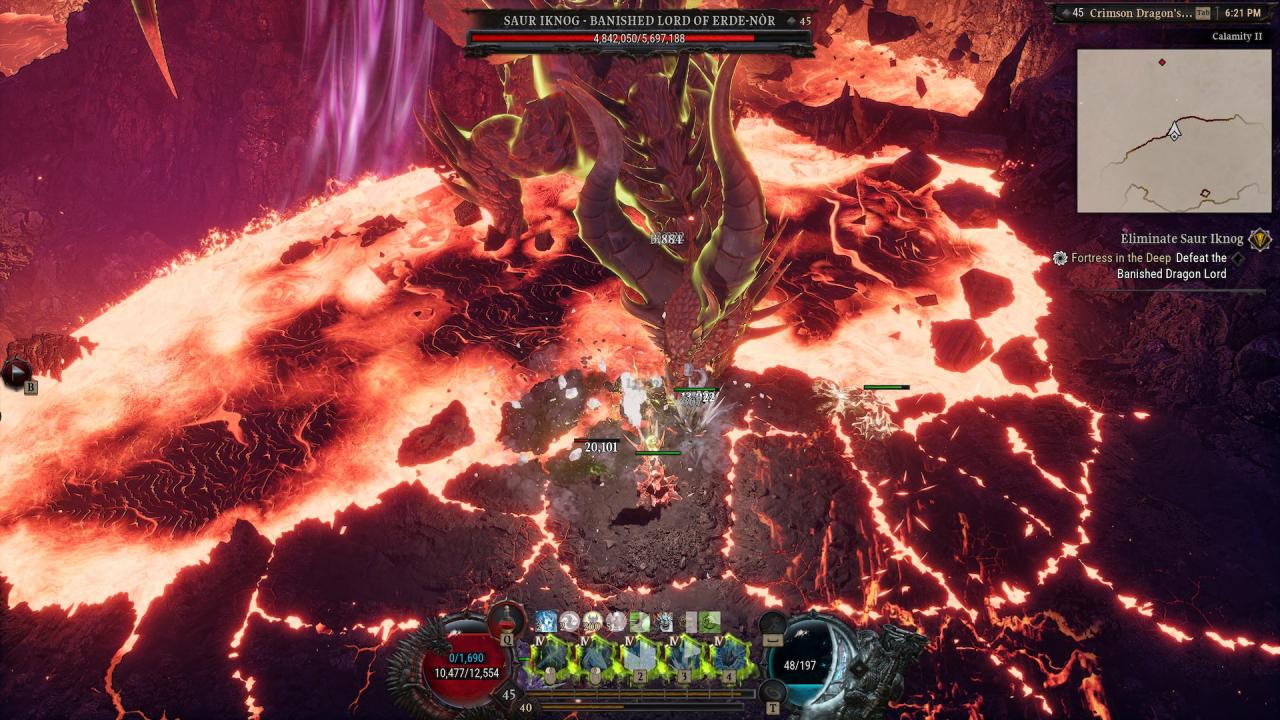
When seen from an isometric angle, armor, monsters, and buildings can all show that the game is trying to be made.
Even though Dragonkin: The Banished doesn't establish a new standard for how games should look in this genre, it never looks cheap, which is very important in a market full of ugly copies. On the other hand, show and uniqueness are not quite the same thing.
There are times when the art direction is too busy with decorations and big armor, creepy enemies, and common dark fantasy themes, which makes it hard to tell what each idea is. Polish is present, but the character is not always revealed. Most of the time, the presentation is impressive but not memorable because it makes the world look like a lot of work went into it, while it stayed strangely anonymous.
This is a common theme with Dragonkin: The Banished: it's always better at meeting genre expectations than going beyond them. The sound design for battle fantasy is good. The abilities, impacts, and ambient effects all add to the sense of motion without getting muddy or empty.
The soundscape has enough force to make skills feel scary, and boss fights can be more exciting with better audio mixing. Sound effects and music do their job of keeping you in the game. Dragonkin: The Banished sounds like a fast-paced, intense, and dangerous game right now, even though the writing doesn't match those feelings on the page. Voice acting doesn't convince as much.
There are some acts that are just fine, and others add to the overall feeling that the story is attempting to sound more mythical than it can handle. It's especially clear in longer dialogue scenes, where stiff delivery and a lot of background information make for stretches that are easier to respect intellectually than to enjoy.
Even though the outcome isn't terrible, it does make the story less exciting. This isn't the worst flaw for an action RPG, but it is still a flaw. Dragonkin: The Banished sounds best when it stops talking and starts fighting. After the whole campaign, it's clear that the game has real skills, a strong desire to succeed, and a good sense of what its fans want most.
Combat is fun, classes are interesting, the build system is really clever, the city growth is more interesting than I thought it would be, and the endgame has enough extras to keep dedicated players interested long after the main story is over. These aren't minor victories.
These are what the genre is all about, and Dragonkin: The Banished delivers on them often enough for action RPG fans who value build experimentation and co-op drive over story elegance to give it their full attention. It's also easy to see the flaws.
Overwriting the worldbuilding, the main character isn't really there, the maps can be too big for their own good, customization is limited in places it should be free, and the sheer number of subsystems can make the whole thing feel like a warehouse of mechanics instead of a well-thought-out adventure.
But none of those flaws really ruin the game because the main action loop works so well. Even though Dragonkin: The Banished might not be the next big thing in its field, it is a strong, well-polished, and often satisfying contender that shows Eko Software knows where the fun is, even when everything else is still trying to find its own voice.
Contributor, NoobFeed
Verdict
A thrilling, system-heavy action RPG with standout combat and smart buildcraft, held back by generic storytelling and bloated design. Delivers enough spectacle and progression to satisfy, even when its ambition occasionally outruns its discipline.
72
Related News
No Data.