
FRONT MISSION 3: Remake Review
PC
Revisiting a tactical RPG classic—does the Remake live up to its legacy?
Reviewed by Wasbir Sadat on Jan 31, 2026
When it came out in 2000 for the PlayStation 1, FRONT MISSION 3 was the first game in a series that started in Japan in 1995 on the Super Nintendo. The game, which was made by Squaresoft, was an ambitious tactical RPG that exposed Westerners to Wanzers.
There were huge mechs that could be customized, complex geopolitical stories, and turn-based strategy that required careful planning. Many gamers in the early 2000s saw it as more than just another RPG. It was a complicated tactical experience with mechas that was influenced by anime like Gundam, Patlabor, and Ghost in the Shell.
.jpg)
In 2025, Forever Entertainment and Megapixel Studio re-release and re-did the series. They started with Front Missions 1 and 2 and then moved on to the much-loved Front Mission 3. It was harder to make FRONT MISSION 3: Remake than the others because it was the most famous and acclaimed game in the series.
Tactical RPGs were often first played on discs or digital files for systems like the PS3 and PSP, which turned many fans into fans. The remake had new features like quicker access, improved cutscenes, and the possibility to play on the Switch, PC, and future consoles. But it was hard to maintain the original's rough charm.
Kazuki Takamura, a test pilot for Kiroshima Industries, and his friend Ryogo Kusama are the main characters in FRONT MISSION 3: Remake. What begins out as a straightforward job to deliver or move something quickly evolves into an international catastrophe with hidden societies, military coups, and technology that isn't allowed.
In the beginning of the game, players are put into a branching plot where a seemingly tiny choice leads to one of two campaigns, each with its own characters, tasks, and endings.
These two tales, which are frequently termed the Emma and Alisa campaigns, cross paths at key points but tell the same crucial events from quite different points of view.The story is strong because it takes place all over the world and includes political drama. You're not just controlling mechs in one-on-one fights; you're part of a bigger world where the choices you make matter.
Kazuki is impulsive and quick-tempered, so supporting characters help elevate the story. The game's network system also adds depth by letting players explore optional lore, company dossiers, and secret files. This old-school internet feature adds to the world beyond the main story, making the game's universe more complete with its complicated web of groups, governments, and plots.
.jpg)
For new players, the branching tracks and the ability to play again and again are big draws. For veterans, though, the way the story is told—with static portraits of characters on top of backgrounds and conversation that is mostly text—may feel old-fashioned when compared to fully voiced RPGs today. Still, people who liked the original style will enjoy the familiar storytelling charm.
The core grid-based, turn-based tactical RPG elements of the PS1 original are still present in FRONT MISSION 3: Remake.
In Wanzers, you take control of different tasks whose goals can be anything from killing all enemies to getting to a certain spot on the map. Each Wanzer can have its arms, legs, torsos, guns, and even paint jobs changed to change how well it works and its stats. Weight is important, different types of weapons have different effects, and where you fight is very important—hitting the right part of an enemy can disable their arms, legs, or cores, which can limit their ability to move, attack, or give up.
The pilot ejection system is one trait that stands out. In the middle of a fight, pilots can be ejected, leaving their Wanzers open to being taken. On the other hand, players can give up their Wanzers and continue fighting on foot. This adds a layer of chaos that is also smart, making risk-and-reward strategies possible.
In addition to letting you build worlds, the network system lets you change things and try new things. You can change the way your Wanzer looks by changing its colors and camouflage, and guns or mech parts get better as you use them more. This means that even if a weapon or part is weak at first, regular use can make it stronger over time. This adds a level of long-term progression that honors planning ahead and trying new things.
In FRONT MISSION 3: Remake, battles are planned out and done carefully. Each mission takes place on grid-based maps that change the result based on terrain, attack ranges, and elevation. Players can't directly aim at enemy parts, but different weapons have different chances of hitting cores, arms, or legs.
.jpg)
Disabling parts of the enemy can make them give up, but the RNG factor makes things unpredictable.
In the middle of a fight, you may have to change your strategy and rely on luck, which can be fun when it works and frustrating when it doesn't. With fists, rifles, shotguns, and missiles, among other weapons, players must keep their teams balanced so they can handle close-quarters fights, mid-range battles, and long-range sniping. Pilots can chain strikes, auto-defend, or aim for specific parts by using the skills over and over again. This makes players want to try out different strategies, even if the first fights are hard.
There are also changes to the quality of life in the remake, such as faster animations for battle, the option to speed up, and the ability to turn off screen shake. Some menus and customization systems are still hard to use. For example, to change parts or compare stats, you have to go through multiple sub-menus, which can get in the way for current players who are used to smooth interfaces.
In FRONT MISSION 3: Remake, growth is more about getting better at skills than about leveling up pilots like in most RPGs. The arms, legs, torsos, and tools of a Wanzer all get better with use, and each part has its own growth path. These parts may give you new skills or powers over time, which you can then add to the Wanzer's battle computer.
This system pushes players to try new things with their strategies: they can use less-than-ideal weapons or parts on purpose to get abilities they want. Pilots don't actually level up in the usual sense, but as they train, they get better at what they do. This method of progression keeps battles interesting by rewarding careful planning and giving players a sense of long-term growth while they make tactical decisions.
FRONT MISSION 3: Remake has a mixed look when it comes to graphics.
The short movie clips (FMVs) have been totally remade with better graphics and animation, but you can still watch the old videos if you want to. The wanzers and landscapes are clearer and have more details than the PS1 version. The explosion effects, damage to limbs, and mech animations have also been improved.
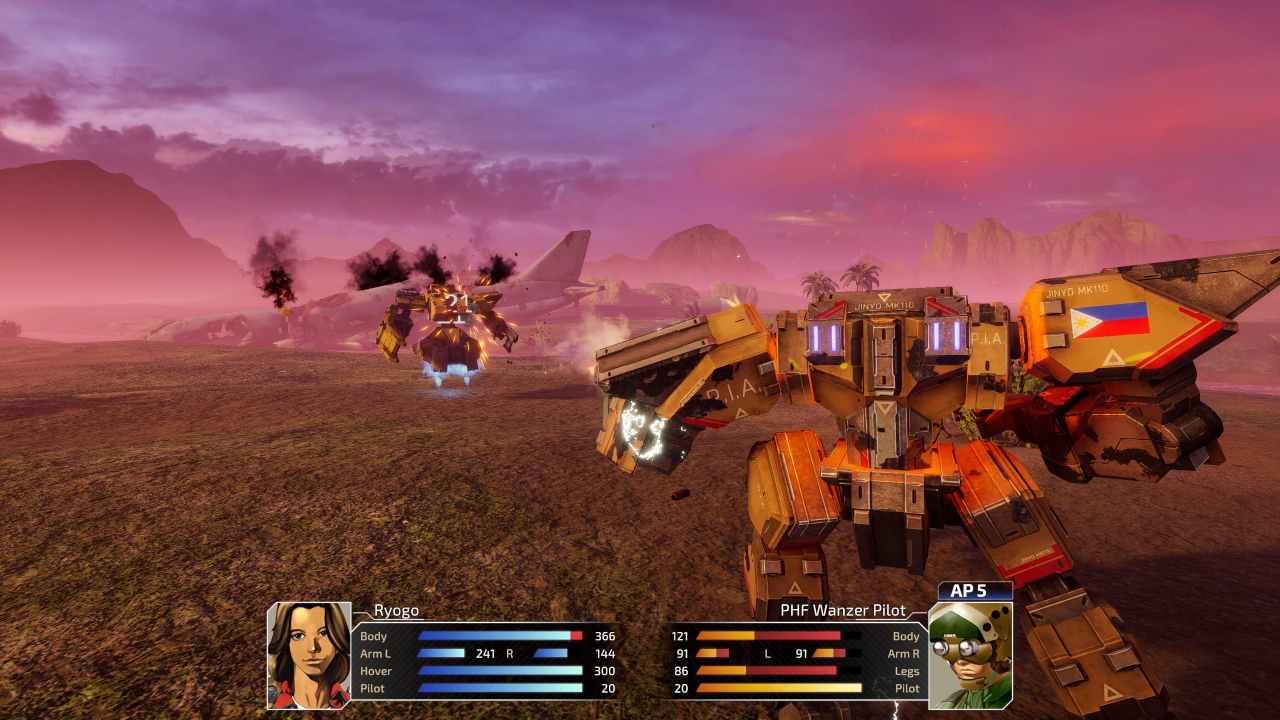
That being said, the update looks too clean, which takes away a lot of the gritty charm of the original. Some character images, especially in the network interface, look creepy or like they were made by AI, with distorted features that make the experience less immersive. Backgrounds are flatter and have less texture, and the original's industrial, war-torn feel has been smoothed out. Fans of the original may notice this right away as a loss of mood.
The game runs well on Switch devices, with frame rates of about 30 FPS on the Switch One and smoother frame rates on the Switch 2. Performance is fine for turn-based games, but stutters happen sometimes during bigger fights or cutscenes, which reminds players that this is not a high-end, triple-A game.
The music design is pretty basic. The music has been fully remastered, and players can switch between new and old songs. The epic, tense, and atmospheric qualities of the original score are still present. Battle, spy, and travel music cues work well and often make the experience more immersive.
But the sound effects don't always sound the same. Fire, explosions, and mech moves can sometimes feel flat or cheap, like they don't have the same power and weight as the original game. Instead of voice acting, writing on top of still backgrounds shows the dialogue.
This choice of style retains the retro mood, but modern viewers might think it's too simple. Sound design as a whole highlights the remake's contradictory identity: it's both a nostalgic look back and a quick upgrade. One of the most famous strategy RPGs from the PS1 era is brought back to life in FRONT MISSION 3: Remake.
The story that can go in different directions, the ability to customize your mech, and the complex tactical combat are all still fun, and changes to the quality of life, such as faster battles and menu shortcuts, help bring the experience up to date. The network system adds depth, story, and the ability to play again and again, encouraging discovery and experimentation.
.jpg)
But the remake is held back by problems with the sound and images. The original is more charming and immersive, but the new version has too clean graphics, images made by AI, missing gritty details, and sound effects that don't work right all the time.
The way combat works is very deep, but it relies on randomness in ways that can annoy experts. Performance is good, but not great, and many of the settings and customization options are still hard to understand.
Basically, the remake does a great job of bringing FRONT MISSION 3 back to life for a new generation of gamers and making it portable and easy to play for long-time fans. On the other hand, it's not really an improvement; it's more of an improved port than a completely new experience.
Contributor, NoobFeed
Verdict
FRONT MISSION 3: Remake revives a tactical RPG classic with branching narratives and mech customization, but clunky menus, bland visuals, and inconsistent audio hold it back. A solid introduction for newcomers; veterans may prefer the PS1 original.
75
Related News
No Data.