
Saros Review
PlayStation 5 Pro
Housemarque doesn’t just refine Returnal—they rebuild the roguelike into something more forgiving, more brutal, and, somehow, more addictive.
Reviewed by Mahi Araf on Apr 27, 2026
If you’ve ever played Returnal, you already know what kind of studio Housemarque is. They don’t really do “safe” design. They build systems that punish hesitation, reward precision, and somehow turn repetition into obsession. With Saros, they’ve taken that philosophy and pushed it further than you probably expect a PS5 game to go this generation.
You can feel the DNA of Returnal immediately, but Saros isn’t interested in just repeating that formula. It feels like the studio looked at everything players loved—and everything they bounced off—and rebuilt the experience around persistence instead of pure punishment. It still has that brutal edge, but now it’s wrapped inside a structure that actually wants you to keep going, even when you fail.
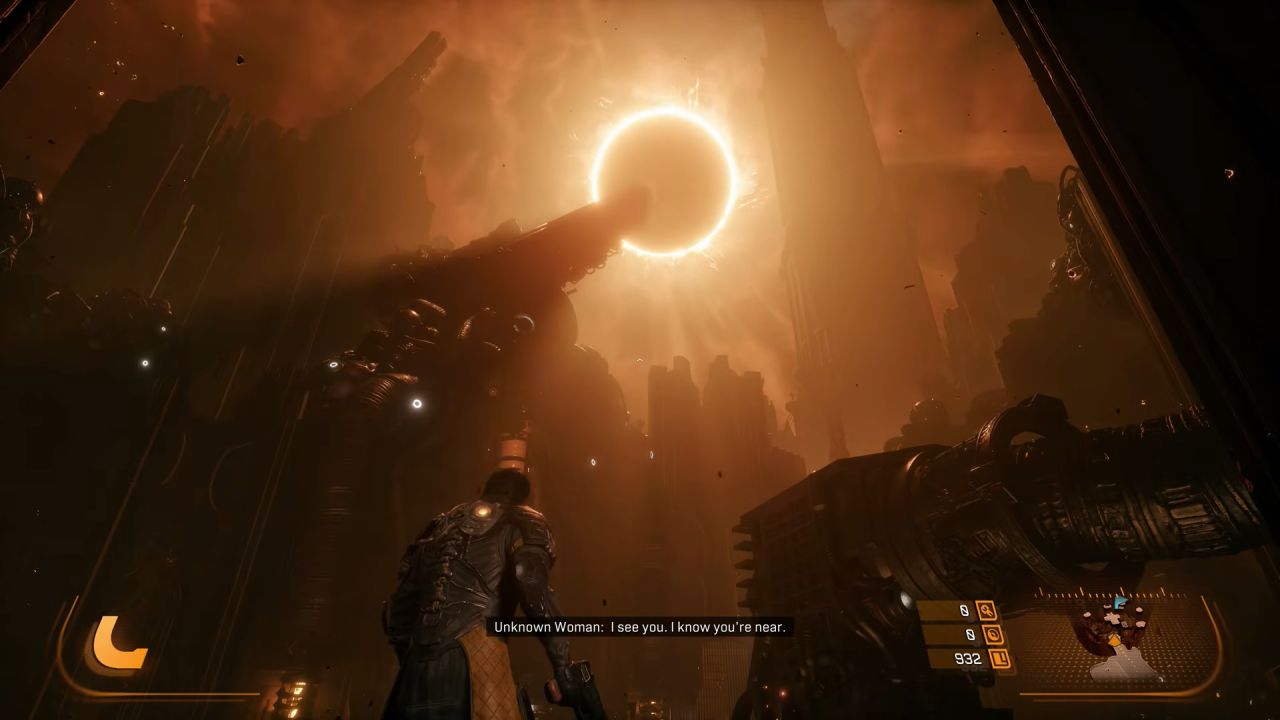
What makes Saros interesting from the start is how confidently it presents itself as “not Returnal 2,” even when everything about it feels like a spiritual evolution of that exact idea. It doesn’t shy away from comparison, but it also doesn’t rely on nostalgia. Instead, it builds its identity through scale, systems, and a much more forgiving relationship with failure. That alone changes the tone of everything you’re about to experience.
Housemarque has always been a studio defined by precision gameplay loops.
Before they ever touched cinematic storytelling or roguelike structure, they were known for arcade-style intensity and tight controls and high-speed action and gameplay systems that demanded mastery rather than patience. That identity didn’t disappear when they made the leap to AAA production; it evolved. Returnal was the turning point where they fused bullet hell design with narrative ambition and proved they could carry a full-scale PS5 experience without losing their mechanical identity.
Saros makes that evolution even more pronounced. You’re no longer just seeing Housemarque experimenting with roguelike structure—you’re seeing them refining it into something more flexible and more accessible without sacrificing depth. The studio has clearly taken everything they learned from Returnal’s reception, especially around difficulty spikes and progression frustration, and rebuilt the experience around player retention instead of player endurance.
What’s interesting is how Saros feels like both a continuation and a correction.
It respects what came before it, but it also clearly wants to smooth out the friction points that made Returnal such a divisive experience. Instead of forcing you through repeated punishment loops, it introduces systems that let you adapt, recover, and rebuild momentum in a way that still feels challenging but far less restrictive.
Saros doesn’t present itself as a traditional sequel, even though structurally it sits very close to one. The shift away from the Returnal name signals something deliberate from Housemarque—they’re not just iterating; they’re reframing. The game is built around the idea of persistence through collapse, and that theme extends directly into how progression works, how story is delivered, and how failure is treated as part of forward movement rather than a reset.
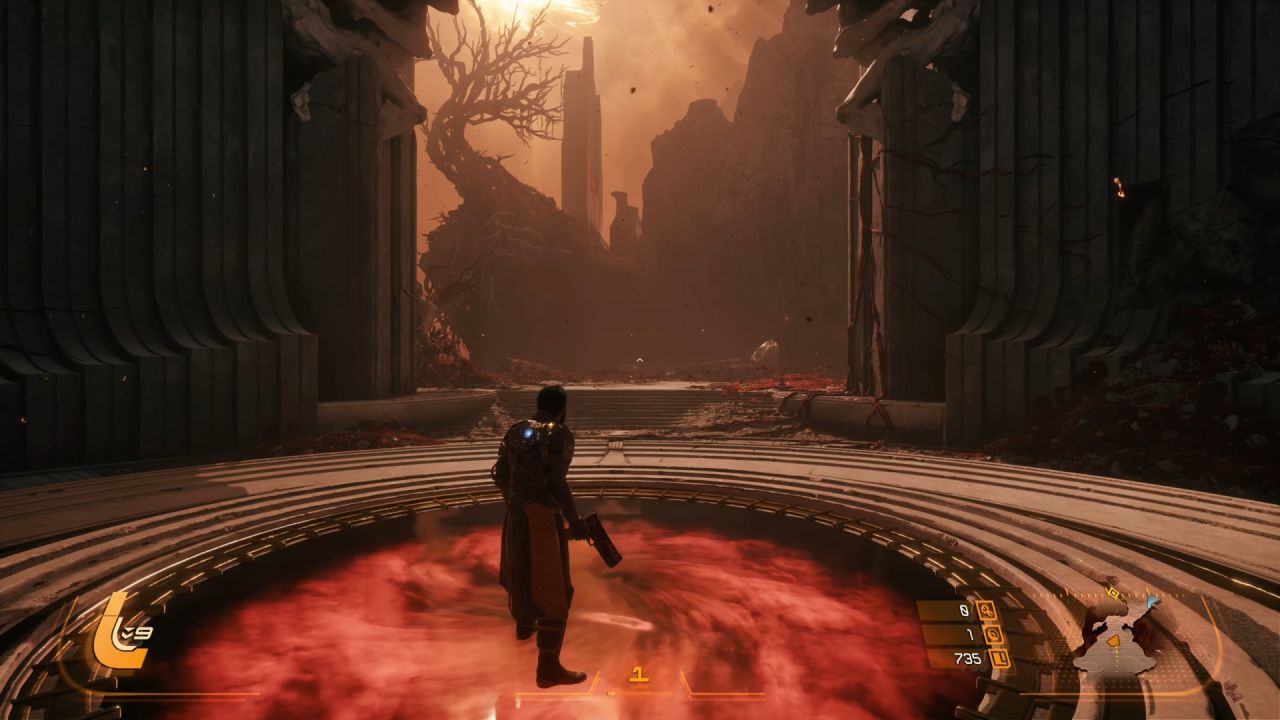
At its core, Saros feels like Housemarque asking a simple question: what happens if a roguelike stops punishing you for learning and instead rewards you for surviving long enough to understand it? That design shift defines everything from its meta progression systems to its more structured exploration flow. It still has randomness, still has danger, still has brutal encounters—but now there’s always a sense that you’re building toward something instead of just surviving another loop.
You step into the role of Arjun Devraj, played by Rahul Kohli, a member of an expedition sent to the planet Carcosa under the control of the Sultari Corporation.
On the surface, the mission is straightforward: investigate failed expeditions, recover missing personnel, and assess the value of Lucenite, a rare and extremely powerful resource that exists only on this planet. In reality, nothing about Carcosa behaves in a way that can be called stable or predictable.
The deeper you go, the more you realize the previous expeditions didn’t just fail—they unraveled. Entire teams went silent, communications degraded into fragmented psychological breakdowns, and time itself began to behave inconsistently. Some survivors claim they’ve been on Carcosa for weeks; others insist it’s been decades. That distortion becomes one of the central mysteries you’re constantly trying to navigate.
Carcosa itself feels like a place built around contradiction. Ancient ruins exist alongside industrial extraction sites that look freshly constructed. Organic and mechanical structures blend in ways that don’t follow any known logic. And then there’s the eclipse, a recurring phenomenon that doesn’t just change lighting conditions—it changes behavior, perception, and even identity.
Arjun’s personal motivation further complicates the mission.
While the corporation frames this as an investigation into failed operations, Arjun is also searching for someone specific tied to earlier expeditions. That emotional thread runs beneath the larger corporate horror narrative, grounding the experience in something more personal even as the world around him becomes increasingly abstract and unstable.
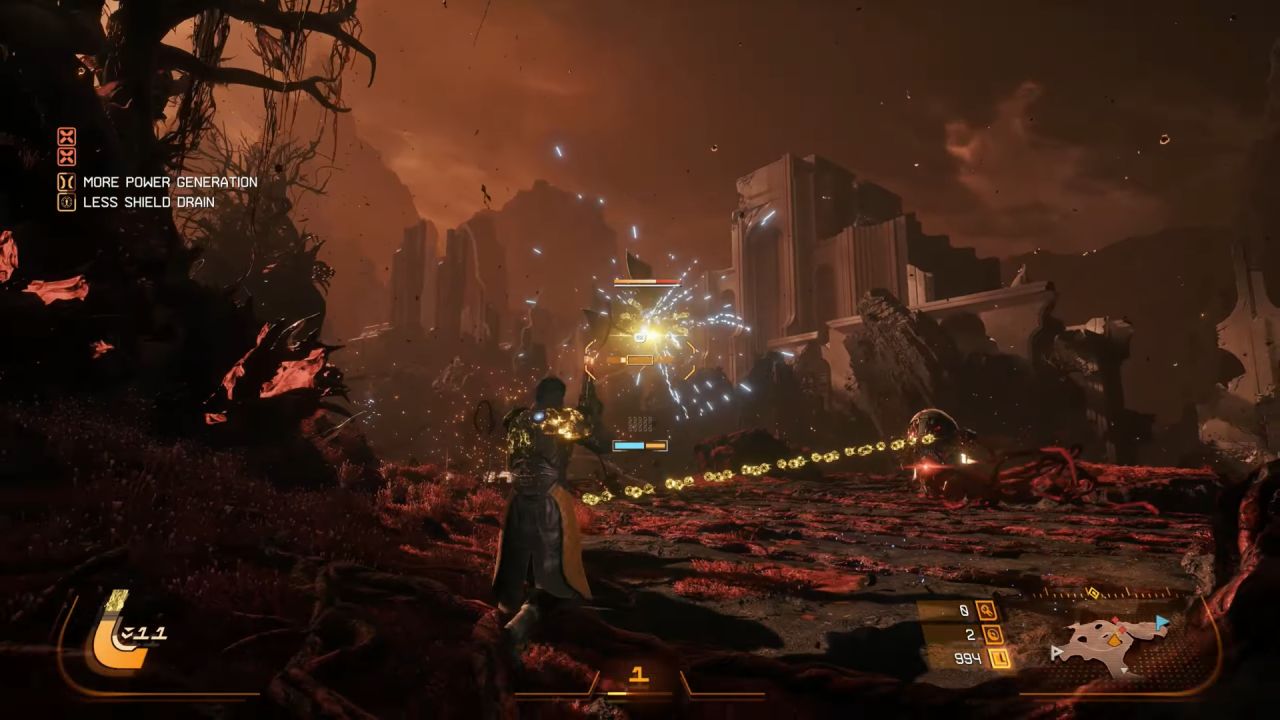
At its most basic level, Saros is a third-person roguelike shooter built around fast reactions and constant movement. You’re never static. Every encounter forces you to read enemy patterns, reposition quickly, and maintain momentum. Combat is immediate and responsive, with no noticeable delay between input and action, which makes everything feel tightly controlled even when the screen is full of chaos.
Exploration is built around a semi-randomized structure. Instead of fully procedural generation, Saros uses curated environments that are rearranged across runs. This makes it easy to tell the levels apart, but they are still surprising. As you play the game more, you start to notice patterns, like where enemies are, where resources are, and how the environment is set up. But the game keeps changing those patterns with new combinations and event triggers.
The dual-state world design is one of the most important systems.
There are two types of biomes: normal and eclipse. When things are normal, exploration is more stable, enemies are easier to deal with, and gathering resources is safer. Everything changes when the eclipse starts. Enemies get more aggressive, the environment changes, and places that were once safe become dangerous.
This change isn't just for looks. It changes the way you think about moving around and fighting. Paths open and close on their own, hazards like terrain damage or environmental traps go off, and even loot gets corrupted, making it stronger. Some areas are locked off until you get certain abilities, like grapples, jump enhancements, or combat upgrades. This allows you to go back to earlier zones. However, unlike Returnal, revisiting is optional rather than forced, which changes the rhythm entirely. Instead of being pushed back, you choose when to come back.
The way the game is set up makes it so that exploration, combat, and progression are all closely linked. You don't just move up levels; you also change how you see them based on what you've unlocked, how the world is right now, and how your build has changed.
In Saros, combat is based on layered aggression and defense that reacts to attacks.
You have to keep moving, shooting, meleeing, and timing your defenses all the time. One of the most important mechanics is being able to reflect or stop incoming attacks by timing your melee attacks perfectly. This turns defense into offense when done right.
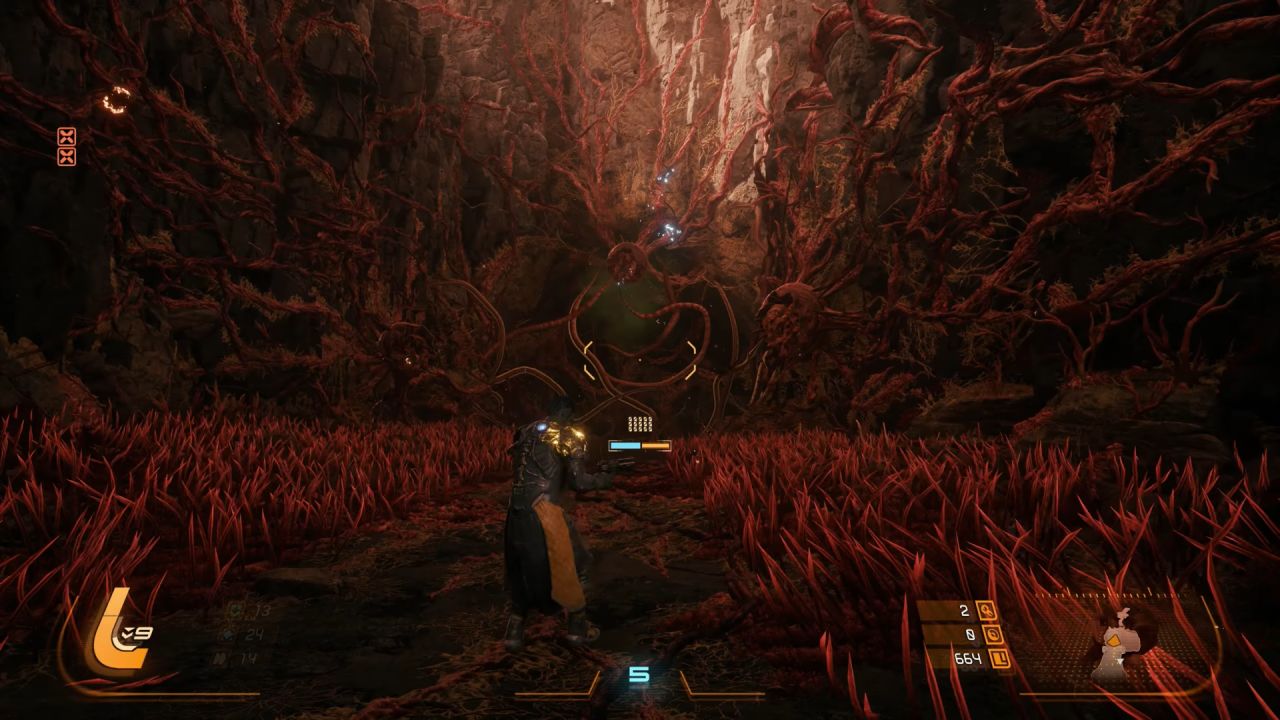
How enemies are designed has a big impact on how fights go. Organic enemies like to rush you and overwhelm you up close, making you move around all the time. Mechanical enemies, on the other hand, control space with ranged attacks and area denial. This mix makes fights with multiple levels, so you almost never have to deal with just one type of threat at a time.
Bosses make this even worse by adding multi-phase fights that change depending on the environment. Some phases get more aggressive during the eclipse, and some add new attack patterns that are related to corruption mechanics.
These fights are more about being able to adapt when things get tough than about remembering things.
There are some minor problems with the system, especially when it comes to control overlap in some inputs. This can sometimes cause unintended actions during high-stress times. But the main combat loop is still strong, smooth, and always interesting throughout the whole experience.
Saros's progression is a lot easier than Returnal's, but it still has depth. Instead of starting over from scratch after you die, you keep the money that you can use to buy permanent upgrades. These include more health, access to weapons, better shields, and more resources, all of which make future runs easier over time.
There is also a skill tree system that lets you change your build over time. This gives the impression of long-term progress that lasts through multiple runs, which makes it less frustrating while still rewarding repeated attempts. Failure is no longer a hard reset; instead, it becomes part of a bigger process of adding things up.
Also, upgrades based on corruption add risk-reward decisions to the process of moving forward. You can choose to take debuffs in exchange for stronger abilities, which lets you make high-risk builds that reward aggressive playstyles. This system ensures that even power growth carries tension, keeping long-term progression from feeling too safe or predictable.
Visually, Saros is one of the more striking showcases on PlayStation 5 hardware.
Carcosa is designed with a strong sense of scale and hostility. Environments feel massive, often alien in geometry, and deliberately uncomfortable in how they frame the player. You’re constantly reminded of how small you are in comparison to the world around you.
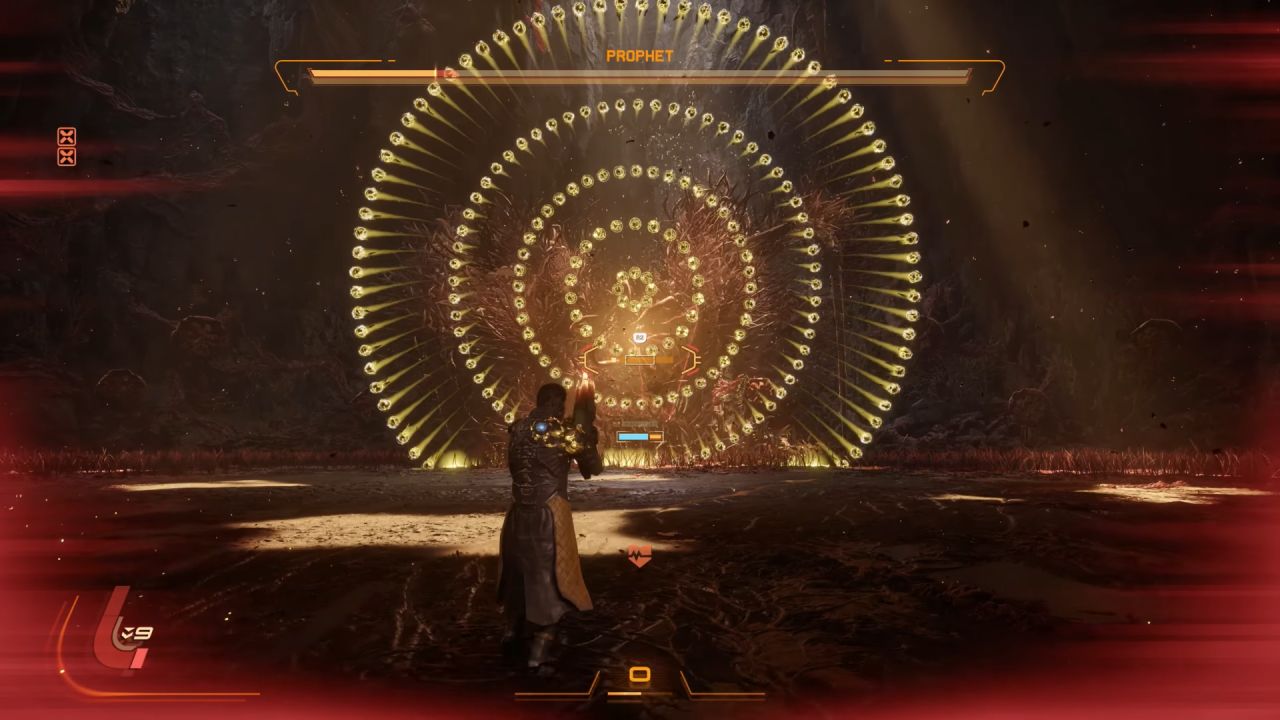
The eclipse system also plays a major role in visual identity. When activated, the entire color palette shifts, environments distort, and subtle environmental animations become more aggressive and unsettling. It's not just a change in lighting; it changes how you see the same space.
This is a great fit for audio design. Combat is quick and responsive, and the sound effects make it easy to tell which enemy is coming and what kind of attack it's using. The music shifts from ambient tension to heavy industrial intensity depending on the state of the battle, adding to the emotional rhythm of each encounter.
Saros is clearly made for people who liked the way Returnal was set up but wanted something that was more flexible and forgiving without losing the intensity. It keeps the core identity of Housemarque’s design philosophy intact—fast combat, tight controls, and high-pressure encounters—but layers it with systems that reward persistence rather than perfection.
What stands out most is how complete it feels as an evolution. Exploration is richer, progression is more meaningful, and combat has more depth without becoming overly complicated. It still demands attention, but it no longer feels like it’s trying to push you away when you fail.
At full price on PlayStation 5, it justifies itself if you’re even remotely invested in roguelike shooters. It’s not a casual experience, but it’s a more approachable and more sustainable one than its predecessor, and that alone makes it one of the stronger genre entries in recent years.
Senior Editor, NoobFeed
Verdict
Saros is a refined, faster, more forgiving evolution of Returnal’s formula that turns repetition into progression and chaos into control—Saros is Housemarque at its most confident and most playable.
95
Related News
No Data.