
ShantyTown Review
PC
A cosy diorama builder that allows one to transform populated cities areas into something unique, calming and strangely beautiful.
Reviewed by Tahmid Mahi on Apr 23, 2026
ShantyTown feels more like a game made to give you a certain feeling than a traditional one. It doesn't try to impress you with how big, complicated, or complex it is. Instead, it focuses on a quieter idea: what if building something could be slow, easy, and almost like meditation? From the moment you start, you are placed into compact environments filled with clutter, stacked structures, and tightly packed urban details.
You are not here to survive, manage resources, or complete high-pressure objectives. You are here to arrange things, decorate spaces, and slowly turn messy areas into something that feels intentional. The game comes from a small indie development background, created over several years by a solo developer. That alone explains a lot of its design philosophy.
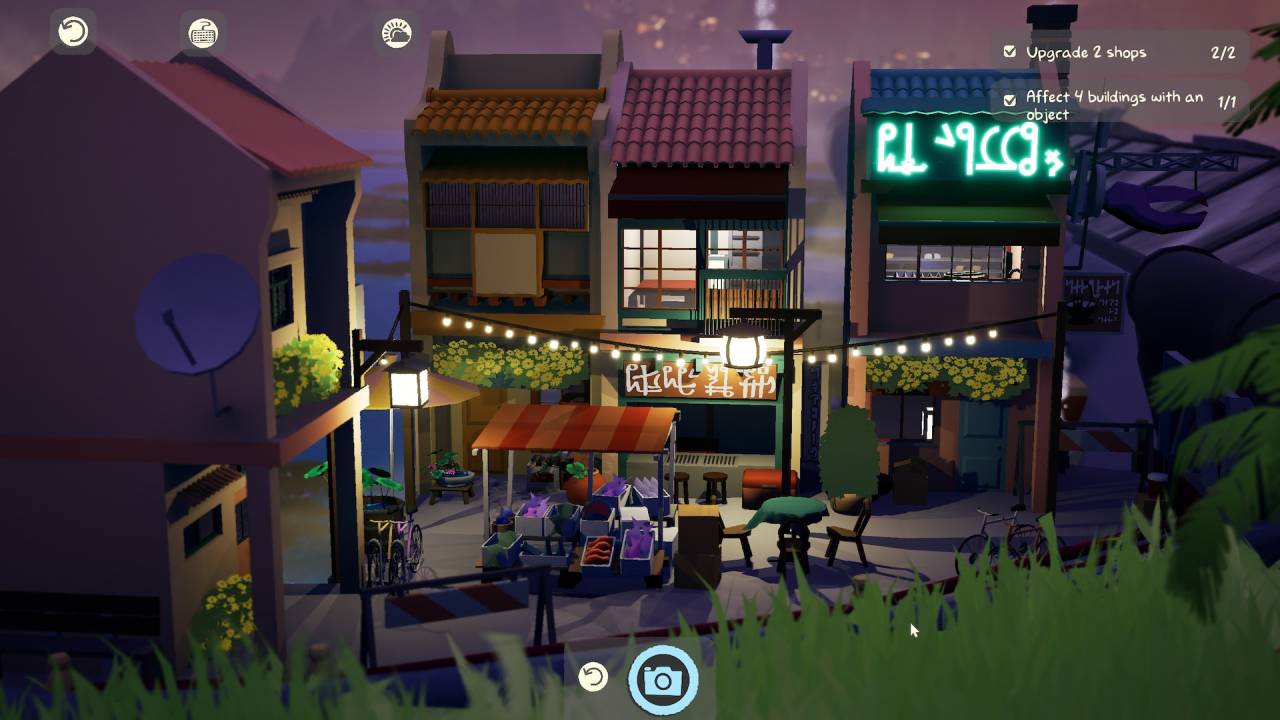
It is not trying to compete with large city builders or complex simulators. Instead, it strips everything down to the core idea of placement and atmosphere. You can feel that focus in the fact that every system is intentionally lightweight. There is no overwhelming tutorial system, no heavy UI pressure, and no expectation that you play "correctly". You are simply dropped into spaces and allowed to build at your pace.
Across all versions and demos of the game, the identity stays consistent.
You are a surveyor moving through multiple locations, documenting spaces, and building small scenes inside them. The tone might shift slightly depending on the framing; sometimes it feels like a formal mission, sometimes it leans toward humor, but the core loop never changes. You arrive, build, photograph, and move on. That simplicity is what defines the entire experience.
ShantyTown does not rely on a traditional story structure, but it still uses framing devices to provide context for your actions. In one version of the setup, you are introduced as a surveyor sent across different regions to document and reconstruct urban environments. You are told to visit specific locations, build scenes, take photographs, and return with a completed report.
At times, the tone is slightly exaggerated, almost like a bureaucratic sci-fi assignment, but it never becomes the focus of the game. As you move through different places, you start to notice how each one feels different, even if there isn't a story to explain it. One area might be a small neighborhood based on real-life cities, like Tokyo or other very crowded urban areas.
Another might place you near industrial structures, lighthouse regions, or marshland systems built around pipes and elevated platforms. There is no dialogue or character-driven storytelling, but the environments themselves begin to tell subtle stories through their layout and design.
You also start to see how the world is connected instead of separate. After you finish a location, you might see flypast views that show nearby areas in the distance. This reinforces the idea that everything exists in a single continuous space. Even though you're only interacting with one small part of the world at a time, the experience makes it feel more like a whole.
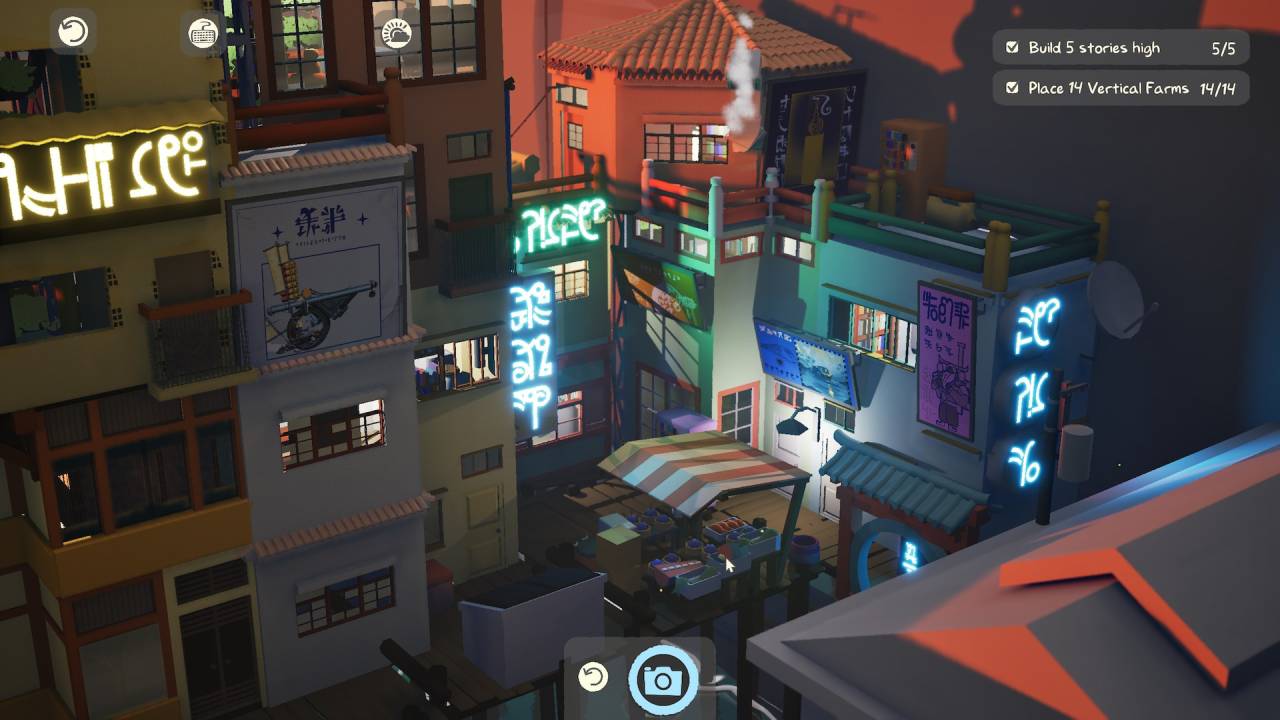
The game doesn't use traditional narrative progression to build meaning; instead, it does so through repetition and changes in the environment. Every place you build is like a picture of a bigger world that you can never fully see. As time goes on, the "story" becomes less about what happens and more about how you see these spaces as you change them.
The main part of ShantyTown is a basic but well-planned gameplay loop: you go to a place, obtain items, and put them in a small area until it feels complete. These things can be houses, stores, signs, utilities, decorations, and small details about the environment. There aren't many options for you. Instead, you get things in small batches over time, which keeps the experience calm and under control.
This gradual item flow is one of the game’s most important design choices.
It doesn't overwhelm you with choices; rather, it focuses your attention on the next step. You put one thing down, get another, and keep building in a steady rhythm. A lot of sandbox or building games have trouble with this approach, but it keeps you from getting tired of making choices. You are never stuck staring at dozens of options. You just work with what you have in the moment.
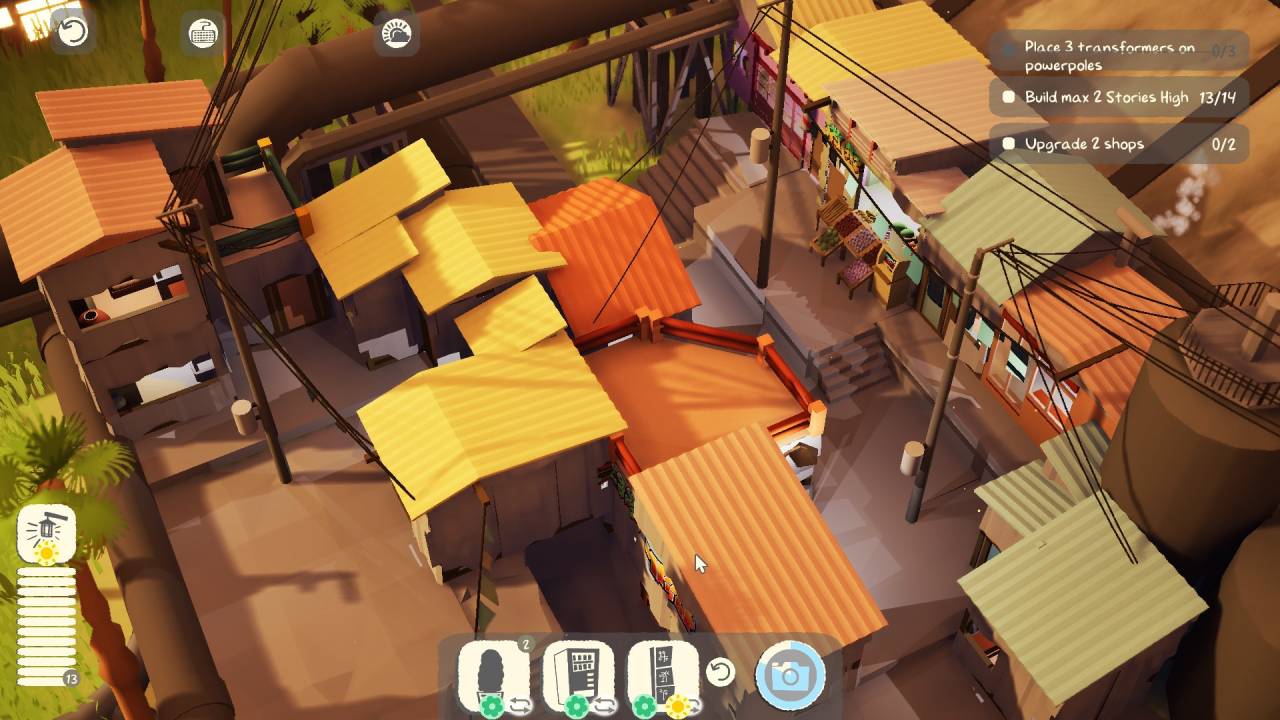
Each structure you place often comes with light requirements. A house might need lighting, utilities, and decorative elements. A shop might require signage, interior objects, or environmental props. Once you are familiarized with these conditions, the structure normally upgrades. Therefore, it is improving visually and sometimes unlocking new items. It gives you direction without turning the game into a checklist-heavy experience.
One of the most intriguing aspects of gameplay is how flexible placement can be. You are not restricted to flat layouts or strict grids. You can stack buildings, place items on roofs, and create layered environments that grow both up and down. This stacking system is one of the most intriguing parts of the game. You might place a café on top of a house or a decorative object on a roof, creating dense little clusters of life.
The variety of locations also changes how you approach building. Some spaces are open and easy to work with, while others are extremely tight, forcing careful placement and spatial awareness. In narrower areas, every object matters more because there is less room to adjust things later. In more open areas, you can experiment freely and create more spread-out designs.
Photography is another major part of the gameplay loop.
Once you are done with your work, you are advised to take pictures. The camera system is surprisingly detailed. You can change the angles, zoom in and out, focus on different points, and even change the weather or lighting. You can walk through your creations in first-person, use drone-style movement to get overhead shots, or freely adjust framing to capture the exact mood you want.
This transforms each completed location into something closer to a personal diorama. It's not enough to just build. You also have to show what you built in a way that feels important. ShantyTown does not involve any combat, plus puzzles are not included either. Instead, the closest thing to puzzle-like gameplay is spatial arrangement and meeting soft placement requirements within each structure.
Each object has a purpose in the environment, and figuring out how to fit everything together becomes the main challenge. You might need to balance lighting sources, decorations, utilities, and structural elements while working within a limited footprint. These constraints act like loose puzzle rules, but they never restrict creativity. There is no single correct solution.
Because of these factors, the game avoids failure states entirely. You can't "lose" a level, and there are no penalties for putting things in the wrong place. This makes the experience feel safe and new. Try odd layouts, stack things in weird ways, or put them in places you wouldn't normally put them to see how they look.
Progression through upgrades replaces what would normally be combat rewards or puzzle completion systems. As you meet building requirements, you unlock new decorative items and structural options. On the other hand, your progression is not linked to difficulty or skill. It simply expands your creative toolkit over time.
The downside of this system is that it can feel directionless if you expect structured challenges. There are no escalating mechanics or increasingly complex puzzles to solve. Instead, creativity entirely replaces difficulty, which may or may not align with your preferences.
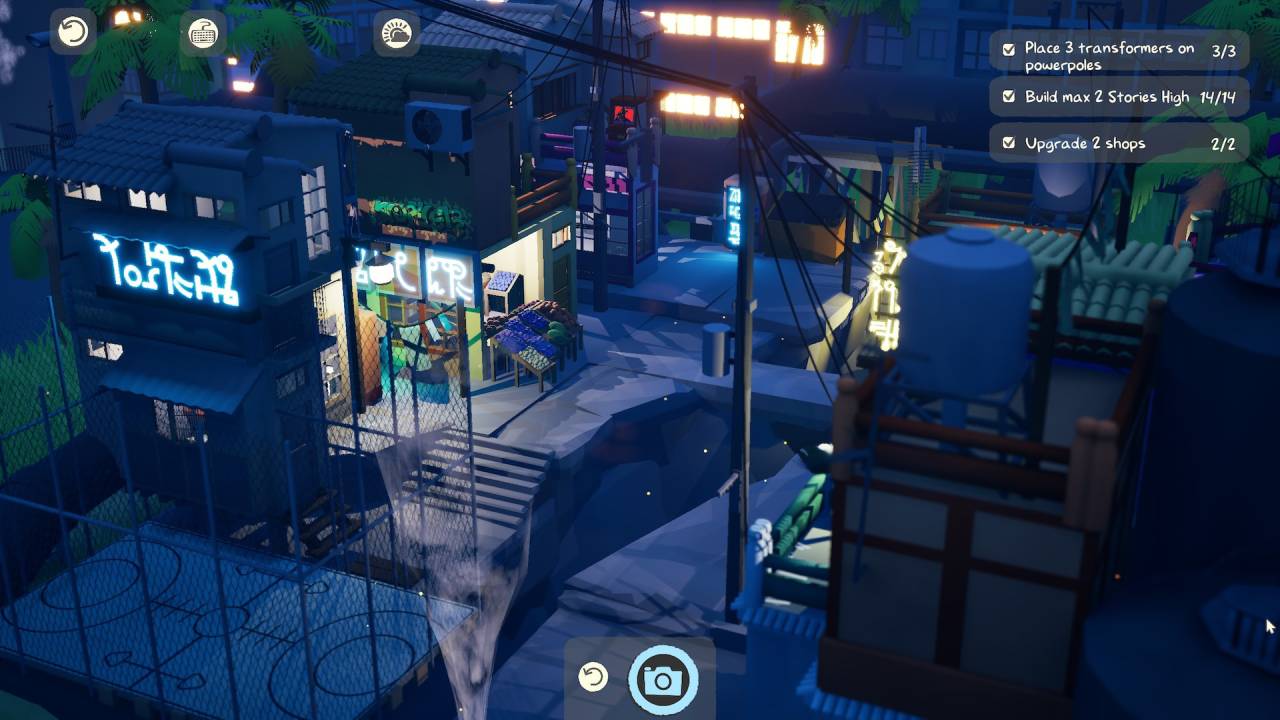
ShantyTown's design is mostly based on dense city planning with a few fantasy elements thrown in. Environments are filled with layered buildings, stacked rooftops, neon signage, and tightly packed streets that feel inspired by real-world high-density cities. Minor things, such as vending machines, air conditioning units, and trash bins, play a heavy role in the environment, not just something random.
One of the most essential elements is the lighting.
The transition between day and night entirely changes how each location feels. Daytime environments appear calm and grounded, while nighttime introduces glowing signs, reflections, and neon accents that render everything a more cinematic tone. These changes in lighting make you want to go back to places and see them in a different mood.
The camera system makes the visual experience even better. You don't have to stick to still shots. Instead, you can move around, change your perspective, and play with framing until you find the right composition. Weather effects like rain, fog, or overcast skies add even more variation to how your scenes look.
Sound design is minimal but effective. The ambient sounds also contribute to the overall experience without taking attention away from the building. Although there is no loud or distracting soundtrack, it is still difficult to concentrate. On the flip side, the audio silently adds to the feeling of calm focus, therefore allowing you to create more buildings.
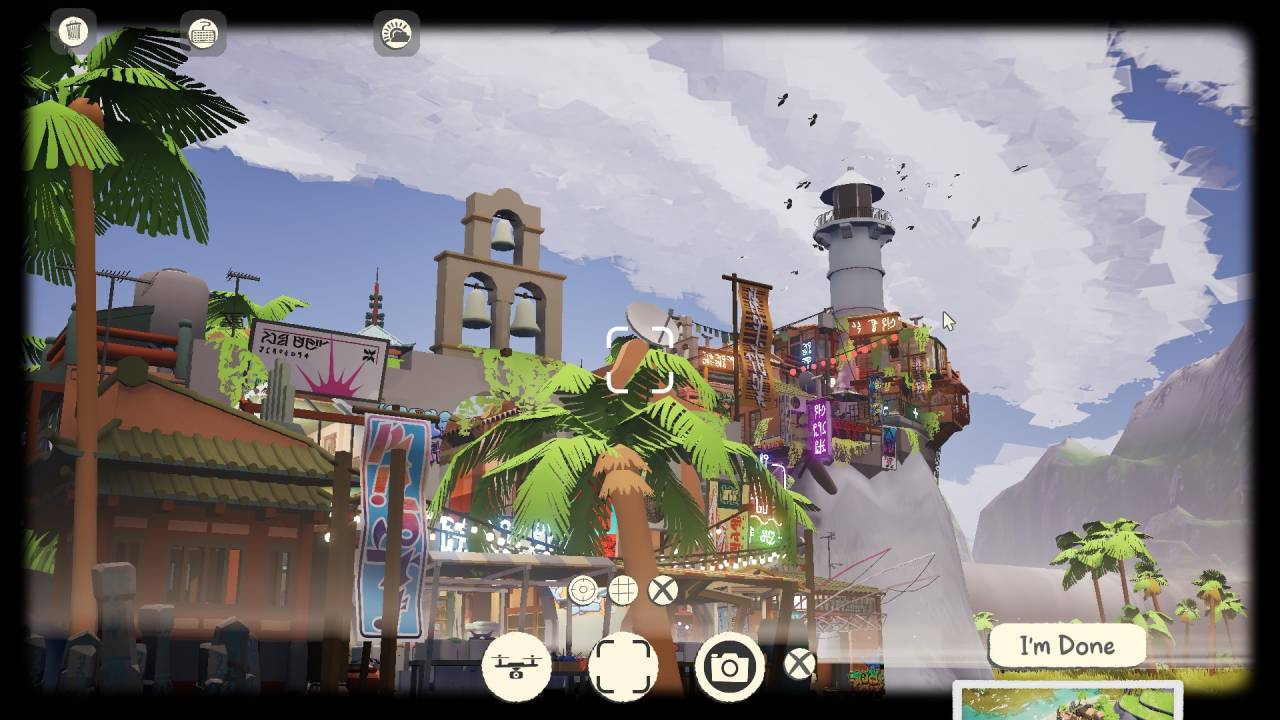
ShantyTown is a building game that is meant to be slow and focused, with an emphasis on mood rather than difficulty. ShantyTown is not like other games, as it eliminates factors such as combat, failure states and heavy progression and replaces them with a simple loop of placements, arrangements, and visual storytelling. You move through small spaces, slowly turning them into thick, layered scenes that feel personal and expressive.
It might not be sufficient for players who crave complicated systems or long-term challenges, but it does provide you a place to relax and build without feeling rushed. It is a game more about watching, being patient, and making small, creative choices than about big results. The longer you play, the more it becomes about your perception of the space than the game's instructions.
Editor, NoobFeed
Verdict
ShantyTown is a calm, creative diorama builder that focuses on relaxing buildings and atmospheres with light progression and expressive building tools, but no challenge, structure, or long-term depth for players who want traditional gameplay systems.
84
Related News
No Data.