
The Legend of Khiimori Review
PC
Early Access
A survival courier journey through 13th-century Mongolia that lives or dies by its bond between rider and horse.
Reviewed by Mahi Araf on Feb 27, 2026
Aesir Interactive is not new to building games around routine and the quiet satisfaction of a job well done. This is the Munich-based studio behind Police Simulator: Patrol Officers, a game that lives and dies on pacing and the player buying into a workday fantasy. Aesir has also spent years circling horse-focused projects under the Windstorm umbrella, learning what horse-sim players complain about most: floaty movement, fake-feeling animations, and mounts that behave like vehicles rather than animals.
These threads come together in The Legend of Khiimori. With 13th-century Mongolia, the Yam courier network, and a relationship with a horse portrayed as the true protagonist, Aesir pushes the discipline of a sim into a historical survival adventure. Additionally, the project bears the marks of a protracted public journey.
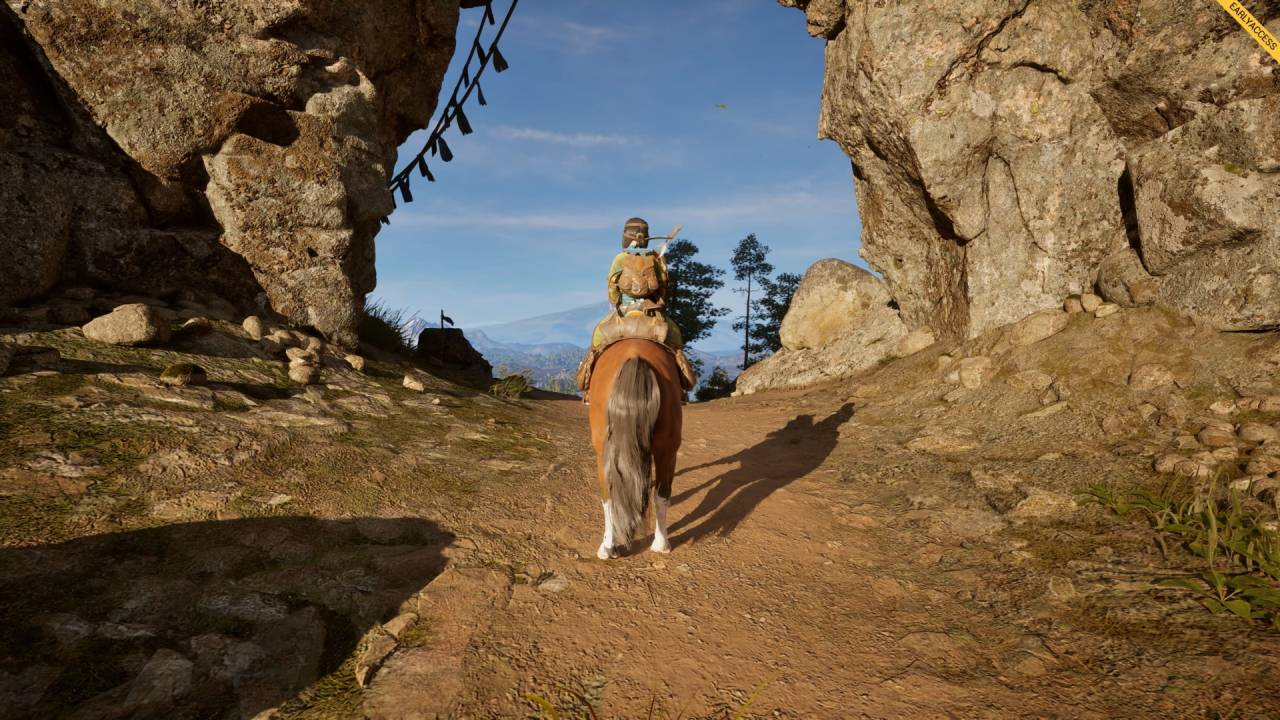
It was first marketed under the Windstorm name, raised money via crowdsourcing, and then progressively changed its name to something distinct. This change is significant because it clarifies why The Legend of Khiimori is so certain of what it is and so adamant about what it is not. You are not a hero from fantasy.
You ride for a living. By design, the work is repetitive. Rather than set pieces, the tension is meant to come from preparation, animals, weather, and distance. One crucial reality check: as of today (February 27, 2026), the Steam listing still lists March 3, 2026, as the planned Early Access release date.
Therefore, this is an evaluation of the game as it has been shown and experienced in the pre-release build and public materials, rather than a final judgment on a completed 1.0 product. Having said that, The Legend of Khiimori already demonstrates the form of a unique feature in horse games: a system-driven loop in which your entire strategy is the horse rather than just a skin.
The Legend of Khiimori doesn't try to win you over with plot twists.
It's more like travel fiction that focuses on everyday life, with the plot as the road and the stakes being practical. You move from one settlement to another, do delivery work, deal with everyday problems, and keep going because the next station needs something.
The story's rhythm follows a routine: get a task, ride, improvise, deliver, and then move on to another job that sends you into a new area in-game to explore to your heart’s content, and that loop is even more beautiful because of the world-building, which I will elaborate on further later.
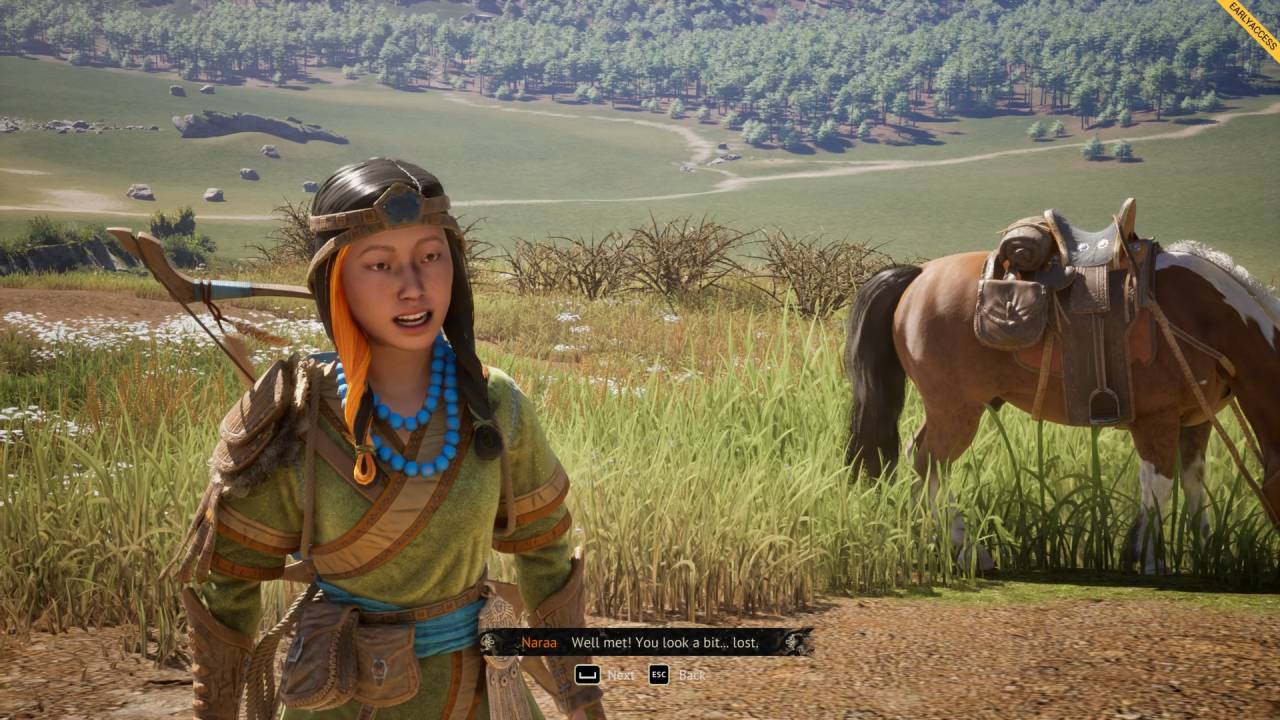
The writing is smart because it helps the story without turning every conversation into a joke about fetch quests. People you meet aren't asking you to save the world. They talk as if they live in a place where travel is dangerous and help is hard to find because they don't have enough people or are under a lot of stress.
You need to find a cartographer, get a dropped pack back after a wildlife ambush, and do courier work that feels more like real-life logistics than busywork in a video game. That tone fits the scene and makes it clear that your character is important because the network is important, not because fate chose you. The game mechanics in The Legend of Khiimori also tell many stories. A map screen is not the only part of route planning.
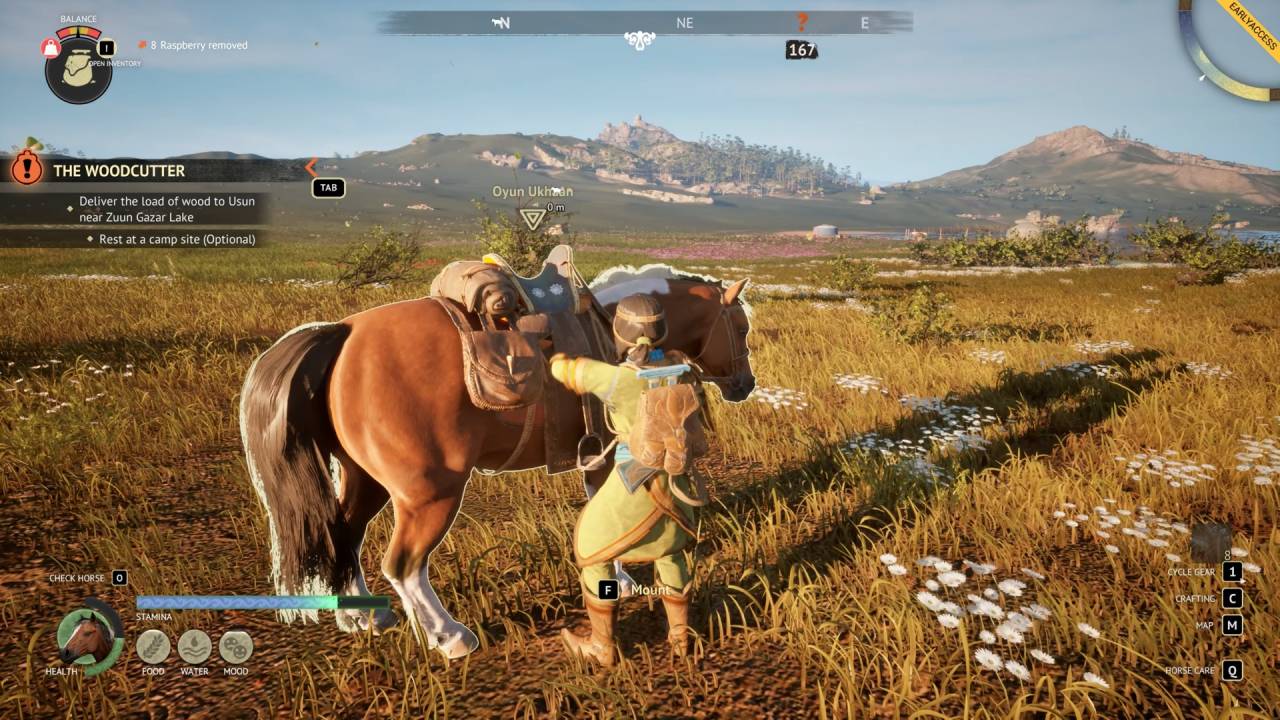
When the game tells you that the ground is muddy or hard, it is basically telling you in character that if you make a mistake here, it will lead to an accident later. You start building personal stories out of systems, like the time you cut across grass to save time and ended up in trouble, or the time you committed to a slope and saw your stamina drop so quickly that you had to change your whole plan.
The risk is that this kind of story takes a long time to grow.
You might think that not enough is happening if you need a strong central mystery right away. The Legend of Khiimori is betting that you will care about the job itself: the daily tasks, the feeling of belonging, and the slow build-up of lived moments. When it clicks, you think about trips instead of cutscenes.
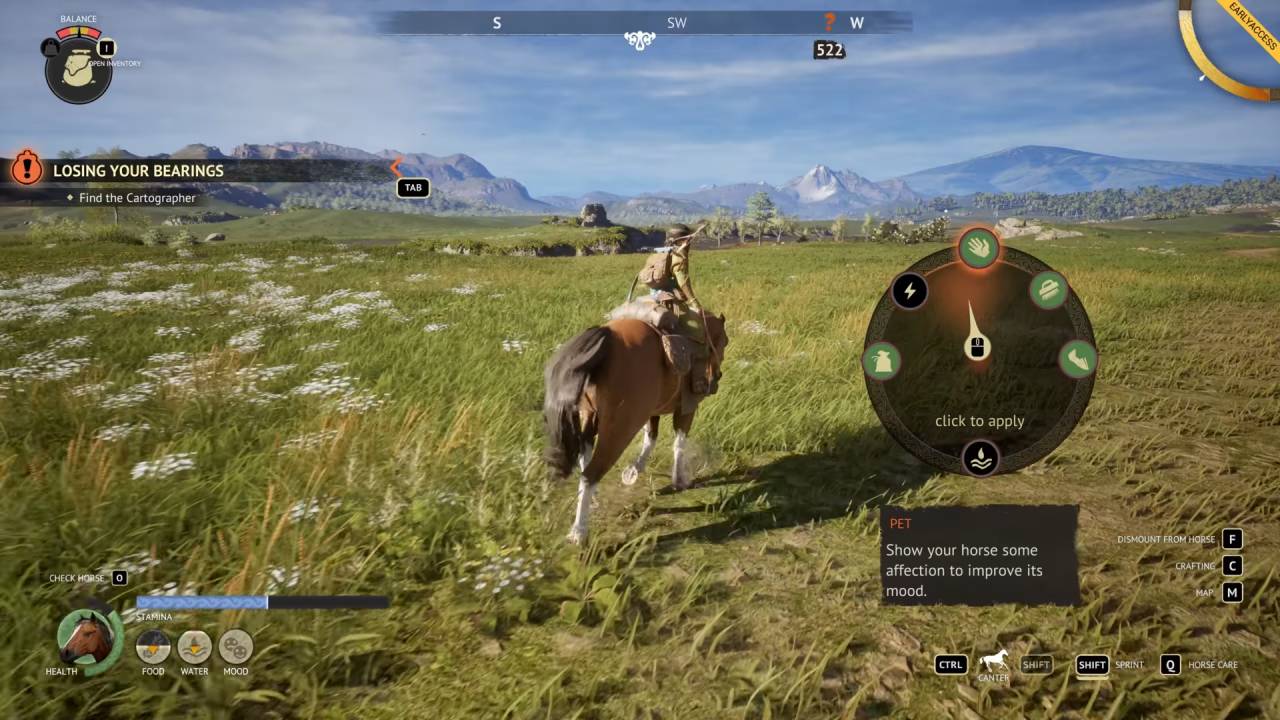
The main part of the game is riding a horse and staying alive as a courier, which is much more hands-on than most games that let you ride. You don't just ride. You get by. The meters are clearly focused on the horse, but food, water, stamina, and mood are always in the background. You can open an interface focused on horses that shows breed details, attributes, and progression.
The game doesn't shy away from making the horse feel like a character with a development path instead of a tool you replace when a better one comes along. The Legend of Khiimori stands out because of that progression. The official pitch makes it clear that you can train, bond with, and breed horses over generations, and that each horse will have special traits that will help you deal with different challenges and biomes. The breeding system is where things really start to move forward.
You can breed horses with traits you want by focusing on bloodlines that do well in certain roles. Want a courier that works best in the mountains? Put balance and agility first. Need reliability over the long haul? Put money into genetics that help with endurance and stamina recovery. This system adds long-term goals that go beyond just leveling up.
Training helps you move forward even more.
Riding regularly, managing carefully, and surviving all lead to small improvements. Killing enemies doesn't give you the usual XP grind. Instead, experience comes naturally from living and traveling. This strengthens the courier's identity. Doing your job well makes you stronger.
Crafting helps the survival layer. You collect mushrooms, herbs, and other things from the environment. When mixed into repellent pouches, animal dung becomes a surprisingly useful resource. Crafting does not overwhelm you with recipes, but it plays a meaningful role in preparation.
In The Legend of Khiimori, your long-term power is not a sword upgrade; it's a better animal and better preparation.
The game makes you think like a rider moving goods through dangerous areas at all times. An inventory is more than just a list. You can put things in saddlebags and balance the weight on both sides of your horse. The game directly connects this to risk: if your cargo is off-balance, you are more likely to trip and get hurt.
Terrain is important here in The Legend of Khiimori in a way that most open worlds can't copy. Slopes make things harder. You don't want to drive through mud; you want to avoid it. The pacing is also honest. The game dares you to enjoy long rides, and you are often alone with the landscape.
That can be calming because it gets you into a rhythm. If you want constant stimulation, it can also feel empty. The best way to do this loop is to think of the trip itself as the activity. You can gather supplies along the way, watch the weather change, take care of your horse, and decide when to rest.
The sim's ambition is most clear when you are controlling the horse. The horse doesn't always stop right away. It keeps going, and you need to figure out how the game wants you to handle speed, stopping, and turning. That realism can make the animal feel real, but it can also make simple tasks like picking up things or reading a prompt feel strange if the horse keeps moving forward.
The Legend of Khiimori has some weirdly satisfying things for people who like horse animation and physicality.
The horse sweats after a long ride, can get too hot, and needs breaks to cool down. When it rains, it gets wet. It gets dirty. If you don't take care of it, its mood will drop. Even small things, like brushing or caring for hooves, are seen as meaningful actions instead of just cosmetic emotes. That obsession with horses first is what the game is all about.
Combat is more present than you might expect from a courier fantasy, but it is still not the main course. You are given a bow and arrows, and the bow feels cleaner and more natural than the non-lethal options. Aiming and releasing is intuitive, and hunting small prey can be genuinely satisfying because it gives you a simple skill to master while traveling.
With all that being said, The Legend of Khiimori still has to prove that it is worth your time.
Non-lethal tools are great for the theme, but they need to be dependable enough that you know you're making smart choices and not just hoping the system works. If the deterrents don't work often enough or you run out of resources too soon, you end up in a comedy of errors where you have to make things up on the spot and hope the animal loses interest.
The Legend of Khiimori is designed to sell space visually. Players keep saying that the landscape has a "so Mongolia" feel to it. The horizons are wide, the lighting is natural, and the terrain looks real instead of romanticized. The game's public materials focus on Unreal Engine 5 features like realistic vegetation and weather effects, and third-party coverage has called its dynamic weather system a key feature.
The weaker side of the presentation is readability and consistency. Item markers can blend into the ground. Some scenes look great, and others not so much. And because you spend so much time staring at your horse in motion, any stiffness in gait transitions or turning becomes obvious fast. The game's entire fantasy depends on the horse looking and feeling right, so animation polish is not a luxury here; it is the spine.
Sound is very important for immersion, especially in a game about traveling. The sounds of hooves, wind, and wildlife in the background do most of the work, which fits with the contemplative tone. There is also an interesting push toward voice work: recent announcements say there will be voice-over in both English and Mongolian. This is the kind of detail that can make the world feel more real without making the game a dialogue machine.
Performance is the elephant in the room for any Unreal Engine 5 open world, and The Legend of Khiimori has been widely discussed as demanding.
The official requirements and community discussion have suggested that optimization is a major focus going into Early Access, and the gap between top-end showcase footage and average player hardware will always shape our perception. The important thing is that The Legend of Khiimori is the kind of game where performance issues do not just annoy you; they break the fantasy. If Aesir nails stability, everything else improves immediately because the game is built on feel.
When you fully accept The Legend of Khiimori's identity, it is at its best. You are not here to see a lot of spectacles all the time. You are here to live in a loop: get ready, ride, manage risk, and slowly improve your horse and your routine. The bond system works because it makes sense.
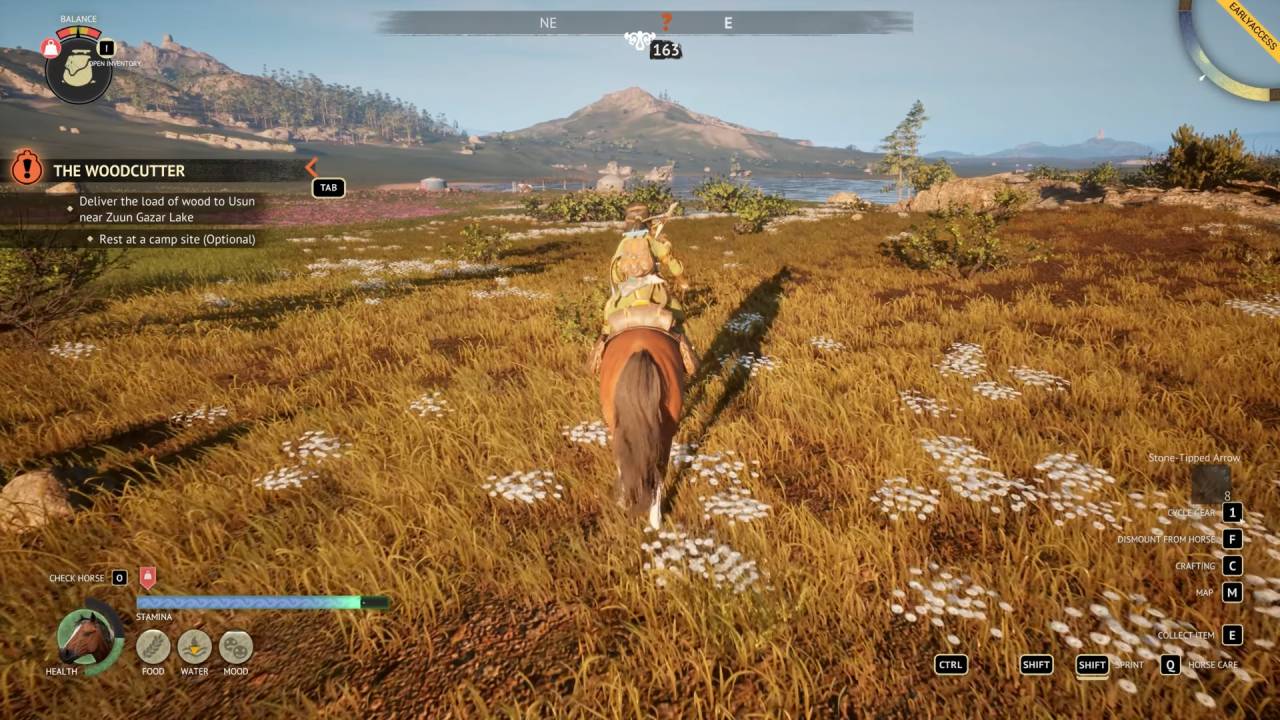
Taking care of your horse is not just a side hustle. That's how you stay alive in-game. The progression works because it is based on skill rather than mindless grinding. The combat works because it is like a tool and not the main focus. Let the job be the story, and let the road make the memories for the story to work.
The Legend of Khiimori will feel slow if you want a fast, open world with fights all the time and scripted drama that never ends.
This is one of the most serious attempts to make a horse game that doesn't treat the horse like a motorcycle with fur. If Aesir can deliver good performance, easy controls, and a wide range of content at the Early Access launch on March 3, 2026, it has a good chance of becoming more than just a fun experiment.
Senior Editor, NoobFeed
Verdict
The Legend of Khiimori is a rare horse-first survival game where planning your route and logistics are just as important as the scenery. If performance and controls stay the same, Aesir could set the standard for modern horse sims.
83
Related News
No Data.