
AMD Radeon RX 7900 XT vs. GeForce RTX 4070 Ti: 1440p and 4K Gaming
Rasterized performance often favors RX 7900 XT while ray tracing efficiency remains a strength for the RTX 4070 Ti.
Hardware by Tanvir Kabbo on Aug 30, 2025
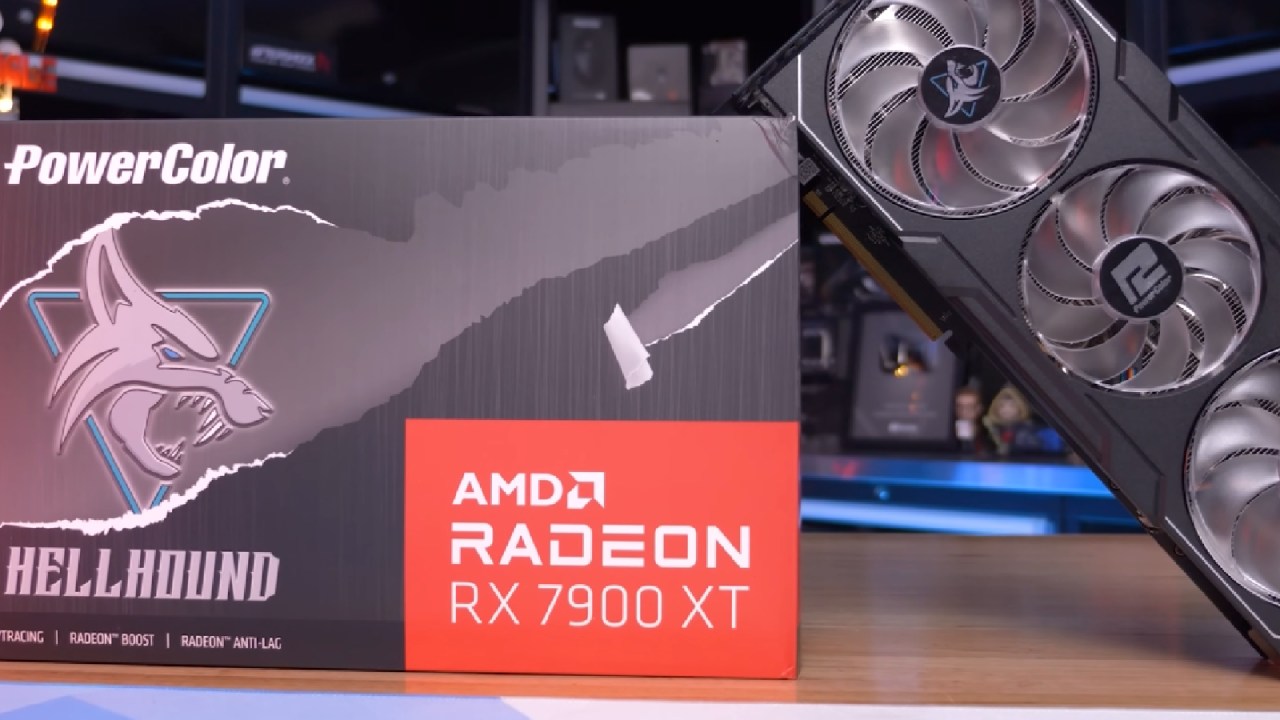
Radeon RX 7900 XT and GeForce RTX 4070 Ti go head-to-head across a massive library of 50 modern games, tested at both 1440p and 4K resolutions. These benchmarks cover rasterization and ray tracing workloads, highlighting performance swings, VRAM utilization, and price-to-performance comparisons.
Both GPUs are positioned in the upper performance tier of the market, and with pricing adjustments since launch, the competition has become much tighter.
Test System Setup
The performance of an 7800X3D was simulated by us testing a Ryzen 9 7950X3D with the second CCD disabled. The computer was powered by 32GB DDR5-6000 CL30 memory on a Gigabyte X670E Aorus Master motherboard.
We used the latest AMD and Nvidia drivers to ensure fair comparisons. Testing was done on rasterized and ray-traced workloads with resolutions of 1440p and 4K.
Fortnite Performance
Starting with Fortnite using the DX11 Epic preset, the RTX 4070 Ti was faster on average at 1440p by around 8%, but its 1% lows were 17% slower than those of the RX 7900 XT. At 4K, the RTX card pulled ahead with 9% greater average frame rates and 13% stronger lows.
Switching to DX12 resulted in a significant performance drop for the RTX 4070 Ti, with a decrease of over 30% at 1440p. With hardware ray tracing, both GPUs performed nearly identically, indicating that RDNA3 can match Ada Lovelace in Unreal Engine 5-based workloads.
Call of Duty: Modern Warfare II
Using the Ultra preset, the RX 7900 XT dominated with a 31% lead at 1440p, achieving an average of 174 fps. At 4K, the margin remained strong at 23%, with 101 fps compared to 82 fps on the RTX 4070 Ti.
The Witcher 3
Without ray tracing, both GPUs achieved nearly 200 fps at 1440p and over 100 fps at 4K, although RX 7900 XT was 11% faster. With ray tracing enabled and FSR2 quality mode, both cards experienced a significant drop in performance, unable to reach 60 fps at 1440p.
RTX 4070 Ti performed 20% better under RT workloads, but both cards delivered undesirable results at 4K.
F1 22 and Warhammer 40,000: Darktide
In F1 22 with ray tracing enabled, both GPUs delivered over 100 fps at 1440p and around 60 fps at 4K, performing nearly identically. In Warhammer 40,000: Darktide, RTX 4070 Ti led by 14% at 1440p, though both struggled at 4K due to VRAM limitations, with RX 7900 XT only reaching 31 fps.

A Plague Tale: Requiem and The Callisto Protocol
A Plague Tale: Requiem favored AMD heavily, with RX 7900 XT leading by 22% at 1440p and 25% at 4K. The Callisto Protocol, utilizing FSR 2 quality by default, showed similar results on both GPUs, with over 170 fps at 1440p and 100 fps+ at 4K.
Atomic Heart and Cyberpunk 2077
In Atomic Heart, both GPUs achieved 103 fps at 1440p, but RX 7900 XT was 10% faster at 4K with 60 fps. Cyberpunk 2077, without ray tracing, showed RX 7900 XT 18% faster at 1440p and 34% faster at 4K.
However, with ray tracing enabled and FSR 2 quality mode, RTX 4070 Ti maintained much stronger performance. RX 7900 XT dropped by 48% at 1440p and 44% at 4K, while RTX 4070 Ti lost only 14% at 1440p and retained the same performance at 4K.
Hogwarts Legacy
At 1440p without ray tracing, RX 7900 XT outperformed RTX 4070 Ti, leading by 28% on average and 56% in 1% lows. At 4K, RX 7900 XT was still ahead by 16%.
With ray tracing enabled, however, the RX 7900 XT lost ground, becoming 9% slower at 1440p with just 59 fps. At 4K, neither card produced desirable results, with RX 7900 XT averaging 27 fps.
Average Performance at 1440p
Across all 50 tested titles, both GPUs averaged nearly identical performance at 1440p, with RX 7900 XT only slightly ahead.
Performance swings of 30% either way were seen depending on the title and whether ray tracing was enabled. Games like Modern Warfare II, Hogwarts Legacy (RT off), and A Plague Tale favored AMD, while Cyberpunk 2077 RT, Metro Exodus Enhanced, and Dying Light 2 RT favored Nvidia.
Average Performance at 4K
At 4K, RX 7900 XT averaged 3% faster overall, compared to an 8% lead in day-one reviews. The margin was effectively a draw. With ray tracing, RTX 4070 Ti often provided smoother results, but without RT, RX 7900 XT typically came out on top.
Ray Tracing and Upscaling
Ray tracing is clearly stronger on RTX 4070 Ti, though performance varies by game engine. Unreal Engine 5 titles like Fortnite show more competitive results. DLSS remains Nvidia's advantage in upscaling, generally offering superior image quality and performance over FSR.
However, testing was standardized with FSR2 quality mode to ensure a fair comparison across both GPUs.
.jpg)
VRAM and Power Efficiency
RX 7900 XT comes with 20GB VRAM compared to RTX 4070 Ti's 12GB. While 12GB is sufficient for most modern games, the larger capacity makes RX 7900 XT more future-proof, especially as games continue to increase VRAM requirements.
Both GPUs draw similar levels of power, with RX 7900 XT sometimes consuming slightly more but also producing higher frame rates.
Pricing and Value
At launch, RX 7900 XT's $900 price tag made it a poor value, especially compared to the $1,000 RX 7900 XTX. However, current pricing has dropped to $800, making it much more competitive.
A better value than both the RX 6800 XT at MSRP and RTX 4070 Ti, which typically sells for Stronger ray tracing and DLSS benefits are offered by RTX 4070 Ti. Still, its reduced VRAM capacity makes it difficult to justify its higher price.
Final Thoughts
All things considered, RX 7900 XT and RTX 4070 Ti perform very similarly on today's gaming workloads. RTX 4070 Ti is the stronger option if ray tracing is a priority, while the RX 7900 XT is better for rasterized performance, future VRAM demands, and overall value, given its current lower price.
RX 7900 XT is the more appealing option at $800, but neither GPU provides revolutionary value compared to earlier models. Both are good choices in the end; the decision you make will depend on how important raw performance and VRAM are to you against ray tracing.
Check Our Other NVIDIA Articles:
- GeForce RTX 5090 Unleashed: Is NVIDIA's New Flagship the Ultimate 4K Gaming GPU?
- NVIDIA GeForce RTX 5080 Review (2025): Still A 4K Gaming Powerhouse?
- RTX 5090 Performance Testing In GTA 5 – 1080p, 1440p, and 4K Max Settings Benchmark
- RTX 5090 Laptop Vs. M4 Max MacBook Pro: Ultimate Raw Performance Vs. Battery Endurance
- NVIDIA RTX 5070 Review: Mid-Range Muscle or Marketing Hype?
- RTX 5070 Ti Review: Performance, Thermals & Power Efficiency Tested
- Asus ROG RTX 5090 Astral OC Vs. Founders Edition: The 4K Gaming Benchmark
- ASUS ROG Astral RTX 5090 OC Edition Review: 32GB GDDR7 & 4K Gaming Benchmark
- ASUS GeForce RTX 5090 LC Liquid Cooled GPU Review: Unmatched Silence & Speed
- MSI GeForce RTX 5090 32GB SUPRIM SOC Review: Power Efficiency, Cooling, and Gaming Performance
- INNO3D RTX 5060 Ti 16 GB X2 Review: Gaming Benchmarks, Temps, and Power Efficiency
- HP Omen 45L Review: RTX 5090 Performance, Thermals, and Value Analysis
- ASUS TUF Gaming GeForce RTX 5060 Ti Review: DLSS 4, Power Efficiency, and Gaming
- ASUS Prime RTX 5060 Ti OC 16GB Review: DLSS 4, Ray Tracing, & Thermals Tested
- NVIDIA GeForce RTX 5060 Review: Specs, Gaming, and Cost per Frame
- MSI GeForce RTX 5090 GAMING TRIO OC Review: A Monster Power GPU
Senior Editor, NoobFeed
Gaming Hardware Updates
No Data.