
NVIDIA Leans on RTX 3060 12GB as RTX 5050 9GB Faces Late June Launch
NVIDIA delays RTX 5050 9GB launch, positioning RTX 3060 12GB as a temporary budget solution with stronger VRAM advantage.
Hardware by Masaru Hoshino on Apr 17, 2026
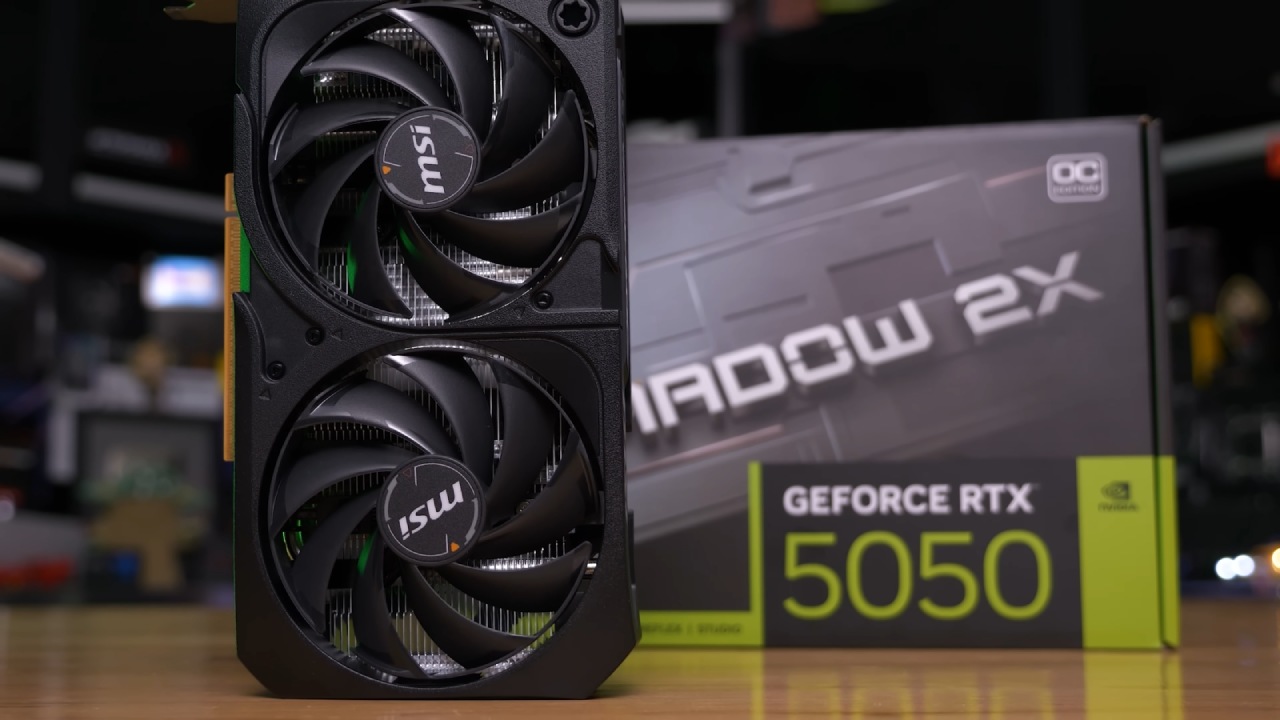
The sub-250 graphics card market in 2026 is among the most unstable and underserved in PC gaming. As top-end graphics cards keep pushing the limits with AI-based features and massive compute improvements, low-end gamers are once again in a familiar holding pattern. It is now reported that NVIDIA has pushed its next GeForce RTX 5050 9GB (GDDR7) (originally planned for May or Computex) to a late June release.
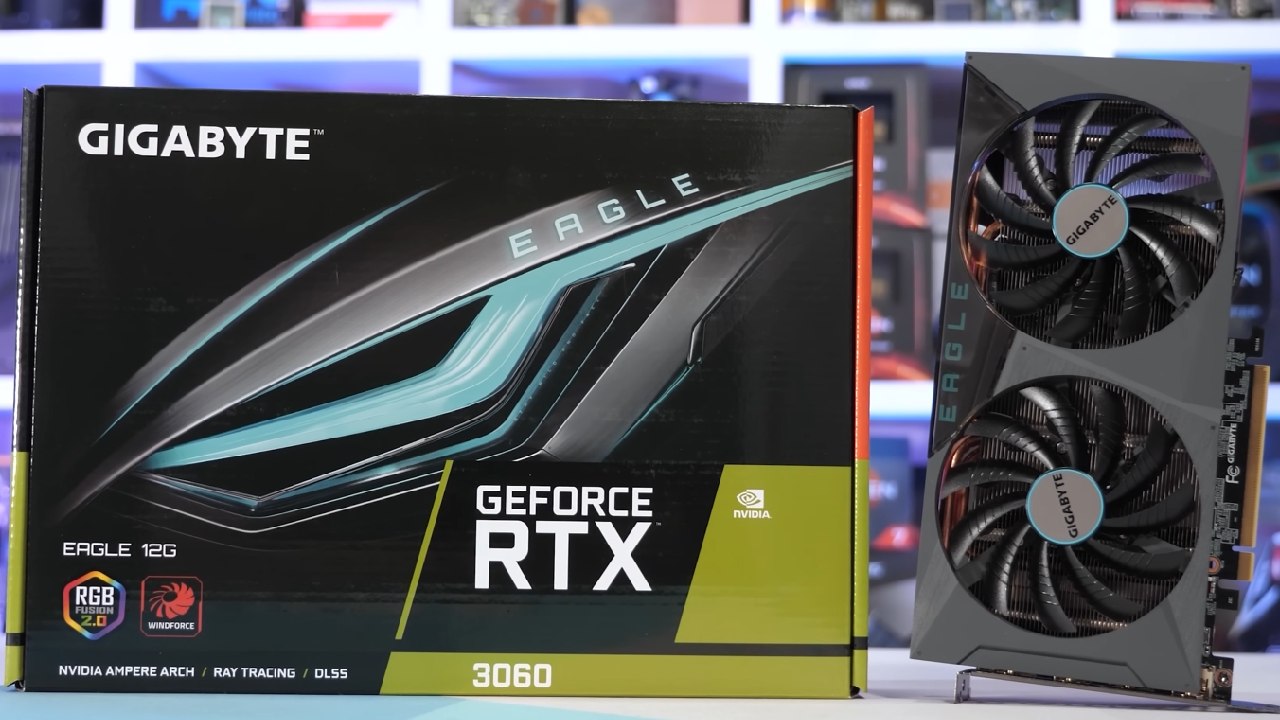
To fill this gap, NVIDIA seems to be relying on a far-fetched backup: the old but still immensely popular NVIDIA GeForce RTX 3060 12GB, a card that is not going away.
A Stopgap Strategy for a Fragile Market
Delays are nothing new in the GPU space, but what's notable here is NVIDIA's apparent lack of a direct interim replacement. The company is also reportedly repositioning the RTX 3060 12GB to fill the gap, rather than accelerating another Blackwell-based SKU, which would essentially make a 2021-era graphics card a 2026 budget anchor.
Pricing is all in this strategy. To be competitive, the RTX 3060 would have to drop down into the sub-200 range. At that tier, it becomes a value proposition, especially for gamers who prioritize memory capacity over state-of-the-art features.
9GB vs. 12GB: Capacity Still Wins Over Speed
Paperwise, the late NVIDIA GeForce RTX 5050 9GB features newer memory technology and architecture. Its design, three 3GB GDDR7 modules on a 96-bit memory bus, provides an estimated 336 GB/s of bandwidth. That is a definite improvement in generation efficiency and speed over Ampere.
But it is not a bandwidth issue, it is a capacity issue.
The current AAA titles are pushing the boundaries of 8GB-class GPUs, particularly at 1080p Ultra and higher settings. The sizes of textures, ray tracing resources, and shader complexity have increased dramatically. In that regard, 9GB is not so much of an upgrade as it is a tentative step forward- arguably, still in the danger zone of VRAM.
In comparison, the 12GB frame buffer of the RTX 3060 still ages exceptionally well. Although its GDDR6 memory and older architecture are less efficient and have lower raw throughput than GDDR7, the extra capacity provides a buffer against stuttering, texture pop-in, and memory overflow issues in newer games.
This forms a strange dynamic: The RTX 5050 has more modern features and bandwidth, the RTX 3060 has more memory headroom and Stability.
The latter can be more important in the real world for budget gamers.
The Feature Gap: Blackwell vs. Ampere
There are definite pros and cons to picking the RTX 3060, of course. Because it is based on Ampere, it doesn't contain the newest Blackwell features. For instance, it doesn't support newer AI-driven features like DLSS 4 and has superior performance for Tensor and RT cores.
These improvements are not small. DLSS remains a significant factor in the lifespan of lower-end GPUs, and more recent versions are increasingly associated with the newest architectures. The RTX 5050 is more future-proof in that way, even if it has less VRAM.
However, feature sets are only useful if the hardware can handle the memory it needs. Even a GPU with little VRAM might not be able to use such advanced technologies at all.
The Unkillable GPU: Why the RTX 3060 Remains the Leader
It's not surprising that the RTX 3060 is one of the most popular GPUs in surveys like the Steam Hardware Survey. It has an uncommon mix of low cost, good performance, and long life.
Five years after it came out, it's still one of the most popular GPUs with 12GB of VRAM. That's really astounding for the future. Newer cards have better designs, but many of them have less memory, making the 3060 stand out.
To a large extent, NVIDIA's reliance on the 3060 today points to a broader industry problem: low-end GPUs have not advanced as aggressively as high-end ones, especially in areas where they are needed most by modern workloads.
Final Thoughts
To budget builders, it is a matter of timing and priorities.
Wait until the RTX 5050 9GB is available if DLSS 4 and other AI features are important. Power efficiency and architectural improvements are more important than raw VRAM. Pricing is competitive without rising.
Buy the RTX 3060 12GB when A sub-200 offer is offered. The idea is to play modern AAA games with less memory. Stability and consistency are more important than cutting-edge features.
The bigger takeaway is less flattering for NVIDIA. The incremental addition of 1GB of VRAM in a new generation does not address the increasing needs of modern games in a meaningful way. It highlights, at best, a conservative attitude towards segmentation, which risks putting budget gamers in an endless loop of compromise.
The RTX 3060 12GB is not a fallback until late June, when it is arguably the wiser choice in a market where memory capacity silently determines real-world performance.
Also, check our other hardware articles:
- AMD Ryzen 9 9950X3D Review: Setting The Standard For 2025 Gaming CPU
- Amazon Luna 2025 Review: Is Prime Gaming's Cloud Service Your Go-To For Casual Fun?
- AMD RX 9070 XT Review: AMD's RDNA 4 Champion for 1440p Gaming
- GeForce Now Ultimate: Ditching Your Gaming PC For Cloud RTX 4080 Power?
- NVIDIA GeForce RTX 5080 Review (2025): Still A 4K Gaming Powerhouse?
- Intel Core Ultra 9 285K Review And Performance Breakdown (2025)
- AMD Ryzen 7 9800X3D Review: 3D V-Cache Goes God Mode with Stunning Gaming Performance
- Intel Core Ultra 9 285K vs AMD Ryzen 7 9800X3D: In-Depth Gaming Performance and Benchmark Comparison
- NVIDIA GeForce RTX 5080 Super Performance In Cyberpunk 2077: Path Tracing & DLSS 4.0 Tested
- AMD Radeon RX 9070 XT In Cyberpunk 2077: Ray Tracing & FSR 4.0 Tested
- Intel Arc B580 Review: The $250 GPU Revolutionizing 1440p Gaming
- Intel Arc B570 Vs. B580: Value, Specs, And Real-World Gaming Performance
- RTX 5090 Laptop Vs. M4 Max MacBook Pro: Ultimate Raw Performance Vs. Battery Endurance
- Intel Arc b580 Vs. RTX 4060: Game Performance And Value Analysis
- RTX5090 Hell Is Us Demo 4K Ultra Benchmark: DLSS Vs. Native Performance Guide
- NVIDIA RTX 5070 Review: Mid-Range Muscle or Marketing Hype?
- Nintendo Switch 2 Review: Handheld Performance, Features & Value Breakdown
- RTX 5070 Ti Review: Performance, Thermals & Power Efficiency Tested
- Samsung Odyssey OLED G81SF Review 2025: Ultimate 32-Inch QD-OLED Gaming Monitor
- AMD RX 9070 Performance Review: Thermals, Clocks, and Real-World FPS
- AMD Ryzen 5 7600 Review: Best Budget Gaming CPU of 2025?
- AMD Radeon RX 7800 XT Review: RDNA 3 Power For Midrange Gaming
- Asus ROG RTX 5090 Astral OC Vs. Founders Edition: The 4K Gaming Benchmark
Editor, NoobFeed
Gaming Hardware Updates
No Data.