
Z1 Extreme vs. Z2 Extreme vs. HX370: Full Handheld APU Performance Comparison
Zen 4 and Zen 5 cores show multi-core and single-core gains along with RDNA 3 and RDNA 3.5 GPU improvements.
Hardware by Masaru Hoshino on Sep 21, 2025
Three of the best handheld APUs are being compared to determine which one delivers the best performance. Among the contenders are AMD's AI laptop-class chip, the HX370, which promises tighter power draw and more GPU muscle; the Z1 Extreme, a longstanding powerhouse that continues to perform impressively across a variety of devices; and the Z2 Extreme, the Z1 Extreme's successor.
With handheld gaming PCs, power consumption is always a consideration, so balanced mode at 17watts and performance mode at 25watts were used for testing.

Devices and Configurations
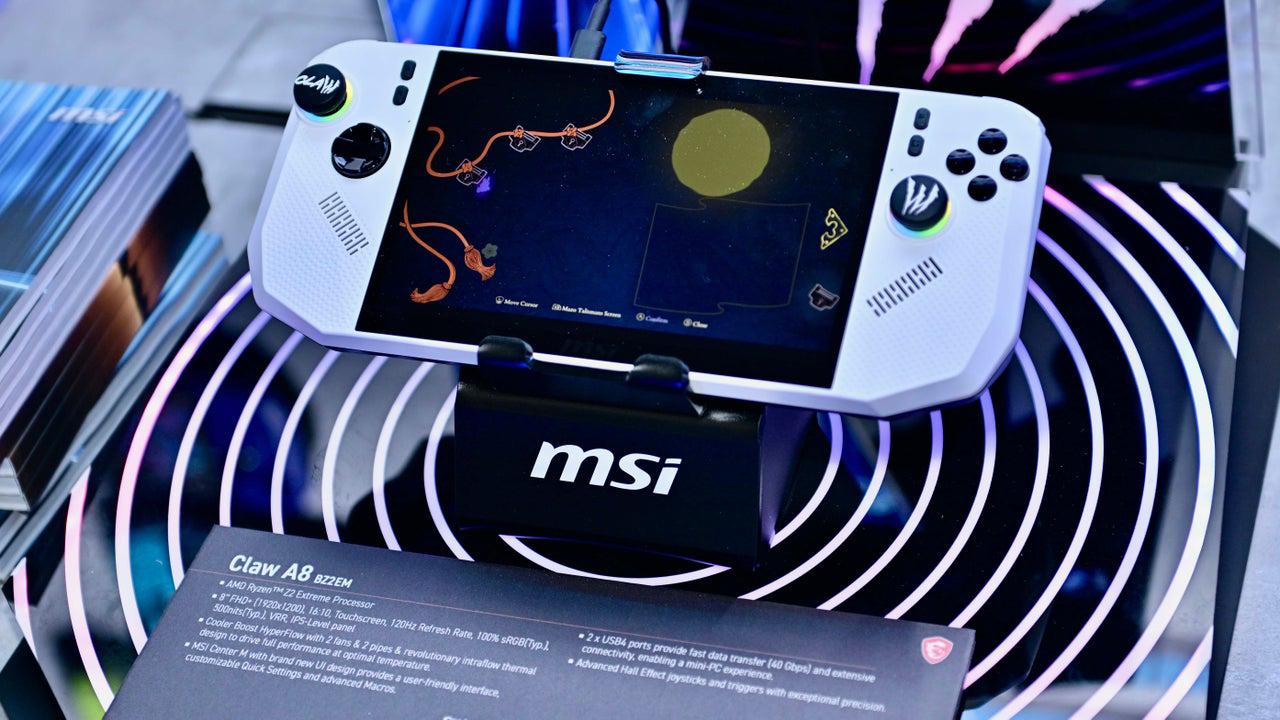
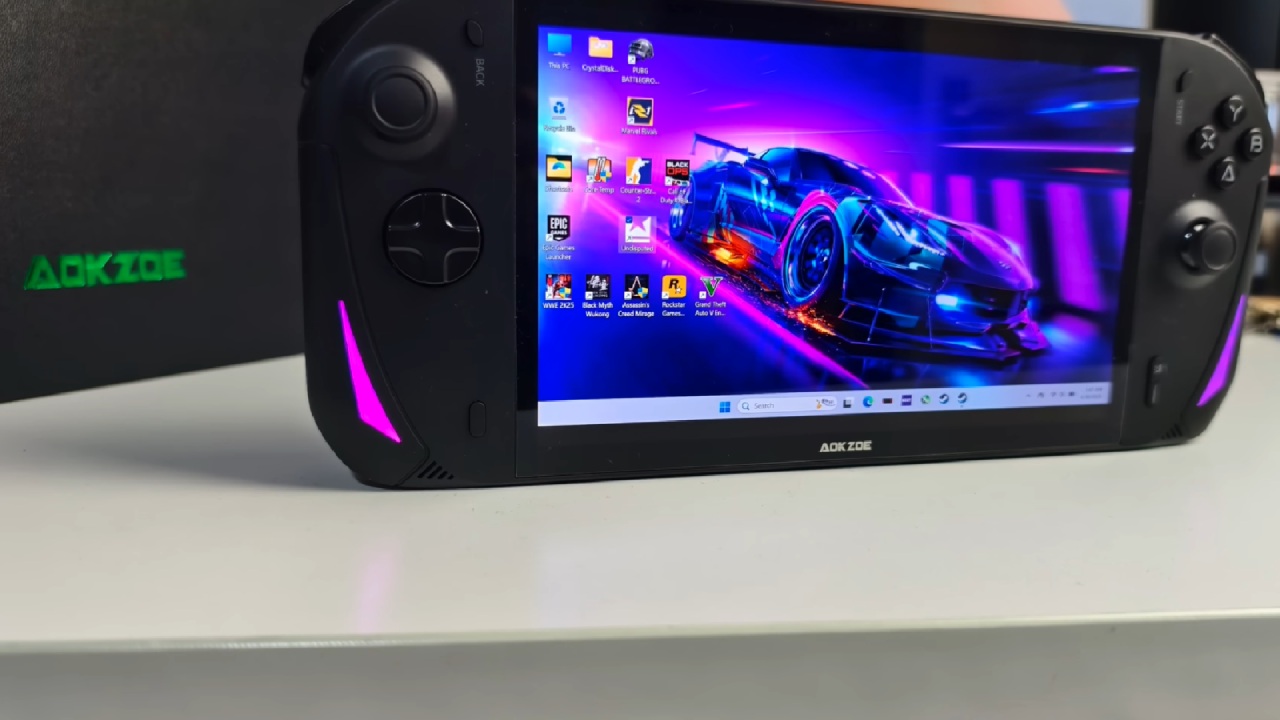
For the Z1 Extreme, the ROG Ally X was used, a well-known device. The Z2 Extreme was tested on the MSI Claw A8, and the HX370 was evaluated using the AOK Zoey A1X. All three devices are similarly speced, ensuring a fair comparison.
The Z1 Extreme features 8 cores and 16 threads based on Zen4 architecture with a boost clock of 5.1GHz. It's a 12 compute unit RDNA3i GPU that clocks up to 2900MHz, paired with 24GB RAM running at 7500MT/s. The Z2 Extreme uses Zen 5 cores in a different configuration, with 3 Zen 5 cores and 5 Zen 5C cores. Zen 5 cores boost to 5GHz, while Zen 5C cores reach 3.3GHz.
Its iGPU includes 16 compute units based on RDNA3.5, and it comes with 24GB RAM at 8000MT/s.
The HX370, also based on Zen 5, offers 12 cores and 24 threads, with 4 Zen 5 cores boosting to 5.1GHz and 8 Zen 5C cores to 3.3GHz.
Its iGPU also has 16 compute units on RDNA3.5, paired with 32GB RAM running at 7500MT/s. Other HX370 systems may support faster RAM, but this one is locked in the BIOS.
Synthetic Benchmark Performance
The first benchmark, Geekbench 6 at 17watts, showed single-core scores of 1795 for the Z1 Extreme, 2325 for the Z2 Extreme, and 2485 for the HX370. Remarkably, the Z1 Extreme outperformed the Z2 Extreme in multi-core performance, but the HX370 outperformed both since it had more threads and cores.
The Z1 Extreme's single-core scores increased to 2379, the Z2 Extreme's to 2766, and the HX370's to 2831 at 25watts. Similar improvements were seen in multi-core performance, with the HX370 achieving 12,552.
OpenCL iGPU performance at 25watts showed the Z1 Extreme at 27,87, the Z2 Extreme at 33,488, and the HX370 performing slightly ahead. 3DMark Time Spy at 17watts gave the Z1 Extreme 2539, the Z2 Extreme 2,017, and the HX370 just over 3,000.
Raising the TDP to 25watts boosted all scores, with the Z1 Extreme reaching 3,17, the Z2 Extreme 3,495, and the HX370 3,521. In synthetic benchmarks, the Z2 Extreme outperformed the Z1 Extreme by about 19% in single-core, 4% in multi-core, and 16% in iGPU performance.
HX370 showed 22% higher single-core, 24% higher multi-core, and 19% better iGPU performance compared to the Z1 Extreme.
Real-World Gaming Performance
In Cyberpunk 2077 at 25watts TDP and using the Steam Deck preset at 1080p, the Z1 Extreme averaged 42fps, the Z2 Extreme 46fps, and the HX370 48fps. At 17watts, the Z1 Extreme dropped to 32fps, the Z2 Extreme reached 39fps, and the HX370 managed 40fps.
Shadow of the Tomb Raider revealed a slightly different trend. At 25watts, the Z1 Extreme averaged 59fps, the Z2 Extreme 64fps, and the HX370 matched the Z1 Extreme at 59fps. At 17watts, Z1 Extreme averaged 44fps, Z2 Extreme 57fps, and HX370 55fps.
For Forza Horizon 5 on medium settings at 1080p with no scaling, the Z1 Extreme delivered 76fps, the Z2 Extreme 80fps, and the HX370 82fps at 25watts. At 17watts, Z1 achieved 63fps, Z2 73fps, and HX370 matched Z2 with 73fps.
Blacksmith Wukong at 25watts with low settings and 1080p resolution scale produced averages of 44fps for Z1 Extreme, 47fps for Z2 Extreme, and 49fps for HX370. At 17watts, the Z1 Extreme averaged 33fps, Z2 42fps, and HX370 44fps, equaling Z1 Extreme’s 25watt performance.
Horizon Zero Dawn Remastered proved challenging, even at 25watts with low settings and 1080p FSR balanced, producing 30fps on Z1 Extreme, 31fps on Z2 Extreme, and 33fps on HX370.
Final Thoughts
Across all benchmarks, the Z2 Extreme demonstrated approximately 15% better overall performance than the Z1 Extreme, while the HX370 showed around 16% improvement.
Performance gains were modest at the handheld TDP levels of 17watts and 25watts. Efficiency differences exist between the Z2 Extreme and Z1 Extreme at lower wattages, but CPU and iGPU performance remain the focus.
Unless the Z1 Extreme has additional features like detachable controllers, variable refresh rate OLED screens, or a different operating system, upgrading to the Z2 Extreme or HX370 could not bring significant advantages.
Waiting for the next generation is advised for notable performance improvements if your existing mobile gaming PC is adequate.
Check our Other Handheld Articles :
- ASUS ROG Ally X Handheld Review: Double the Battery, Double the Comfort
- Nintendo Switch 2 Vs. Original Switch 1: A Full Comparison
- How To Connect A Camera And Join Voice Chat With Nintendo Switch 2
- Nintendo Switch 2 Review: Handheld Performance, Features & Value Breakdown
- ROG Xbox Ally X Vs. ROG Ally X: Display, Battery & Controls
- ASUS ROG Ally X vs. Steam Deck OLED: Display, Battery & Gaming Benchmarks
- MSI Claw 8 AI+ Review: Display, Controls & Gaming
- Nintendo Switch 2 vs. Steam Deck OLED: Gaming, Performance, Battery, Display and Value
- PlayStation Portal Review: Remote Play, Cloud Streaming & Travel Gaming
- PlayStation Portal vs. Lenovo Legion Go: Best Portable Gameplay
- Lenovo Legion Go S vs. Zotac Zone: In-Depth Experience Comparison
- How AMD Dominates the Handheld Market
Editor, NoobFeed
Gaming Hardware Updates
No Data.