
Z1 Extreme vs. Z2 Extreme vs. Intel Core Ultra 7 258V: The Ultimate Handheld
Detailed performance specifications across CPU, GPU, and memory configurations for each handheld chip.
Hardware by Tanvir Kabbo on Aug 10, 2025
When it comes to Windows handheld gaming devices, the battle of performance is heating up with three major chips dominating the market: AMD's Ryzen Z1 Extreme, the newer Ryzen Z2 Extreme, and Intel's Core Ultra 7 258V.
With increasing competition and advancements in handheld tech, it's time to break down how each of these APUs stacks up, especially at the most commonly used power profiles, 17W and 25W TDP.

The Contenders and Their Devices
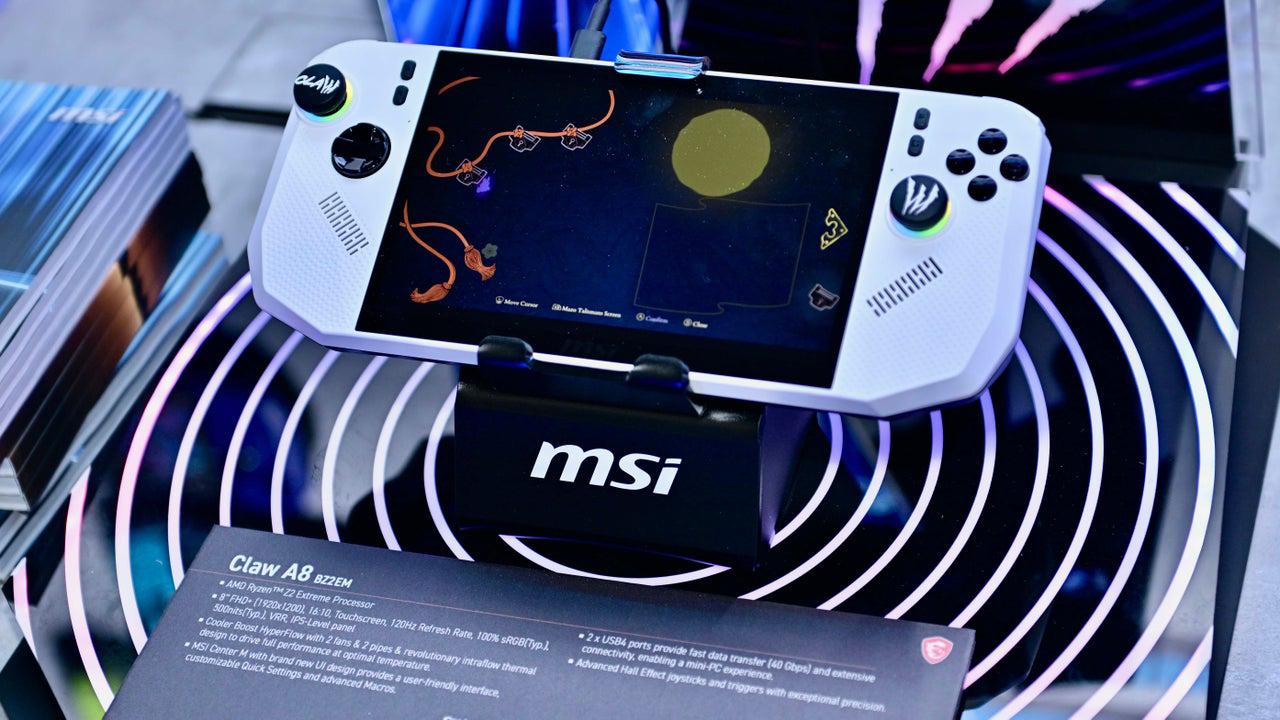
For testing, we're using three popular handhelds. The ROG Ally X represents Z1 Extreme. However, this chip is also found in other devices like Legion Go and Legion Go S. Z2 Extreme is housed inside the all-new MSI Claw A8, with different devices like Legion Go 2 and an upcoming ROG Xbox Ally X expected to feature it as well.
Lastly, Intel Core Ultra 7 258V comes inside MSI Claw 8 AI, though other manufacturers like 1X Player also use this chip.
Chip Architecture and Specifications
Z1 Extreme, built on Zen 4, features 8 cores and 16 threads. It reaches an all-core boost clock of 5.1GHz and includes a 12-compute unit RDNA 3 iGPU running up to 2900MHz. Paired with 24GB of RAM clocked at 7500MT/s, it's a solid performer.
Z2 Extreme is based on the newer Zen 5 architecture with 8 cores and 16 threads, configured with 3 high-performance cores capable of reaching 5GHz and 5 efficiency cores capped at 3.3GHz. The Radeon 890M iGPU boasts 16 compute units on RDNA 3.5, also clocking up to 2900MHz. It pairs with 24GB of RAM at 8000MT/s.
Core Ultra 7 258V by Intel takes a different route with 8 cores and 8 threads—4 performance cores reaching up to 4.8GHz and 4 efficiency cores up to 3.7GHz. The onboard ARK 140V iGPU includes 8 XE2 cores clocking to 1950MHz. It's equipped with 32GB of on-package memory running at 8533MT/s.
CPU Benchmarks: Geekbench 6 at 17W and 25W
Using Geekbench 6, Core Ultra 7 258V came out on top at 17W with a single-core score of 2571 and a multi-core score of 8247. However, at 25W, both Z1 and Z2 Extreme overtook it in multi-core performance thanks to their 16-thread advantage. Z2 edged out Z1 slightly in single-core at 25W, while Z1 fell behind.
GPU Performance: 3DMark Time Spy
3DMark Time Spy synthetic tests revealed that Intel's ARK 140V iGPU outperformed both AMD chips at 17W and 25W. But test scores aren't always reflected in real-world performance, particularly with Intel's more recent ARC iGPUs, which typically perform better on paper than in real-world scenarios.
Gaming Performance Comparisons
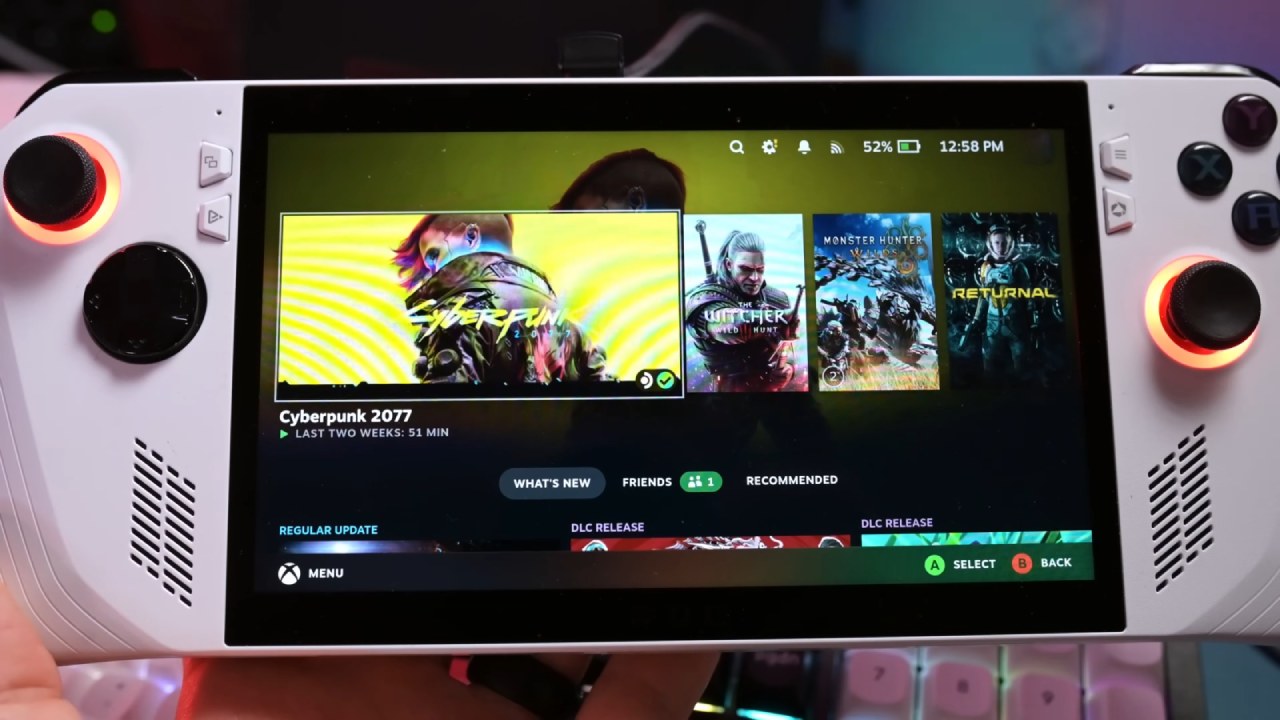
Cyberpunk 2077 at 1080p and 25W showed Z1 Extreme averaging 41 fps, Z2 Extreme at 46 fps, and Core Ultra 7 258V leading with 54 fps. Even at 17W, 7 258V maintained its lead with 42 fps, while Z1 managed 32 fps and Z2 39 fps.
Shadow of the Tomb Raider at 1080p low settings, Z1 averaged 59 fps, Z2 64 fps, and 7 258V slightly ahead at 65 fps at 25W. Interestingly, at 17W, Z2 outperformed the others.
Forza Horizon 5 at 1080p medium settings gave us 76 fps on Z1, 80 fps on Z2, and 83 fps with 7 258V at 25W. At 17W, Z2 barely beat the Intel chip by 1 frame.
Black Myth: Wukong, tested with 60% resolution scaling and low settings at 1080p, saw Z1 at 44 fps, Z2 at 49 fps, and the Intel chip at 50 fps at 25W. At 17W, Z2 again slightly edged out the Intel chip.
Another Unnamed Game, tested only at 25W, showed Z1 hitting 30 fps, Z2 at 31 fps, and 7 258V outperforming both at 37 fps. Even lowering the resolution to 720p didn't drastically improve performance across the board.
Final Thoughts on Performance and Value
With the games tested, Z2 Extreme and Intel Core Ultra 7 258V are clearly neck-and-neck in performance. Depending on whether you plan to run your handheld at 17W or 25W, either could be the better option by just 1–2 frames. However, both consistently outperformed Z1 Extreme, which isn't surprising given its older architecture.
Since Intel's 7 258V has been available for a longer time, driver upgrades have resulted in notable improvements, particularly in titles like Forza Horizon 5 and Cyberpunk 2077. Similar driver upgrades are probably in the works for AMD's more recent Z2 Extreme, which might further increase performance.
If you're leaning toward AMD, Z2 Extreme is a better choice than Z1 Extreme right now—unless you can score a Z1 device at a significantly lower price. If you're interested in going the Intel route, 7 258V is a capable and competitive chip, showing that Intel's handheld push is gaining serious traction.
Either way, you've got strong options for high-end handheld gaming performance.
Check our Other Handheld Articles :
- ASUS ROG Ally X Handheld Review: Double the Battery, Double the Comfort
- Nintendo Switch 2 Vs. Original Switch 1: A Full Comparison
- How To Connect A Camera And Join Voice Chat With Nintendo Switch 2
- Nintendo Switch 2 Review: Handheld Performance, Features & Value Breakdown
- ROG Xbox Ally X Vs. ROG Ally X: Display, Battery & Controls
- ASUS ROG Ally X vs. Steam Deck OLED: Display, Battery & Gaming Benchmarks
- MSI Claw 8 AI+ Review: Display, Controls & Gaming
- Nintendo Switch 2 vs. Steam Deck OLED: Gaming, Performance, Battery, Display and Value
- PlayStation Portal Review: Remote Play, Cloud Streaming & Travel Gaming
- PlayStation Portal vs. Lenovo Legion Go: Best Portable Gameplay
- Lenovo Legion Go S vs. Zotac Zone: In-Depth Experience Comparison
- How AMD Dominates the Handheld Market
Senior Editor, NoobFeed
Gaming Hardware Updates
No Data.