
AMD's RX 9050 $279 GPU Could Face Competition From Future CPUs
AMD’s new budget GPU faces growing competition from integrated graphics as future processors gain more power and dedicated silicon.
Hardware by Naheyan Tahmin on Aug 19, 2026
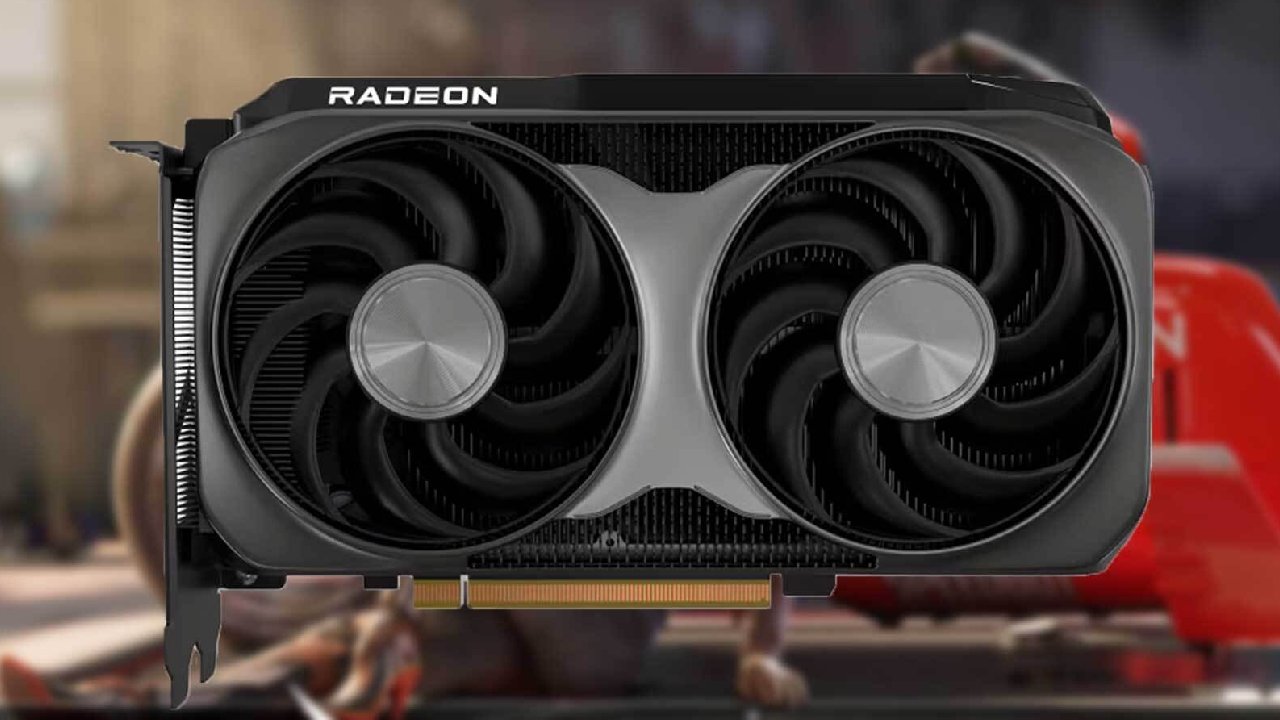
AMD has launched a new GPU for $279, but its competition may not come from Nvidia. The graphics chip in a future processor could pose a bigger challenge to entry-level discrete GPUs. Radeon RX 9050 arrived on July 28 as the smallest RDNA 4 card yet, while a July 29 report suggested a future desktop CPU could devote a 65W power tier to integrated graphics.
The direction raises a question about whether cheap graphics cards are improving or becoming unnecessary. The official specification looks modern. RX 9050 has 16 compute units, 1,024 stream processors, 32 AI accelerators, and 16 ray accelerators. It has 8GB of GDDR6 on a 128-bit interface, 288GB/s of bandwidth, and 32MB of Infinity Cache.
Radeon RX 9050 Specifications
This is not simply an RX 9060 with lower clocks. It is a smaller design with 10.6teraflops of FP32 compute. The names sound close, but the hardware gap is substantial. AMD rates the standard card at 92W.
It needs one 8-pin connector and a recommended 450W power supply. RX 9050 also includes PCI Express 5, AV1 encoding, DisplayPort 2.1 A, HDMI 2.1 B, Anti-Lag 2, Fluid Motion Frames, and FSR Redstone.
The card is built for the bottom of the stack, with a focus on power consumption and entry-level gaming. The biggest surprise is board partner tuning. Sapphire's compact Pulse model raises the boost clock from 2.6 GHz to 2.76 GHz and the board power to 100W.
It is only 200mm long, so it could fit neatly into small gaming PCs. That sounds useful, but why does a 92W card still need an external power cable? Then, there is the 4GB version. AMD has reportedly confirmed that the model is limited to system builders. It cuts the memory interface to 64-bit, reducing bandwidth to 144 GB/s.
Two computers carrying the same RX 9050 name could perform very differently. When buying a pre-built, we should look at the memory capacity and bus width, not just the GPU badge.
Integrated graphics could change the entry-level market.
A July 29 report claims Intel is preparing a Nova Lake desktop processor with 12 XE3-P graphics cores and a 65W graphics power tier. This isn't official, and final specs could change, but Intel already offers Panther Lake processors with up to 12 XE graphics cores, so the direction is believable. Integrated GPUs are receiving more silicon and power.
That creates a problem for cards like the RX 9050. A separate GPU adds cost, cooling, another power connection, and dedicated memory. A powerful integrated design reduces complexity and makes compact PCs easier to build. Integrated graphics still depend heavily on system memory bandwidth.
A discrete card offers a key advantage: dedicated GDDR6 memory and more predictable gaming performance. For a new budget PC, it may be smarter to see what the next high-powered desktop APUs can deliver. RX 6500 is not the future of high-end gaming.
It warns about the future of low-end GPUs. The next budget battle may not be AMD versus NVIDIA. It may be discrete graphics versus the CPU itself. The choice could come down to buying a separate budget GPU or spending more on a processor with powerful integrated graphics.
Editor, NoobFeed
Gaming Hardware Updates
No Data.