
Etrange Overlord Review
Nintendo Switch
A strange encore in hell – style over substance or hidden gem?
Reviewed by Wasbir Sadat on Mar 23, 2026
The game was made with help from Sohei Niikawa, who is best known for his work on the Disgaea series. It's easy to think of his other works when you play it. This game, however, doesn't just try to copy what other games have done well; it's a very different kind of action RPG with musical theater elements, a funny story, and a gameplay system based on a changing "lane."
This is a risky mix that sounds interesting on paper, but as with many novel ideas, how it's carried out is very important. This makes for a game that is both delightfully different and frustratingly unstable.
.jpg)
At its heart, Etrange Overlord is about a strong wizard who is put to death after being falsely accused of killing a king.
Rather than ending her journey, this event becomes the beginning of a strange new chapter, as she awakens in hell. Surprisingly not upset by her situation, she quickly adjusts, establishing her dominance through her immense magical power and slowly gathering a group of similarly strange allies.
The structure of the story leans strongly toward the ridiculous and funny. Because Etrange feels too strong, she laughs off most threats, which sets the tone for a story that never takes itself seriously. The dialogue is full of jokes, strange interactions between characters, and a general feeling of chaos. Sometimes it really works—there's something charming about how the group becomes like a family, and there are times when character moments feel real and even heartfelt.
But the writing isn't always good. The story is a lot like Niikawa's other games in that it uses strange humor, references, and over-the-top characters a lot. Some people may feel right at home with that style, but others may find it confusing or even tiring. The story hints at deeper ideas like systemic battles, personal growth, and the difference between heaven and hell at times, but these are often overshadowed by the game's constant focus on comedy and spectacle.
Adding musical parts is another thing that fans don't agree on.
These acts pop up all over the story, often without much buildup. They give it a unique theatrical flair, but they can feel like they have nothing to do with the rest of the story. The fact that these parts can be skipped before they start shows that the developers are aware that some people might not like them. They help make the game what it is, but they don't feel very important to the story itself.
Etrange Overlord has a pretty simple way to play: pick a party, go into a stage, finish an objective, and then go back to base to get upgrades and get ready for the next stage. Missions happen in short, action-packed stages. Each stage has a clear goal, like beating waves of enemies, staying alive for a certain amount of time, or doing objective-based jobs like defense or delivery.
Each mission lets players bring up to four characters, and they can easily switch between them while fighting. There is a clear difference between each character's role—ranged attackers, close-combat experts, or balanced fighters—but these differences aren't very big. It's easy to pick up and play because the method is simple, but it also makes it harder to get into over time.
.jpg)
Players go back to a central hub, which is frequently a mobile base, between activities to buy things, upgrade their weapons, cook meals for buffs, and maintain track of their resources. This way of earning advancement is part of the game's main cycle, and it motivates players to keep making their party better so they can handle bigger tasks.
The fighting in Etrange Overlord is quick and sensitive, and it's based on basic moves like combos, dodges, and special attacks. It's easy to move around, and changing characters in the middle of a battle gives you more options for how to play. But the lane system—a rotating track that keeps switching out things, power-ups, and tools throughout each stage—is what really makes the game stand out. This lane is like a moving resource system.
Players can grab things as they walk by to temporarily get different skills, heal faster, or make attacks stronger. In some stages, the lane is even used for movement, letting players ride platforms over gaps or change their position during battle.
This is a smart feature that adds visual flair and lets you make decisions at any time.
Aside from the lane, players can also use environmental tools like turrets and bombs, which are powered by energy tokens they find on tasks. These add some variety, especially in boss fights and other difficult fights where players have to use certain mechanics to their advantage instead of just hitting.
The combat method is fun for short periods of time, but it's hard to stay interested in for longer periods of time. The thing that makes it easy to use is also what makes it weakest. There isn't much difference between characters because they all have the same basic attack, dash, and special skill. This can make experimenting with new party members feel unrewarding.
Another factor that isn't consistent is difficulty. Some stages are so easy they're almost silly, while others add sudden spikes that don't feel like a natural development but more like an artificial wall. Players are often pushed back into the upgrade systems at these points, making a loop that can feel overly long.
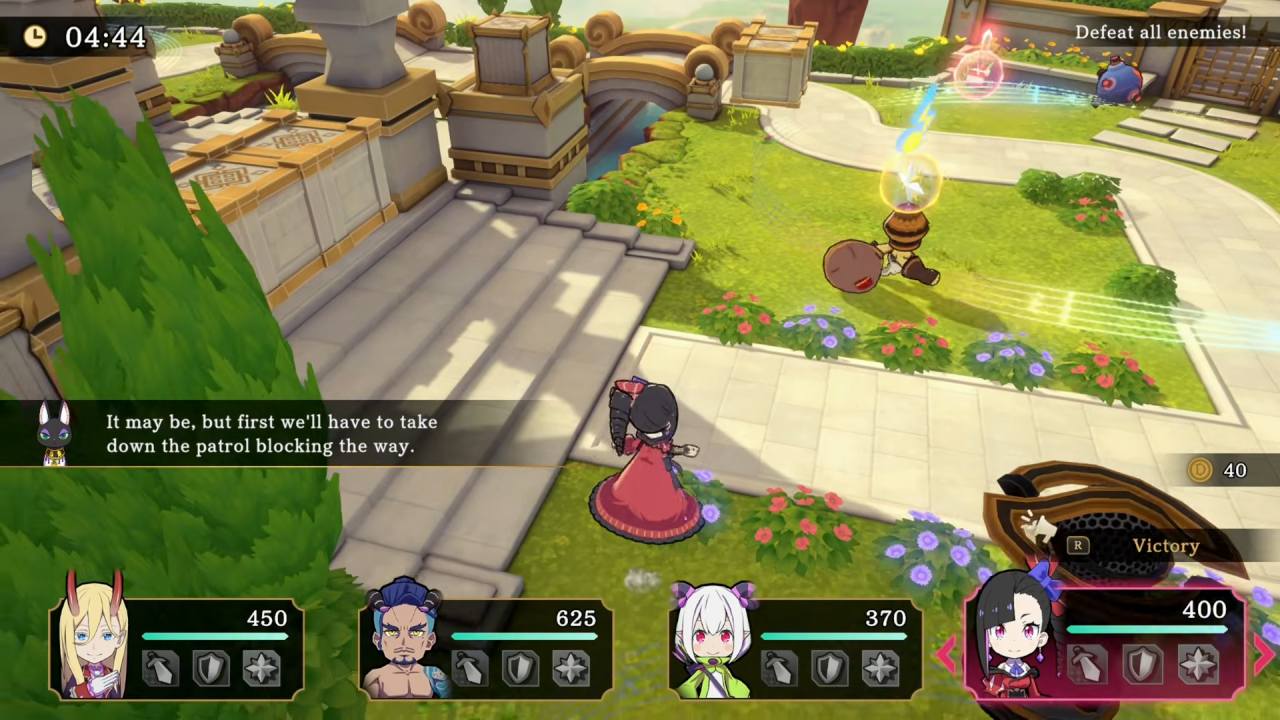
The way the lanes work is new and interesting, but it has some problems. When you share controls for important actions, like dashing and dealing with lane platforms, you might make mistakes that are very annoying. Still, it's undeniably fun when it works, especially when you chain together a bunch of power-ups to overwhelm enemies.
In Etrange Overlord, getting better means collecting resources and upgrading your equipment. You can use the materials you get from missions to improve your weapons, your lane items, or to cook dishes that give you brief benefits. Even though these methods make you feel like you're growing, they also make you grind a lot.
Later upgrades need larger and larger amounts of materials, which are often much more than a single run can give you naturally.
Even though the game lets you do things like buy resources or send out missions, these features don't really feel like they add much. This makes the growth curve feel longer than it needs to be.
It's interesting that some players may find it easier to just keep going with missions than to really get involved with these tools. This makes it hard to connect how the game is supposed to work with the best way to play it.
The style of A Strange Overlord's art is artistic and anime-inspired, which goes well with its mood. The bright and expressive character designs go well with the comedic and theatrical tone of the game. Even though the settings aren't very detailed, they work and are easy to get around in, so the gameplay stays the main focus.
However, the presentation as a whole can feel shaky at times.
There may be parts that look or sound like they were made on a shoestring budget, especially the character models and effects. A lot of the visual charm comes from the art style, but it doesn't always hide the flaws in the assets underneath. Not all sound design is good or bad. The Japanese voice acting is good, and the performances fit well with the over-the-top tone of the game. But the fact that there aren't any other language choices could be a problem for some players.
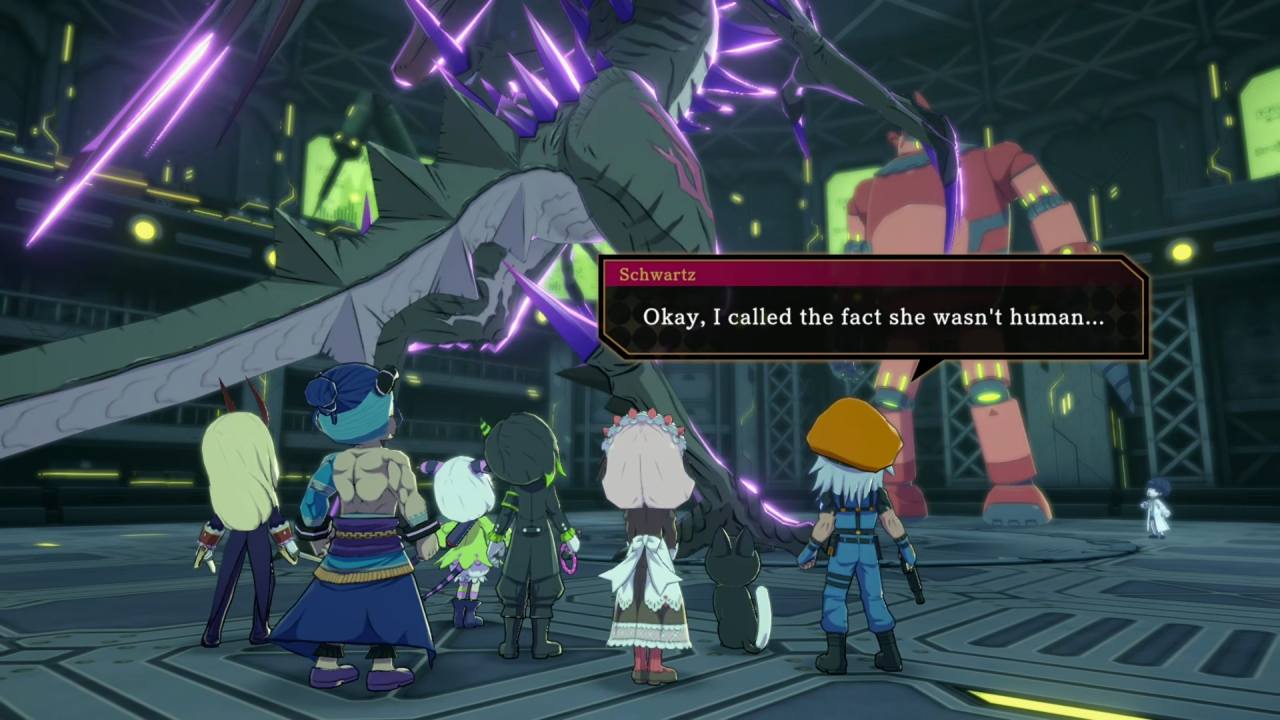
Even though they are a big part of the show, the singing numbers are surprisingly lackluster. Even though they make things interesting, they don't usually leave a lasting effect. The music does a good job of supporting the action outside of these parts, but it's not particularly memorable.
The goal of Etrange Overlord is what makes it a game. It tries to combine action RPG elements with melodic storytelling, funny writing, and a unique way to play called "lanes." These things sometimes work so well together that they create moments that are truly fun, charming, and memorable.
There isn't much depth to the gameplay, the growth systems can be annoying, and the story is fun, but it doesn't always connect.
Many of its ideas don't feel fully developed; they seem like they were added just to try something new rather than as part of a fully realized design.
But there is clearly something interesting about it. There is a game behind the rough lines that attempts to be different, even if it doesn't completely work. If gamers are willing to overlook its limitations, Etrange Overlord gives them a one-of-a-kind trip. Not everyone may connect with this voyage, but those who do will probably remember it fondly.
Contributor, NoobFeed
Verdict
Etrange Overlord is a quirky, ambitious RPG with charming characters and a unique lane mechanic, but shallow combat, repetitive progression, and underwhelming musical elements hold it back from true greatness.
67
Related News
No Data.