
Going Medieval Review
PC
A 3D evolution of colony Sims that finally finds its identity.
Reviewed by Wasbir Sadat on Mar 24, 2026
Going Medieval has finally hit its long-awaited 1.0 release, after being in early access for about five years. This is a big step forward in the game's development. The game wasn't a sequel; it was developed by Foxy Voxel and released by The Mythwright. Instead, it was a bold attempt to change the colony simulation genre into something more engaging and spatially dynamic.
Going Medieval clearly took a lot of ideas from games like RimWorld, which helped create the genre. But instead of just copying the formula, the game tried to answer a key question: what if a colony sim supported full 3D verticality?
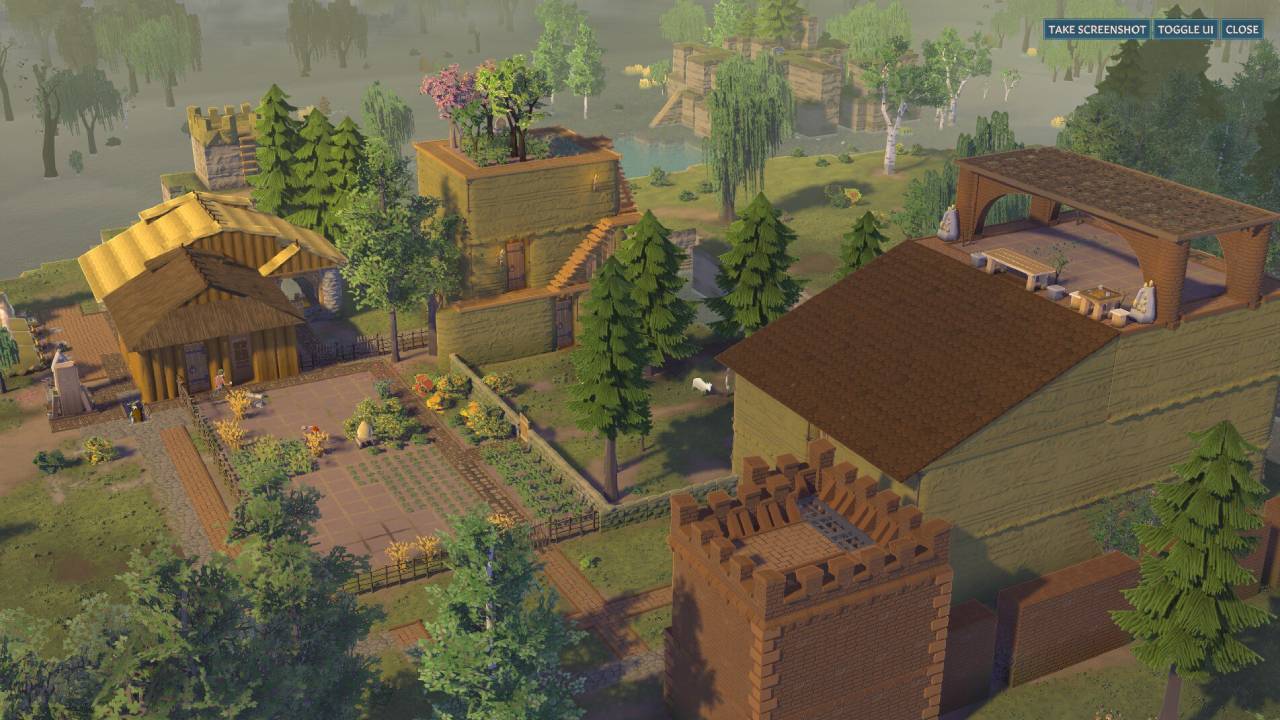
People often called the game a "3D RimWorld" when it was in early access.
That comparison is still valid, but it doesn't fully show how much the game has grown. The first drafts were not well thought out and lacked direction, structure, and long-term goals that meant something.
But over time, regular updates added more complex features, better onboarding, and improved the way the game worked. With the 1.0 release, Going Medieval has gone from being an interesting idea to a much more full experience, though there are still some bugs.
Going Medieval doesn't rely too much on a traditional story framework, like many sandbox colony simulators. Instead, the story is built through action that changes on the fly.
It takes place in a medieval world after a plague has killed most of the people who lived there. Your job is to start over and rebuild society. This idea gives a simple but useful background that explains the game's rules without limiting the player's freedom.
The game does not have a set plot; instead, it lives on the stories you make up.
Each person has their own traits, good and bad qualities, and these help and hurt the events that happen. You could take in a fleeing survivor, only to face an attack days later, or you could lose a key member of your settlement and feel the effects all the way through your supply chain. These moments make a connection and a sense of what will happen that doesn't feel forced.
When the game was fully released, the renown system was added. This gave the game more meaning than it had in early access. Now, players can work toward long-term goals that are related to different ways of playing, like religion, trade, combat, or study.
Whether you're building a huge cathedral to draw in pilgrims or a busy market, these goals give you an important endpoint without taking away from the sandbox feel of the game. Going Medieval is a colony management simulator at its core. You take charge of a small group of settlers and help them build a successful town. When you start, you have a few characters, usually three.
.jpg)
Each one has their own skills and traits.
Picking the right mix of people is very important because specialization is a big part of how well things work. You will do well if your team is well-balanced and has people who are good at construction, farming, combat, and study.
You control the game by giving your settlers jobs, setting priorities, and making sure their needs are met. Like the games that inspired it, you don't always have direct power over the characters.
Instead, you give your people tasks to do, like cutting down trees, mining for resources, farming crops, or making things, and they will do them based on a system of priorities. This method works well most of the time, but sometimes the AI acts in a way that doesn't make sense, and you have to fix it by hand.
The fully 3D building system is one of the best things about the game. Going Medieval lets you build up instead of out, unlike most colony sims that work on a flat plane. You can build houses with many floors, dig deep into the ground, and make defenses that are stronger than they look.
Because of this, it is more creative and well-planned than its competitors. An underground building is especially important for keeping food fresh because the cooler temperatures help keep food from going bad.
Seasons are also very important to the game. You'll need to plan for hard winters and hot summers by making sure you have enough food, clothes, and a place to stay. Crops only grow at certain times of the year, and if you don't plan ahead, people could go hungry or freeze to death. These environmental pressures add a layer of realism and challenge that keeps the gameplay engaging.
In Going Medieval, battle is a mix of planning ahead and defending quickly.
Raids happen from time to time, and as your town grows, the difficulty of the raids increases. You can put settlers in battle roles and use defensive buildings like walls, traps, and towers to protect your settlement.
.jpg)
Later updates that added rally points and bells made it much easier to handle battles. You don't have to keep an eye on every settler during a raid; instead, you can send groups to specific defensive positions and give them one order to start working. This makes the game easier to play and lets you use more complicated defenses.
A lot of progress has been made in enemy AI as well. In older forms, enemies would just charge straight at your gates. They can now dig through the ground, build ladders to climb walls, and find weak spots in your defenses to attack. This makes battles more interesting and pushes players to change their strategies instead of sticking to the same ones.
The way fire works adds another level of meaning. Fires can spread quickly through buildings, so you need to act quickly to keep them under control. At the same time, players can use fire to attack with flaming spears and traps, which lets them come up with creative ways to fight.
On the other hand, fighting has some problems. There are still problems with balance, especially with how AI acts and with some types of weapons. Even though the method is fun to use, it can feel inconsistent or unfair at times, especially during attacks on a large scale.
The study and skill systems in Going Medieval are very important to how far you can go. For each settler, practice makes perfect, which means that the more they do something, the better they get at it. This gives your colony a natural sense of growth and pushes it to specialize.
One of the most interesting things about the game is the research method.
Research needs to be put down in books before technologies can be unlocked through a menu. After that, these books need to be kept safe and saved. You could lose that information if they are damaged or stolen during a raid. This gives development a real, high-stakes feel that you don't see very often in this genre.
.jpg)
The renown system added in 1.0 makes success even better by giving players long-term goals. Focusing on certain activities, like trade, religion, or combat, can help you reach big goals that will affect the way your town grows.
These methods are new and cool, but they can be hard to learn for new players. It can be hard to learn because there are so many rules and dependencies, even with the better tutorial.
Going Medieval looks a lot better now than it did when it was in early access. The graphics may not be the best on the market, but the game has a certain charm that fits its setting. Adding details about the environment, like grass that moves, ivy that grows on walls, and different kinds of plants, helps bring the world to life.
The visual appeal is also helped by the 3D building method.
It's very satisfying to see your village grow from a small camp to a huge fortress. You can easily see both the big and small parts of your work because you can zoom in and out and switch between layers. Optimization features like occlusion culling, which stop objects that can't be seen from being rendered, have made performance better.
But big towns can still make the game hard, especially late in the game. Going Medieval's sound design fits in with the games without getting in the way. The background music creates a calm and engrossing environment that makes long game sessions feel soothing instead of stressful.
Sounds from the environment, like wind, footsteps, and building work, make it feel more real. Even though the sound isn't revolutionary, it does its job well. When you play this kind of game, you want something that adds to the experience without standing out too much. Going Medieval has changed a lot since it first came out in early access.
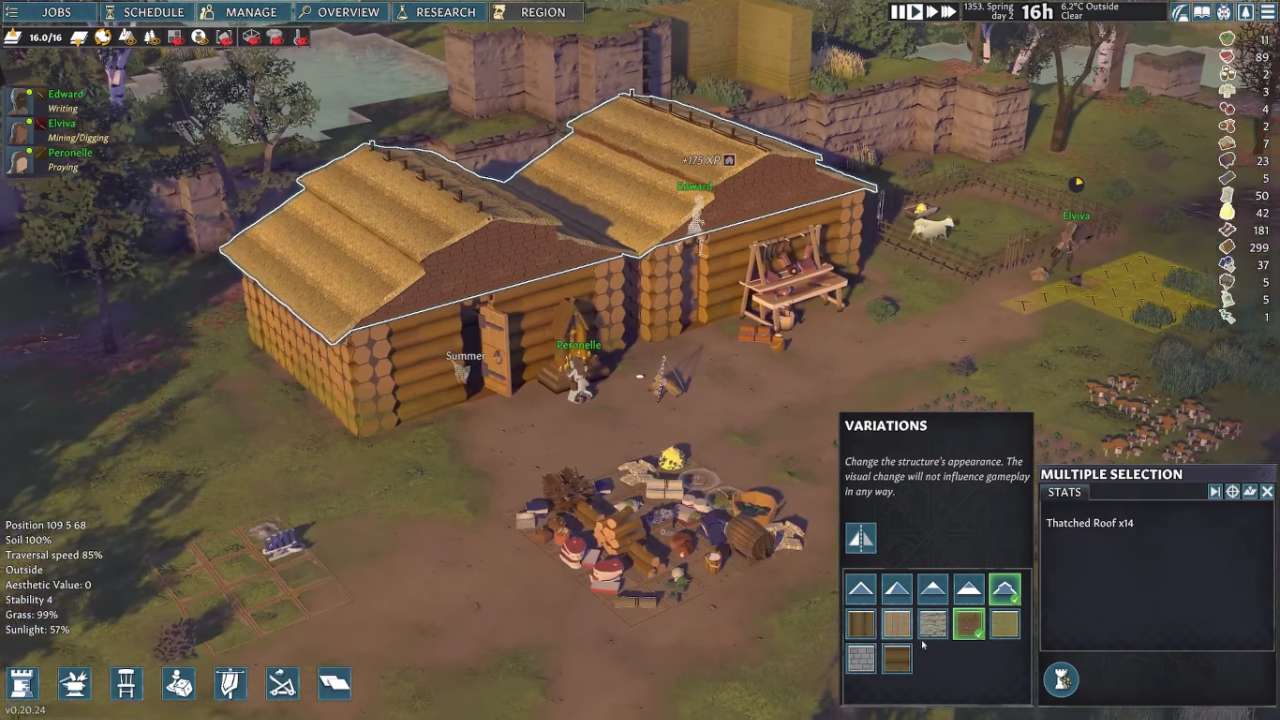
What started out as a rough and somewhat aimless project has grown into a deep and interesting city simulator with a clear sense of who it is. Most impressive is its 3D building system, which brings something new to a game that has been around for a while. The game does a great job of making stories that are immersive and player-driven, and it has a rewarding gameplay loop that can last for dozens of hours.
Systems like research, renown, and seasonal management add depth and variety, while improvements to combat and AI keep things challenging. Still, it has some problems. Having trouble with balance, AI quirks, and speed issues can ruin the experience. Also, newcomers may find it hard to use because its methods are so complicated.
Even with these problems, Going Medieval is still a fun game for colony model fans. This is definitely worth your time if you liked games like RimWorld and have been looking for something that takes that idea to a whole new level.
Contributor, NoobFeed
Verdict
Going Medieval is a deep, immersive 3D colony simulator with creative building, strategic combat, and emergent storytelling. Despite balance issues and complexity, it’s highly engaging for fans of the genre.
68
Related News
No Data.