
Mixtape Review
PC
A bittersweet teenage memory set to music, growing up, and the sound of letting go.
Reviewed by Mahi Araf on May 08, 2026
Mixtape comes from Beethoven and Dinosaur, a small Australian studio that first really landed on the map with The Artful Escape. That earlier game already showed you what they were about: loud personality, music-first storytelling, and a strong sense of style over traditional gameplay structure.
The team itself is made up of people with music backgrounds, including former rock musicians who eventually shifted into game development. That detail isn’t just trivial either, because everything they make feels like it comes from people who understand music as more than just background noise.
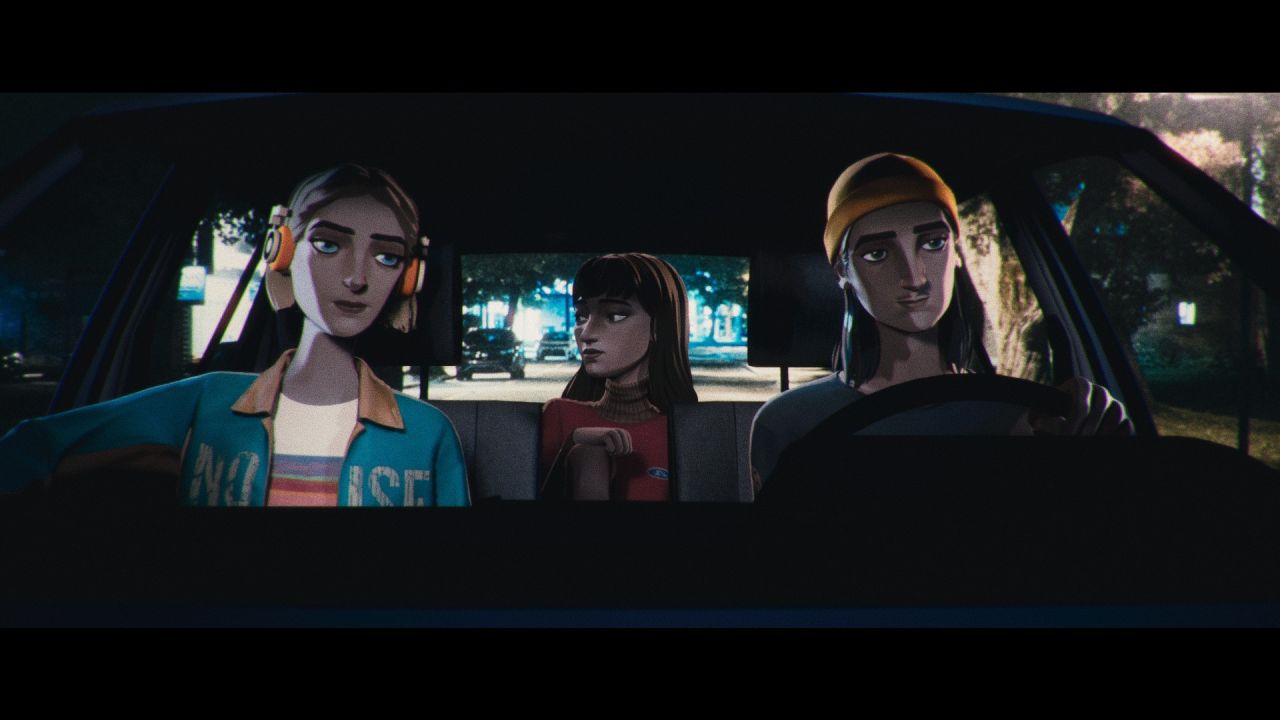
After The Artful Escape, the studio didn’t pivot away from what worked for them. Instead, they committed to it even more. Mixtape is basically the next step in their creative identity, where music isn’t just part of the experience; it’s the foundation of how the entire game is built. You can feel that evolution in how confident the presentation is, how tightly the scenes are tied to songs, and how much trust the game places in rhythm, tone, and memory.
What makes Beethoven and Dinosaur stand out is that they don’t try to fit into traditional game structures.
They are more interested in emotional storytelling through sound and visuals, almost like they’re trying to recreate how memories feel rather than how they happened. Mixtape continues that philosophy, but with a more grounded and relatable focus on teenage life, friendship, and change.
Mixtape didn’t come out of nowhere as a random idea. It feels like a natural extension of what the studio was already exploring. After building a reputation for blending music with interactive storytelling, this game leans even further into that direction. Instead of just being about performance or artistic identity like their previous work, it turns inward and focuses on memory, nostalgia, and growing up.
The concept itself is built around the idea of a mixtape as a collection of emotional snapshots. You aren’t just playing through a story linearly; you are moving through memories triggered by songs. That structure gives the developers a lot of freedom to jump between tone, gameplay style, and emotional intensity without needing to justify it through traditional logic.
It’s less about realism and more about how your mind remembers moments when music is involved.
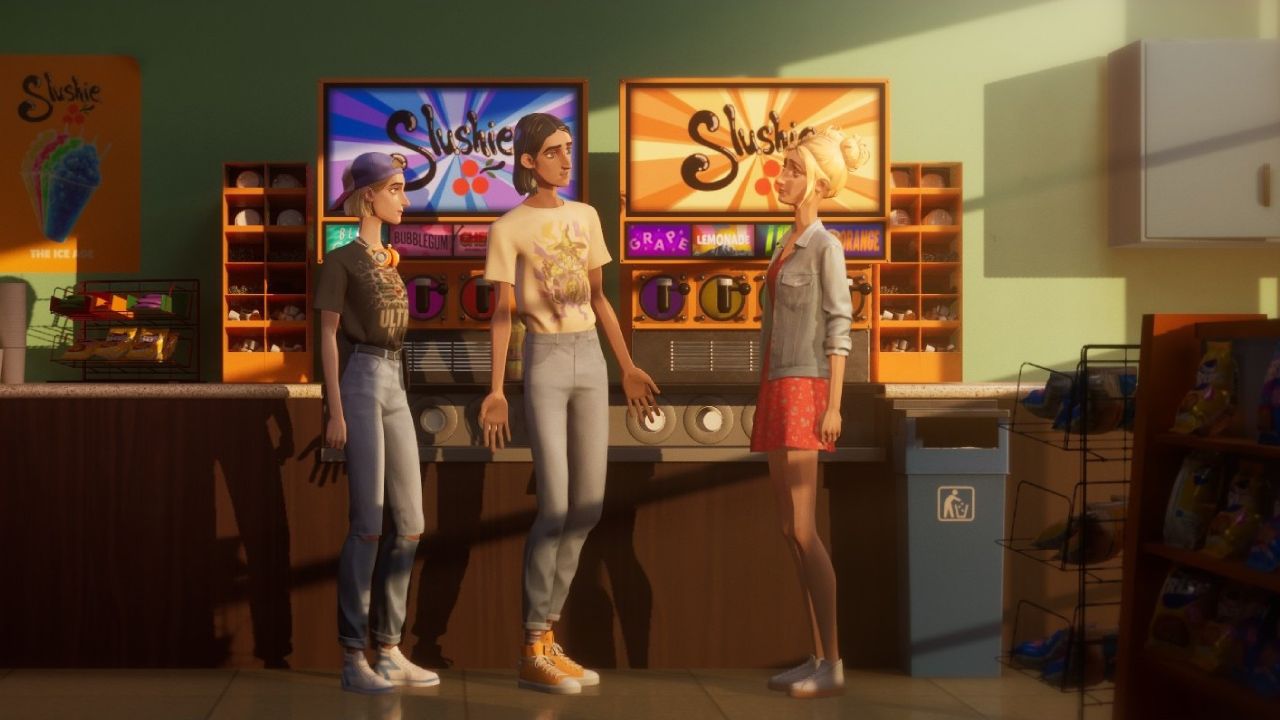
Mixtape follows three teenagers on one last night together before life pulls them in different directions. You spend most of your time in the perspective of Stacey Rockford, a music-obsessed teen who is about to leave for New York to become a music supervisor. Alongside her are her best friends Van Slater and Cassandra Morino, both dealing with their own personal struggles while trying to hold onto a clearly shifting friendship.
The core narrative is simple on the surface. It’s a last night of freedom before adulthood begins to take over. Stacey has planned everything like a perfect mixtape, aiming for one final unforgettable adventure that leads to a beach party. But as you would expect, things don’t go as planned. Instead, the night becomes a series of detours, emotional moments, awkward encounters, and memories that feel both exaggerated and completely honest at the same time.
As the story unfolds, you are constantly moving between present moments and memory-like sequences triggered by music. These aren’t clean or realistic flashbacks. They feel more like emotional reconstructions, shaped by how teenagers actually remember things rather than how they objectively happened.
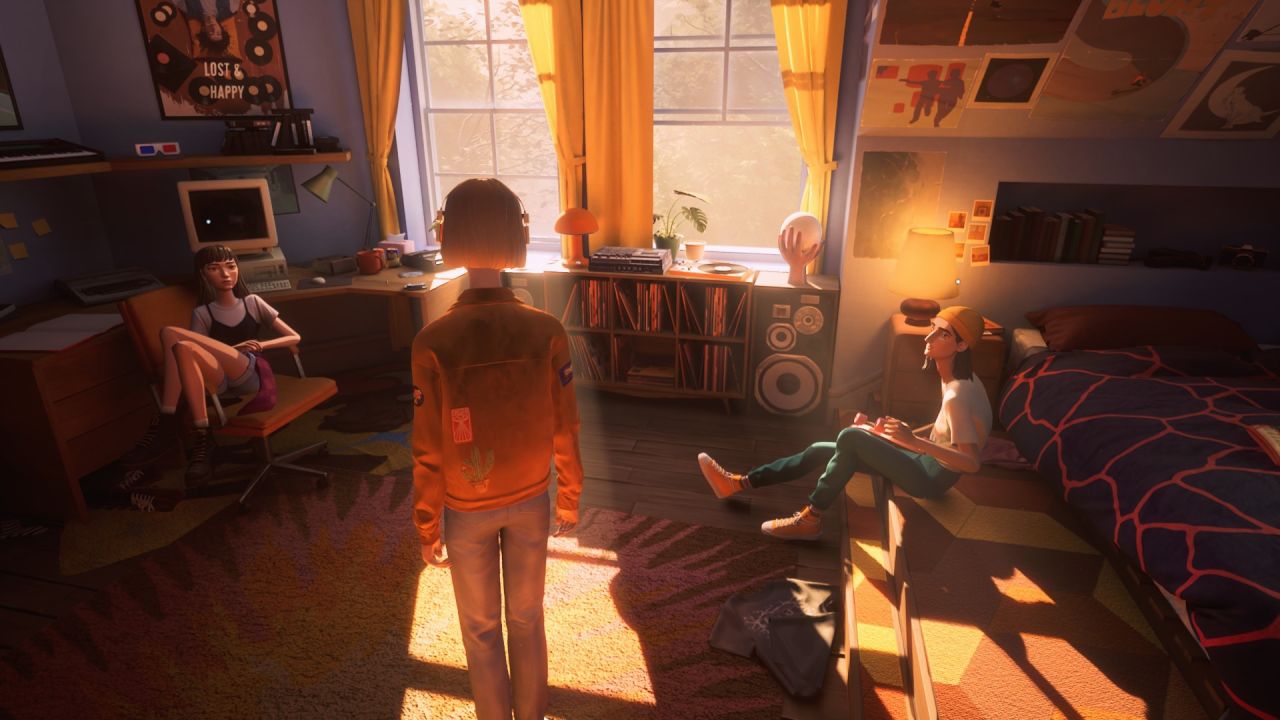
That gives the story a slightly dreamlike quality, where skateboard rides, arguments, jokes, and emotional breakdowns all blend together through the soundtrack.
The friendship between Stacey, Van, and Cassandra is the heart of everything. You see them joking, arguing, holding each other up, and sometimes just skirting around uncomfortable truths. Stacey is driven and focused on her future; Cassandra is dealing with a controlling home life and wants more freedom; and Van is more laid back but still deeply creative and thoughtful. There’s a rough authenticity to their dynamic, especially as the pressure of separation begins to set in.
What makes the story work is its ability to combine humor with emotional depth. There are moments that feel light and fun, like goofing off on skateboards or trying to crash a party. The next moment can suddenly become something more reflective, or even painful. The game doesn’t over-explain these emotional swings. It lets them sit with you instead, often with music as the bridge between moods.
Much of the storytelling is also through small interactions instead of large dramatic events. Whether it’s conversations in bedrooms, quick exchanges while exploring, or even silence between characters, it’s often more than direct exposition. You learn about who these characters are through how they behave when nobody is trying too hard to perform.
Gameplay in Mixtape is intentionally light and flexible.
You aren’t dealing with complex systems or deep mechanics. Instead, the game uses short interactive sequences to support the story and music. One moment you might be skateboarding down a road; the next you are controlling a shopping trolley out of control or navigating surreal, dreamlike scenes that don’t strictly follow logic.
Skateboarding is one of the recurring mechanics and acts as a simple way to move between moments. It’s not about mastery or difficulty. It’s more about rhythm and flow, matching movement with music while characters talk around you. Even when you fail or crash, the game simply resets you instantly, removing punishment entirely so the focus stays on pacing and mood.
Other gameplay moments are more experimental. You might be doing QuickTime-style interactions, playing simple mini-games, or engaging in small tasks like taking photos or interacting with objects in environments. These segments are brief, often customized to particular songs, and each sequence seems like a self-contained memory.
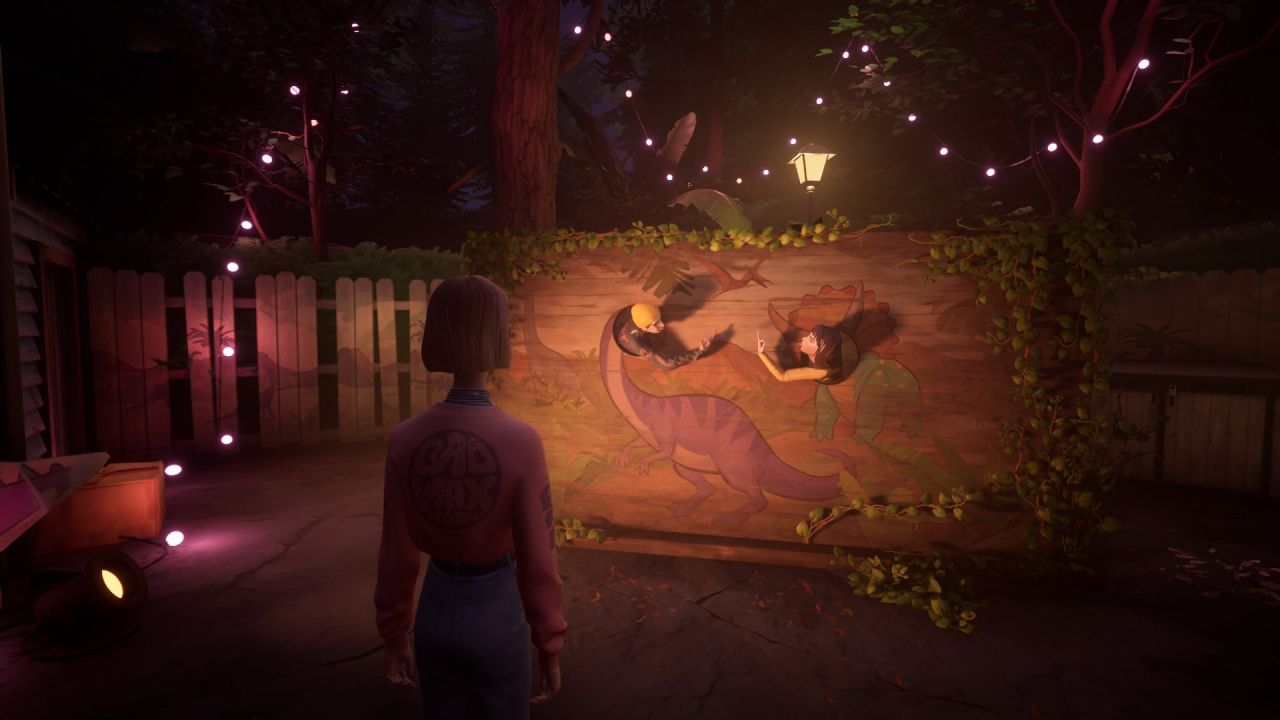
Some of the best moments are from surreal or over-the-top gameplay sections.
They are not meant to be real in a strict sense. Instead, they are projections of emotional states. For example, flying over landscapes or chaotic situations where actions are exaggerated to fit in with teenage emotion, frustration, or excitement. These moments are less about what you do and more about the feeling of it all with a song playing in the background.
Another big part of the structure is exploration. You often end up in bedrooms or small interior spaces that feel intimate and inviting. These environments are filled with things you can touch – CDs, VHS tapes, posters, and other teen memorabilia. Stacey often comments on, or talks about each item, which helps provide context and personality to the world.
The exploration sections slow things down and let you live with the characters. They’re not traditional puzzles, but rather narrative pauses in which you take in details about the characters’ lives. The tempo switches from upbeat music-driven parts to quiet contemplation, which helps to balance the overall experience.
There are also light interactive moments that resemble puzzles, but they are simple and intuitive. Things like rewinding tapes, activating small environmental interactions, or triggering dialogue through object discovery. None of it is designed to challenge you in a traditional way. Instead, it keeps you engaged while the story moves forward.
The strength of the gameplay is not in complexity, but in how well it supports the tone. Everything is built to serve the idea of memory and music rather than challenge or difficulty. But it also means that if you're hoping for more in-depth systems, the gameplay can feel a bit thin.
It's deliberately simple, which might not appeal to everyone.
Mixtape has no real XP system, no progression tree, and no grind. No getting stronger, no unlocking powers, no leveling up stats. Progression is only a narrative device. You progress by moving through scenes and completing story events, not by developing a character through systems. This really cements the idea that the game is about emotional advancement, not mechanical advancement.
Mixtape is a visual feast. It takes on a stylized, hand-painted look that’s a touch surreal, but not to the point of emotional unreadability. The character models are detailed, though not in a traditional realistic way. They prefer expressive animation that emphasizes emotion over accuracy instead.
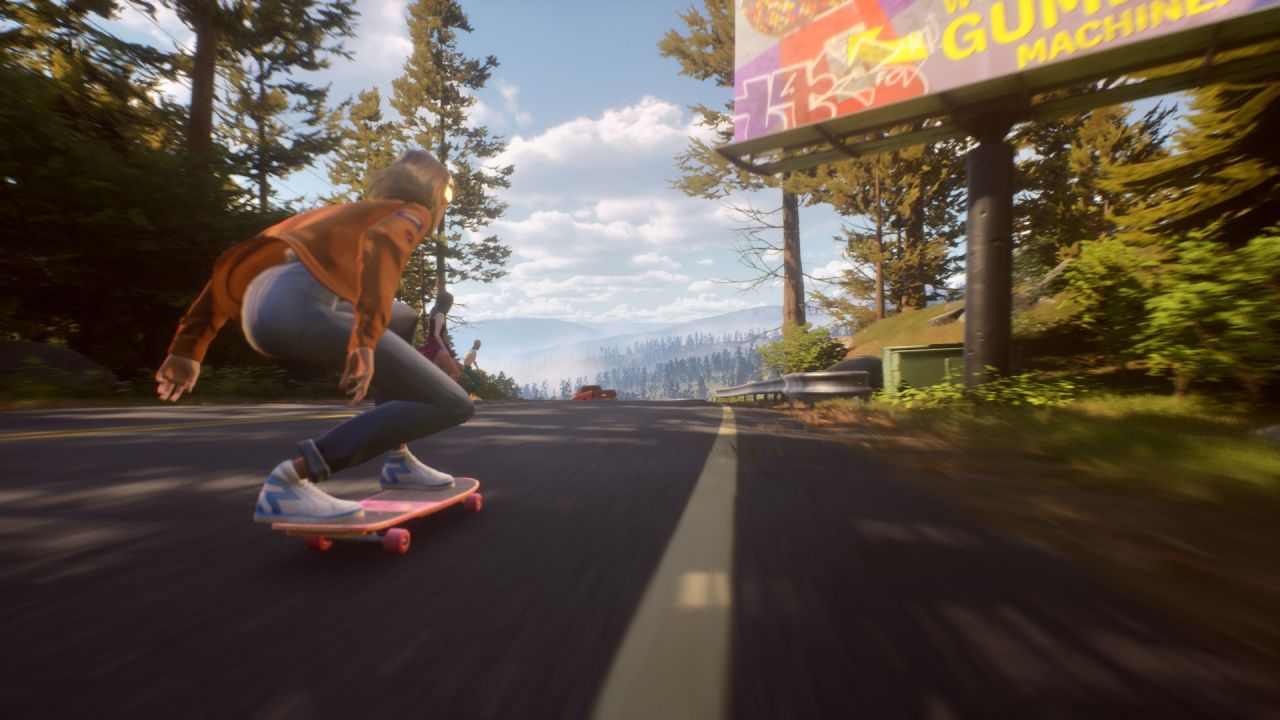
Another notable decision, visually, is how animation is handled. The game often uses lower frame rates for character movement, which gives everything a slightly stop-motion or stylized cinematic feel. It makes the scenes more deliberate and artistic, instead of smooth or realistic. It also helps each movement to be recognizable in the musical moments.
Lighting is a huge part of the presentation.
The game is built in Unreal Engine and uses strong lighting and color design to shape mood. The environments range from warm nostalgic interiors to more chaotic or dreamlike outdoor sequences, with the tone varying. It looks like every frame was done with purpose, like a curated film shot and not a game environment.
The performance is solid, and world presentation is uniform throughout, with smooth transitions between gameplay and cinematic moments. The perspective of the game is often changing, from third-person gameplay to stylized camera angles or even faux live-action transitions. These changes offer a more dynamic presentation and avoid visual fatigue.
Sound is the main focus of Mixtape. The soundtrack isn’t just background music; it is the fabric of the entire experience. All the key moments are associated with a particular track, and the scenes are constructed around how that music affects emotion and pace.
The playlist is wide-ranging, spanning many decades and genres.
You can hear tracks from bands such as Devo, Joy Division, The Smashing Pumpkins, Iggy Pop, The Cure, and so on. The choice is not mere nostalgia; it is a matter of matching emotional tone with musical identity. Some songs provide the soundtrack to wild skateboarding sequences and others to quiet introspective moments.
Occasionally Stacey breaks the fourth wall to explain why she picked a song or what it means in context. It creates a layered experience; you’re not just listening; you’re being guided through the emotional intent behind each track. It gives the soundtrack a curated mixtape vibe, just like the title suggests.
The voice acting is also very much a supporting part of the soundtrack. The main cast do a good job of grounding their performances and keeping the dialogue believable, even as the scenes become more and more surreal. The chemistry between the three leads is such that their interactions feel genuine, especially when emotions change.
Mixtape isn’t trying to be a traditional game with deep systems or long progression loops.
Rather, it is about providing a highly controlled emotional experience. The shortness is a plus because it keeps things focused and doesn’t have unnecessary filler. At around three to four hours, it feels more like an interactive film built around music and memory.
The price point aligns with that structure, sitting in the range of an indie narrative experience rather than a full-scale game. Whether it is worth it depends entirely on what you expect. If you want systems, challenges, or long-term progression, it will feel light. But if you connect with its themes, music, and storytelling style, it leaves a strong impression that lingers after it ends.
What Mixtape does best is make you feel something tied to your memories. It doesn’t just tell you a story about teenagers. It uses music and moments to reflect how growing up actually feels, especially when you look back on it later in life. That emotional resonance is where the game lands its impact.
By the end, Mixtape feels less like something you played and more like something you experienced. It's introspective, personal, and deliberately constructed around emotion, not mechanics. It doesn't try to be everything, everywhere, all at once, and it's that focus that makes it stand out.
Senior Editor, NoobFeed
Verdict
A brief, music-centric coming-of-age tale that mixes nostalgia and sentimentality into an interactive mixtape of adolescent recollections.
90
Related News
No Data.