
Warhammer 40,000: Mechanicus II Review
PC
A gothic symphony of steel, faith, and tactical obsession wrapped inside the cold logic of war.
Reviewed by Sarwar Ron on May 21, 2026
It has always been easy for the video game industry to make Warhammer games laden with violence, huge armor, and the incessant cries of holy war. But atmosphere is a rarer achievement. Many versions get the look of the cosmos right, but miss the peculiar spiritual dread rising beneath its mechanical cathedrals and collapsing cities.
Warhammer 40,000: Mechanicus II has the challenge of building on one of the few strategy games to truly capture the creepy appeal of the Adeptus Mechanicus. The second game, developed by Bulwark Studios and published by Kasedo Games, expands upon the first game and adds the ancient Necrons as a second playable faction.
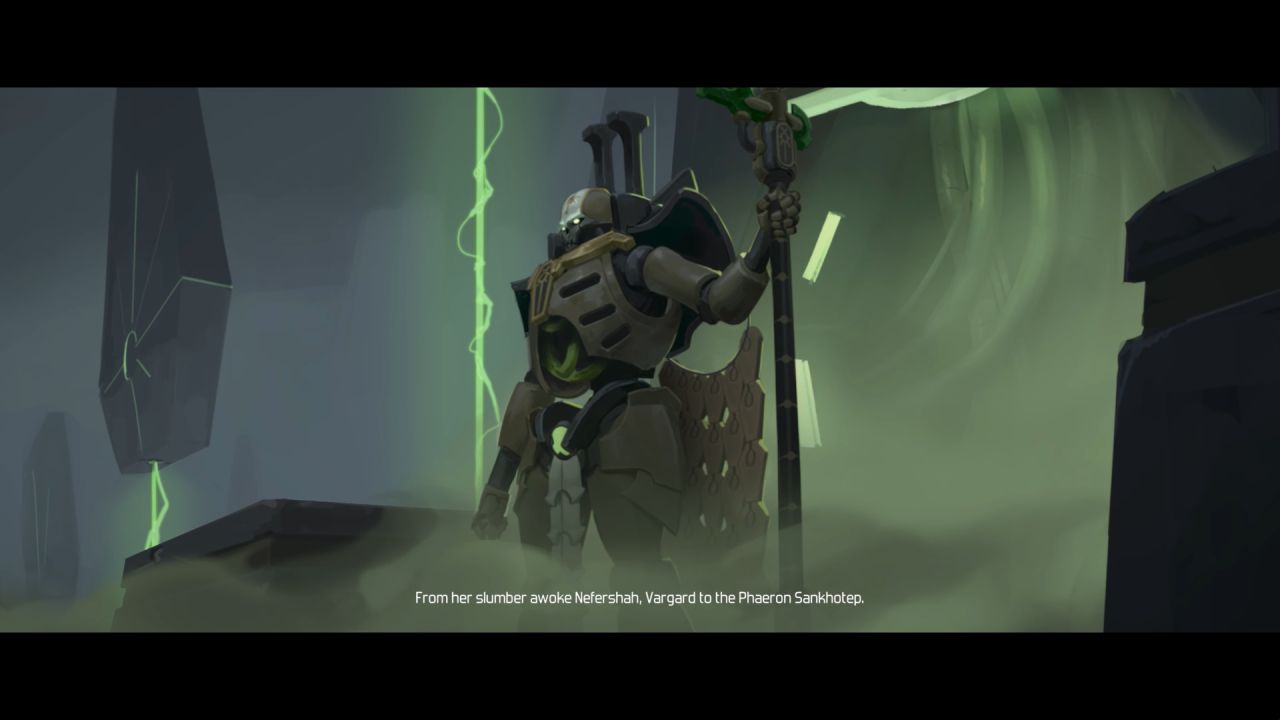
The first Mechanicus failed not because of its complex mechanics, but because of its suffocating atmosphere, hypnotic music, and well-considered tactical design.
Warhammer 40,000: Mechanicus II works well to maintain that identity while layering additional game elements over the fundamental system and power disparity between factions. Set in the grim darkness of the far future, the game focuses on the Adeptus Mechanicus and the rising Necron dynasties as they battle across the scorched surface of Hekateus IV.
Rather than making the conflict good vs. evil, the story relishes the uncomfortable truth that every faction in the Warhammer universe is on the brink of fanaticism and destruction. This ambiguity about the concept provides the task more drama right from the bat than many recent strategy games.
Warhammer 40,000: Mechanicus II isn’t the only strategy game in town, but it’s one of the more confident. Every task has a ritualistic intensity. Servo skulls float between cathedrals of deserted factories, metallic chants resonate over war zones and conversations between cybernetic priests sound like a machine rewriting sacred texts. The game realizes that mood is not simply for show. It is the atmosphere that holds everything on the planet together.
But even with those strengths, the sequel sometimes stumbles because it has so much it wants to do. Tactical encounters become stale, progression systems break down quickly, and the structure of tasks lacks the cumulative complexity necessary for long campaigns. Warhammer 40.000: Mechanicus II is still very interesting, but it doesn’t change much when it should have been trying to become something new.
Warhammer 40,000: Mechanicus II contains the same story-based moral tension that made the first so unforgettable. The Necrons are devoid of all humanity. They want to be emotionless and immortal. The Adeptus Mechanicus are religious fanatics of information. Both sides saw themselves as entitled to be in control, and the war that has developed is ideological rather than purely military.
The operation begins with an acquisition and reconnaissance mission, which establishes the tone and the pace immediately. The game does not bombard you with massive lore dumps. Instead, it colors its universe with a well-thought-out mood and character interaction. Slowly, the game unveils old ruins, buried tech, and prohibited finds, making it feel more like you’re uncovering perilous archaeological mysteries than just swapping out fighting fields.
The five Magi leading the Mechanicus mission bring a lot of character to the plot. They’re cybernetic priests with high enhancements, but each has their own aims, their own way of conceiving tactics, and their own issues with other people. The actors don’t seem like expendable robot caricatures since they have caustic talks, ideological disputes, and sometimes touch on buried humanity.
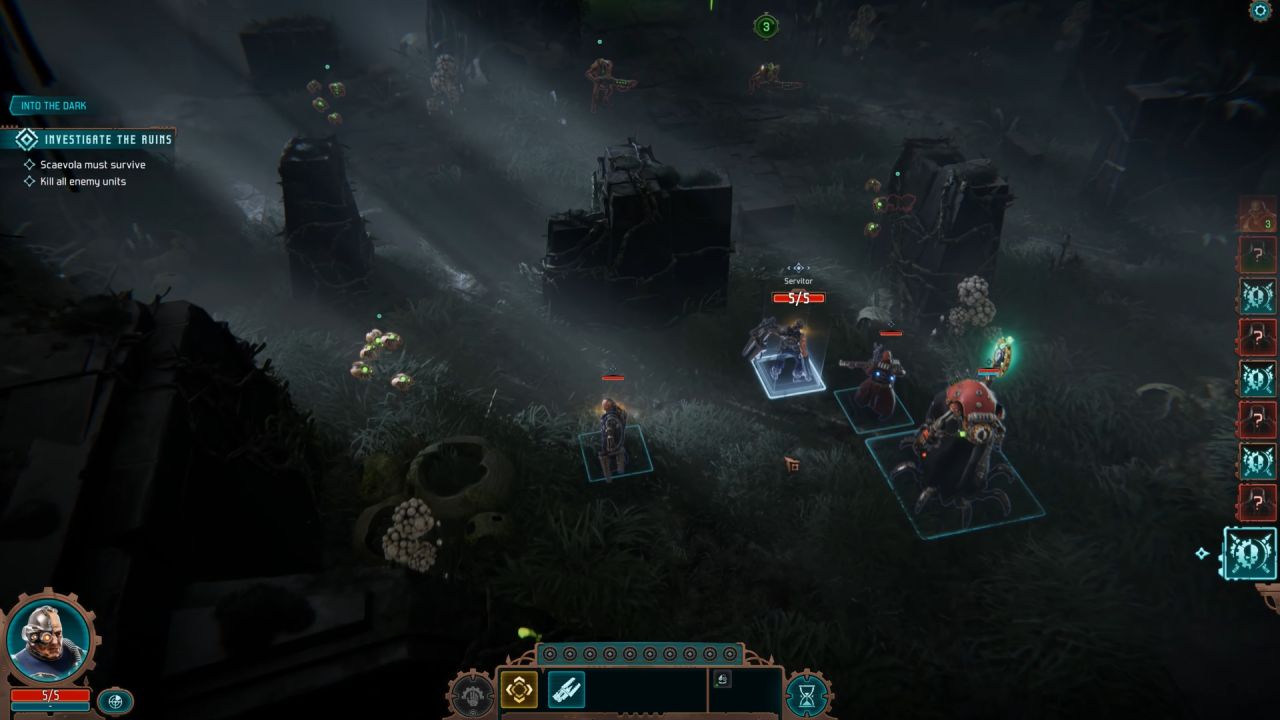
The Necron plot is also interesting in ideas, but not quite as strong emotionally.
It’s a new and exciting take on the Warhammer games, playing as the ancient machine rulers striving to restore their lost power. Their method emphasizes certainty and dominance, a stark contrast with the Mechanicus’s devotion and discovery. The tone difference between the two groups makes the structure much more successful as a whole.
It’s worth noting that Warhammer 40,000: Mechanicus II doesn’t have any easy heroes. Each victory is ethically stained since the world is made up of infinite cycles of success and defeat. Dark, sure, but the game keeps the bleak mood of Warhammer without getting ridiculous or self-important. The mix of tones keeps the story interesting through long campaigns.
But the stories don't always hit one emotionally. Each activity has a strong mood, but the overall tale struggles to maintain a dramatic pace over lengthy spells of playtime. There are a lot of significant reveals that aren’t set up enough, and a lot of side characters who do nothing except deliver exposition.
The pacing also sucks, with the same mission objectives constantly breaking the flow of the story. And holding strategic points, defending positions, and killing enemy troops all slow the emotional flow between major story beats. The backstory is still good, but the framework often undermines the impact of the story's best moments.
Despite its shortcomings, though, Warhammer 40,000: Mechanicus II is still an excellent game. The universe feels authentic. Every conversation, every mission briefing, every detail of the environment, contributes to the strange spiritual machinery that makes the world work. The strategy game genre is not known for its consistently immersive, story-driven environments.
Tactically, Warhammer 40,000: Mechanicus II expands on the tactical pillars of the first game, while adding new tools that make tactics more versatile. Combat takes place in turn-based conflicts, where placement, resource management, and ability synergy are vital to survive in more deadly areas.
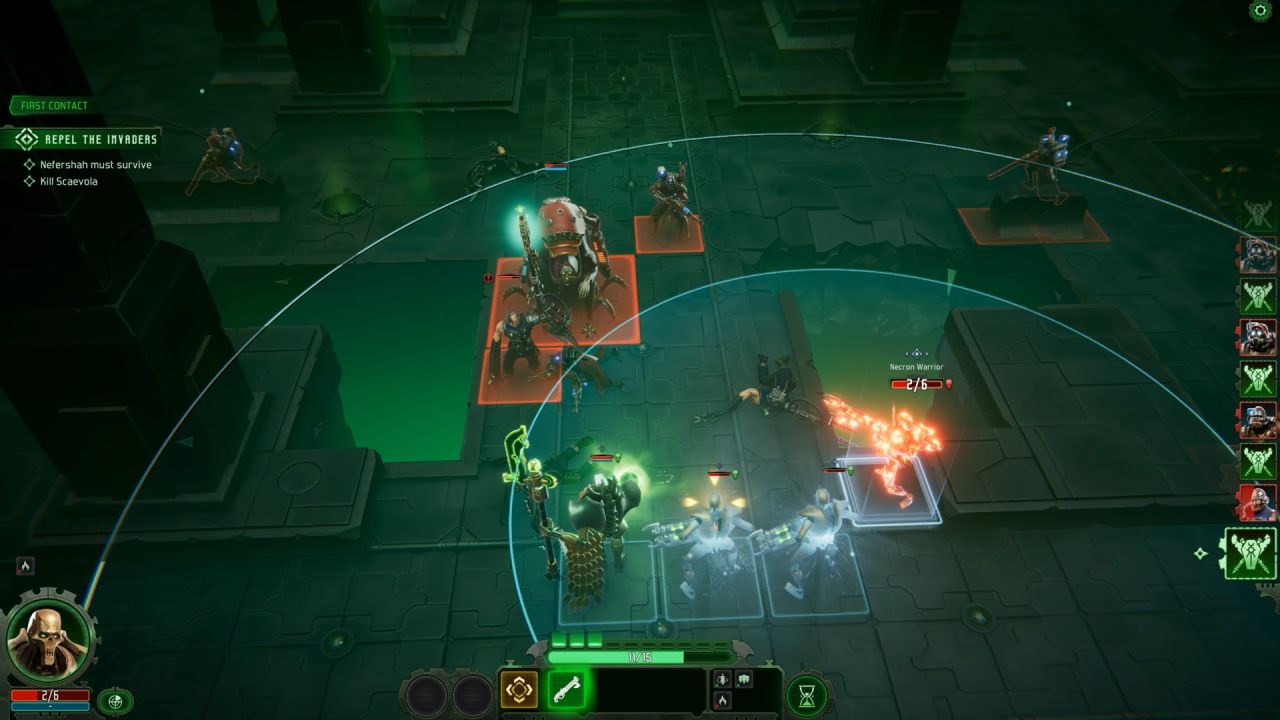
The biggest mechanical modification is the asymmetrical faction design that splits the Mechanicus and Necron fights. Mechanicus forces achieve cognition by playing roles on the battlefield connected to the specialty of their units. Rangers use accurate long-range strikes to gain resources while Vanguard units hunt for weaknesses in the adversary to make their tactics more effective.
This makes for a satisfying fight rhythm as behavior on the battlefield directly affects the ability to plan ahead.
Necron forces operate in a very different way. In combat, gradually they gain their Dominion resource, rewarding careful control of the battlefield and long-term positioning over aggressive momentum. The early turns are usually slow, but once the systems of the Necron forms are fully active, they become incredibly dangerous. This imbalance keeps campaigns not only visually but also functionally diverse.
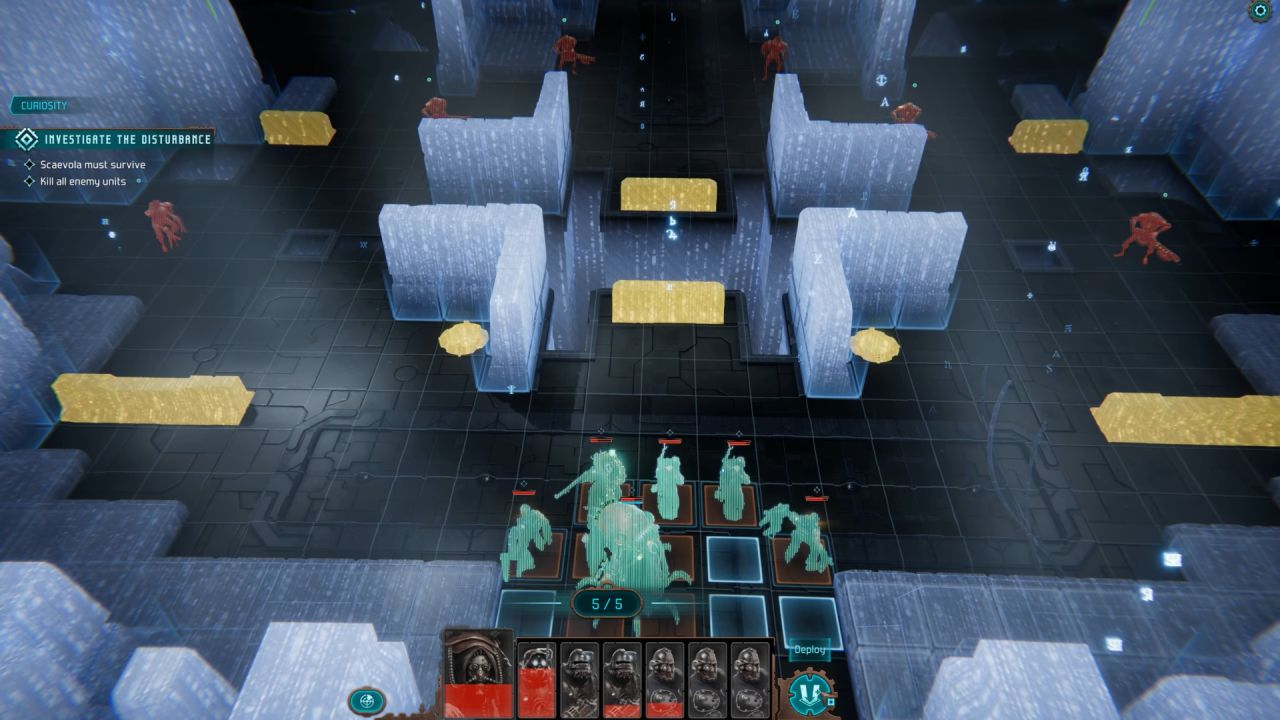
Also, the boss system makes it a lot easier to shift approaches. Each Magos has its unique skills, combat bonuses, and development trees, which let you customize the way you battle based on your own particular strategy tastes. Some commanders specialize in aggressively controlling the front lines, while others are experts in support mechanics that greatly enhance allied troops.
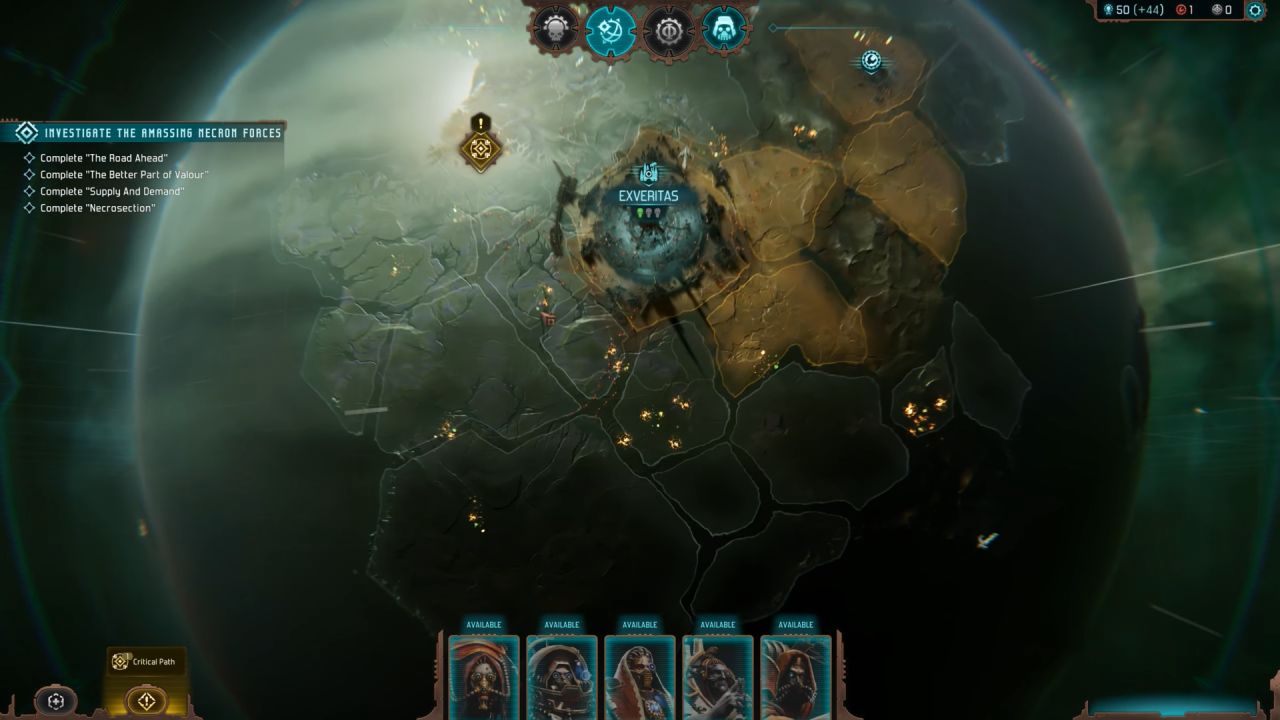
Warhammer 40,000: Mechanicus II also offers additional strategic management beyond the fight itself, including global maps, forge improvements, unit development and story advancement mechanisms. Between tactical missions, you can research new technology, bolster your soldiers and deal with planetary disputes. These adjustments are intended to make the war feel like a wider picture rather than just a few discrete fights.
At first, these systems appear to have many layers. Choices seem to matter, the plot flows in a steady stream, and tactical combat sustains a brisk pace. It’s not too difficult to play, but it makes it easy to understand the strategic information. The sequel’s usability is one of its best assets, helping to keep the focus on making decisions on the battlefield rather than managing menus.
Unfortunately, as the campaigns go on, the system starts to show some holes. It's astonishing how fast advancement systems plateau. This means that preferred builds win over and over again with no real incentive to try something new. When the finest strategies are found, conflicts are less unpredictable and less tense tactically.
What makes this dilemma even more remarkable is that the underlying ideas are still fun. Warhammer 40,000: Mechanicus II has some brilliant moments in battles with destructible cover, coordinated ability chains, and shifting control of the ground. There’s nothing wrong with the procedures as such. The trouble is they don’t evolve in any significant way over time.
Combat remains the most significant feature of Warhammer 40,000: Mechanicus II, with tactical engagements occurring all the time, often adding interesting strategic depth. Every battlefield requires cautious movement, timing of skills, and understanding of where things are. Mechanicus places greater attention on battlefield rhythm and tactical character than many other strategy games, which solely care about numerical optimization.
The Cognition system makes fighting even more rewarding by rewarding conduct on the battlefield that fits a given function.
Rangers get resources by performing accurate strikes. Support units enhance their teammates by scanning them. Front-line warriors daringly alter their locations to affect the battle. Not just dealing damage, but each class has a function to play.
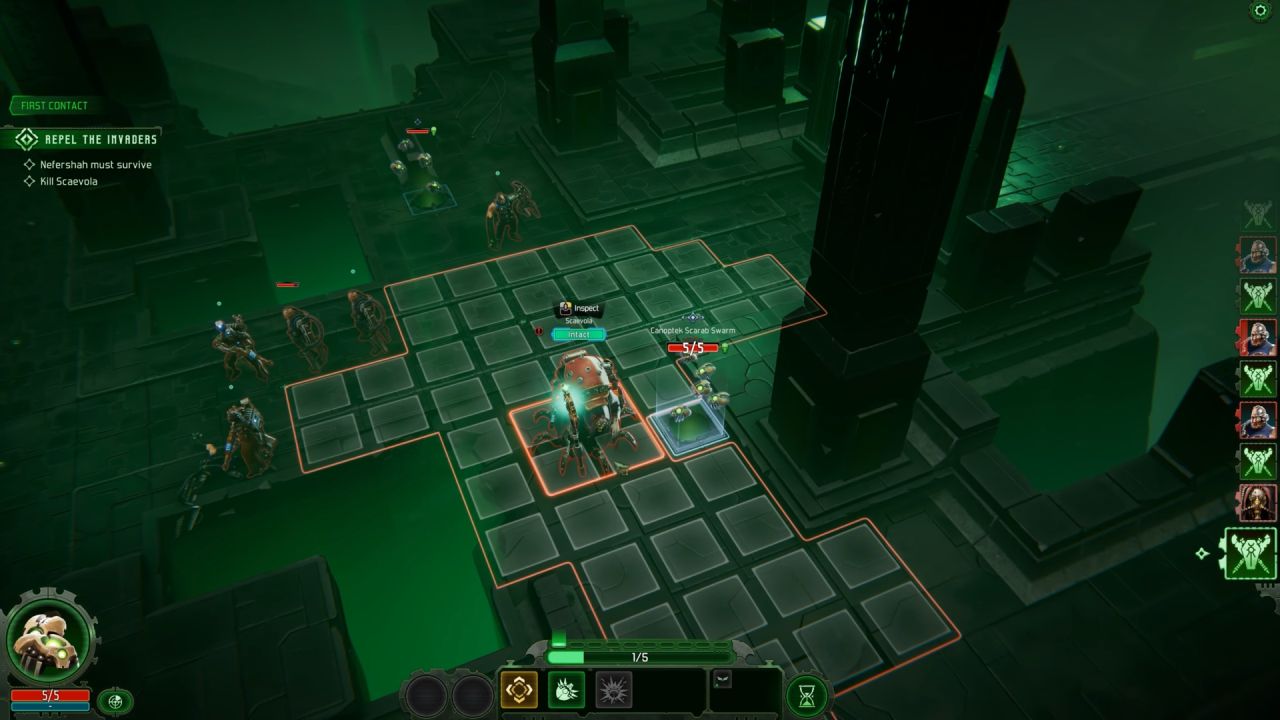
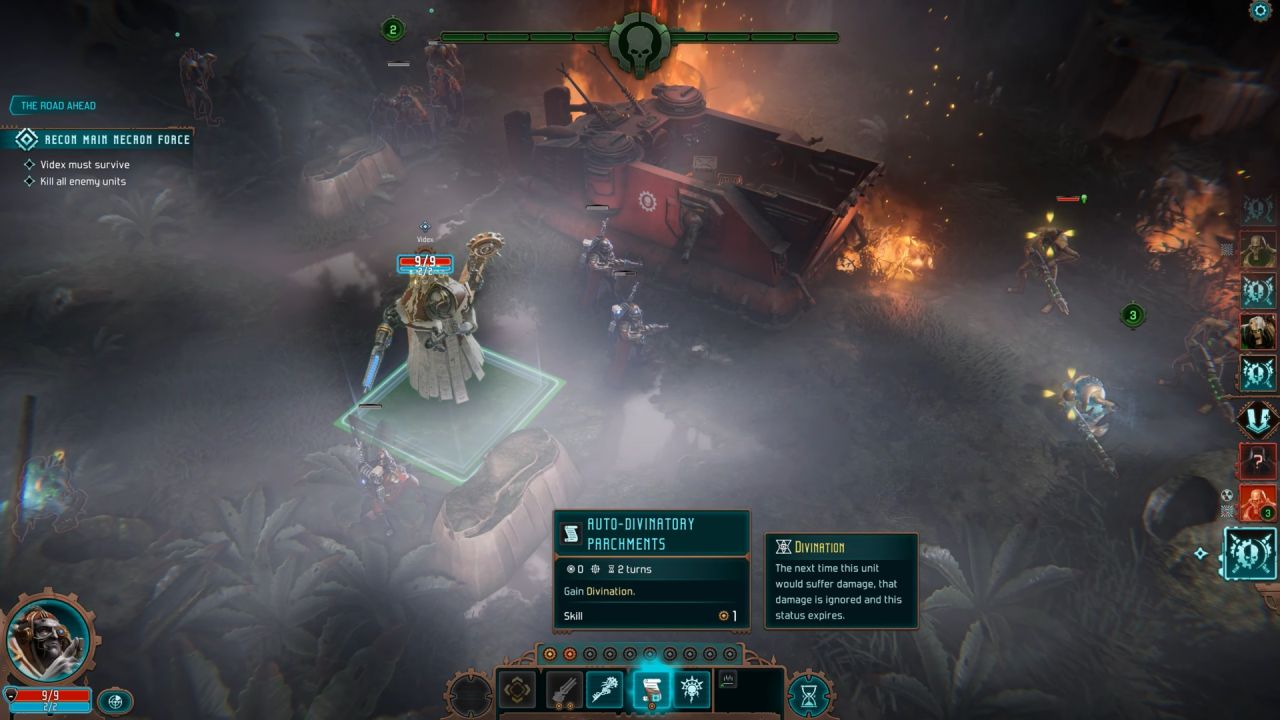
Changing the environment also provides a nice variety of tactics. Destructible cover will force you to switch defensive positions rather than holding your ground. Open terrain, industrial sites, wetlands, and buildings in poor condition all make it much more difficult to observe and alter the way people move around the battlefield. Warhammer 40,000: Mechanicus II knows the ground itself should be an active part of the battle.
The Necron game features a lot of fascinating pivots. They build more slowly, they ask for defensive patience and controlled momentum, not a rash assault. When combined, all the Dominion systems combine Necron armies into terrifyingly effective war machines that can easily defeat their opponents.
Eventually, though, combat encounters get tiresome as mission aims are not truly distinct. Basically, the game structure is to protect zones, destroy attackers, and survive over and over again against reinforcement waves. The individual fights are still entertaining, but the objectives as a whole don’t alter enough to keep things new forever.
The difficulty level balance also changes. Early missions can feel like punishment with limited resources and units that have yet to quite hone their talents. Later fights are very different, with armies upgraded and advancing forward virtually unstoppably. By the end of the campaign, even the largest battles don't really generate much real strategic tension.
That said, the combat system is always easy to read and fun to play. Attacks have a heavy graphical impact, tactical choices matter, and the imbalance of power between sides provides enough diversity to keep you engaged for dozens of hours. Warhammer 40,000: Mechanicus II doesn’t reinvent the wheel when it comes to turn-based tactics, but it knows how to make strategy games attractive and believable.
The nicest part about Warhammer 40,000: Mechanicus II is how beautifully it gels together as a setting. There are lots of little touches to the combat that make you feel more connected to your party. Mechanicus forces specialize on the battlefield, gaining expertise and becoming more tactically efficient. Necrons, on the other hand, use deliberate movement to make things impossible to dodge.
The procedures don’t seem distinct mechanically; they seem like they’re part of a story.
Accessibility deserves accolades, too. Many strategy games are quite hard for a new player to get into, due to plenty of hidden formulas and micromanagement. Mechanicus makes information clear but also has enough complexity to appeal to experienced tactical players. Granular challenge modifiers allow you to change things without altering the strategic way in which the game is played.
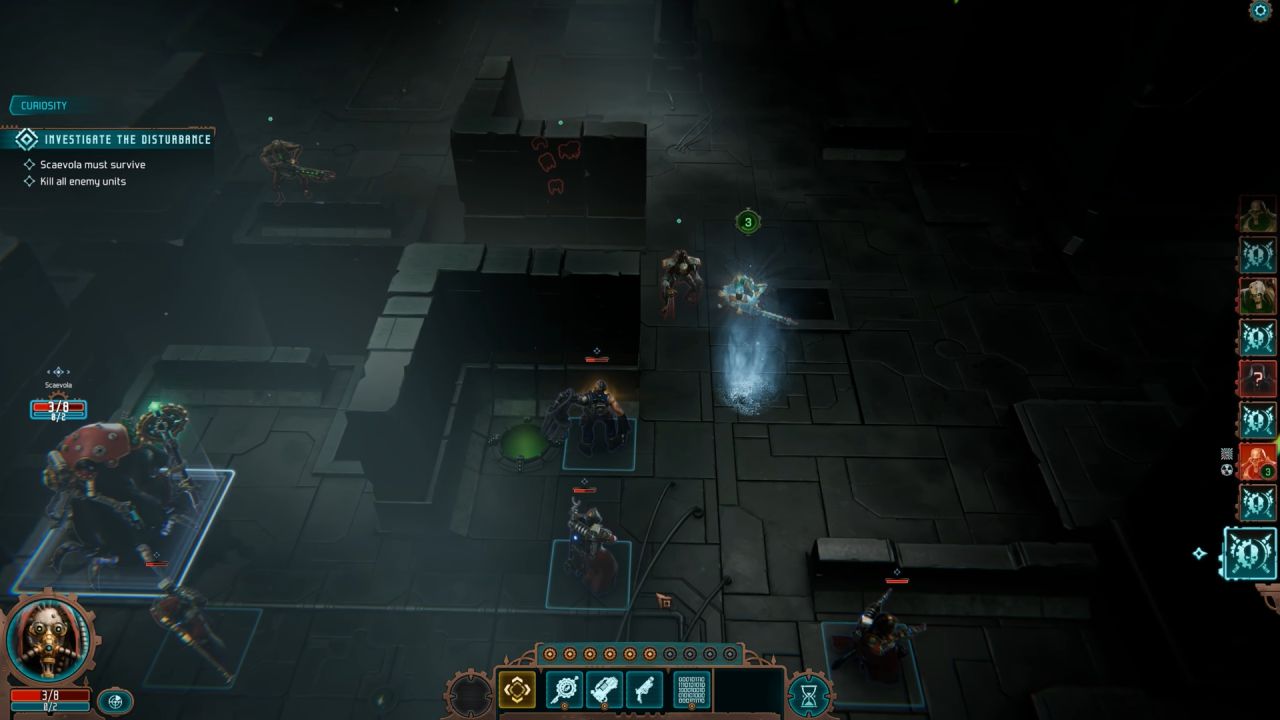
Battle is also much stronger in visual readability. Clear unit outlines, clear battlefield effects that indicate danger, and easy-to-see tactical information in combat. There are so many distinct groups and skills to consider, but you rarely lose sight of what matters most on the battlefield.
But the system struggles with long-term transformation. Once you discover the optimal builds and upgrade pathways, you don’t need to experiment as much. In the latter sections of both campaigns, the progression systems cease to provide any substantial strategic obstacles.
Mission greatly facilitates this recurrence. The game is largely about location and removing opposing forces, and so it is more difficult to find inventive solutions to tactical challenges. The core combat is still fun, but the framework around it starts to feel like it should've been there all along.
There are also occasions when the Necron turn effects slow the game considerably during bigger battles. The group likes a slow build on the battlefield, and so enemy turns can be surprisingly long when a lot of units are activated at once. This makes the pace of fighting substantially slower in extended fights.
These issues notwithstanding, Warhammer 40,000: Mechanicus II is still one of the better dramatic strategy games I’ve had in a while. Even when the same things happen over and over again, the style and presentation keep pushing the experience in a very amazing way.
Warhammer 40,000: Mechanicus II has a lot of progression methods. They affect both the effectiveness of forces on the battlefield and the long-range planning of the campaign. Leaders receive experience by completing missions, which allow them to unlock upgrades, passive boosts and tactical skills that can greatly impact their performance in battle.
You can make modifications that make an impact early in the game.
The skill tree structure. Some commanders suit aggressive assaulting playstyles, some are built for support utility, or for defensive control of the battlefield. Put in faction-specific rules, and you have a lot of strategic possibilities at the start. Unit development is more than simply individual leaders. As new technologies, forge upgrades, and troop advancements are produced, armies around the game world become increasingly diverse.
It feels very rewarding to get stronger units and battlefield tools in the first half of the game. The game should not have too much grinding, and that is vital. The campaign does not progress by farming the same thing over and over, but by completing missions. Resource collecting seems consistent and manageable, which keeps you focused on trying out different techniques rather than going through infinite optimization circles.
Too bad the ways of progression get less intriguing the further the chapters go. When the chosen builds are completely functional, upgrades do not make any difference to how the battlefield is defended. The excitement of discovery slowly fades into the daily grind of an office over time.
The problems are the same with the world map tools. The immersion of managing planetary conflicts and forging growth feels good initially, but so many of the extra goals feel like busy work instead of strategically fascinating side material. Warhammer 40,000: Mechanicus II occasionally confuses size with detail that makes sense.
That said, the progression system is fun in that it keeps layering on faction identity and fighting specialization. Still, from a strategic point of view, it's tremendously satisfying to see armies evolve from small scouting forces to frightening technological war machines for much of the campaign.
In terms of graphics, Warhammer 40,000: Mechanicus II is a big leap forward over its predecessor. The first game was a success in terms of atmosphere and art direction, even if the settings were quite simple. The sequel introduces much more territory, including woods, marshes, mountains, industrial complexes, and massive tech temples, all portrayed with much greater detail.
The Adeptus Mechanicus look is awesome still.
You won't find another modern strategy game that looks anything like it. Rusted machinery, illuminating scripture, giant mechanical constructions, and endless industrial wreckage make for a one-of-a-kind look. All wars are simultaneously holy and dirty.
Character design is vital, as the Magi and Necron troops express who they are only through their outlines and movement. The cybernetic priests move with a disturbing ritualistic precision; the Necron fighters’ simple motions and bright metal structures radiate a cold mechanical inevitability.
Lighting and impacts on the environment usually help immersion to be stronger. Fog seeps over gutted areas, damaged machinery sparks, and the impact of weapons lights up the surroundings with violent flashes of industrial power. Warhammer 40,000: Mechanicus II always looks like it costs a lot, even as a niche strategy game.
But the greater visual ambitions require a system with very high needs. There are still some configurations where performance tuning does not quite behave appropriately, especially at high graphics settings. Strong systems may need to be adjusted with tech like fog rendering & upscaling to get steady frame rates.
It's especially hazardous for the gear you bring along. Getting high performance on the Steam Deck is hard to do consistently, and makes it tougher to play the game on a handheld for players. With the slower strategy pace, it seems like a missed opportunity. Still, it’s an incredible artistic effort. Strategy games do not do a good job of creating this mood through visual design alone.
Warhammer 40,000: Mechanicus II makes every battlefield a temple to machines, chaos, and war that never ends.
The best part of Warhammer 40,000: Mechanicus II is perhaps the sound design. Composer Guillaume David has done it again, creating another unforgettable soundscape, blending mechanical percussion, distorted chants, synthetic orchestration and haunting electronic textures. The music is always adding to the emotional tone without taking away from the practical focus.
The battles pulse with a metallic intensity, and the quieter exploration moments employ unnerving ambient drones to keep the tension simmering just beneath the surface. Few strategy games made today use music this well to set the tone. The voice acting also makes the absorption a lot better. The Mechanicus conversation nevertheless clearly draws on religion and technology, turning typical mission briefings into disturbing liturgical rites.
The characters don’t sound like warriors so much as robots reading holy texts via damaged computers. The Necron voice design is amazing next to the Mechanicus style. They deliver in a colder, more distant way, adding to the group’s legacy of arrogance and emotional emptiness. This variation in sound identity makes the asymmetric campaign architecture much more robust.
Environmental sound design provides more texture to the jobs. In industries, the clatter of metal steps, the distant groan of machinery under crumbling walls, and the satisfying weight of a plasma gun firing deadly. Every area sounds like it's full of dead technology. The soundtrack never gets old, even on extended campaigns, as the pieces shift a little as the tale progresses.
Warhammer 40,000: Mechanicus II realizes how essential sound is to the mood as much as how things appear, and the result is one of the best sound experiences in the strategy genre. Warhammer 40,000: Mechanicus II has some really fascinating paradoxes. At the same time, it’s one of the moodiest strategy games in years, and a sequel that’s perhaps too cautious to entirely outshine the first game.
The core tactical systems are still a blast to use, the audiovisual presentation is fantastic, and the uneven power balance between factions provides a ton of interesting strategic variety. Both the Adeptus Mechanicus and the Necrons campaigns offer wonderful themes and retain the dark philosophical tone that makes the Warhammer universe fascinating. Every battlefield is a site of ritualistic fixation, of technical horror and imperial splendor fraying at the seams.
Only a few games know their source material as well.
But the experience doesn’t live up to its potential with repetitive mission objectives, sluggish progression systems, and a lack of balanced challenge. Warhammer 40,000: Mechanicus II often does a terrific job of building on previously outstanding ideas, without introducing enough large new ideas to keep the enthusiasm continuing.
But even with those flaws, it is still a very interesting game just because of the way it feels. Music, graphics, and identities of each group come together into a unified artistic vision that turns every battle into more than a simple tactical engagement. In this strategic game, you have to win conflicts, but not only. In this strategic game, you have to survive in a world where violence and machine faith are the norm.
Warhammer 40,000: Mechanicus II ultimately succeeds because it respects both strategy players and enthusiasts of Warhammer lore. Novices will find it easy to get into without sacrificing any of its thematic richness, while long-time fans will adore the amount of attention that went into each metallic hymn, corrupted battlefield, and hallowed machine routine. The mechanics do it again and again, but there's no fighting the vibe.
Admin, NoobFeed
Verdict
Visually stunning and rich strategy sequel elevated by strong faction identity, satisfying tactical combat. Warhammer 40,000: Mechanicus II lacks long-term mission variety, but its immersive world and strategic depth remain deeply rewarding.
66
Related News
No Data.