
Ryzen 5800X3D Returns While RX 9070 GRE Launches Globally: What Gamers Should Actually Buy
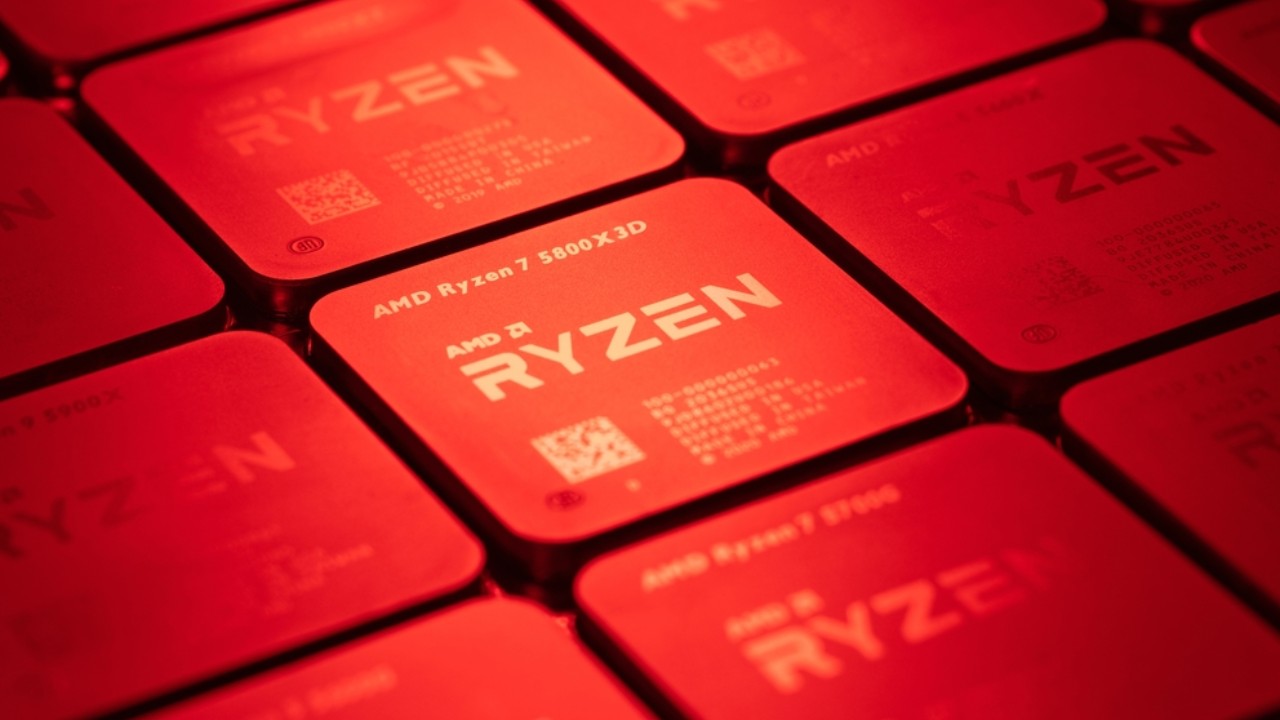
AMD relaunched the Ryzen 7 5800X3D as a 10th Anniversary Edition to give AM4 owners a final upgrade path.
Hardware by Shinji Okazaki on Jul 10, 2026
AMD made two significant hardware announcements close together, and they sent very different signals about where gamers should put their money. One brings back a well-regarded CPU for an older platform, while the other introduces a new GPU whose positioning raises real questions. Both decisions affect anyone weighing a CPU upgrade, a GPU upgrade, or a full platform rebuild.
AMD's Ryzen 7 5800X3D is returning as a 10th Anniversary Edition for the AM4 platform. On the surface, that looks like a straightforward win for anyone wanting to stay on their current motherboard and DDR4 memory. The more interesting part of the story is why bringing it back required real engineering work in the first place.
Why AMD Had to Re-Engineer the Chip
According to AMD, reviving the 5800X3D was not as simple as restarting an old production line. The original 3D V-Cache stacking process used for the first version of this chip is no longer in use, meaning AMD had to re-engineer and re-qualify the chip for a newer stacking process. The core specifications remain unchanged from the original: this is still the Zen 3 architecture, with eight cores, 16 threads, a 4.5 GHz boost clock, 96 MB of L3 cache, DDR4 support, and the AM4 socket.
If you have an older computer with a Ryzen 5 2600, 3600, or 3700X, or a weaker Ryzen 5000 chip, the 5800X3D is a big step up for gaming without needing a new motherboard, DDR5 memory, or a fresh Windows installation. For people who already have an AM4, the best thing about this chip isn't that it's new, but that it lets them avoid rebuilding their whole platform.
AMD priced the 5800X3D 10th Anniversary Edition at $349, below the original $449 launch price from 2022. Whether that represents a good deal depends heavily on your starting point. For someone already on AM4, it likely does. It's tougher to sell to someone who is building a new PC from scratch, especially since AMD has promised support for the AM5 platform until 2029.
A new AM5 build comes with DDR5 memory, newer motherboards, future support for Ryzen CPUs, and a much longer update window. The verdict on the CPU itself is pretty clear: the 5800X3D comeback is a good way to finish off an AM4 system, but it's not the best place to start for someone building a new PC from scratch.
The RX 9070 GRE Launches Globally
AMD's Radeon RX 9070 GRE is now launching worldwide, positioned on paper as a solid 1440p gaming GPU. It's built on the RDNA4 architecture with 48 compute units, 3072 stream processors, 12GB of GDDR6 memory, a 192-bit memory bus, 432GB/s of bandwidth, and a 220W board power rating.
The complication comes from how closely the GRE sits next to AMD's own standard RX 9070, which offers 56 compute units, 3584 stream processors, 16GB of VRAM, a wider 256-bit memory bus, and considerably higher memory bandwidth, all at the same 220W power rating. The GRE isn't just a minor step down.
Despite that internal positioning problem, the RX 9070 GRE isn't a weak card in absolute terms. According to AMD's own figures, it outperforms the RTX 5060 Ti 16GB at 1440p, and independent testing backs that up in several titles. Testing from TechSpot found the RX 9070 GRE runs around 9% slower than the standard RX 9070 at 1440p, while still outperforming the RTX 5060 Ti 16GB in several benchmark averages.
.jpg)
It offers less GPU, less VRAM, less bandwidth, and weaker long-term headroom, yet it launches at $549, close enough to the standard RX 9070 that the value proposition becomes genuinely confusing. That creates an awkward situation: compared to Nvidia's card, the GRE looks strong, but compared to AMD's own standard RX 9070, it starts to look like the weaker choice, which is the real trap facing buyers evaluating this card in isolation.
Resolution has a lot to do with how much VRAM really counts.
12GB is still enough for most people at 1080p. At 1440p, 12GB is fine, but 16GB seems like the safer choice, especially for newer games with high-resolution textures, ray tracing, large open worlds, and future PC ports. When it comes to 4K, 12GB needs more care. Many software programs still give Nvidia a significant advantage over other companies in AI and creative tasks because more programs can use CUDA.
RX 9070 GRE is mostly a value card for gamers, and if it's not clearly a value compared to AMD's own range, the case for it as a whole gets a lot weaker. It needs to be compared directly against the standard RX 9070, competing Nvidia options like the RTX 5060 Ti 16 GB, older RX 7900 series cards, and whatever pricing is actually available locally.
At $500 or less, the RX 9070 GRE becomes a genuinely interesting option. At $549, it requires a fairly specific set of circumstances to make sense, and if the standard RX 9070 is priced close to it, the GRE quickly becomes the harder sell. Overall, AMD's CPU move looks strong, giving AM4 owners a real upgrade path at a moment when DDR5 pricing and full platform costs remain painful.
The GPU move is considerably weaker, not because the RX 9070 GRE performs poorly, but because it has been positioned awkwardly against AMD's own lineup. The better approach for most gamers is to buy the 5800X3D only if already on AM4, consider the RX 9070 GRE only if it's clearly and meaningfully cheaper than the standard RX 9070, and otherwise wait for pricing to improve or opt for the stronger card outright.
Editor, NoobFeed
Latest Articles
No Data.