
AMD Ryzen 9 9950X3D2: Is More Cache Worth It for Gaming and Workloads
AMD Ryzen 9 9950X3D2 introduces dual 3D V-Cache CCD design with increased cache capacity and higher power limits.
Hardware by Tanvir Kabbo on Apr 11, 2026
The evolution of 3D V-Cache continues as AMD introduces a new flagship desktop processor designed to push the limits of performance. With increased cache, higher power consumption, and a refined architecture, expectations are naturally high. However, real-world performance—especially in gaming—depends on more than just raw specifications.
Introducing the Next Step in 3D V-Cache
Today we get to share the next step in the evolution of 3D V-Cache. We're introducing the new Ryzen 9 9950X3D2 dual edition, the world's first desktop processor with two CCDs featuring 3D V-Cache. After months of waiting, AMD has finally announced its newest flagship CPU, carrying not one but two CCDs with 3D V-Cache.
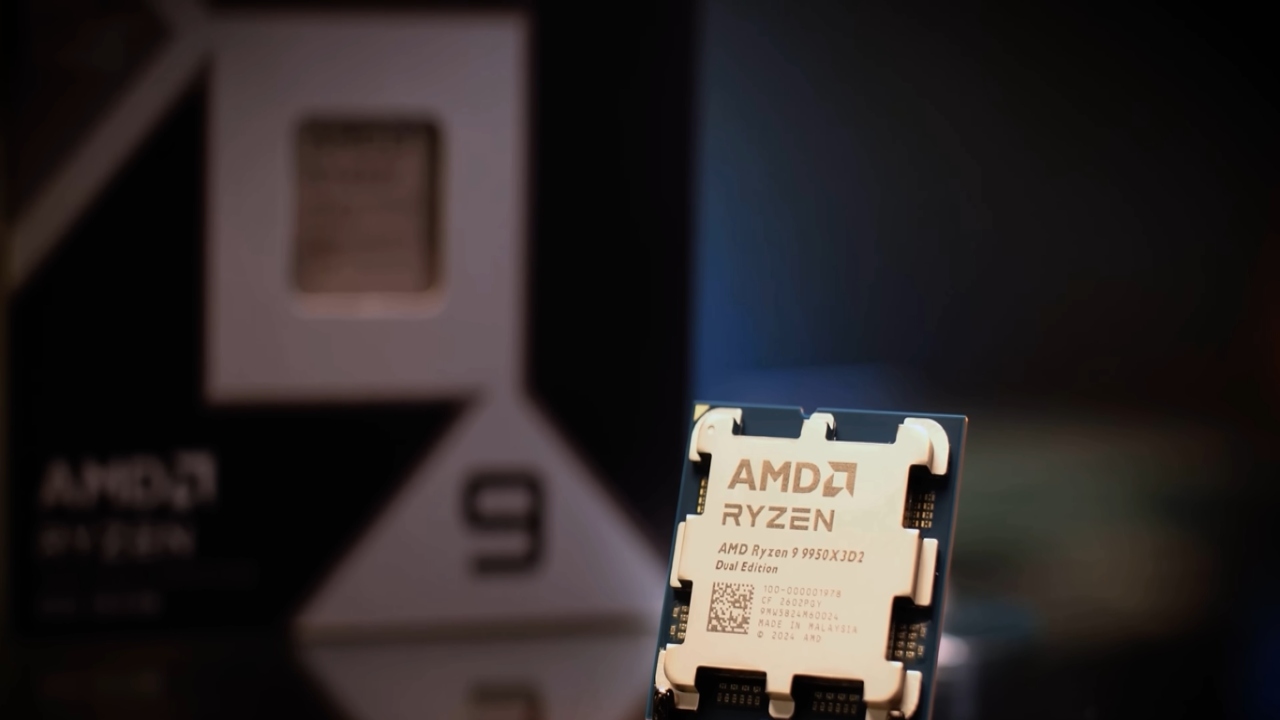
Its L3 cache capacity has increased from 128MB to 192MB, while its TDP has risen from 170W to 200W. However, its boost clock has been reduced slightly from 5.7 GHz to 5.6 GHz. Naturally, the real question becomes whether the extra cache will actually bring more FPS.
Architecture and Key Differences
It's still a 16-core dual CCD Zen5 CPU. The only difference between this and the regular 9950X3D is that it now includes two X3D CCDs instead of one. At first glance, the slower boost clock might make it seem like a downgrade, but that's not entirely accurate.
There are two CCDs in the standard 9950X3D. The one without 3D V-Cache runs at 5.7GHz, while the one with 3D V-Cache runs at 5.5GHz. With the 9950X3D2, both CCDs feature 3D V-Cache, effectively factory overclocking the chip by at least 100MHz compared to the cache-equipped CCD of the original model. This also explains why the TDP has increased from 170W to 200W.
Will More Cache Improve Gaming Performance?
At first glance, it might seem obvious that more cache and higher effective clock speeds should result in better gaming performance. And to some extent, that assumption holds true—the newer version will perform better. However, the improvement doesn't primarily come from the extra cache but rather from the higher clock speeds.
The reason the additional cache doesn't significantly boost gaming performance is inter-CCD latency.
The Impact of Inter-CCD Latency
Dual CCD processors face a common issue: communication between cores located on different CCDs. When games assign workloads across cores in separate CCDs, those cores must communicate through the Infinity Fabric. This process is slower compared to communication within the same CCD.
Latency charts show that core-to-core latency within the same CCD is much lower than between different CCDs. Because the CCDs are physically separate, data transfer between them inherently takes longer.
Why 3D V-Cache Doesn't Solve Everything
While 3D V-Cache does reduce latency, it primarily improves data transfers between the CPU and RAM. It does not reduce latency when data needs to move from one CCD to another.
This means that the extra cache can't get rid of the delay when communication happens between CCDs. So, having more cache doesn't automatically guarantee better gaming performance. This constraint is part of how dual CCD processors work.
Real-World Benefits and Productivity Gains
The Ryzen 9 9950X3D2 is great for productive tasks. AMD says the performance improvements range from 5% to 13% across various software programs compared to the original 9950X3D.
These improvements are due to higher TDPs, faster clock rates, and more cache. Many productivity apps, on the other hand, benefit more directly from bigger cache sizes and are less affected by inter-CCD delay than games.
Pricing Expectations and Market Position
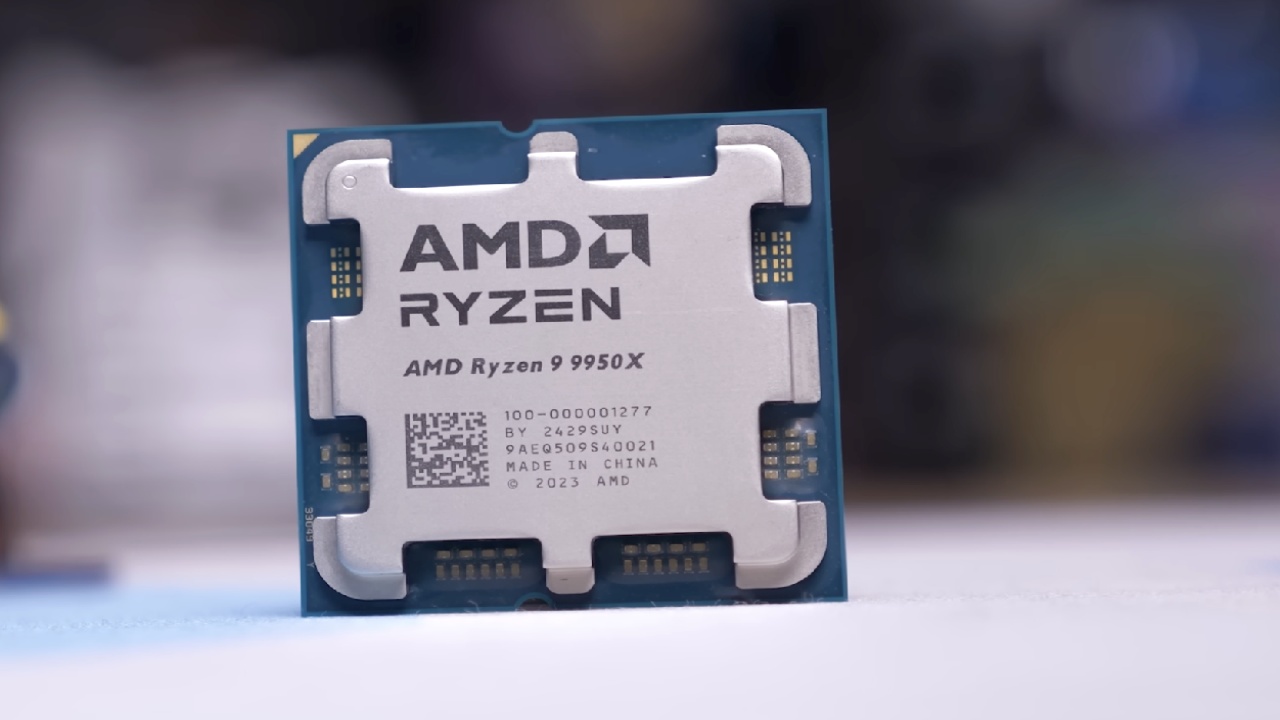
The 9950X3D has a suggested retail price (MSRP) of $699, which is $100 higher than the non-X3D version. Because of this, the new processor is likely to cost about $799.
That puts it in a price range where it could cost more than some high-end GPUs, showing how expensive desktop CPUs have grown in this market.
Final Thoughts
In real life, the Ryzen 9 9950X3D2 dual edition doesn't make a big difference in gaming performance compared to other X3D CPUs. The improvements are easier to see when you're trying to get things done because you can fully use the extra cache and greater power limitations.
If gaming is your main thing, the difference might not be worth the upgrade. But the new design delivers substantial gains for applications that can better leverage cache and multi-core performance.
Also, check our other hardware articles:
- AMD Ryzen 9 9950X3D Review: Setting The Standard For 2025 Gaming CPU
- Amazon Luna 2025 Review: Is Prime Gaming's Cloud Service Your Go-To For Casual Fun?
- AMD RX 9070 XT Review: AMD's RDNA 4 Champion for 1440p Gaming
- GeForce Now Ultimate: Ditching Your Gaming PC For Cloud RTX 4080 Power?
- NVIDIA GeForce RTX 5080 Review (2025): Still A 4K Gaming Powerhouse?
- Intel Core Ultra 9 285K Review And Performance Breakdown (2025)
- AMD Ryzen 7 9800X3D Review: 3D V-Cache Goes God Mode with Stunning Gaming Performance
- Intel Core Ultra 9 285K vs AMD Ryzen 7 9800X3D: In-Depth Gaming Performance and Benchmark Comparison
- NVIDIA GeForce RTX 5080 Super Performance In Cyberpunk 2077: Path Tracing & DLSS 4.0 Tested
- AMD Radeon RX 9070 XT In Cyberpunk 2077: Ray Tracing & FSR 4.0 Tested
- Intel Arc B580 Review: The $250 GPU Revolutionizing 1440p Gaming
- Intel Arc B570 Vs. B580: Value, Specs, And Real-World Gaming Performance
- RTX 5090 Laptop Vs. M4 Max MacBook Pro: Ultimate Raw Performance Vs. Battery Endurance
- Intel Arc b580 Vs. RTX 4060: Game Performance And Value Analysis
- RTX5090 Hell Is Us Demo 4K Ultra Benchmark: DLSS Vs. Native Performance Guide
- NVIDIA RTX 5070 Review: Mid-Range Muscle or Marketing Hype?
- Nintendo Switch 2 Review: Handheld Performance, Features & Value Breakdown
- RTX 5070 Ti Review: Performance, Thermals & Power Efficiency Tested
- Samsung Odyssey OLED G81SF Review 2025: Ultimate 32-Inch QD-OLED Gaming Monitor
- AMD RX 9070 Performance Review: Thermals, Clocks, and Real-World FPS
- AMD Ryzen 5 7600 Review: Best Budget Gaming CPU of 2025?
- AMD Radeon RX 7800 XT Review: RDNA 3 Power For Midrange Gaming
- Asus ROG RTX 5090 Astral OC Vs. Founders Edition: The 4K Gaming Benchmark
Senior Editor, NoobFeed
Gaming Hardware Updates
No Data.