
FSR 4 vs. DLSS 3/4: High-Quality Graphics Upscaling for Modern AMD GPUs
RDNA 4 GPUs experience enhanced performance with FSR 4, balancing high-quality image reconstruction and efficient handling of motion-intensive graphics.
Hardware by Tanvir Kabbo on Sep 26, 2025
With FSR 4, AMD introduces its first public-facing foray into machine-learned graphics for consumers, designed to replace FSR 3. Currently, only RDNA 4 GPUs are supported, meaning that earlier AMD GPUs, as well as those from Nvidia and Intel, cannot run this new technology.
While details about FSR 4's underlying technology remain limited, AMD highlights INT8 performance with sparsity. For example, an RX 9070 XT achieves 779 TOPS, compared to an RTX 3090 with roughly 640 INT8 TOPS with sparsity, an RTX 4090 with 1,321.2 TOPS, and a PS5 Pro with around 300 TOPS.
On a theoretical level, RDNA 4 GPUs now boast impressive machine learning capabilities, which FSR 4 leverages to handle its heavy computational workload.
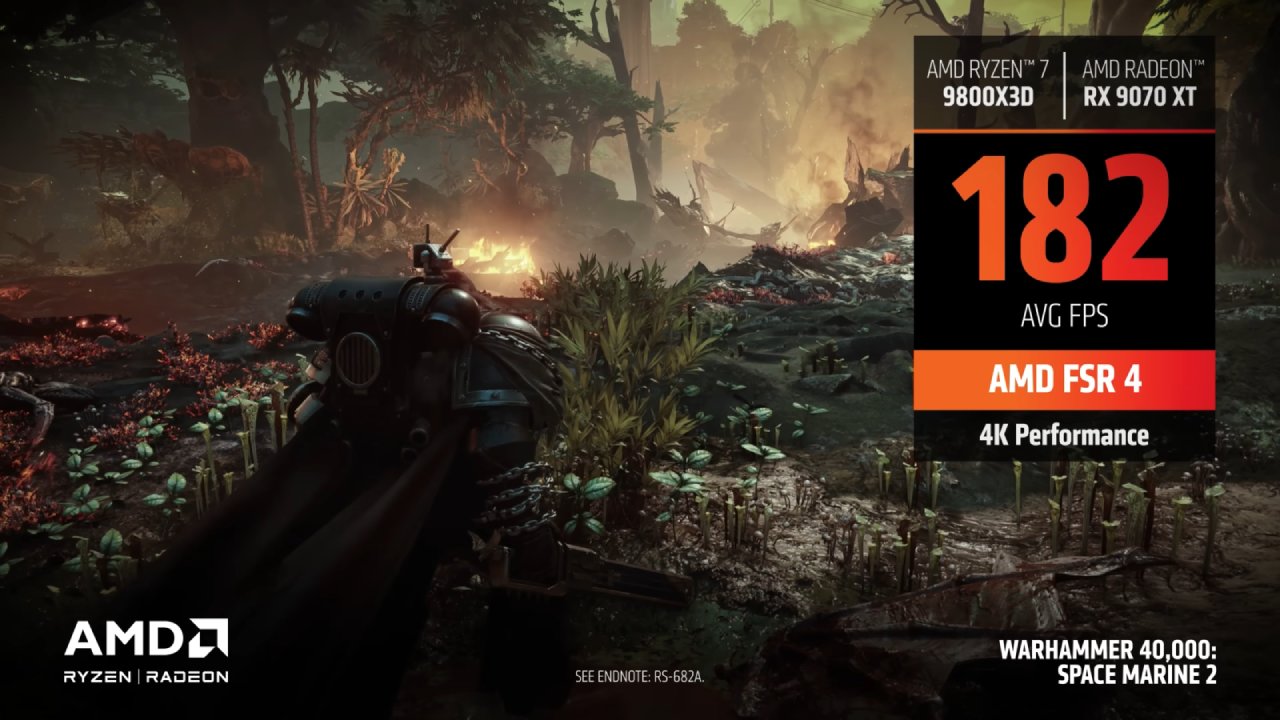
FSR 3 vs FSR 4 Performance
We tested FSR 3 and FSR 4 side by side on an RX 9070 XT at 4K performance mode, using the Ratchet & Clank opening cutscene as a benchmark. FSR 4 averaged around 8% slower than FSR 3 at parity settings. For RDNA 4 GPU users, this means paying a performance cost to use FSR 4.
The critical question then becomes whether the improved image quality justifies this drop in performance.
From my observations, FSR 4 clears up nearly all the image quality issues that FSR 3 exhibited. Particle effects, a major weakness in FSR 3, now appear clean and ghost-free. For instance, in Horizon Forbidden West, the waterfall surface lost detail under FSR 3 due to ghosting across dozens of frames.
FSR 4 completely fixes this issue, making the waterfall seem the way it was meant to and keeping the flow and chaos of the water just right.
More details and clearer objects
FSR 4 also talks on problems with transparency. Because there were no motion vectors, translucent objects like water or glass sometimes looked painterly and smudged in FSR 3. Switching to FSR 4 restores normal-mapped details, clearly showing individual ripples and wave crests.
Additionally, low-motion objects now display more surface detail. In 4K performance mode, inner textures on items like pouches and skirts exhibit greater contrast and sharper definition. Overall, FSR 4 produces images that are less hazy and more stable than FSR 3.
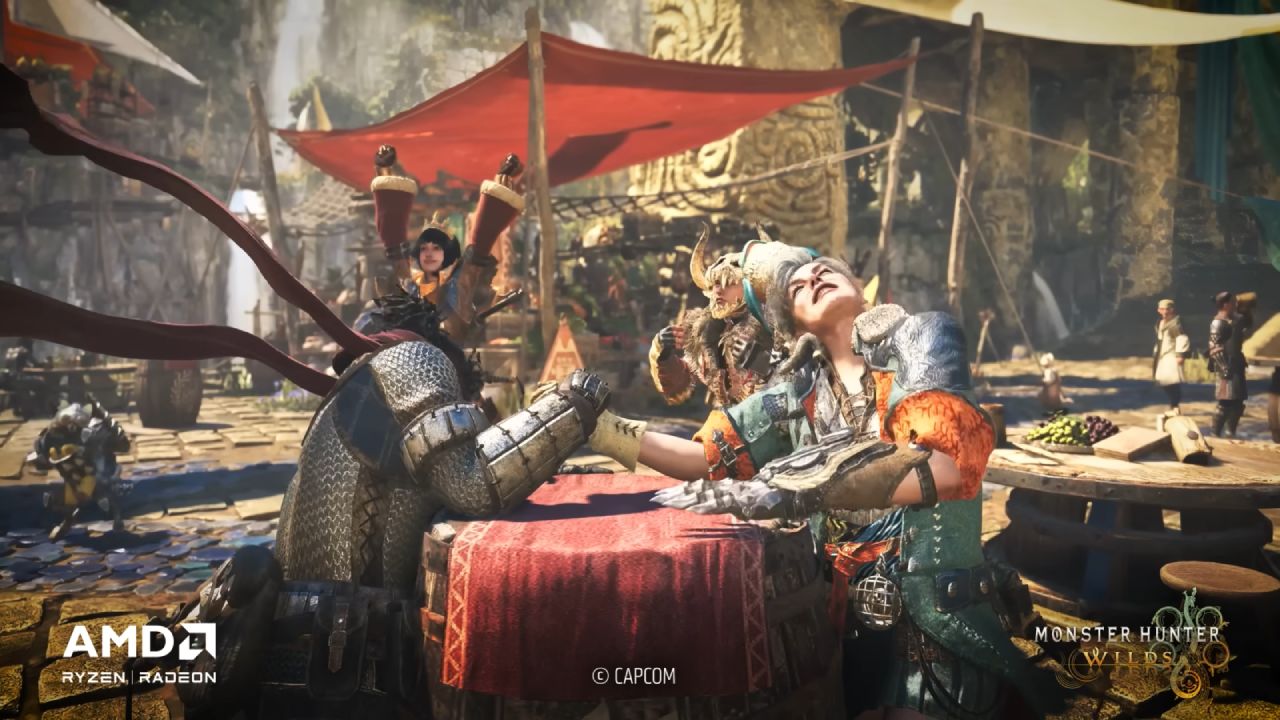
Enhanced Anti-Aliasing
The biggest difference is in how well it handles motion and anti-aliasing. FSR 4 makes pixel creep and other artifacts that stay from frame to frame much less of a problem. Moving things like characters and gear still have smooth edges even when they are moving slowly. In FSR 3, things sometimes looked pixelated and oversharpened.
FSR 4 works quite well when things are moving quickly, getting rid of blown-out pixelization and disclusion fizzle. This one change makes FSR 4 a big step ahead from FSR 3 for RDNA 4 GPU users. It means that AMD GPUs can finally give you high-quality visuals without any trade-offs.
FSR 4 vs. DLSS
It is interesting to compare FSR 4 with DLSS. Against DLSS CNN models, FSR 4 matches or slightly exceeds image quality for objects at rest or low velocity. For example, fine details on Aloy's quiver straps show more definition in FSR 4.
Moreover, FSR 4 offers improved image stability and anti-aliasing compared to the CNN model, thereby reducing stair-step effects and flickering.
When pitted against DLSS Transformer models, FSR 4 shows its limitations. The Transformer model resolves finer detail and maintains superior stability across frames, particularly on complex objects like Aloy's armor, quiver, and pouch.
While FSR 4 holds its own against CNN models, it cannot fully match the sharpness and detail preservation of DLSS Transformer. In motion, however, FSR 4 often performs comparably to CNN, reducing wave-like distortions and maintaining clear visuals during character movement.
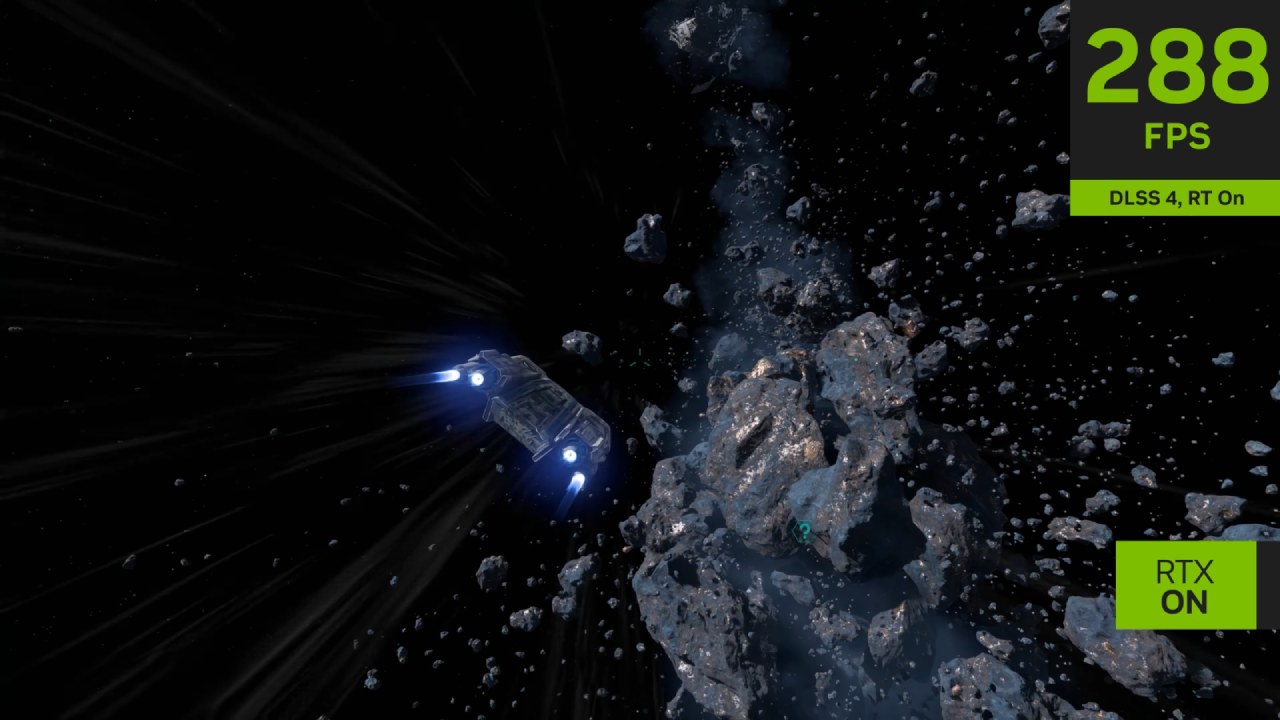
Performance and Value
FSR 4 comes with a performance cost. In tests, it ran around 20% slower than DLSS CNN on an RTX 5070 TI while delivering similar image quality. Against the Transformer model, the RX 9070 XT, using FSR 4, was only 5% slower, although image quality concessions were apparent.
Despite this, FSR 4 offers a compelling value proposition, being $150 cheaper by MSRP compared to Nvidia GPUs with DLSS.
Final Thoughts
AMD has made great progress with RDNA 4 and FSR 4, which provide image quality that is far better than FSR 3 and even better than older DLSS models in several important areas. FSR 4 doesn't quite equal the DLSS Transformer model in terms of fine detail, but it does give clean motion, powerful anti-aliasing, and consistent images, which makes it a great alternative for AMD GPU users.
FSR 4 makes AMD GPUs very competitive in terms of performance and image quality, and it gives consumers a clear upgrade path if they want advanced upscaling capability.
Check Our Other Upscaling Articles:
- FSR vs. XeSS vs. DLSS: Best Upscaling Technology for Gaming in 2025
- FSR 4 vs. DLSS 4 at 4K: A Detailed Comparison
- FSR 4 vs. DLSS 4 in 1440p Gaming: Visual Fidelity and Frame-Rate Uplift Analysis
- DLSS 4 Ray Reconstruction: Elevating Ray Traced Visuals with AI
- DLSS 4 vs. DLSS 3: How Transformer‑Based Upscaling Sharply Outpaces the Old AI Model
- AI Upscaling on PS5 Pro: Can PSSR Finally Match DLSS?
- DLSS 4 Balanced vs. Performance: Striking the Perfect FPS and Image Quality Balance
Senior Editor, NoobFeed
Gaming Hardware Updates
No Data.