
Steam Machine Pricing Signals Shift Toward PC-Level Hardware Costs
Steam Machine expected to align pricing closer to midrange PCs while delivering compact design, quiet operation, and SteamOS compatibility.
Hardware by Masaru Hoshino on Nov 26, 2025
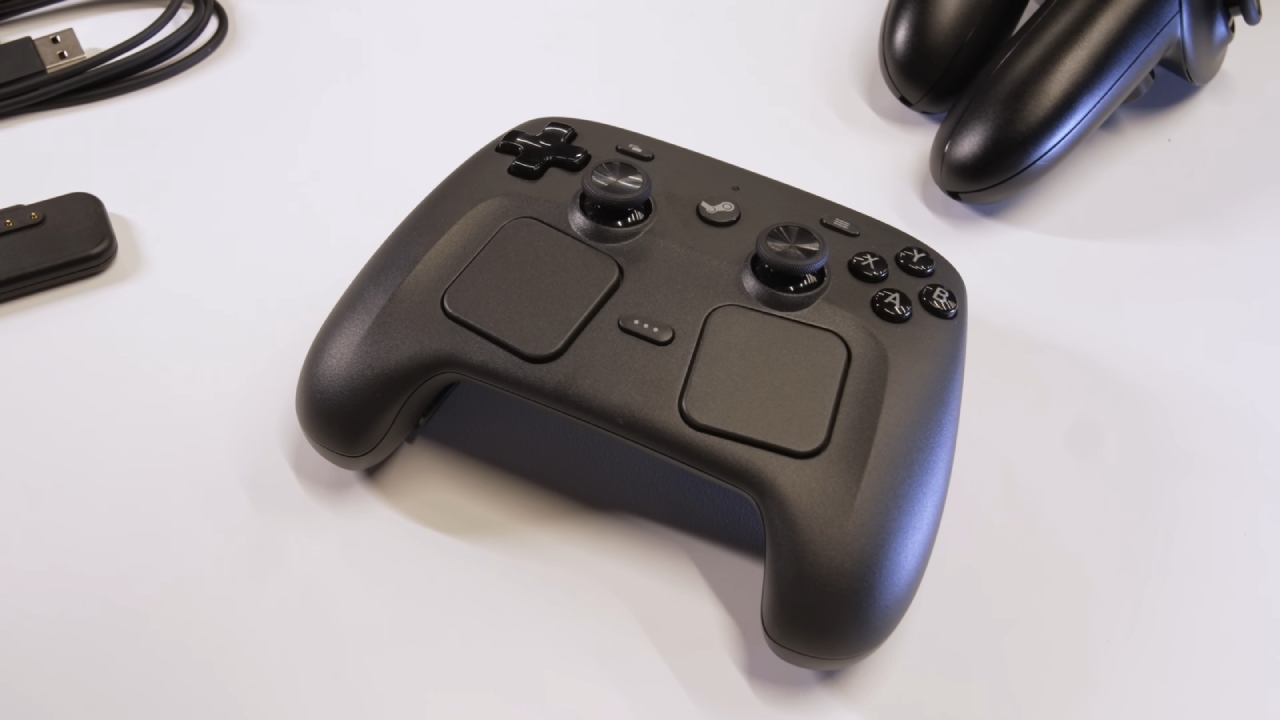
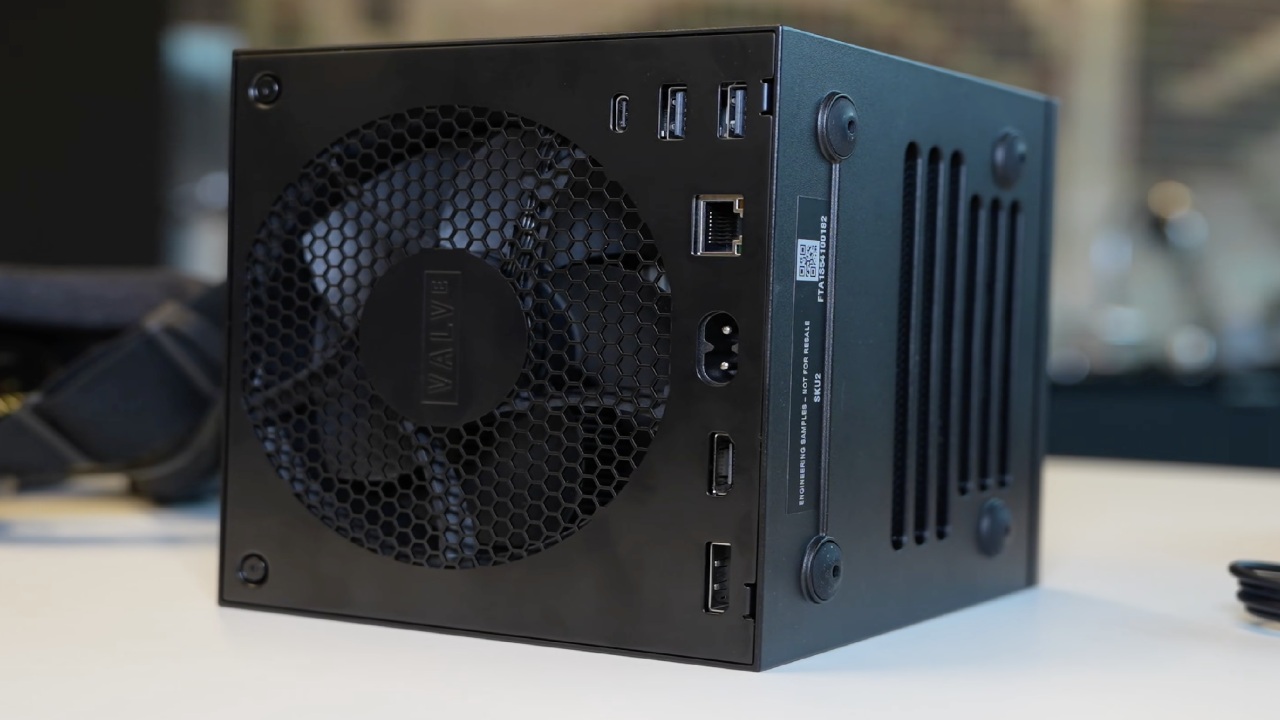
The first major story of the week centers on Valve's Steam Machine. It represents an exciting potential merger of console and PC philosophies, delivered in a compact form factor with access to the Steam library, no Windows requirement, and a polished interface. Yet, despite early talk of affordability, there has been little clarity on a firm price point.
Comments from Linus Sebastian of Linus Tech Tips suggest the machine may not land anywhere near console-like pricing. Valve indicated that pricing remains fluid due to rapidly evolving market conditions, but assured that the final numbers will be locked in ahead of the Q1206 launch alongside the new Steam Controller. Based on current signals, the idea of a highly affordable, console-priced Steam Machine appears increasingly unlikely.
.jpg)
Early Pricing Signals
We were told affordability would be emphasized, but the latest comments paint a different picture. Linus relayed that Valve expects the Steam Machine to be competitively priced with a PC but priced like a PC rather than a console, since Valve will not rely on subsidizing hardware costs through game sales.
This sentiment was echoed on the Friends Per Second podcast, where Pierre-Loup Griffais described the goal as matching PC pricing on a performance-equivalent basis. He also highlighted features difficult to replicate in a DIY build, such as the small form factor and notably quiet operation.
Oliver, who attended the event, initially expected a $600 price point but now anticipates a higher number based on these industry discussions. He compared similar pre-built systems on retail listings that feature GPUs like the RX 7600, 5060, or 4060—systems usually priced around $800–$1000, despite offering stronger GPUs than those used by Valve.
This raises the realistic possibility that the base Steam Machine could approach the lower end of that range, even if Valve wants to stay competitive.
Market Context and Price Pressures
We can also see external factors that make prices less certain. The prices of components, especially DRAM, are not steady. Depending on how Valve chooses to absorb or pass on those costs, tariffs in the US market could potentially affect the ultimate price. Some corporations distribute the effects of tariffs worldwide, while others absorb them. Others hike prices immediately in affected areas. It's still not obvious what Valve's plan is.
At the same time, the Steam Machine occupies a unique position. There is no direct comparable product on the market: a native SteamOS box designed around a specific hardware configuration with console-like simplicity. That makes consumer expectations harder to anchor, giving Valve more pricing flexibility—but also introducing risk if priced too close to traditional pre-built PCs.
Target Audience and Competitive Landscape
The big question is still: Who is this machine for? Valve needs to lower prices a lot if it wants to compete with consoles. At the same time, Sony is offering big Christmas discounts on the PlayStation 5, indicating it wants to reach a wider audience. Valve, on the other hand, seems to be going after PC gamers instead of directly competing with consoles.
This changes the value proposition. A Steam Machine doesn't let you upgrade it over time like a game PC does. One of the best things about PC gaming is that you can switch out your CPU or GPU. You can't do that anymore. The small size and quiet functioning are great, but the fact that you can't upgrade it makes the initial price feel more justified.
Furthermore, competitors like MicroCenter are selling machines with far stronger hardware—such as a 7500X3D paired with a 9060XT—for around $1000. Compared to these, Valve's device looks modest on raw performance.
Evolving Pricing Strategy and Community Feedback
There is a strong possibility Valve is listening closely to community reactions. Floating vague pricing language lets them gauge what people expect, what they think, and how they feel before setting the final prices. Alex said that businesses typically throw out notional price ranges and then change them based on what people say in public. Valve might be figuring out where this product should go right now.
We also talked about how the long-term costs compare to consoles. Consoles charge subscription fees for multiplayer functionality, whereas Steam is still free. Some players could save money over a few years, making the higher initial cost easier to handle.
Hardware Limitations and Developer Considerations
We also need to consider whether the Steam Machine's specs align with where game development is headed. The machine sits at the typical midrange spec point on the Steam hardware survey with 8GB of VRAM. Yet developers often fail to optimize properly for 8GB GPUs despite their prevalence in the market.
Even GPUs like the 4060 and 5060 families—widely adopted—still encounter issues in VRAM-intensive games. So the question becomes: if millions of existing 8GB GPUs haven't influenced better optimization from developers, will the Steam Machine?
Alex expressed skepticism that developers will meaningfully target the Steam Machine's spec unless the device sells extremely well. Valve is adding options for developers to automatically apply recommended settings profiles through API support, which might assist. But there are still concerns about ray tracing, machine learning acceleration, and long-term compatibility as graphics technology evolves.
Oliver argued that spending more for a higher-tier GPU—something like a 9600XT 16GB—would better futureproof the device, even if it meant a higher upfront cost. The current GPU choice may limit longevity, especially if Valve expects the device to serve as a household gaming box for 3–5 years.
Final Thoughts
Linus even told a story: when he offered $500, the mood in the room changed, suggesting that Valve is aiming far higher. In the end, the price will only be known once Valve finishes the product. The next important step is to test and simulate real games on the same hardware to gauge the significance of the 8GB VRAM limit.
As more information emerges, discussions around value, performance, and market positioning will continue to evolve.
Also, check our other hardware articles:
- AMD Ryzen 9 9950X3D Review: Setting The Standard For 2025 Gaming CPU
- Amazon Luna 2025 Review: Is Prime Gaming's Cloud Service Your Go-To For Casual Fun?
- AMD RX 9070 XT Review: AMD's RDNA 4 Champion for 1440p Gaming
- GeForce Now Ultimate: Ditching Your Gaming PC For Cloud RTX 4080 Power?
- NVIDIA GeForce RTX 5080 Review (2025): Still A 4K Gaming Powerhouse?
- Intel Core Ultra 9 285K Review And Performance Breakdown (2025)
- AMD Ryzen 7 9800X3D Review: 3D V-Cache Goes God Mode with Stunning Gaming Performance
- Intel Core Ultra 9 285K vs AMD Ryzen 7 9800X3D: In-Depth Gaming Performance and Benchmark Comparison
- NVIDIA GeForce RTX 5080 Super Performance In Cyberpunk 2077: Path Tracing & DLSS 4.0 Tested
- AMD Radeon RX 9070 XT In Cyberpunk 2077: Ray Tracing & FSR 4.0 Tested
- Intel Arc B580 Review: The $250 GPU Revolutionizing 1440p Gaming
- Intel Arc B570 Vs. B580: Value, Specs, And Real-World Gaming Performance
- RTX 5090 Laptop Vs. M4 Max MacBook Pro: Ultimate Raw Performance Vs. Battery Endurance
- Intel Arc b580 Vs. RTX 4060: Game Performance And Value Analysis
- RTX5090 Hell Is Us Demo 4K Ultra Benchmark: DLSS Vs. Native Performance Guide
- NVIDIA RTX 5070 Review: Mid-Range Muscle or Marketing Hype?
- Nintendo Switch 2 Review: Handheld Performance, Features & Value Breakdown
- RTX 5070 Ti Review: Performance, Thermals & Power Efficiency Tested
- Samsung Odyssey OLED G81SF Review 2025: Ultimate 32-Inch QD-OLED Gaming Monitor
- AMD RX 9070 Performance Review: Thermals, Clocks, and Real-World FPS
- AMD Ryzen 5 7600 Review: Best Budget Gaming CPU of 2025?
- AMD Radeon RX 7800 XT Review: RDNA 3 Power For Midrange Gaming
- Asus ROG RTX 5090 Astral OC Vs. Founders Edition: The 4K Gaming Benchmark
- Intel Core i5-13400F Gaming Performance: Still Worth It in 2025?
- ASUS GeForce RTX 5090 LC Liquid Cooled GPU Review: Unmatched Silence & Speed
- ASUS ROG Ally X Handheld Review: Double the Battery, Double the Comfort
- Lenovo Legion Go S Review: The Ultimate Steam Deck 2 Alternative
- Sapphire NITRO+ AMD Radeon RX 9070 XT Review: The Ultimate 4K Gaming GPU
- Alienware 16 Area 51 Review: The Ultimate 2025 Gaming Laptop
- Alienware Area-51 Review: Unmatched 4K, Thermal, and Acoustic Performance
- AMD Ryzen 7 7800X3D: Delivers Gaming Performance Far Beyond Expectations
- AMD Ryzen 9 7900X Review: Powering the AM5 Era with DDR5 & PCIe 5.0
- Intel Core i9‑14900K vs. AMD Ryzen 7 7800X3D: Power Profiles & Gaming Benchmarks
- Intel Core i9 14900K: Specs, Benchmarks, and Competitor Comparison
- ASRock Radeon RX 7800 XT Challenger OC Review: Best Price-to-Performance GPU of 2025
Editor, NoobFeed
Gaming Hardware Updates
No Data.