
AMD Zen 6 EPYC Venice Shows 20% Per-Core Performance Lead
AMD Zen 6 benchmarks reveal higher per-core performance and memory bandwidth across the upcoming EPYC Venice server platform.
Hardware by Nahe Yan on Sep 22, 2026
AMD has released new Zen 6 performance data from its next-generation EPYC Venice processors, while early RX 9050 testing highlights the impact of reduced memory capacity and bandwidth. The memory market is also shifting as NAND supply increases and competition from new DRAM and NAND emerges.
AMD just released new detailed Zen 6 benchmarks, and its next-generation CPU architecture shows a performance lead in the latest results. The results come from AMD's next-generation EPYC processors, code-named Venice, which are server chips, but they show what the newest architecture can do.
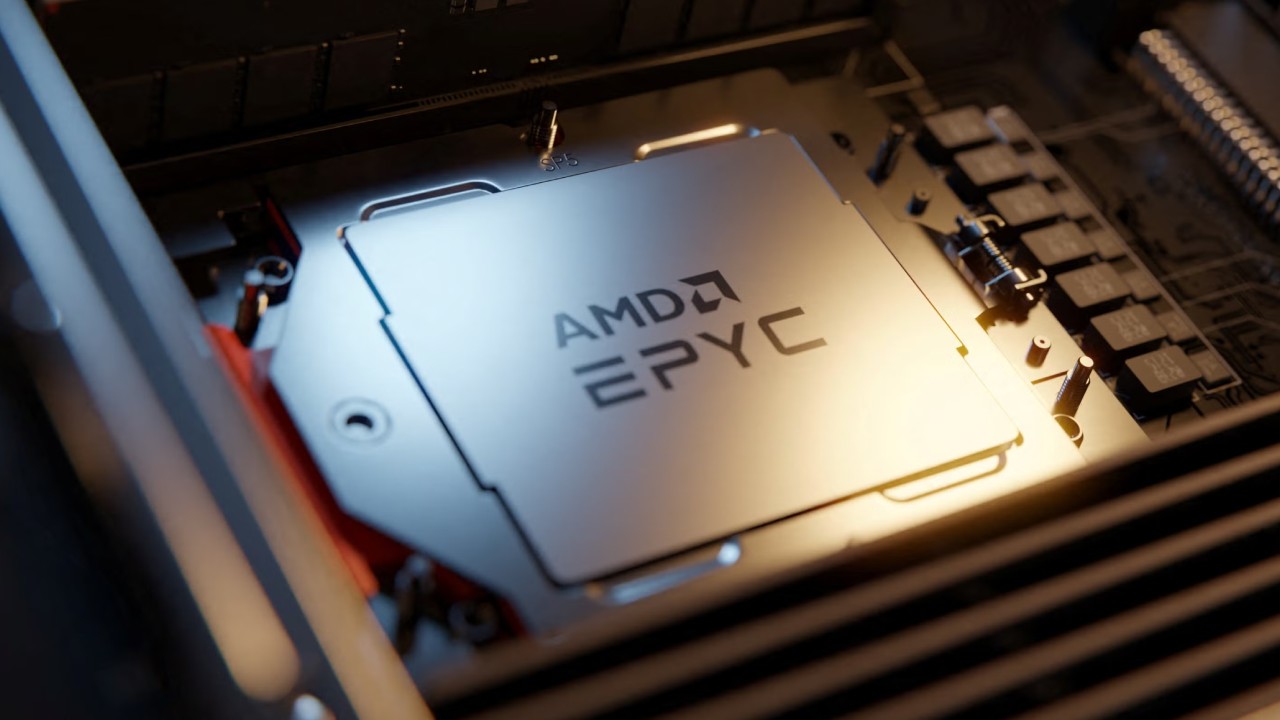
AMD Zen 6 Shows Per-Core Performance Gains
The per-core result matters because it uses AMD's full Zen 6 cores rather than winning simply by throwing more cores at it. AMD also tested the chips with higher core counts. The top Venice chip has up to 256 Zen 6C cores, while Vera has 88. In head-to-head comparisons, AMD claims its EPYC 9996 delivers 2.24 times the overall performance of the Vera platform in the same test.
Moving back to the 96-core Venice chip against the 88-core Vera, the performance-per-core results show that the Zen 6 CPU leads in each test, with multiple tests showing more than 30% higher performance. Memory is another area where Venice has an advantage. Venice supports 16 channels of DDR5, giving AMD up to 1.6TB/s of bandwidth.
In AMD's testing, that translates to around 18% higher sustained memory bandwidth than Vera. The largest number comes when AMD looks at an entire data center rack. Using a modeled 100kW power budget, AMD estimates that Venice could deliver around 3.4 times the throughput of an Nvidia Vera-based setup.
These are AMD's benchmarks, and the rack comparison is modeled, so independent testing will be needed to confirm the numbers. Even so, the results provide a look at Zen 6 performance. If part of the per-core advantage carries over to Ryzen 10,000, the desktop market could see a performance shift.
4GB model has less VRAM and lower memory bandwidth.
Instead, AMD launched a version that had to be bought inside a CyberPowerPC. This model only comes with 4GB of VRAM. It was later found that the card does not just have half the memory. It also comes with half the bus width and Infinity Cache.
After some time, the first reviews are in, and the results show a large performance gap. Hardware Unboxed tested an XFX RX 9050, and its 18-game average at 1080p Low settings shows that the 8GB version is 37% faster than the 4GB model. The cards have the same number of cores, the same ray accelerators, and the same clocks.
The difference comes from the memory configuration, memory interface, and Infinity Cache. Even at 1080p on the lowest settings, the 8GB card remains 32% faster. The results show how much the reduced memory configuration can affect performance.
Editor, NoobFeed
Gaming Hardware Updates
No Data.