
Europa Universalis V: Fate of the Phoenix Review
PC
An empire on the brink where every decision feels like a conversation with history.
Reviewed by Sarwar Ron on May 06, 2026
Grand strategy games don’t tend to fare well if they are pretty. Their power lies in the strain, in the gradual erosion of confidence, in the excitement that one single slip might reverse decades of progress. This line of thinking has always been present in Paradox Interactive’s design language. With Europa Universalis V: Fate of the Phoenix, the firm is struggling against one of the most interesting civilizations in history.
Instead of being spread out fairly throughout dozens of countries, this immersion pack is nearly entirely focused on the fading Byzantine Empire. Europa Universalis V: Fate of the Phoenix is the first significant downloadable expansion for Europa Universalis V, produced by Paradox Tinto and published by Paradox Interactive.
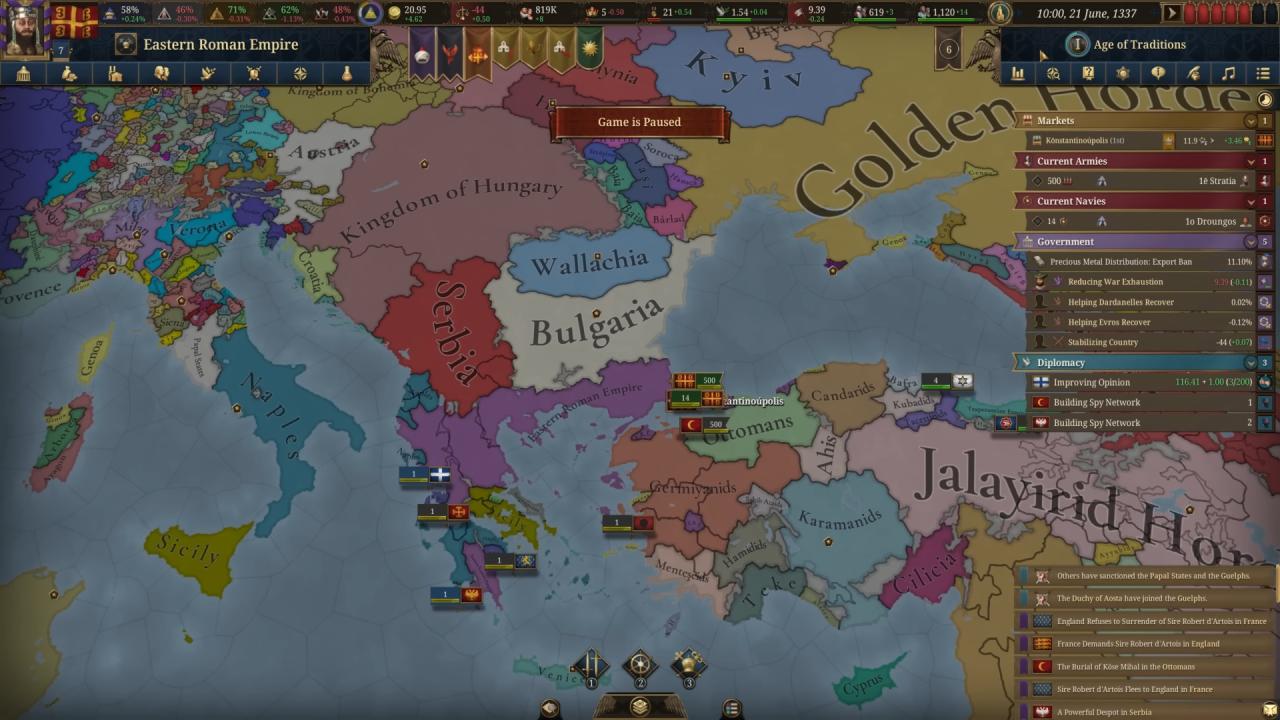
Expectations were already high for the basic game, as it was based on Europa Universalis IV, a strategy titan that dominated the genre for over a decade. The expansion does not seek to make it easy for everyone. It encourages historical density, political volatility and relentless pressure. That decision immediately sets it apart from more frivolous strategy add-ons.
Europa Universalis V: Fate of the Phoenix is interesting, not only because it’s set in Byzantium, but for the way it makes you feel.
This expansion throws you into a society teetering on the edge of collapse, weighed down by debt, religious strife, military pressure, and failed bureaucracy. At first sight, this is not a power dream. This is a frantic balancing act where just getting through the day is an achievement. Every meal, every gathering, every diplomatic conversation is shadowed by extinction.
Paradox has always been good at letting numbers tell a tale. Here, the tale becomes more concentrated and tighter. The expansion has you defending a crumbling kingdom as they decide what it will become. What should Byzantium do: imitate the Western Catholic Church or preserve its Orthodox character at all costs?
Is it worth investing in commerce, reforming the military, or bringing back religion? In Europa Universalis V: Fate of the Phoenix, this conflict of ideals is translated into highly personal gameplay mechanics. For a massive strategy game, it makes the experience feel remarkably grown-up. The upgrade doesn’t give you a clean slate; instead, it throws you into pandemonium immediately.
It is aggressive, complex and at times cruel. But the core of that harshness is the stark brilliance that makes Paradox brilliant. Europa Universalis V: Fate of the Phoenix recognizes a plan is only noteworthy when it looks like you’re about to fail and looks like you deserve to triumph. Europa Universalis V: Fate of the Phoenix is not like other games. It conveys its tale through systems, not scripted cinematics.
The plot develops gradually out of political calamities, succession crises, invasions, and ideological battles. Each mission becomes a distinct tragedy or triumph in history, depending on what you do. The emergent structure of the expansion gives it a lot of replay value.
At the heart of the major argument are identities. Byzantium is caught between East and West, between retaining the traditional ways and adapting to survive. You must continually decide whether the state will remain true to its Orthodox Greek origins or become more Catholic European. These options aren’t just for show. They influence politics, faith, the economy, and society’s growth during the campaign.
The narrative design is what makes the history fit so well into the game.
Political crises and chains of events make the kingdom more unstable. Dynamic historical occurrences. Rivals threaten borders. Estates fight reform. Religious divides divide the country. It's really compelling to feel like you're in control of a civilization that's breaking apart. History is no longer merely background info in Europa Universalis V: Fate of the Phoenix.
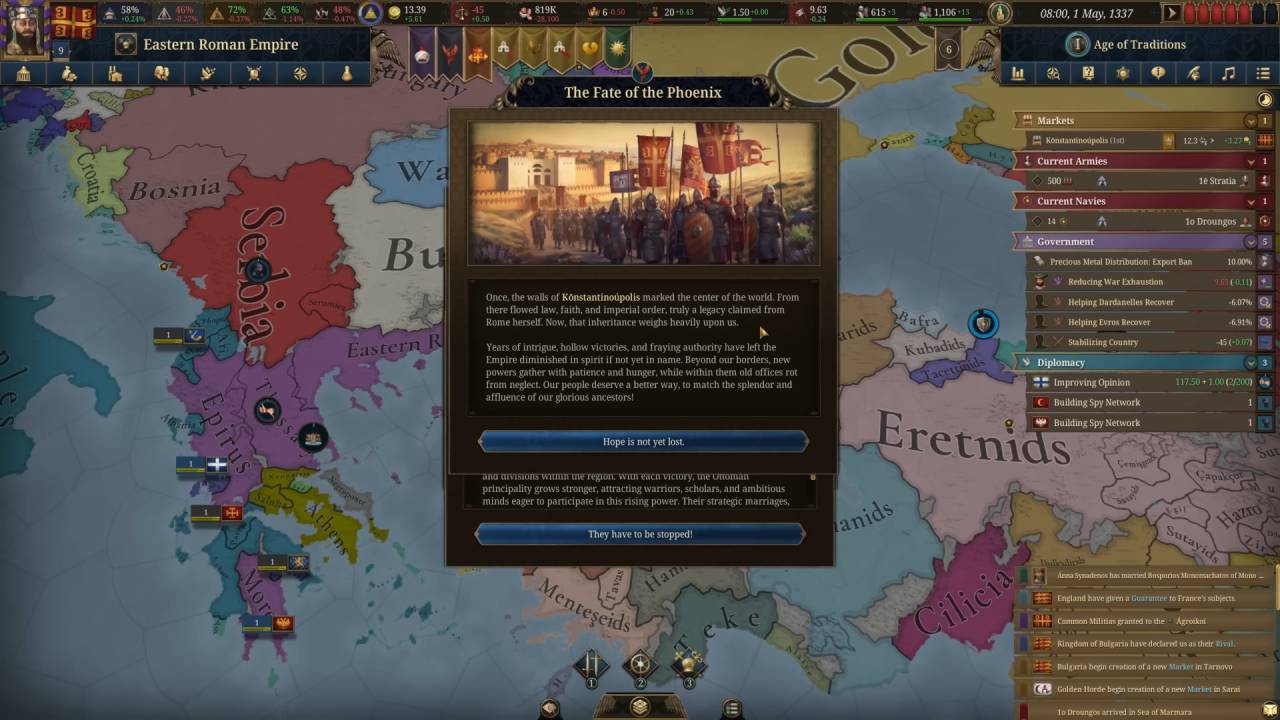
But rather it is a perpetual cause of strife. Not as loud, but there's still a powerful current flowing through the strategy systems. Small touches, like references to past trade and religious reform decisions or events, make the game feel like it links what you are doing to what actually happened in history. The game continues, stating that the Byzantine Empire was not only wiped out by battle. It came apart due to centuries of instability and judgments that could not be taken.
But the narrative core has certain issues. To those who do not care about the history of the Byzantine Empire, the growth may seem too limited. Unlike the larger Paradox expansions that boost multiple areas at once, Europa Universalis V: Fate of the Phoenix stays pretty much concentrated on one area. The changes don't seem that big outside of Byzantium and the political area around it.
That concentration makes immersion more powerful for some groups but less appealing to a broader audience. The essence of Europa Universalis V: Fate of the Phoenix remains a grand strategy game, with long-term empire administration, trade, religion, and war as its main topics. Over hundreds of years of play, you manage taxation, military recruitment, government reform, trade routes, technology advancement, and foreign alliances.
That extension doesn’t modify any of those rules. Instead, it transforms them so that they are grounded in the imperative of survival. The hours of operation are designed to be strict. At the start, Byzantium is in debt, has low authority, inflation, weak institutions, and neighbors who don't like it.
There are threats from outside, including Serbia, Bulgaria, and, mainly, the Ottoman Empire. Inside, poor government procedures break down systems. During the early stages of the game, you are more occupied with averting calamities than with conquering.
The pressure has a tremendous effect on the normal feel of Europa Universalis V.
Traditional expansion techniques are dangerous because they constantly undermine stability. Rather than resorting to force, decisions concerning commerce and diplomacy become increasingly essential. Every cent counts. Every partnership matters. Even natural disasters can destroy vital infrastructure and disrupt long-run goals.
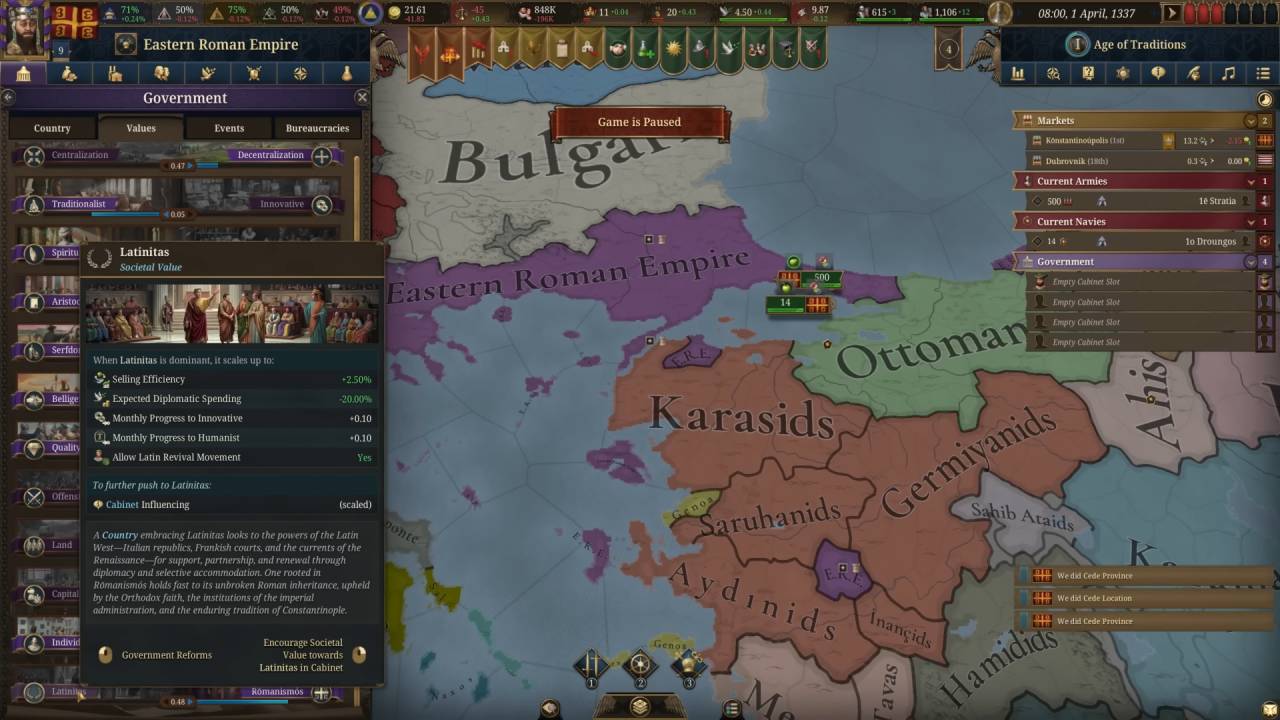
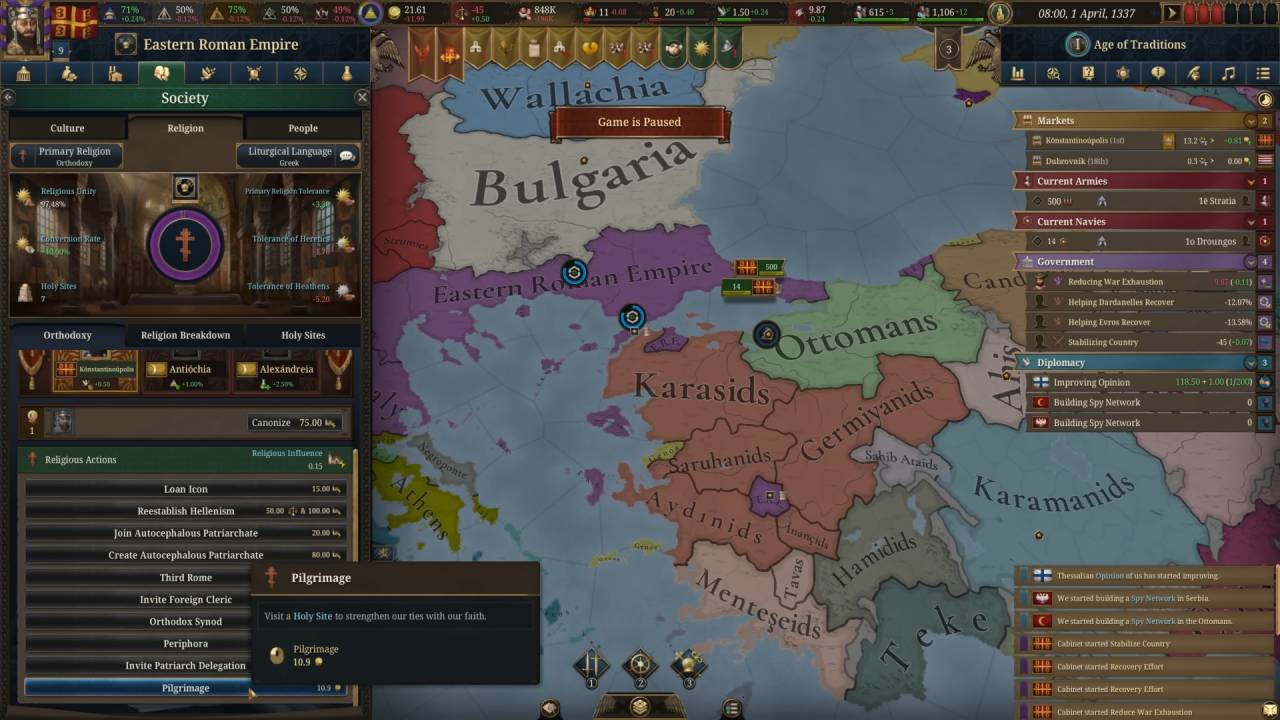
Europa Universalis V: Fate of the Phoenix likes to throw a lot of things at you at once. A lot of the expansion is devoted to religious details. Many new orthodox mechanisms have been incorporated that give you greater power over ecclesiastical authority and the ideological identity of the empire. Another noteworthy innovation is the idea of resurrecting the Hellenistic religion.
These approaches facilitate playing many roles and endorse the core concept of the expansion: conserving and transforming culture. Trade and relations are more crucial than usual because Byzantium’s economy is poor. It’s a perpetual balancing act between investing in business, military defense, or internal change. In this game, you rarely get to work on all of their goals at once. Rather, it forces priorities by making things scarce.
The shortage of resources creates some of the strongest strategic drama the game has had in years. But occasionally, intricacy can be an issue. The expansion may be a bit overwhelming for inexperienced players not accustomed to Europa Universalis tactics. There are a lot of options, and the rules overlap so much that you have to know a lot about the base game.
Europa Universalis V: Fate of the Phoenix doesn’t teach you the basics; it assumes you know how to play. This approach deepens immersion for specialists but can alienate those less skilled. Europa Universalis V: Fate of the Phoenix features a combat system that uses the same real-time strategic warfare mechanics as the basic game.
Armies move between provinces, naval forces secure trade routes and coastlines, and battles are fought according to the technology, morale, and composition of the units. But the expansion transforms the perception of war from a simple means of expansion to a last resort.
The threat from the Ottoman Empire is constantly present.
Their military power is almost like a stopwatch ticking down to a war that will have to happen. Byzantium lacks the economic and political stability to sustain a long-term fight, so you can't just brute-force your way to an early win. In war, people gain patience, readiness, and the ability to think on their feet. Reckless desire is punished, strategic caution rewarded in Europa Universalis V: Fate of the Phoenix.
The extension turns negotiation and state management into intellectual problem-solving, even if there are no actual puzzles in the classic sense. All political decisions seem to be tied to each other. Removing estate privileges would mean more stable taxes in the long run, but could pose problems for now. Backing changes to religion could increase your credibility, but might harm your relationships with others.
That’s what makes strategic puzzles so much more interesting than pre-written jobs. The nicest part of the combat system is how well it ties into the expansion's broader ideas. You know it takes a lot to go to battle. It takes years to get back. If you lose, you can lose money, and the organization can go bankrupt.
Military wins have an emotional consequence that you don’t normally find in strategy games. It’s so realistic. When an army defeats the impossible and triumphs, the victory is deemed to have been achieved. But the mechanics of combat do reveal some of the expansion’s shortcomings. However, some disasters and historical events depend too much on mechanisms already present in the base game.
Oftentimes, scenarios like disease breakouts are the same regardless of the country you are in. Sometimes the system’s rigidity erodes what makes the Byzantine experience exceptional. Additionally, AI can be unreliable for larger situations. Sometimes the enemy appears to be making random decisions, especially given the new historical conditions the development has created.
These problems don’t break the game, but they do definitely take you out of the immersion of battles that would be incredibly tense otherwise. Europa Universalis V: Fate of the Phoenix is at its best when its features mesh together naturally rather than mechanically.
In Europa Universalis V: Fate of the Phoenix, there are no normal experience points.
Instead, development is made by greater technology, a stable economy, updated armaments, and changes in the government. The way it is set up suits the game's historical simulation theme nicely; the progress feels natural, not phony. Nations change by policy and the ability to adapt, not by grinding away again and again.
Getting back on a solid financial footing is essential to make progress during the campaign. Early debt makes it exceedingly hard to expand the military and exercise political authority. Before embarking on major missions, you must carefully stabilize your income through trading, levying taxes, and developing infrastructure.
As the kingdom's wealth grows, it gradually advances from a weak remnant to a regional power. Religious path systems also aid a lot with long-term growth. If you want to increase Orthodox power or restore Hellenistic ideals, you open up new political and cultural alternatives and influence the empire's destiny.
Rather than pushing for optimization, the tools encourage users to experiment. You are given credit for being skilled at tactics and acting like people from the past. The progression is pleasant; it fits inside the tale. The empire is already in dire straits, thus creating troops, taking back lost territories, or restoring legitimacy all feel like things that need to be done.
Improvement takes time and might be a painful process. Yet the glacial pace feeds the central myth of the expansion, pulling civilization back from the verge of disaster. In Europa Universalis V: Fate of the Phoenix, recovery is made enjoyable. It also looks beautiful, another thing that makes Paradox the best at designing massive strategy games.
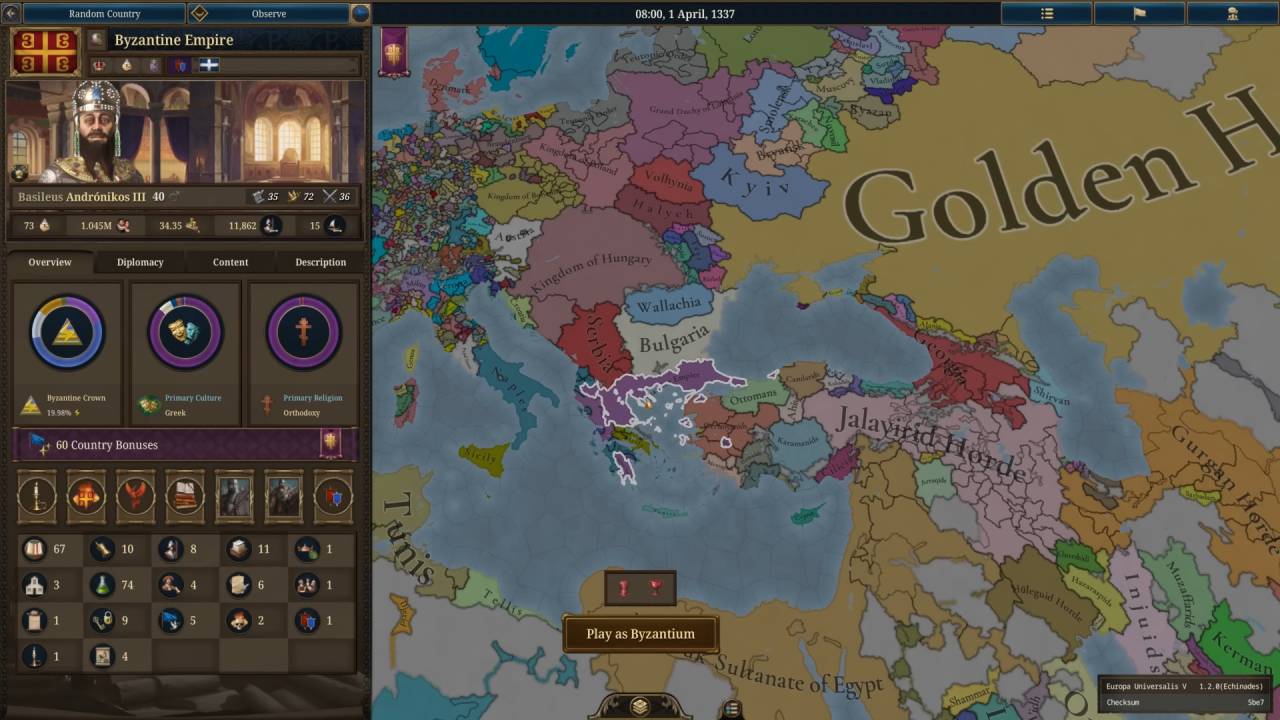
In Europa Universalis V: Fate of the Phoenix, the arrangement is still rather cluttered, but the map itself is very detailed and easy to read. The regions, political borders, commerce routes, and layers of landscape feel real under your choices. The globe map is like a living book, constantly altered by conflict and peace.
The upgrade also features graphic accents with a Byzantium theme, as well as new artwork, historical photographs, and interface elements. The nature of the empire is eloquently reinforced by the combination of religious, political, and cultural icons. These features might seem like just a nice touch at first, but they make the experience all the more immersive throughout protracted missions.
Layers on a map are to be applauded, for they make intricate information very plain.
You may see beautiful overlays of economic power, religious spread, military placement, and diplomatic ties. Strategy games don’t usually let you know this much. At times, Europa Universalis V: Fate of the Phoenix feels more like a historical simulation than a game. Sometimes technical issues get in the way of the experience.
Micro stutters in huge events, visual glitches, and sometimes uneven interfaces are a reminder that the game is still in its infancy after its debut. They are not major issues, but you may notice them when they persist over long periods. All in all, this is still a really decent presentation for the genre, despite these issues. You don't see this very often in large strategy games: the weight of visual tone.
The aesthetics here do not just add to the mood. They amplify it. The planet seems feeble, aged, and politically fragile. The atmosphere in Europa Universalis V: Fate of the Phoenix makes the game appear incredibly special. The audio design of Europa Universalis V: Fate of the Phoenix is bold but not overdone. The symphonic music is big, melancholy, and full of history, yet it doesn't get in the way of the controls.
The music is louder during armed conflicts and softer during times of peace and administration. The new music blends seamlessly with the rest of the Europa Universalis V soundtrack. The expansion's mood is well augmented by huge orchestral arrangements and Byzantine-influenced instruments. They fuse a feeling of the fall of the empire with a residual hope. There isn't a lot of great music that captures the historical era's vibe very well.
The interface noises are also wonderful; they provide you with regular feedback without interfering. Diplomatic messages, military notifications, and menu selections are all different noises. This allows you to simply navigate through the game's many stages. In a genre based on information management, these tiny elements are very important.
Another nice touch is the music player embedded right in the interface.
Because Paradox knows how people enjoy playing massive strategy games, they let you pick the music to play over long campaigns. Sessions can run for hours, and the option to adjust settings makes it much easier to get lost. Europa Universalis V: Fate of the Phoenix understands the importance of keeping your senses satisfied during long-game sessions.
Europa Universalis V: Fate of the Phoenix isn’t for everyone, and that’s precisely why it succeeds. The growth does not make things simpler to access or more open. Rather, it makes the historical specificity and strategic pressure yet greater. It has you struggling to survive one of the most perilous geopolitical crises in history, always contemplating what form of society should be saved.
The most powerful thing about growth is that it is always unstable. The campaign is built on debt, war, religious conflict, natural calamities, political fragmentation, and all that makes it feel incredibly tiresome in the nicest manner imaginable. You have to be patient, flexible, and willing to lose a number of times before you really get how the systems function to stay alive. Collapse has been made fungaming in Europa Universalis V: Fate of the Phoenix. There are limits, that’s for sure.
Other mechanics still feel overly stiff, other features feel like they’re lifted from the original game, and the game’s narrow concentration on Byzantium means it will appeal to a smaller audience. New players often struggle to keep up with the constant stream of information displayed on screens and in systems. But these shortcomings rarely stand in the way of the expansion's aims.
What's most recalled about the whole affair is that it's all done so personally. One could restore Orthodox control throughout Europe, and another could restore Byzantium through trade and diplomacy. Others may adopt Hellenistic revivalism and radically restructure the state. Not many strategy expansions let you have this much latitude with your ideas and tales within such a tight framework.
Ultimately, Europa Universalis V: Fate of the Phoenix seems less like DLC and more like an interactive history lesson that makes you think about decline, identity, and strength. It encourages you not just to conquer new places, but to keep the world’s meaning alive as it breaks apart. The depth of feeling in the upgrade makes it far more than another strategic add-on; it's one of Paradox’s most deliberate historical experiences in recent years.
Admin, NoobFeed
Verdict
A punishing yet deeply rewarding strategy expansion that transforms Byzantine collapse into gripping interactive drama. Europa Universalis V: Fate of the Phoenix thrives on historical tension though dense systems and narrow focus may be overwhelming.
71
Related News
No Data.