
Forza Horizon 6 Review
Xbox Series X|S
A polished, fast, and surprisingly emotional return to open-world racing that finally makes Japan feel like more than just a backdrop.
Reviewed by Mahi Araf on May 15, 2026
You’ve probably seen this series come and go in your mind over the years, even if you stopped actively caring about it at some point. The Forza Horizon games have always been that familiar loop where you jump into a car, floor it through a massive open map, and watch XP, rewards, and chaos stack up while you drift through corners you barely think about anymore. It’s a formula that has barely changed in spirit, yet somehow still pulls you back in when it matters.
Forza Horizon 6 arrives in a very different moment for the franchise. The pressure around it is unusually high, not just because it’s the next numbered entry, but because the entire direction of the racing series on Xbox feels like it’s shifting.
.jpg)
Forza Motorsport has faded into the background, cross-platform releases are now normal, and Horizon has effectively become the main identity of the brand. On top of that, development has seen changes, with new teams stepping in alongside long-time Forza Horizon leadership, which makes this entry feel like both a continuation and a reset at the same time.
The setting alone has been the biggest talking point for years. Japan has been the community’s long-requested dream location, and the game doesn’t ignore that fact. It actually weaves it into the world itself, giving you the sense that this festival has been trying to land here for ages. When you finally arrive, it doesn’t feel like a random choice anymore. It feels like something that’s been building up across the series.
Once you drop into the world, you quickly realize this is not just a cosmetic change.
The map is huge, and it’s structured in a way that keeps expanding your sense of scale the longer you play. Early on, you focus on Tokyo’s neon-heavy streets, where races, missions, and festival events keep you busy enough that you don’t think too far ahead. Then you open the full map, and it becomes apparent how much space you have yet to explore.
Driving across the entire map is not a quick sprint. Even a full highway run from one side to the other takes real time, and that’s intentional. The world is built to make travel feel like part of the experience rather than just a menu selection. You’re constantly moving between dense city areas, mountain roads, snowy peaks, rural farmland, and long coastal highways.
It’s varied enough that you stop treating it like one large playground and start noticing it in smaller chunks. The progression system leans heavily into this structure. Instead of dumping everything on you from the start, the game uses a wristband-style system where you gradually unlock access to new tiers of events.
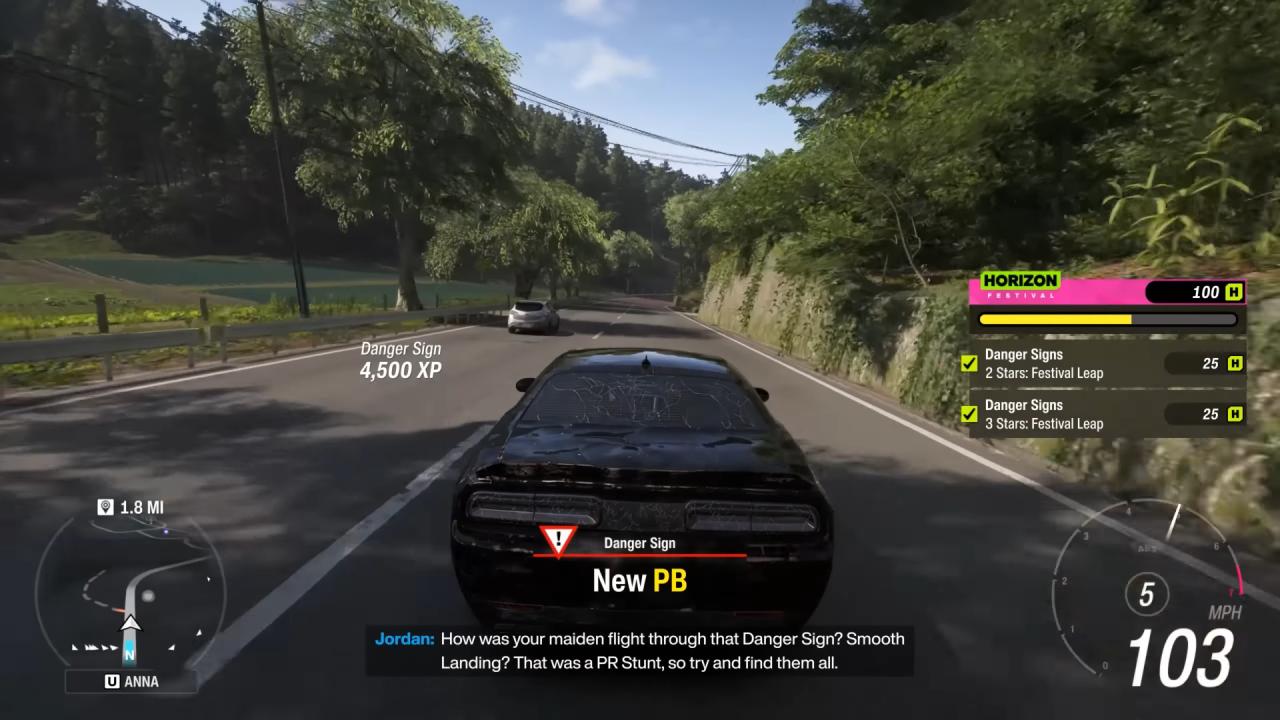
You earn XP through races, PR stunts, and exploration, and each milestone pushes you toward the next championship set. Running parallel to that is a journal-style progression track that rewards exploration, hidden finds, and side activities. It splits your attention in a way that actually feels intentional rather than overwhelming.
What this changes is how you approach the map.
Instead of ignoring side content as you might have in earlier entries, you naturally start picking things up along the way. Mascots hidden across regions, treasure hunt-style clues that lead you to abandoned cars, and barn finds all sit in your path without feeling like checklist clutter. Even when you’re just driving to a race, you end up detouring because the world is structured to reward curiosity in small, constant ways.
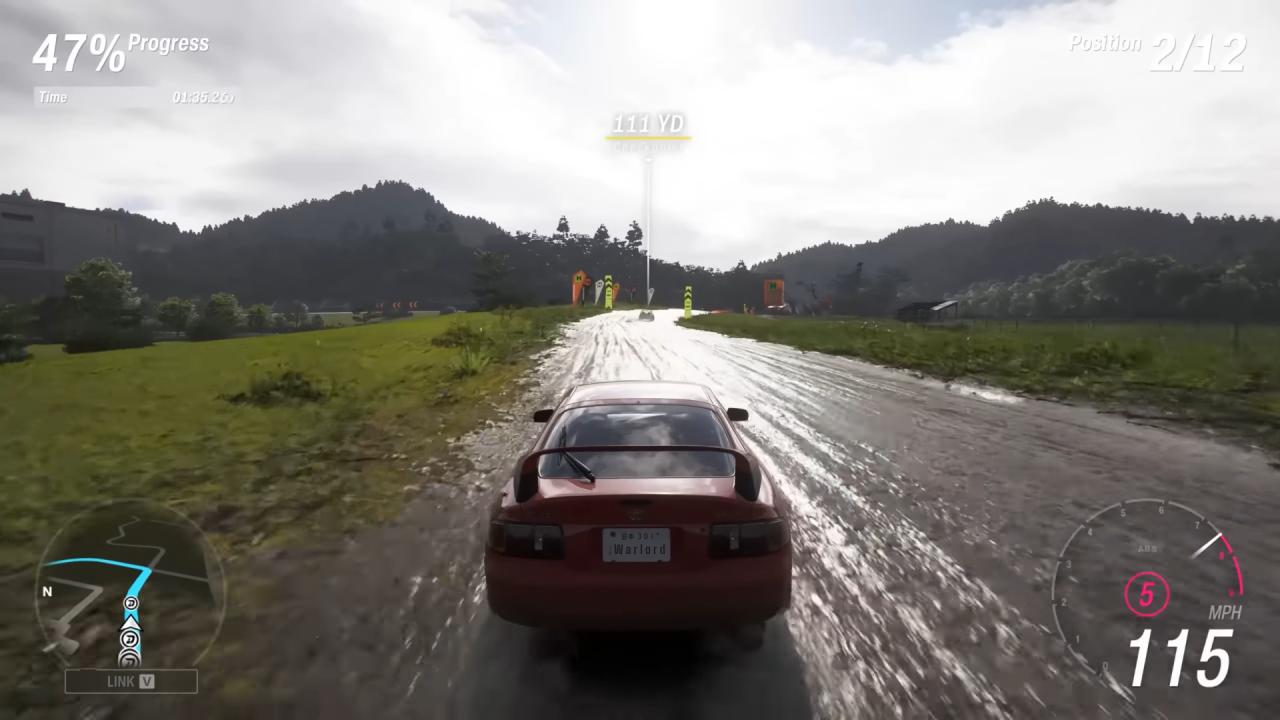
Gameplay itself still sits in that familiar Forza Horizon space between simulation and arcade. The handling is responsive but not punishing. Cars have weight, but they don’t fight you. Drifting is easier than it looks, but still satisfying when you chain it properly through tight corners or mountain switchbacks. You’re not being asked to master realism here.
You’re being asked to enjoy speed in a way that feels controlled but still a little exaggerated, like how you imagine driving fast rather than how it would actually feel. The standout change is how much more confident the game feels in its identity. You’ll find yourself doing everything from street races through Tokyo traffic to downhill mountain runs that feel inspired by classic racing culture.
There are structured championships, open events, and even set-piece moments like racing a mech in a spectacle-style showcase. Some of these moments are toned down compared to earlier Forza Horizon games, but they still break up the rhythm enough to keep things from blending together.
The driving experience in Forza Horizon 6 is consistently smooth.
You don’t get sudden spikes in difficulty unless you’re entering higher-tier events like touge-style races or Horizon Rush challenges, which are designed to push you harder than the rest of the game. AI can feel inconsistent at times, especially with rubber-banding behavior, where opponents either fall behind too easily or suddenly surge ahead in unpredictable ways.
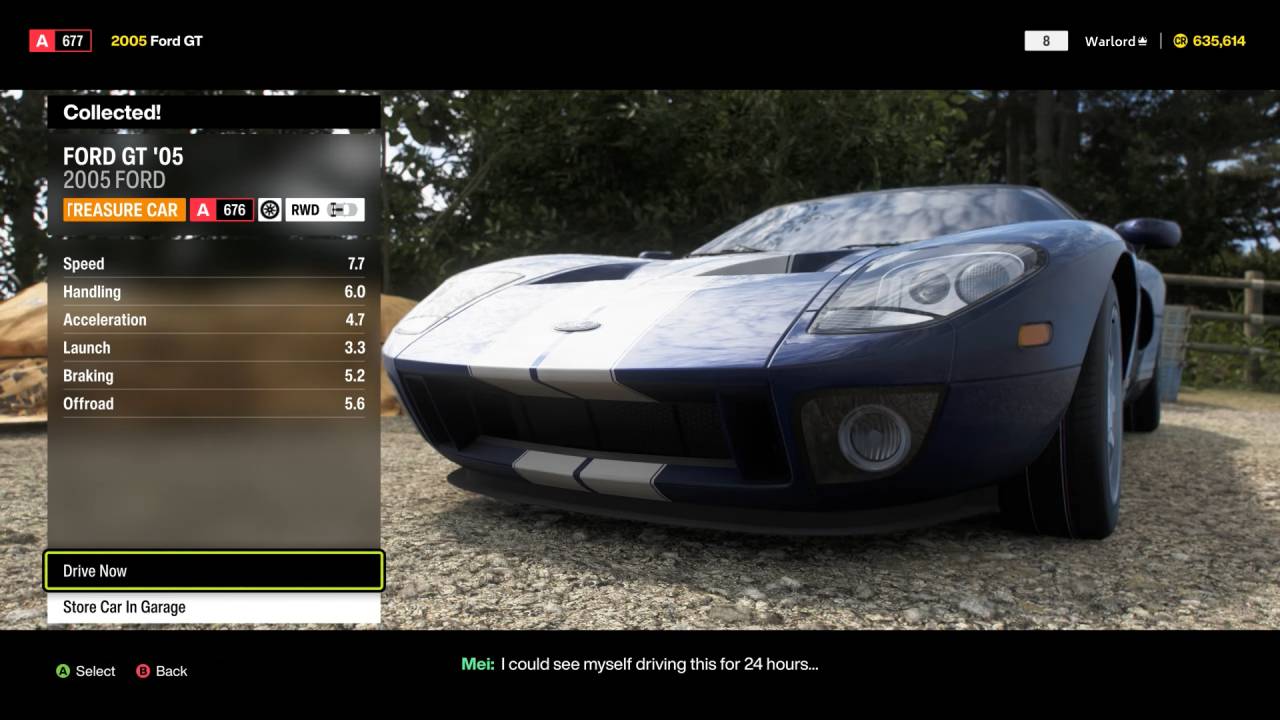
It doesn’t ruin races, but you definitely notice it when you’re chasing clean wins. Where the gameplay loop of Forza Horizon 6 really hooks you is in how rewards are handled. Compared to previous entries, there’s a noticeable reduction in constant car handouts, although you still get access to vehicles fairly quickly.
Earlier games tended to overload you with supercars early on, which made individual vehicles feel less meaningful. Here, the flow is slightly more restrained, even if the system still leans generously overall. You’re not grinding for hours to feel progress, but you’re also not drowning in instant rewards every few minutes.
The XP and reward structure still plays a big role in how you move through the game. Races, stunts, and exploration all feed into progression meters that unlock new tiers of content. Wheel spins and reward systems are still present, though reduced in frequency, and remain somewhat divisive. The system uses random rewards for vehicles, which keeps it light and unpredictable, but these rewards don’t always feel like something you earned in a traditional sense.
Car culture is one of the strongest areas this time around.
The roster of Forza Horizon 6 includes a strong mix of Japanese performance cars and familiar global brands, and it noticeably improves how engines and vehicle identity are represented. Cars actually sound closer to what you expect now. Turbocharged engines feel distinct, rotary engines behave differently in tone, and classic Japanese performance cars finally have audio profiles that match their reputation.
Even smaller details like brake squeal and gearbox behavior add a bit more texture to driving. Customization hasn’t been completely overhauled, but it’s been refined in small ways. You’re still working with familiar systems for tuning, body kits, paint jobs, and visual adjustments, but the addition of an expanded garage and home customization gives you more personal space to build around your identity.
It’s not a revolution, but it does make your progression feel more anchored than just owning a list of cars in a menu. The world itself is easily one of the biggest upgrades compared to previous Forza Horizon entries.
Tokyo feels dense enough to be captivating, with highways, tight city streets, and surrounding regions that push you out toward mountains, farms, and coastal roads. It doesn’t always reach full density in terms of traffic or pedestrian life, which is noticeable when you slow down and look around. Roads can feel a bit empty outside of race contexts, and traffic variety sometimes breaks immersion with odd vehicle choices that don’t always match the setting perfectly.
Even so, the environmental design is crucial. Mount Fuji stands in the distance as a constant visual anchor as weather systems shift across regions and seasonal effects like snow dramatically change how certain areas feel. Racing through fog at night or drifting through wet neon-lit streets gives the world a strong visual identity that holds up even when the simulation side of life feels slightly underpopulated.
Graphically, this is one of the strongest entries in the series.
Forza Horizon 6 runs very well on high-end hardware, and even during chaotic races, it maintains a consistent frame rate. Lighting makes a huge difference to how everything feels, particularly during golden hour or city runs at night. Wet road reflections, drifting smoke trails, and particle effects during off-road sections all combine to make for a feeling of constant and fluid motion.
And even when you’re pushing into demanding areas like snowstorms or dense festival environments, the performance is stable. The game clearly prioritizes consistency, and it pays off in how confident the driving feels at high speeds. You’re not fighting technical issues while trying to stay on track, which keeps the focus where it belongs.
Sound design is another area that has clearly been taken more seriously this time. Engines no longer feel generic across vehicle classes. You can actually hear differences between engine types, and environmental echo adds weight to tunnels, city blocks, and open highways.
Music selection also leans into the setting more effectively, blending Japanese radio stations with international tracks in a way that fits the tone of driving through a stylized version of Japan.
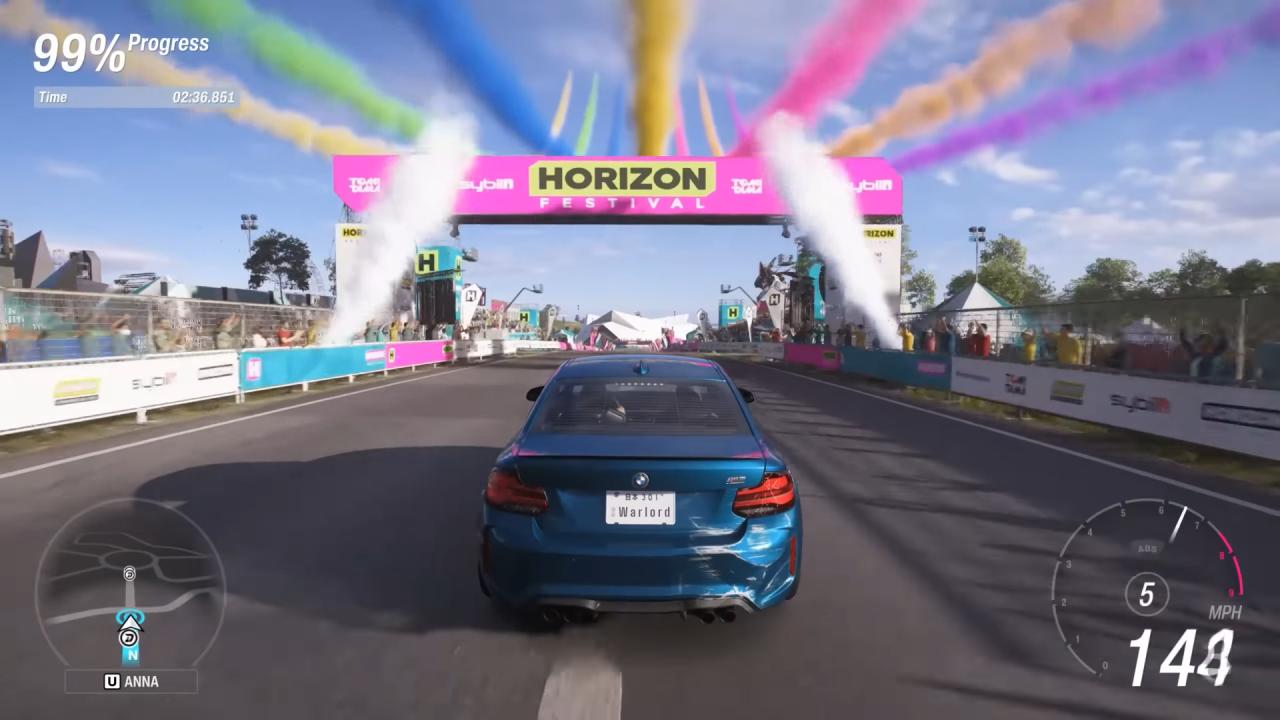
The experience feels like a more focused version of what the series has been building toward for years.
It still carries some of the long-running quirks, like slightly light traffic density and occasional repetition in progression structure, but it also fixes enough long-standing issues to feel meaningfully refreshed. The world is more engaging, the driving is tighter, and the structure finally gives you a reason to care about long-term progression again.
There’s still familiarity here, and that’s not a bad thing. You’re still doing the same core loop of racing, exploring, upgrading, and repeating, but the way it’s presented feels more intentional and less scattered. It respects your time a bit more while still leaning into the chaos that defines the series.
Overall, Forza Horizon 6 feels like a version of Forza Horizon that finally understands what it wants to be without trying to reinvent itself. It’s fast, polished, and consistently fun in a way that makes it easy to sink hours into without thinking too hard about it.
Senior Editor, NoobFeed
Verdict
Forza Horizon 6 is a confident and refined open-world racer that makes Japan its best setting yet, even if a few familiar series flaws remain.
80
Related News
No Data.