
Log Away Review
PC
A meditative cabin-building sandbox that finds beauty in stillness but stumbles on execution.
Reviewed by Zahra Morshed on Dec 05, 2025
Log Away is a cozy game that is meant to be a quiet place to relax and enjoy creative play while celebrating the dream of living far away from modern life's demands. The game, which was made by The-Mark Entertainment, is based on the popular genre of digital building sandboxes, but it focuses on peace and quiet instead of progress.
The game promotes itself as a safe place where players can build a beautiful cabin in the middle of pure nature. Log Away tries to change what escapism means by using easy-to-use tools, letting you change the theme, and putting more emphasis on mood than skill.
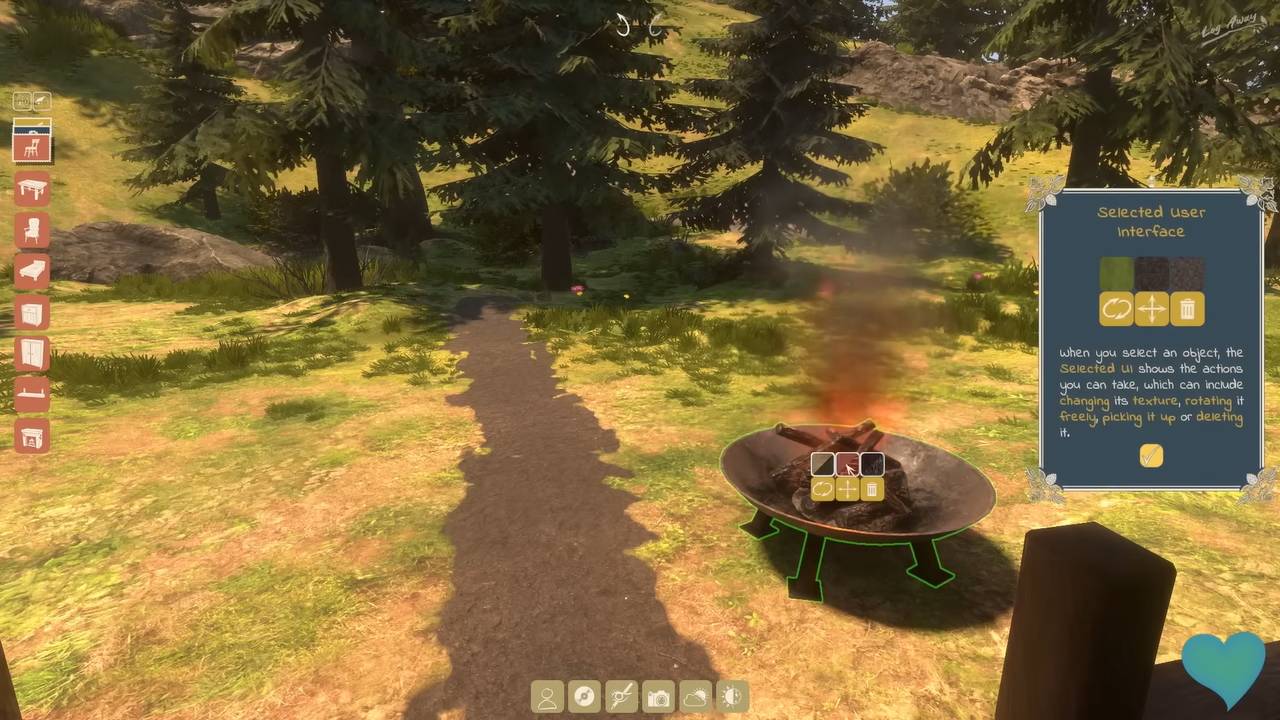
Log Away isn't a typical story; instead, it's based on a theme about escaping the stresses of everyday life to find personal meaning in space. Building a dream getaway in a remote area that looks like a national park postcard is what the experience is all about.
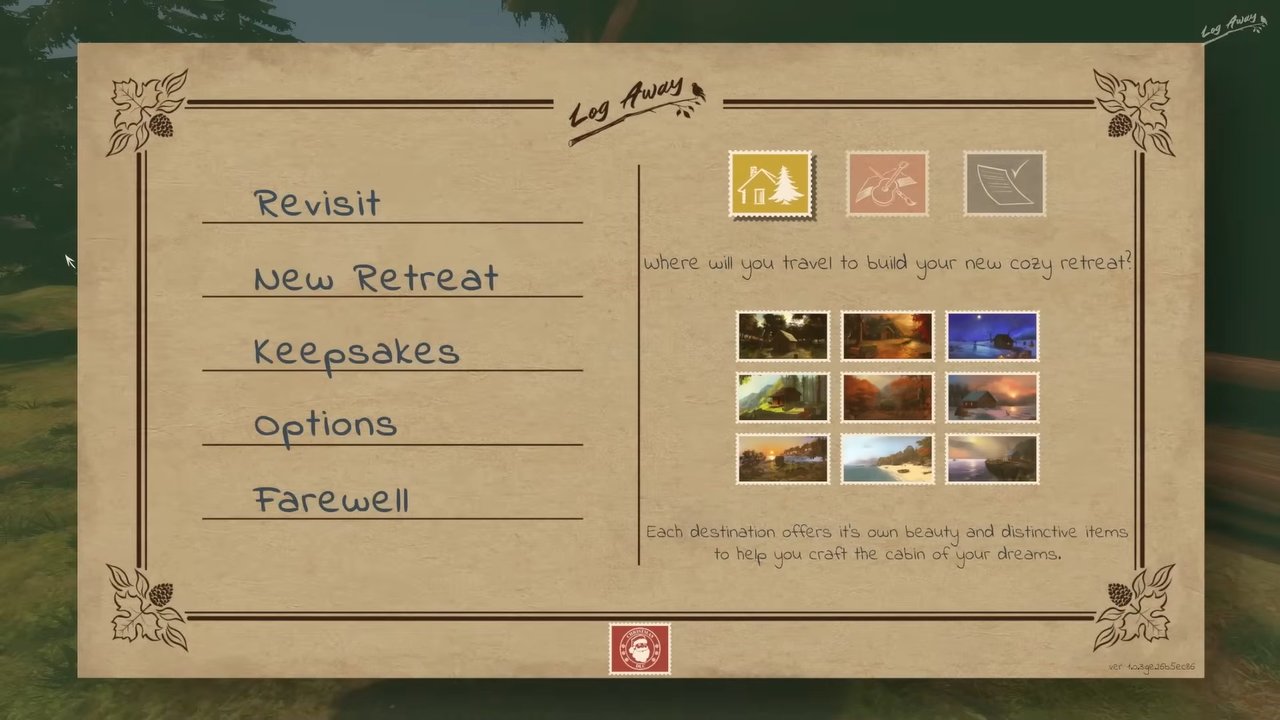
Each hobby and destination choice slightly changes the available decor, allowing for thematic expression through carefully chosen sets of objects.
Log Away's emotional weight comes from its setting, using nature and the design of the cabin as story techniques, since there is no plot. Looking at it this way, Log Away turns into a story about shaping oneself instead of following a set path.
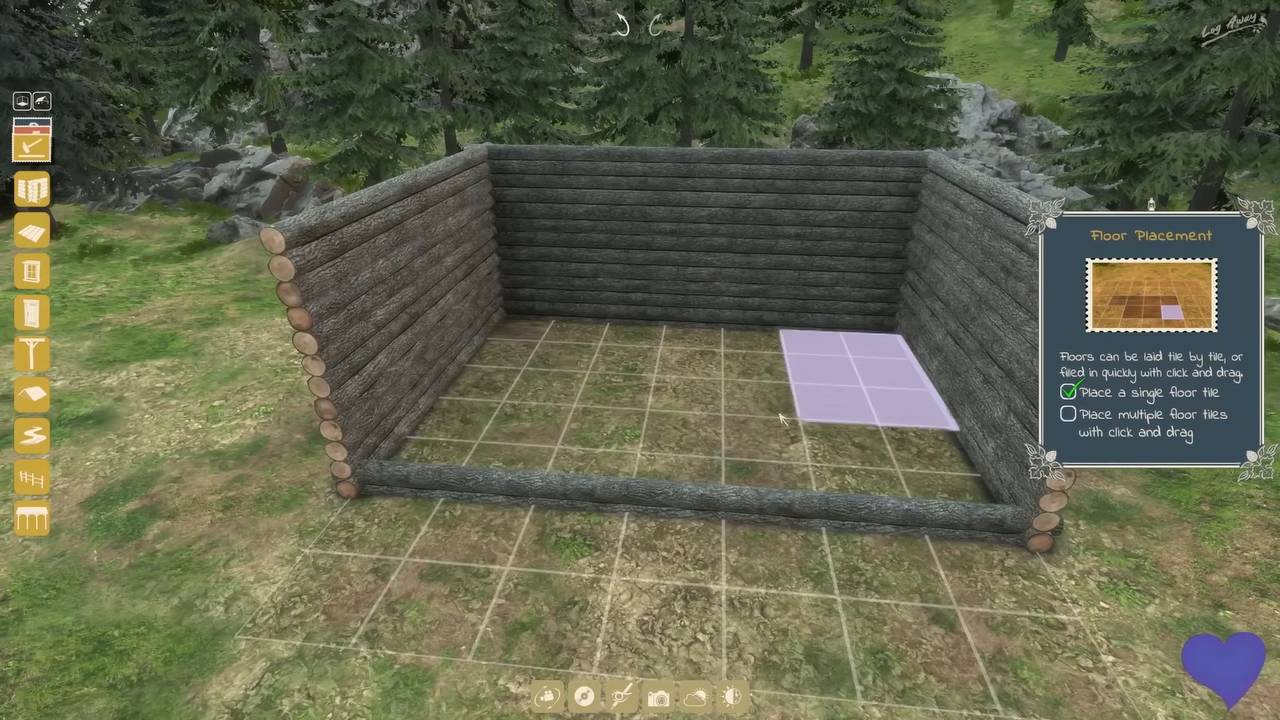
Log Away's main loop is based on using an easy-to-use building interface to add floors, raise walls, choose roof styles, and gradually furnish a small cabin area. Every piece of furniture, from chairs and shelves to fires and curtains, was chosen to create a mood rather than serve a practical purpose.
The player changes layouts over and over, trying out different textures and groups of objects while moving through a grid-based building zone that limits the size of the build. Users can add pets, change the weather, and take pictures of their created havens in a variety of lighting conditions. The process supports slow, thoughtful iteration and puts creative ease first.
Log Away doesn't have any fights, but its puzzle-like features come from the Coziness rules and the way objects work together. Each thing gives you Cozy Points, which are like challenge points in a game and help you make well-thought-out compositions. Individual pieces of decor are valuable when put together in ways that suit each other or fit with a theme.
On the other hand, repeated objects lower returns, which means they act as soft constraints that support variation. Log Away adds strategic decision-making through decor synergy instead of standard puzzle-solving in this way.
Log Away's Cozy Point system gives the game structure without making you feel rushed. It does this by maintaining the game's calm rhythm while encouraging players to think about how the game was designed. Its synergy rules encourage themes to go together, which makes layouts that were carefully chosen more rewarding.
But the method can be hard to understand because themed bonuses and items that are linked to destinations aren't always easy to see or understand in-game. This lack of clarity, along with the fact that repeating items don't give you as much of a return, can cause friction that could break the otherwise relaxing creative loop that Log Away was trying to create.
In Log Away, you can move forward by collecting Cozy Points and eventually unlocking Keepsakes, which are collectible items with short stories related to your chosen hobbies. As a reward for maximizing thematic synergy, each retreat ends with a trunk full of souvenirs that support personal style.
Keepsakes are unique to each interest, so you need to do more than one build to get all of the possible entries.
This makes for a long-tail progression path. Even though it's not really a grind in the traditional sense, this system makes the game more playable by making getting Cozy Points both a creative challenge and a light completion task in Log Away.
Log Away's look is based on soft lighting, lush scenery, and warm color schemes inside that are meant to make you feel calm. Places like beaches, meadows, and mountain slopes are meant to be calm places where players can express themselves.
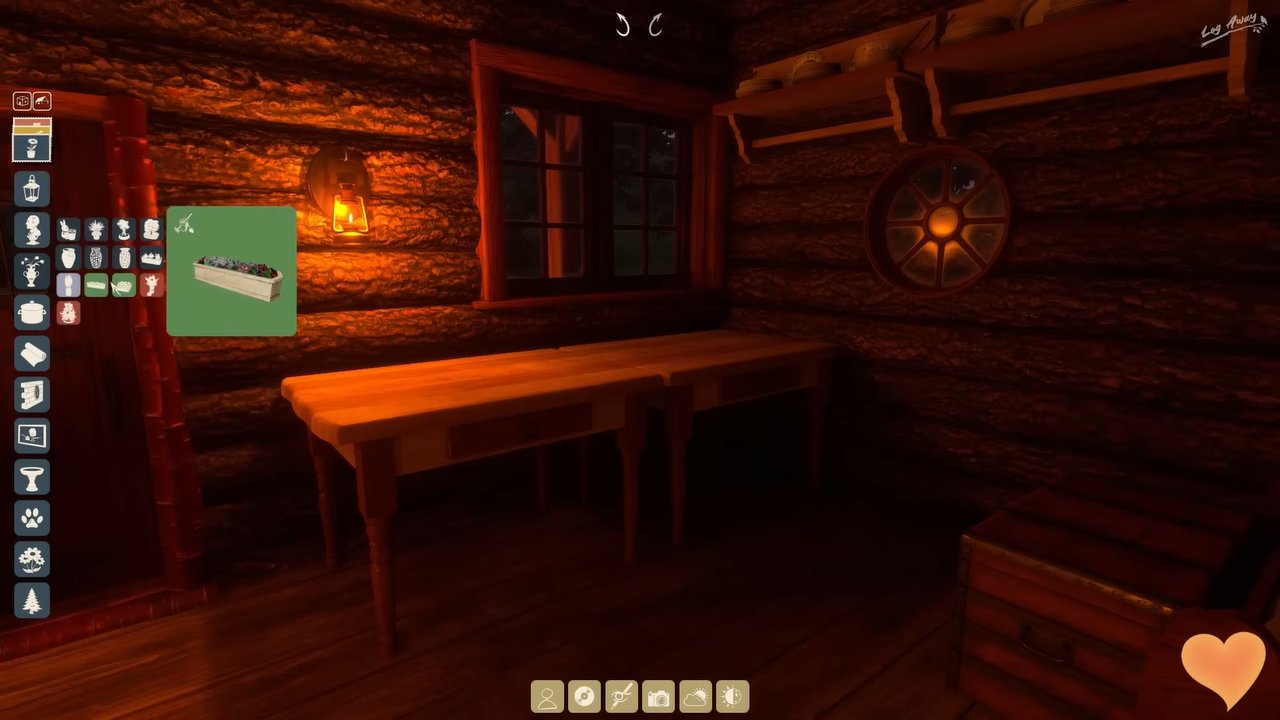
Larger objects and architectural pieces usually look clean and well-rendered, which adds to the attraction. However, the attachment shows that smaller decorations are very blurry, which means that the texture resolution isn't always constant, which makes Log Away less accurate in fine details.
Log Away has calm images and soft music tracks that are meant to inspire creation without getting in the way of focus. During building sessions, the music can be changed, which lets you make the sensory background more unique.
Environmental cues, like changing weather or the quiet of the night, blend in easily and add to the mood of reflection. However, the general volume and clarity seem low, and there are times when the sound doesn't have the presence needed to fully immerse you in Log Away.
Log Away is a charming book that makes you want to slow down, build with purpose, and enjoy the peaceful process of making a personal refuge. Its Cozy Point system adds thoughtful structure, and its wide range of furniture, places to visit, and activities supports free-form play.
Some of the freedom that the experience tries to achieve is lost, though, because of speed problems, annoying clipping, and a limited 7x7 plot. Even with these problems, Log Away is still a good way to relax online. It rewards patience and imagination with short, peaceful moments that you create by hand.
Log Away takes away standard barriers like managing resources or the economy in order to give a more meditative take on sandbox building.
This method lets players try out different things right away by giving them instant access to furniture, colors, and decorating tools.
This creates a setting where relaxing is more important than survival, creating, or optimization loops. By getting rid of obstacles, Log Away encourages players to see the house as a way to express their mood rather than a way to move forward mechanically.
A tight grid gives the game structure, but it also limits players' ability to be creative, especially those who are used to having more freedom to build in other cozy sandboxes. The small footprint makes for a focused design exercise, but it doesn't always feel right with the wide-open spaces around the house.
This pressure is more noticeable when players try to use bigger layouts or theme-based builds that need more space to move around. The grid's goal to lead can unintentionally limit, which goes against what Log Away wants to do, which is to free people.
One thing that makes Log Away stand out is its Keepsake system, which gives players a way to remember their progress through carefully chosen artifacts that are related to their hobbies. Each item has a short story behind it that ties in with the overall themes of remembering and personal history.
These changes make a cabin from a purely decorative activity to a more contemplative one about who we are. But getting all the Keepsakes takes multiple retreat runs, which may get old for players who want a lot of different gameplay options in Log Away.
Technical problems add extra problems that throw off the game's otherwise calm flow. Unexpected drops in frame rate are common and are usually caused by the mouse leaving the current window. People who use more than one computer may find the lack of cursor lock especially annoying because it can stop them in the middle of placing something carefully. The game works hard to create a calm atmosphere, but these performance interruptions throw that off. Taking care of them is necessary to get the smooth experience Log Away offers.
Environmental rendering usually does a good job of capturing mood, but problems with visual clarity show up when looking at smaller items, which takes away from the hand-crafted look. It might be hard for players to see the details of items, which makes it harder to keep the style consistent in rooms with lots of different features.
Even though these errors don't make the game unplayable, they do add an extra layer of distraction during scenes with a lot of design. For a game that focuses so much on visual unity, Log Away has gaps that stand out more.
Even with these problems, Log Away has a strong emotional core based on escape and softness. It's world uses light, weather, and tableau design to make players feel calm and away from too much stimulation. The day-night cycle and seasonal filters make experimenting with the atmosphere even more fun, turning picture mode into a place to be creative.
With these tools, you can turn every build into a unique picture that captures the spirit of comfort that is Log Away.
The slow pace also makes it possible to include pets, background items, and small details about everyday life, all of which add to the retreat's charm. These details add to the dream of making a cozy, lived-in home where warmth and personality are the most important things.
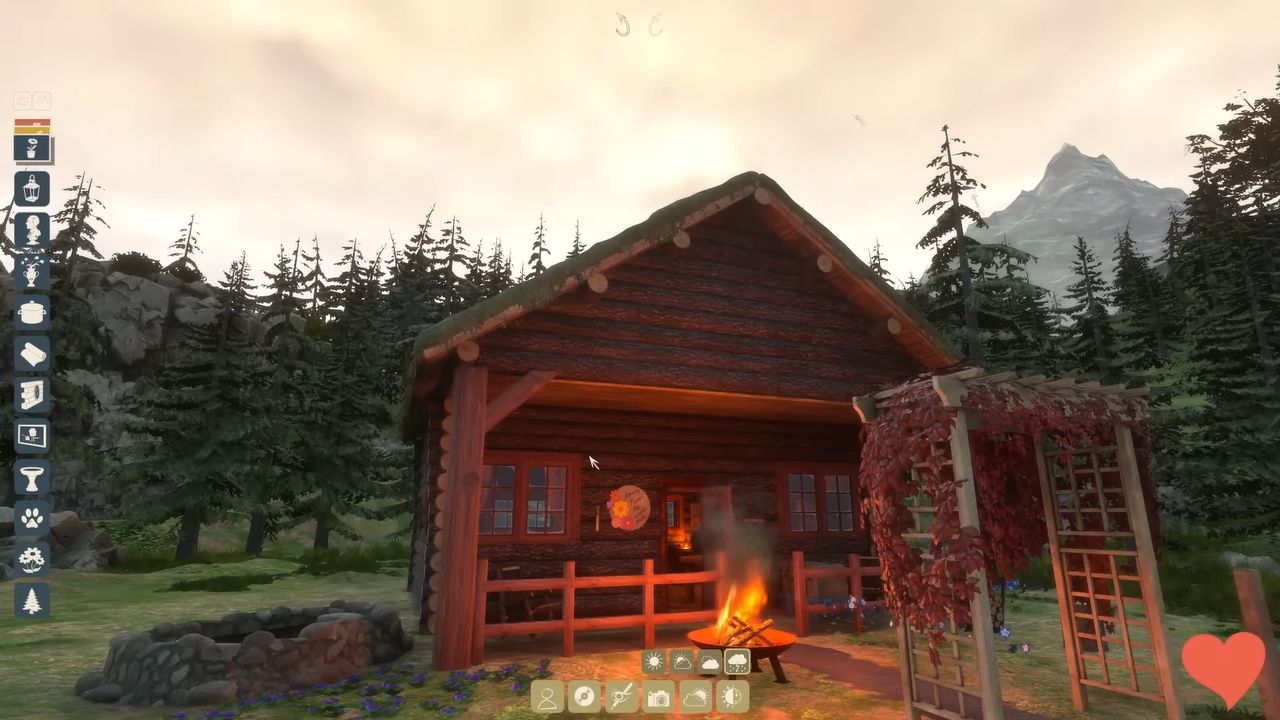
They also make thematic consistency stronger, letting people show who they are through both structure and decoration. These kinds of gentle touches make Log Away even more moving.
Log Away is a lot like a digital diary in that it lets players try out their creative ideas over and over again without getting in trouble. Since there are no limits or failure states, the experience is open-ended, which lets you think about it for a long time.
This method is similar to the idea behind slow gaming, which focuses on being present instead of getting high. Log Away then turns into a place where players can be creative and let their ideas flow at their own pace.
The holiday DLC for the game adds to its holiday fun by adding holiday decorations to limited-time cabin builds. Its photo tools work well with these features, which makes players want to make their own virtual postcards. Seasonal material gives the sandbox a festive feel, which supports its focus on mood-driven play. This way of doing things makes Log Away a great place to show yourself through themes all year long.
The best thing about Log Away is that it can make you long for peace and quiet in the real world. Even though there are some technical problems, the settings show an idealized escape that makes you think. The game is meant to do more than just entertain.
It's also meant to calm you down by being like fresh air and quiet mornings. Log Away is meant to be a way to relax instead of a way to keep track of things you need to do.
Still, the experience needs to be improved in order to be at its best. It's hard to tell how precisely the camera is moving, especially when putting small items or moving through small rooms. Players may experience unwanted acceleration or stuttering, which can make delicate jobs that should be easy more difficult. Even though each of these problems isn't very big, they add up and make it harder to get into Log Away.
Overall, Log Away is a well-thought-out but flawed addition to the cozy-building genre. Its methods are more focused on expression than mastery, giving you a place to unwind, experiment, and make things without any limits. When all of its parts work together, it gives you moments of real peace and artistic play. If it is improved even more, Log Away could become a must-have for gamers looking for calm digital escapes.
Contributor, NoobFeed
Verdict
Log Away is a serene, creative escape with heartfelt systems and beautiful environments, though constrained spaces and technical issues limit its full potential. A charming retreat for players who value calm over complexity.
66
Related News
No Data.