
No, I'm not a Human Review
PC
A game which induces a true sense of paranoia.
Reviewed by Mash Rahman on Sep 29, 2025
You are stuck. Your house is your only refuge. The world outside is infected with an evil beyond your understanding, and you are look at broadcasts of ways of surviving. In a world where trusting the wrong person can result in death, who do you let in? Who do you let stay?
No, I'm Not a Human is a strange and unsettling game, the kind that makes you feel like you don't belong, constantly trying to make you feel out of place. No, I'm not a Human was developed by a small studio named Trioskas, and the devs of this studio did not follow most of the conventional rules of survival horror games.
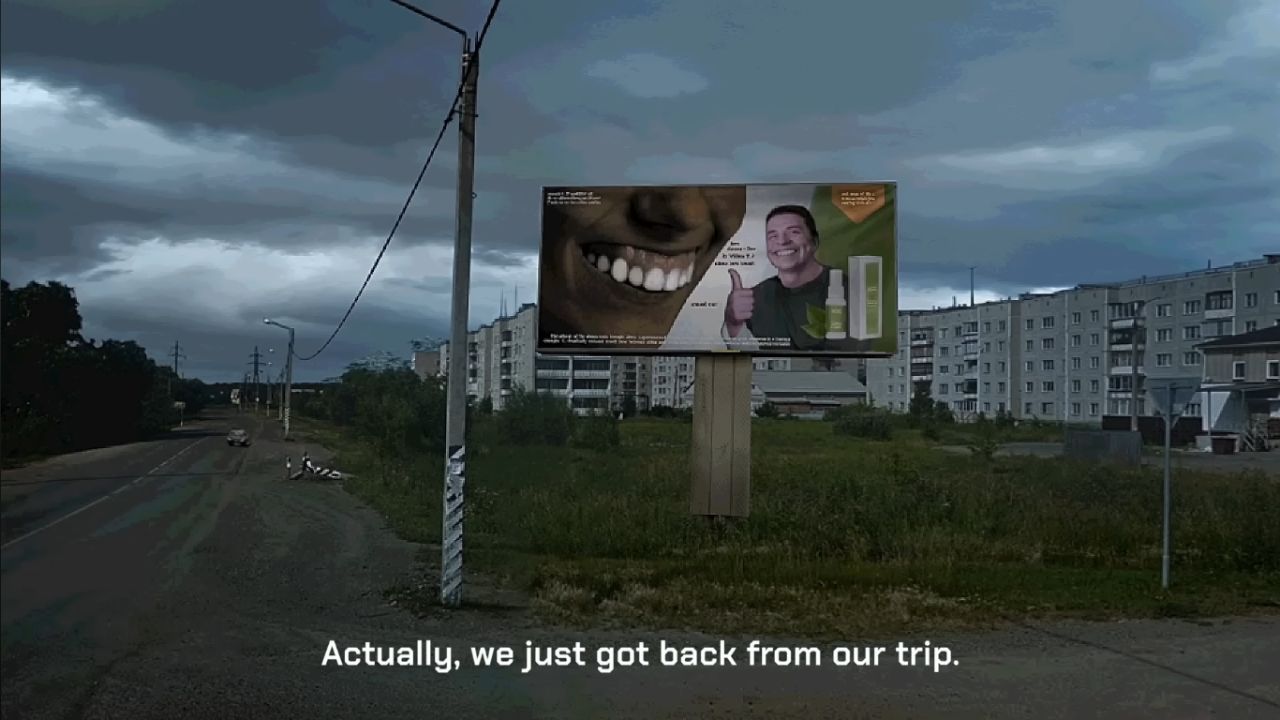
Unlike other survival horror games, No, I'm Not a Human does not arm you with weapons or offer familiar puzzles; you are locked inside your house, and the game dares you to live with the weight of the choices you make throughout the game. Offering no easy victories.
Every small decision, from who you let in your home to who you accuse of being a visitor. It draws spiritual inspiration from films like The Thing and They Live, horror stories where the true enemy is mistrust. Trioskas has made a game where suspicion is utilized both for narrative and as a game mechanic, a design choice that results in a deep, paranoia-inducing atmosphere.
No, I'm Not a Human constantly uses ideas and settings like this to create a sense of unease.
The story begins in a setting that at first appears ordinary, where a cutscene featuring real-life-like images is shown. However, your eyes are soon betrayed by the change in art style as characters are introduced that look out of place. The game frequently employs ideas and settings like these to create a sense of unease. Using all of your senses against you.
You play as a lone resident, stuck in your home as rumors spread of mysterious beings appearing on Earth known as Visitors. The Sun has somehow caused them to come about, and these creatures now infiltrate humanity by imitating people. However, they are not perfect copies of humans; there is always something wrong in the details, sometimes something just slightly off, making it difficult to identify those imperfections.
Over time, your quiet house becomes a refuge of sorts as you let in more people seeking shelter or a place to rest, but it consequently also becomes a prison where you could be locked in with one of these visitors.
Strangers will knock at your door; some are genuine survivors, others are Visitors waiting for their chance to slip inside. Even if you let them in, the dangers do not end there, as distrust can spread quickly among the survivors present, and tempers flare. At night, it is often the case that you find that the survivors have turned on each other.
Sometimes, government agents may appear at your door and drag the survivors out of your house. And other times you wake up to find yourself completely alone, exposed to the creatures you worked so hard to keep yourself safe from.
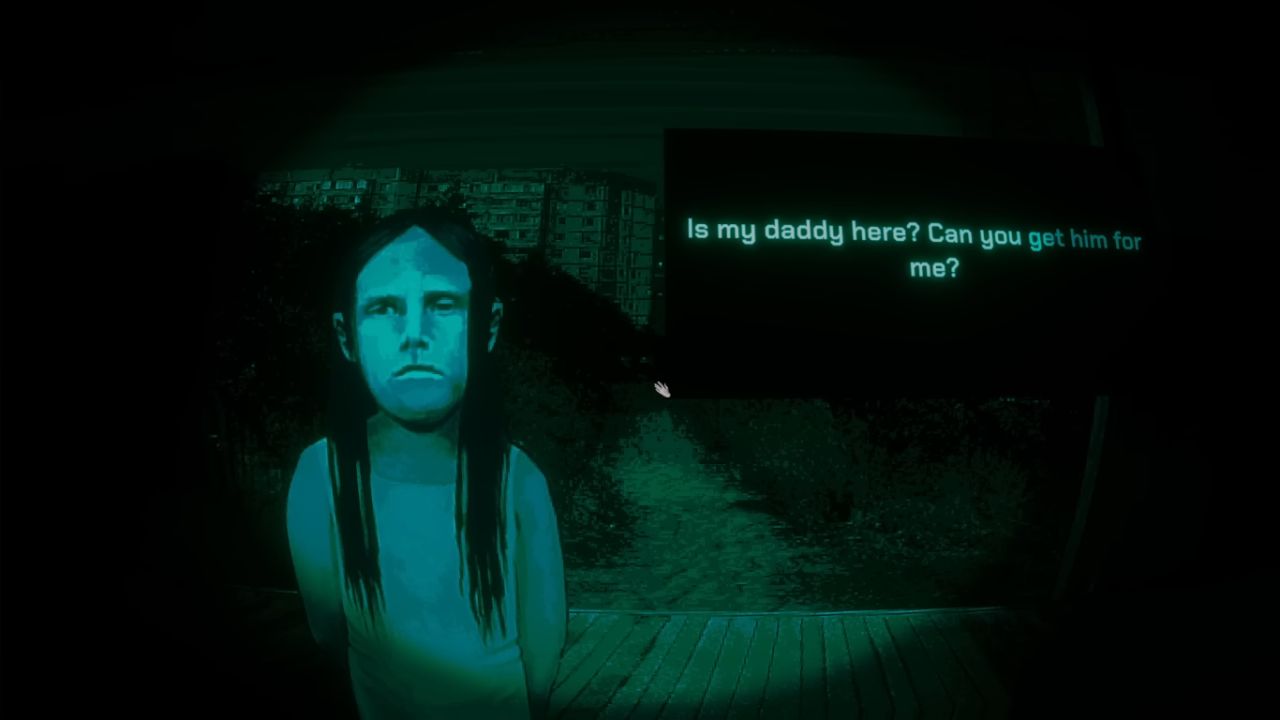
The narrative rarely gives you a clear answer. Instead, it confronts you with uncertainty at every turn, letting you hash out the Visitors' true purpose or even the rules of their invasion. No, I'm Not a Human thrives in the confusion it creates through half-truths from the survivors and visitors, the distorted broadcasts on TV, and conversations that you participate in that raise more questions than they answer.
You are left to piece everything together with your intuition or whatever truth you can form, and are forced to live with the unease of never really knowing if you are making the right call.
The game's mechanics are deceptively simple, structured around a day-and-night cycle. During the day, you are given a limited amount of energy points to spend each day. Each action consumes energy, so there is never enough to do everything at once.
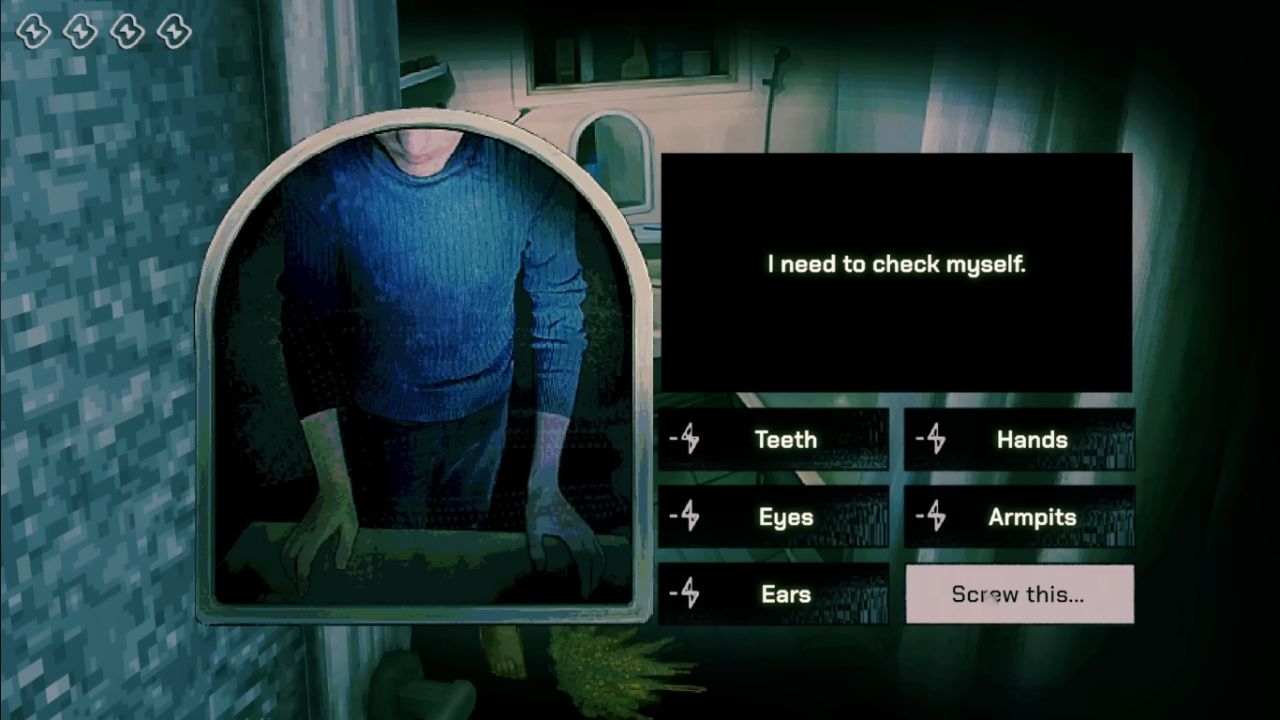
You can question the survivors you have let in, check the television for reports of any incidents, and get advice on checking whether someone is a visitor or not. Interacting with objects in the house also costs energy. You can try to strengthen the fragile bonds you have with the survivors, but you have to be careful as to which dialogue you choose.
The choices you make are never trivial, as every point used is another opportunity lost. Nighttime is a completely different beast. You cannot leave the house, but at nighttime, you can observe the outside world through your window and wait for the inevitable knocks at your door.
These are one of the most tense moments in the entire game. Do you open the door for the person seeking refuge and risk letting a Visitor inside, or should you deny entry to them and possibly doom a desperate human to death outside?
The cycle repeats, and with each new day, the amount of paranoia grows thicker. The survivors you have let in start to whisper suspicions and conspire about each other, requirements of each survivor shift, and things spiral out of control in ways you can never completely anticipate.
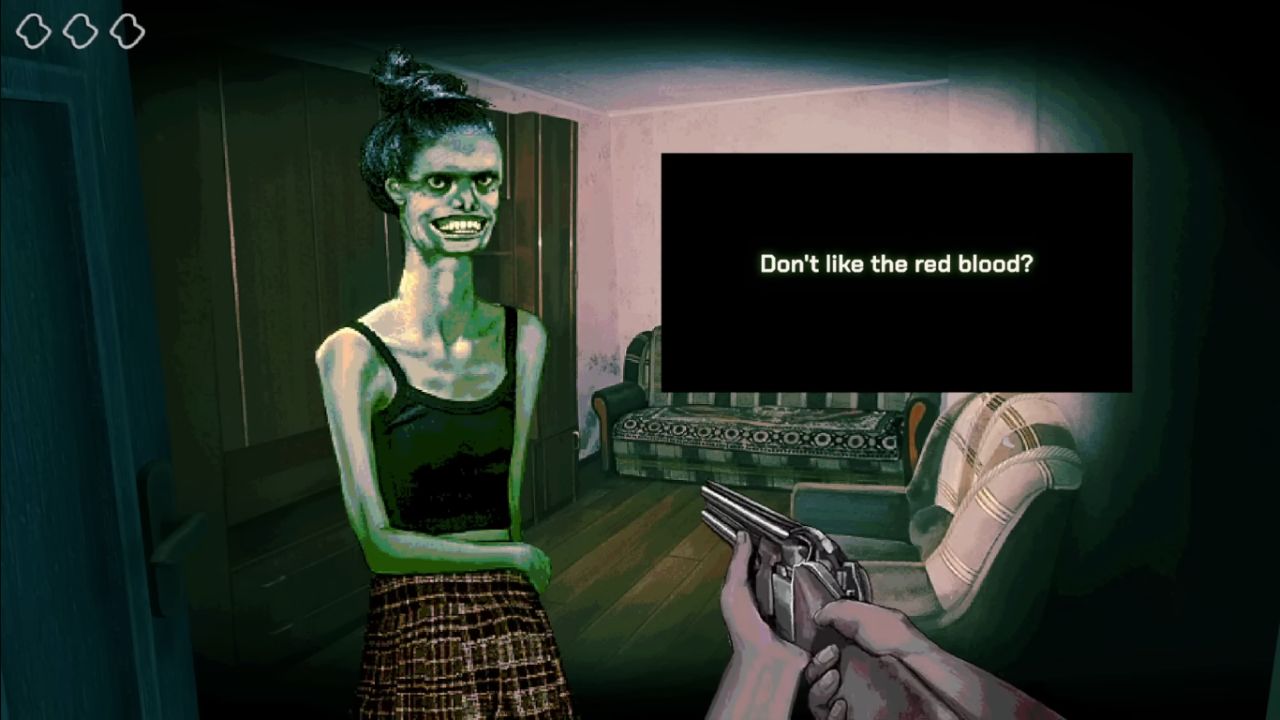
Combat does not exist in the traditional sense, but that doesn't mean you never face any confrontation. The closest thing comes in the form of interrogations and executions. If suspicions about a guest rise too high, you can challenge them. Sometimes they cooperate; sometimes they resist violently.
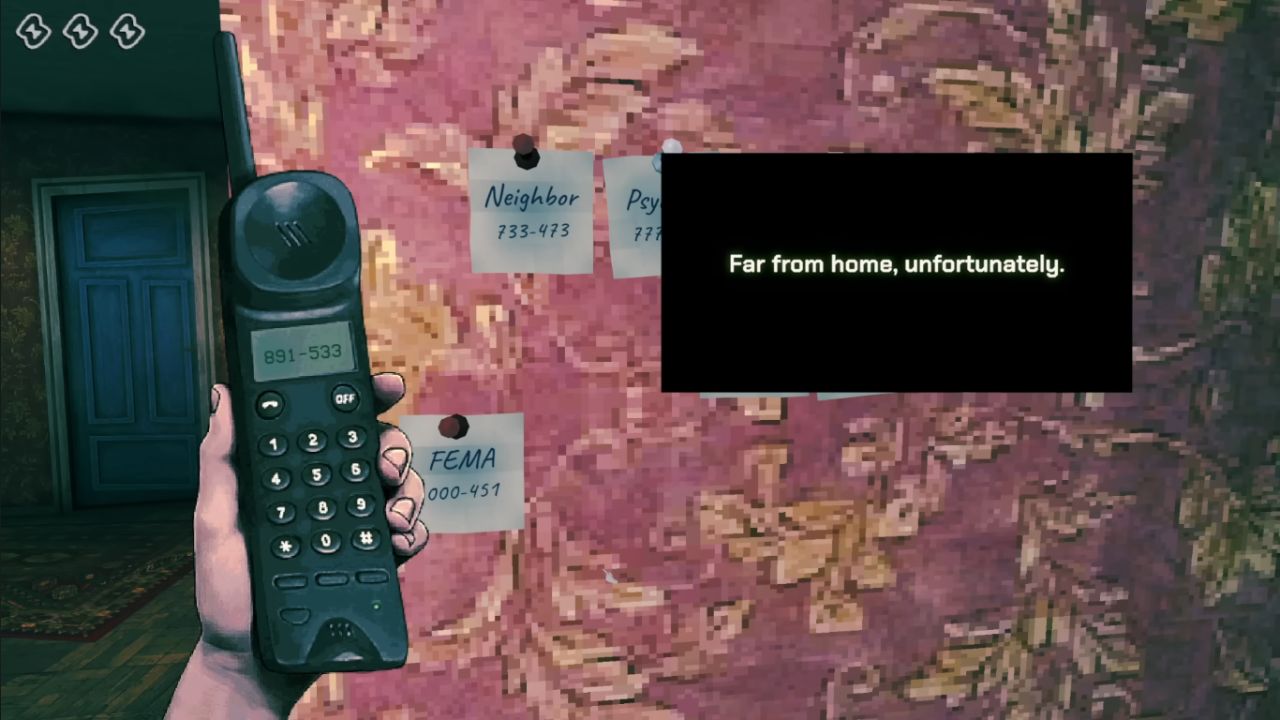
Scenarios like these are more about deduction than taking action. Relying on small behavioral cues, news fragments, and dialogue to guide your judgment. The system purposefully does not allow you to interrogate newcomers the moment they arrive, and you must wait until the following morning, which makes thematic sense since living with doubt is central to the experience. However, mechanically, it can feel like a missed opportunity to escalate tension more quickly.
The strength of this game lies in its effective use of uncertainty as a strategic tool. There are never clear answers, and every interaction is filled with risks that must be taken. Survivors' needs and side goals add variety to each run of the game, ensuring that every playthrough unfolds differently.
There are multiple possible endings in No, I'm Not a Human, all presented in a comic-book-like style cut scene; each one is grimly satisfying in its own way. The game feels at its best when several days have passed, and your home is full, and every interaction feels like it could tip the fragile balance into chaos.
At that point, the paranoia becomes suffocating, which is exactly the intended effect. This is further amplified by the systems. Such as the save structure where, instead of relying on autosaves, progress is tied to drinking a kombucha.
No, I'm Not a Human doesn't have any auto save results in the save of the player being wiped out upon death.
This results in the player's save being wiped out upon death, making players think before taking risks or experimenting further, and increasing the sense of being trapped. Combined with some repetitive tasks, like tuning the radio or shuffling through chores, this can make the whole process feel like you are in a prison.
The graphics and art style of No, I'm Not a Human are as uncanny as its subject matter. The character models are designed to look almost human but not quite, with exaggerated or distorted features that are made in a way to immediately put you on edge.
This uncanny valley effect perfectly represents the idea of the Visitors, as they imitate humanity imperfectly. Alongside the uncanny look, the world around sometimes almost looks like a direct trace of things from real life. Creating that essence of being almost real but still not there.
The environment itself is rich with small details, but it is the gradual transition that unsettles most. No, I'm Not a Human starts with surroundings that seem like real life and are nearly boring, but as time goes on, things start to change. The textures change, the shadows become darker, and the home itself seems more and more strange. The way the area looks makes it seem small, which supports the sense that your house is both your safest place and your most dangerous jail.
Sound design may be the most powerful element of all in No, I'm Not a Human. In my opinion, there are only a few horror games that use audio cues so effectively. Every knock on the door sounds slightly different, whereas interactions with the characters feel like a dreadful guessing game where the tone and rhythm of the music hint at desperation, hostility, or something in between.
The soundtrack itself is sparse, often letting silence dominate until it is broken by disturbing noises. The broadcasts on TV, filled with sounds of static and warped voices, add to the sense of uncanniness. Dialogue from the survivors in your home is delivered in a stilted, almost artificial manner, which makes it difficult to ever feel at ease.
Ambient noise like distant screams, distorted humming, and sudden thuds that fill the silence is sure to make you dread every quiet moment. The soundscape amplifies the paranoia already baked into the mechanics, ensuring that you never feel safe, even when nothing appears to be happening.
Taken as a whole, No, I'm Not a Human is a game that is less about survival and more about endurance. It asks what it means to make decisions when you cannot possibly know the right answer. Do you open the door to a stranger in need, or keep it locked and live with the guilt that you might have condemned someone to die?
Do you accuse a guest of being a Visitor, knowing there is a chance you might be executing an innocent person that just needs help? The weight of these choices is the true horror, not sudden monsters or gore. The game punishes indecision as much as it punishes action, reminding you constantly that in a world ruled by mistrust, there are no clean victories.
Trioskas has created something rare: a horror game that is not interested in cheap scares but in the psychological toll of mistrust. It can be frustrating at times, but it's a truly unforgettable experience. If you come to it expecting traditional gameplay loops, you may find yourself disappointed.
But if you approach it ready to immerse yourself in uncertainty, you will find a work that gets under your skin in ways few games do. No, I'm Not a Human is not a game about winning. It is a game about living with the weight of impossible choices, about paranoia and guilt, and about realizing that safety is just another illusion.
Contributor, NoobFeed
Verdict
No, I am not a Human is a horror masterpiece that excels in creating an environment where the player is made to feel uneasy and a prisoner to the surroundings, through a combination of mistrust and une
85
Related News
No Data.