
No, I'm not a Human Guide | How to Get the Super Visitor Ending
Here's a guide on how to get the Super Visitor Ending in No, I'm not a Human.
Game Guide by Mash Rahman on Oct 06, 2025
No, I'm not a Human is a game that has many layers, with every decision affecting the ending you get. One of these endings, to me, seems to be one of the best endings, as it gives the player character a peaceful ending, even if it is a false one.
In this guide, I will help you get and even give you tips to avoid the Super Visitor Ending in No, I'm not a Human.
About the Ending and its Lore Implication
This path has its roots in the very first demo of the game, and it is a class in how to craft psychological horror, with atmosphere, conversation, and symbolism all combining to create an ending that feels deeply awkward and emotionally charged.
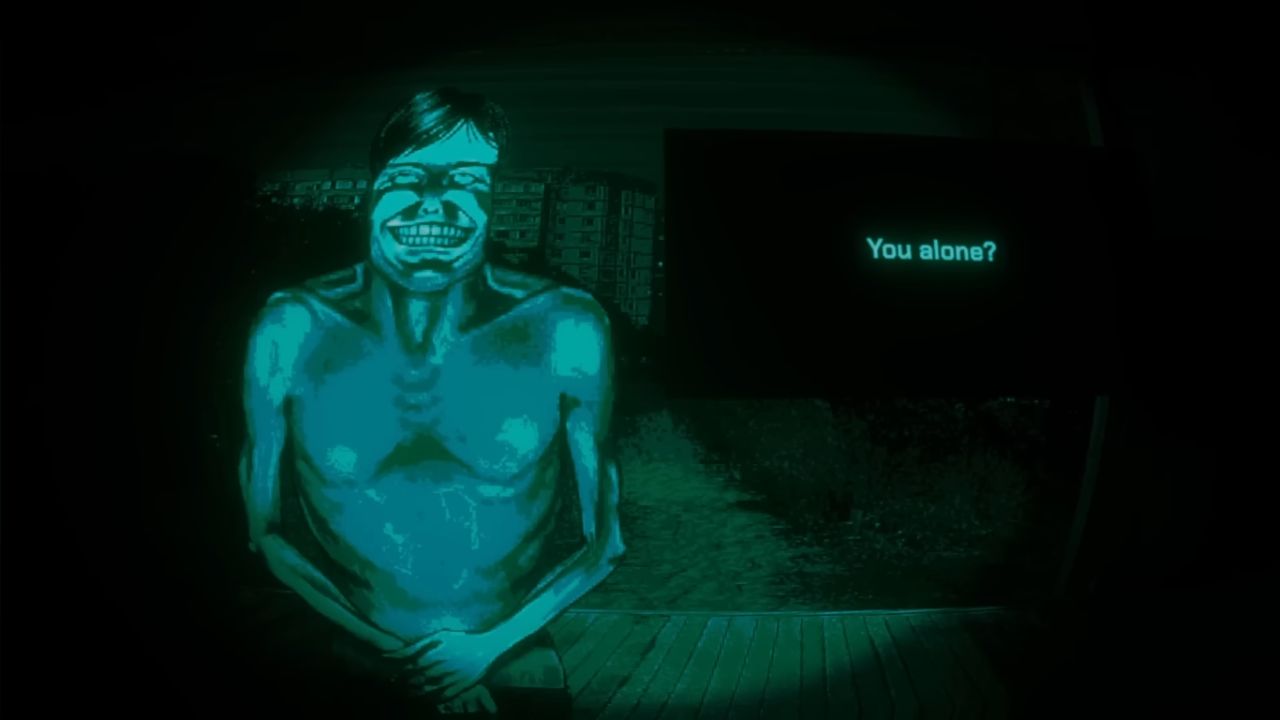
The Super Visitor ending is triggered either by allowing him into the protagonist's house or by not responding quickly enough to bar him from entering.
In one of the final scenes, an odd knocking can be heard at the door. Players are then offered the choice of letting the guest in. If they do let the visitor in, they immediately commit to this course of action.
However, even if the player refuses or simply takes too long, the result is the same—the guest bursts in, splintering the door.
Contrary to other parts of the game where passivity might sometimes be rewarded by hidden disclosures, here, hesitation is penalized. This requirement highlights the fact that some experiences in life are unavoidable, regardless of how much one tries to evade them.
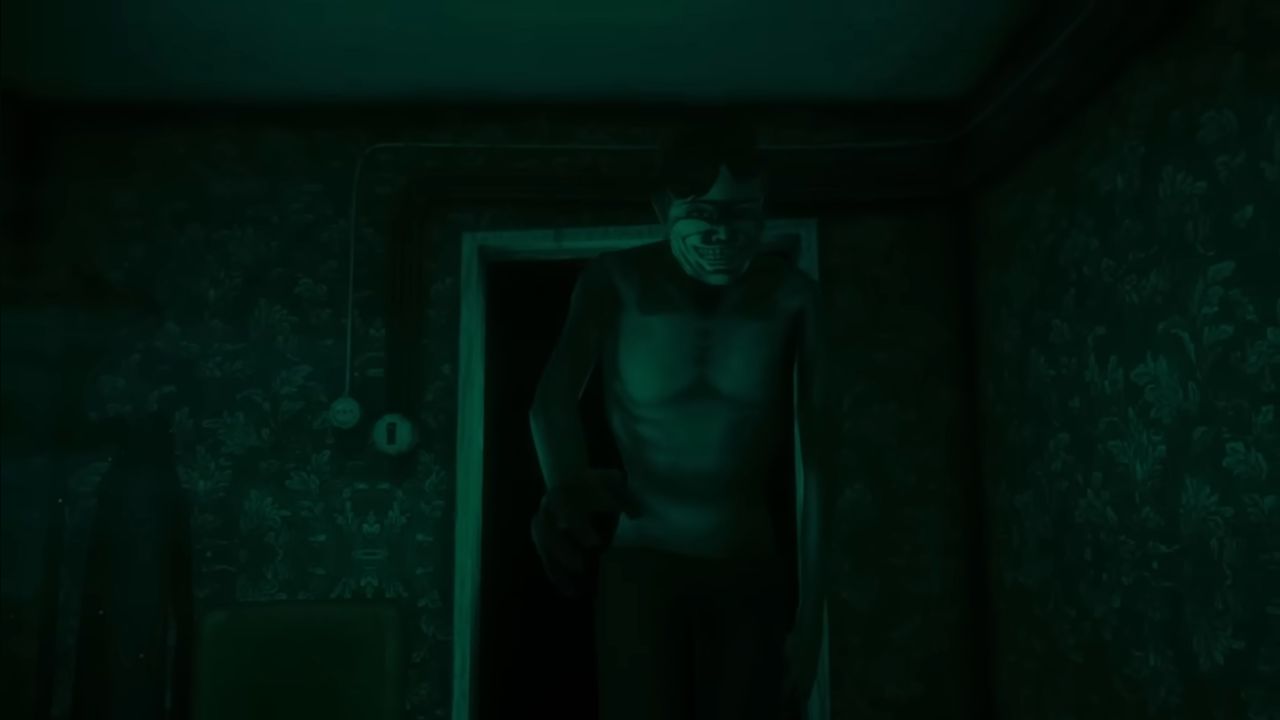
The Super Visitor himself is a gaunt, white figure whose approach cannot be evaded. When he shows up, the atmosphere immediately shifts. The sound design of the game plays a significant role in evoking fear, with a mix of distorted sounds, creaks, and silence that hangs in the air.
His calm yet menacing presence immediately makes it clear that the protagonist is helpless in this situation. Although his figure is terrifying, what is most terrifying about him is what he says. From the onset, the Super Visitor has an unsettling intimacy with the protagonist.
He tells them that he has come from others like them and that he has been directly commissioned to look for them since they have been "chosen". The concept of being chosen is initially serious, but later becomes more of a blessing that turns into a curse.
The visitor's speech is ponderous and deliberate, with lines spoken as if he is telling the protagonist to surrender rather than reject.
His monologue comes to the essence of the internal problems of the protagonist. He tells them that they are alone, that they have always been alone, and that they bear the heavy burden of having to make decisions constantly.
According to him, the protagonist has suffered these burdens for too long; in his view, there is a different option for your destiny. By "joining" him, the protagonist would be relieved of loneliness, choice, and strife.
What he offers, however, is not freedom, nor even companionship. What he offers is death, in disguise as release. The implication is clear: that by yielding to him, the protagonist's journey is over for good.
The visitor's logic is chilling because it is so close to convincing. His language evokes emotions that many of the players can relate to, making the experience feel overly intimate.
Symbolically, the Super Visitor can be interpreted as an embodiment of despair, depression, or intrusive thoughts. His deathly pale complexion and aggressive incursion mirror the way bad feelings can erupt unexpectedly into our existence, demanding to be noticed.
He threatens your existence by saying that he will break into the house if left behind, making this reading plausible, demonstrating that the nastier sides of human psychology cannot be contained indefinitely.
The insistence, reiterated throughout the play, is that the title character is "chosen", which underlines the harsh irony of depression, which has a tendency to cause its victims to think themselves isolated, damned, or trapped.
Rather than the supernatural stranger, however, the Super Visitor is a symbol of the protagonist's inner demons brought to life.
At the end of the conversation, the game reveals one of its most frightening sequences. The visitor appears to the protagonist in an animation that bears down on him with its looming figure, distorted visuals that become increasingly suffocating.
There is no option but to fight back; there is no chance to resist. The hero is surrounded by the visitor's presence, and the screen blackens. This is perhaps one of the only endings within the game that actually feels resolved.
Other branches offer some semblance of uncertainty or possibility of futures, but the Super Visitor ending offers only closure through death. It is abrupt, tragic, and cannot possibly be reinterpreted as anything other than a complete erasure of the hero's story.
The psychological weight of this finding is that it represents real struggles. Many players view the Super Visitor as being an icon of suicidal thoughts or perhaps even the urge to just abandon hope altogether.
What makes him attractive is that he offers death as a cessation of pain. Life has loneliness, choices, and burdens, and he offers a means in which none of those things matter anymore.
It is frightening, precisely because the reasoning is so straightforward, and because when one is desperate, it can sometimes seem like almost the only choice. The game makes people play out just how appealing that surrender would be, even as it shows the terror of actually submitting to it.
Aside from other endings, the Super Visitor is unique. With the so-called 'good ending,' where the protagonist is encountered by a godly divinity, it represents one of transcendence, expansion, or greater meaning.
That option feels hopeful, suggesting that there has to be something beyond agony and bewilderment. The Super Visitor is not so.
He is the embodiment of dissolution and despair, slamming the door on any possibility of meaning. His arrival is unavoidable, his conversation is deeply personal, and the final act he performs is terminal in a way no other branch can.
Despite its negative subject matter, players overall strive for this ending. Much of that is due to sheer curiosity, but more than that, the Super Visitor is one of the most iconic characters in the game.
The Super Visitor's design, dialogue, and the weight of his overbearing presence, along with the ending, ensure that players who experience it will not forget it.
Also, check our No, I'm not a Human Review
Contributor, NoobFeed
Latest Articles
No Data.