
Outbound Review
Nintendo Switch 2
A beautiful, low-stress survival adventure where building shines brightest, but pacing and performance keep pulling you off the road.
Reviewed by Asura Kagawa on May 13, 2026
Outbound comes from a relatively small, independent development team aiming to carve out a space in the increasingly crowded “cozy survival” genre. While the studio doesn’t carry decades of franchise history or a long list of sequels, it clearly builds on a modern lineage of exploration and crafting-driven games that prioritize atmosphere over intensity.
You can feel the influence of titles like Firewatch, Raft, and even Stardew Valley in how it approaches pacing, player freedom, and emotional tone. Instead of pursuing blockbuster spectacle, the developers have a more modest philosophy: games as spaces of relaxation and reflection.
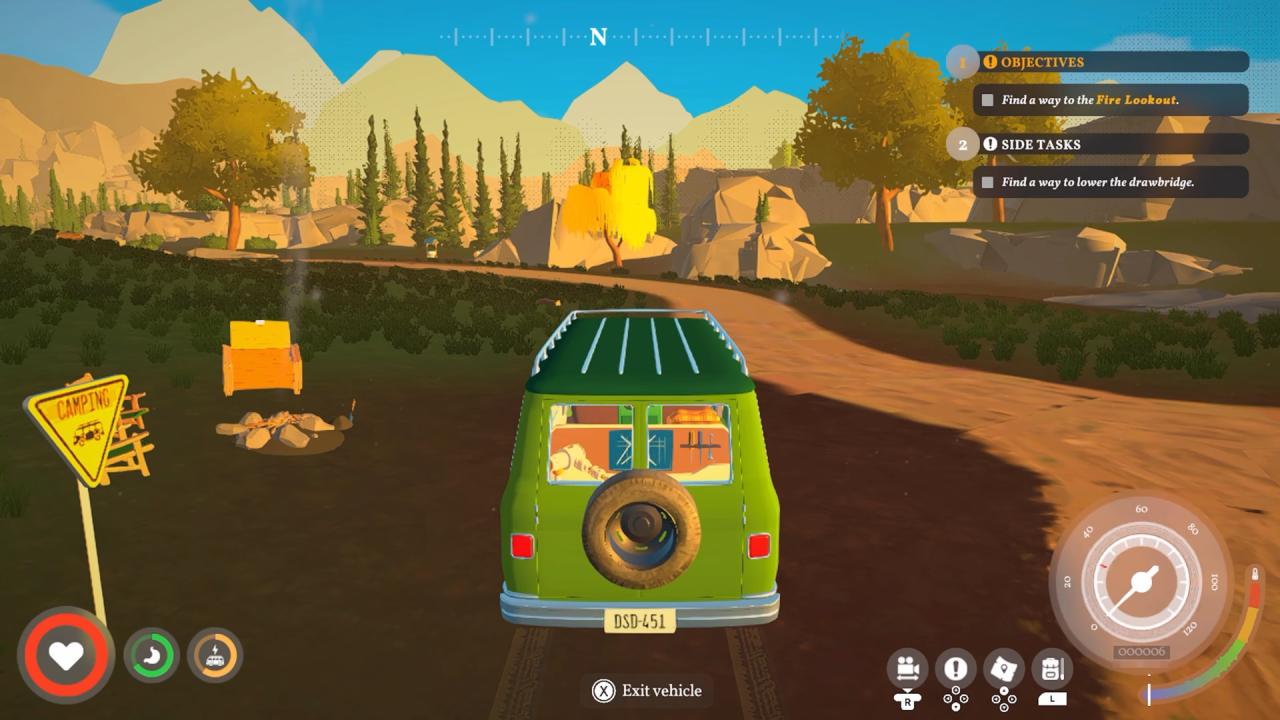
That design direction of Outbound is not accidental.
The art style, the absence of combat—it's all a deliberate effort to take away any pressure and just leave exploration, crafting, and movement. Yet, what makes Outbound particularly compelling in this context is that it doesn’t feel like a random experiment. It feels like a focused response to a very specific question: what if survival games removed stress entirely and replaced it with sustainability and comfort?
The developers clearly understand that modern players sometimes want systems that don’t demand mastery, only participation. Even its environmental themes feel rooted in this philosophy. Rather than framing nature as something to survive against, the game positions it as something to live within. That alone places Outbound in a very specific design lineage that prioritizes mood over mechanics.
Outbound originally appeared in demo form, where it immediately stood out thanks to its unusual premise: a fully customizable camper van in a soft, post-human wilderness. Even in that early version, the core fantasy was clear. You weren’t a hero, a soldier, or a survivor of a catastrophe. You were simply someone living off-grid in a world that had already moved on.
That demo response helped solidify interest in the concept, especially among players who enjoy slow-paced exploration games. The idea of van life as a playable experience felt novel, even refreshing, compared to more traditional survival settings filled with danger and hostility.
By the time the full release arrived, Outbound had expanded that idea into a full system-driven experience. It wasn’t just about driving anymore. It was about building a mobile home, managing energy systems, sourcing recycled materials, and gradually transforming a van into a self-sustaining ecosystem.
The end result is a game that feels like it evolved from a simple concept into a surprisingly layered survival sandbox, even if not all of its systems land with equal impact. Outbound’s narrative is intentionally minimal, almost to the point of being atmospheric background noise. You play as a nameless traveler moving through a world where humanity has either disappeared or quietly withdrawn.
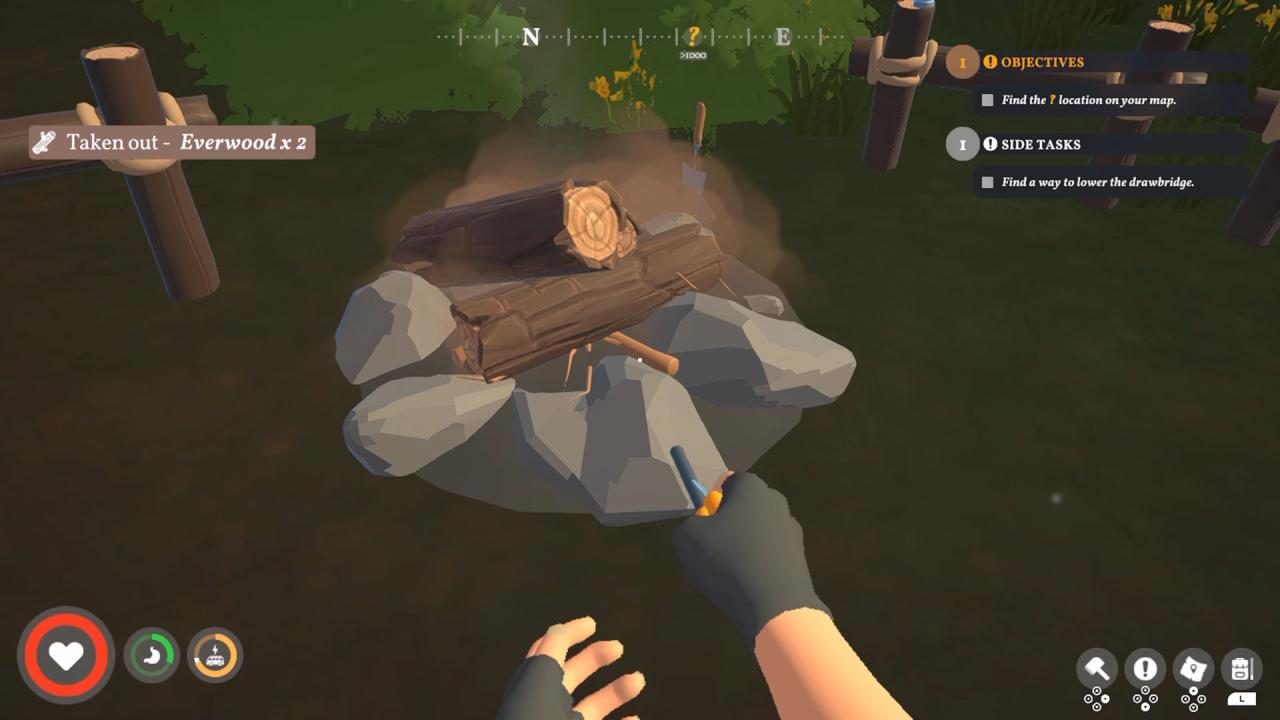
There are no cutscenes to explain what happened, no exposition dumps, no central antagonist driving events.
The story is told in environmental fragments. Abandoned buildings, subtle details, and notes of a world that once existed but is no longer present suggest a civilization that has vanished. The interpretation is left entirely to the player. Some may see ecological collapse; others, a peaceful departure. The ambiguity is part of the design.
One of the more interesting narrative touches is the presence of a companion dog. This small addition adds emotional grounding to what would otherwise be a very isolated experience. The dog is not just decorative; it interacts with systems, carries items, and provides a sense of presence in an otherwise empty world.
There is also a strong environmental undertow to the narrative structure. Energy is renewable, resources are recycled, and progress is tied to sustainability, not domination. Even the absence of hostility feels like a statement: this is not a world that needs to be conquered.
The world itself is broken into many biomes, each subtly hinting at different remnants of human activity. Wind turbines on fields, abandoned lodges, and dilapidated infrastructure imply a civilization that altered itself rather than fell apart violently.
In the long run, it’s the atmosphere, not events, that is the story. It exists to support exploration rather than drive it.
Outbound’s gameplay loop is built around a familiar survival framework: gather, craft, build, and explore. However, everything is intentionally softened to avoid pressure. Hunger exists, stamina exists, and health exists, but none of them feels particularly punishing. At its core, the loop focuses on resource collection. You gather wood, stone, fiber, and recyclable scrap scattered across the environment.
These materials feed into crafting systems that gradually expand your capabilities and improve your mobile base. Crafting itself is layered through a blueprint system. Instead of unlocking everything at once, you gather blueprints from terminals scattered around the world. These need recycling vouchers earned by processing litter found in the environment.
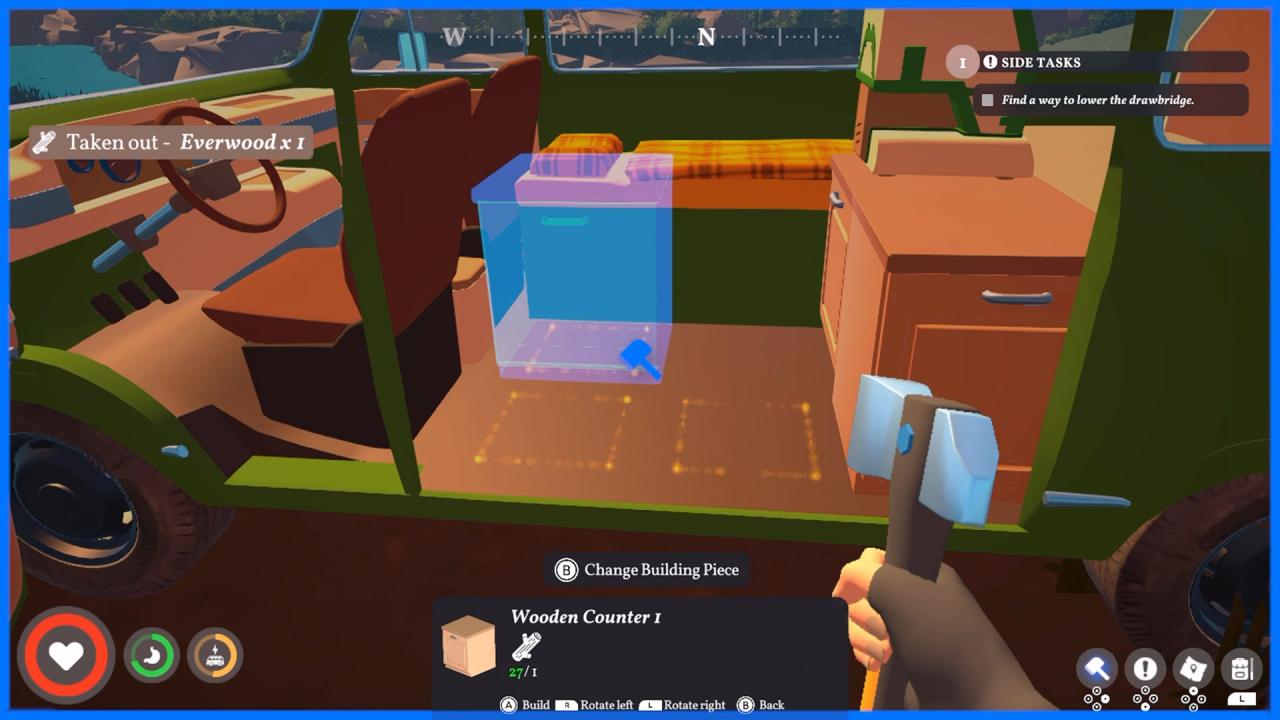
This creates a loop of exploration, recycling and progression. Another important system is van management. You'll need to monitor energy levels, fuel sources, and battery capacity. Initially, it feels constraining, but later it becomes a fully renewable system, powered by solar panels, wind turbines, and hydro solutions.
Progression is steady but not rapid. It’s slow by design and trips frequently take longer than you’d think. The van itself starts sluggishly but improves with upgrades. Even on foot, stamina limitations reinforce the game’s slow rhythm. There is also a gardening and food system that allows you to grow crops on your vehicle.
This ties in with the sustainability theme and helps to reduce the need to scavenge over time.
But some of the mechanics seem less necessary. Hunger, for example, exists more as a checkbox than a meaningful system. Since death has no real consequence, survival pressure is largely symbolic. The closest thing to a “challenge” comes from traversal barriers. Progression locks include broken bridges, locked gates, steep terrain, and resource-gated upgrades. These are environmental puzzles, not traditional gameplay puzzles.
Some areas can only be reached after upgrading your tools or vehicle capabilities. Some obstacles cannot be broken with a weak pickaxe, and some engines aren’t powerful enough to let you travel certain routes. They are not puzzles in the classical sense, but they do structure progression in a controlled way.
At its core, Outbound is all about exploration. The world is big, open, and visually diverse, with forests, mountains, deserts and coastal areas. Each biome has its own aesthetic identity and resource distribution. Movement, however, is intentionally slow. Walking is sluggish, running drains stamina quickly, and vehicle travel is not particularly fast early on. The result is a pace that makes exploring feel more like a meditative experience than an adventure.
The world is filled with collectibles and little discoveries like gnome figurines, blueprint stations, derelict buildings and environmental landmarks. However, many of these are map-marked, which reduces the sense of organic discovery. One of the game’s strongest exploration features is how your mobile base integrates into travel. You are not returning to a home; your home travels with you.
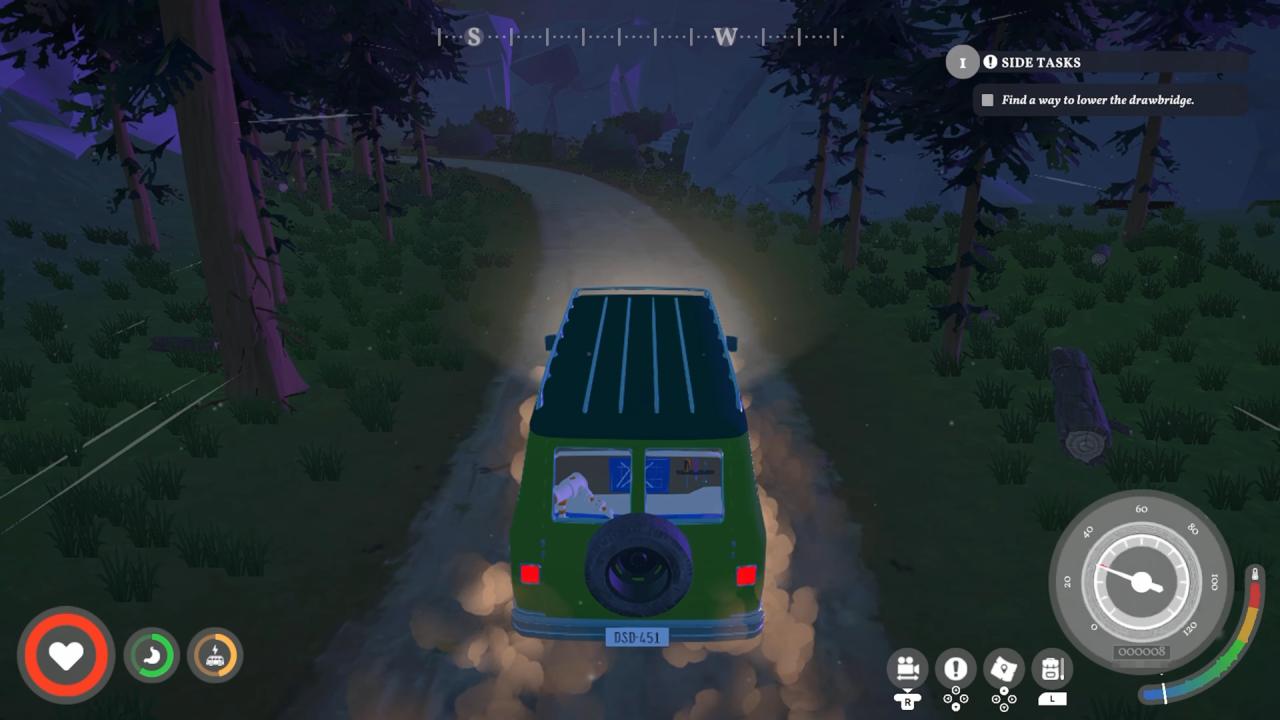
This removes the traditional loop of base-returning and replaces it with continuous movement. Multiplayer significantly enhances exploration. Long travel sections become social, not passive, in co-op. Silence is replaced by conversations, and the gathering of resources is a collaborative, not a repetitive, activity.
Solo exploration can get a bit stale after a while without NPCs or dynamic world events.
One of Outbound’s greatest strengths is its visual design. The world is painted in a soft watercolor style, blending natural landscapes with hints of technology. Wind turbines, fields, and deserted buildings set a peaceful, if slightly melancholic, tone. Lighting is particularly good. Sunsets, fog, and weather effects can often turn simple landscapes into memorable views.
There are so many moments where the game just naturally tells you to stop and look around. But the technical execution doesn’t quite match the art direction. There are frame rate inconsistencies, and noticeable pop-in and texture streaming issues, especially on Switch hardware. These issues break the immersion in a game that relies heavily on it.
That said, the world design is cohesive. Each biome feels unique, and the transitions between areas are smooth and visually coherent. The sound design is subtle but effective. A large part of the experience is ambient audio. Most of the silence is filled with wind, birds and environmental effects. The soundtrack is very subtle, coming in and out depending on the biome and situation.
The protagonist talks aloud from time to time, responding to events. It might seem strange at first but this quickly becomes another grounding detail reinforcing isolation. Silence is used on purpose. There are many moments without music, only footsteps and ambient noise. This increases the sense of loneliness but can at times feel too empty. Overall, the audio supports the game's tone rather than dominating it.
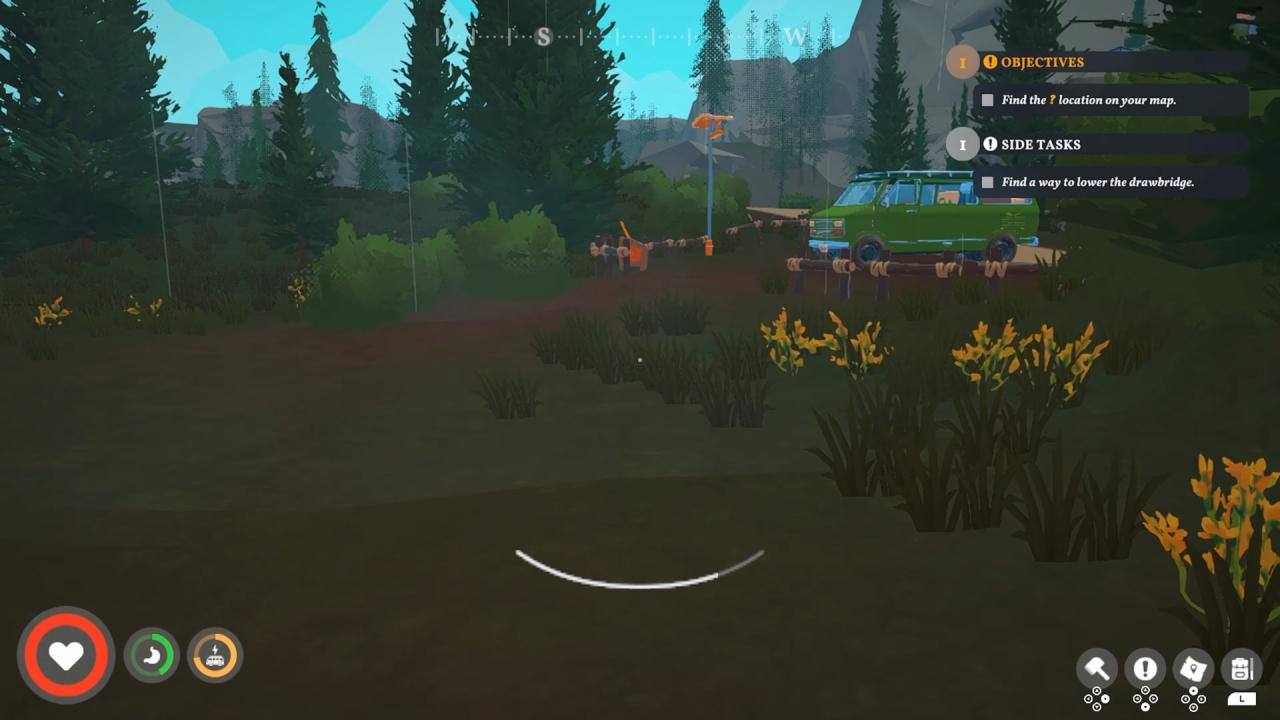
Outbound is at its best when it leans into its core fantasy: a peaceful, mobile life based on exploration, sustainability and creative building. The camper van customization system is awesome, with surprising depth and freedom. The world is beautiful and the atmosphere is always soothing.
The biggest challenge, though, is pacing. Travel is slow, progress can seem monotonous, and the world lacks enough dynamic activity to sustain long solo sessions. Performance issues also hurt immersion, particularly on Switch, with frequent frame drops and pop-in. The experience underneath all of this is still compelling.
At around £19.99, the game offers a solid amount of content, especially for players who enjoy cozy survival systems or co-op exploration. Multiplayer, in particular, significantly elevates the experience. Outbound is not perfect, and it never quite reaches its full potential, but it delivers a unique and relaxing journey that many players will appreciate if they understand exactly what is going on.
Staff Writer, NoobFeed
Verdict
Outbound is a beautiful, cozy vanlife simulator with excellent building and atmosphere, held back by pacing and performance issues.
71
Related News
No Data.