
ROG Ally X vs. Legion Go 2: Is the Upgrade Worth It?
Legion Go 2 introduces refined design and display upgrades while delivering only modest performance gains over the ROG Ally X.
Hardware by Masaru Hoshino on Oct 07, 2025
With the new Lenovo Legion Go 2 coming out, the competition in the handheld gaming market is getting even tougher. It will go up against ASUS's ROG Ally X. Both devices have their own strengths.
One has a beautiful OLED display, while the other has great value and mature driver support. The Legion Go 2 costs a lot because it has the most up-to-date features. The ROG Ally X is still a good choice, especially if you buy it used or in an open box.
Let's look at the main differences, benchmark results, and in-game performance to see how these two handhelds stack up against one other.
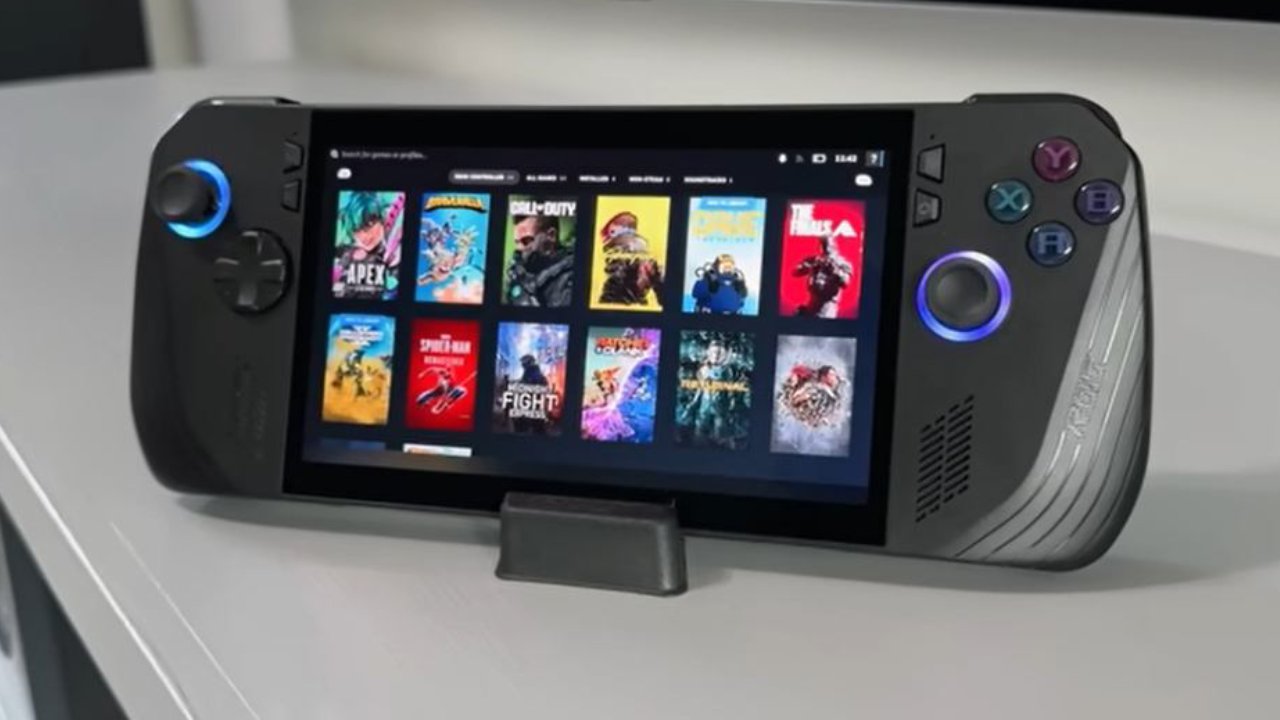
APU and Hardware Comparison
At the core of this comparison are two AMD APUs that define performance. The ROG Ally X features the AMD Ryzen 7 5800X3D, based on the Zen 4 architecture.
It features 8 cores and 16 threads, with a base clock of 3.3GHz and a boost clock of up to 5.1GHz, paired with a 12-compute unit RDNA3 iGPU that operates at up to 2900MHz. The Ally X also comes with 24GB of RAM running at 7500MT/s.
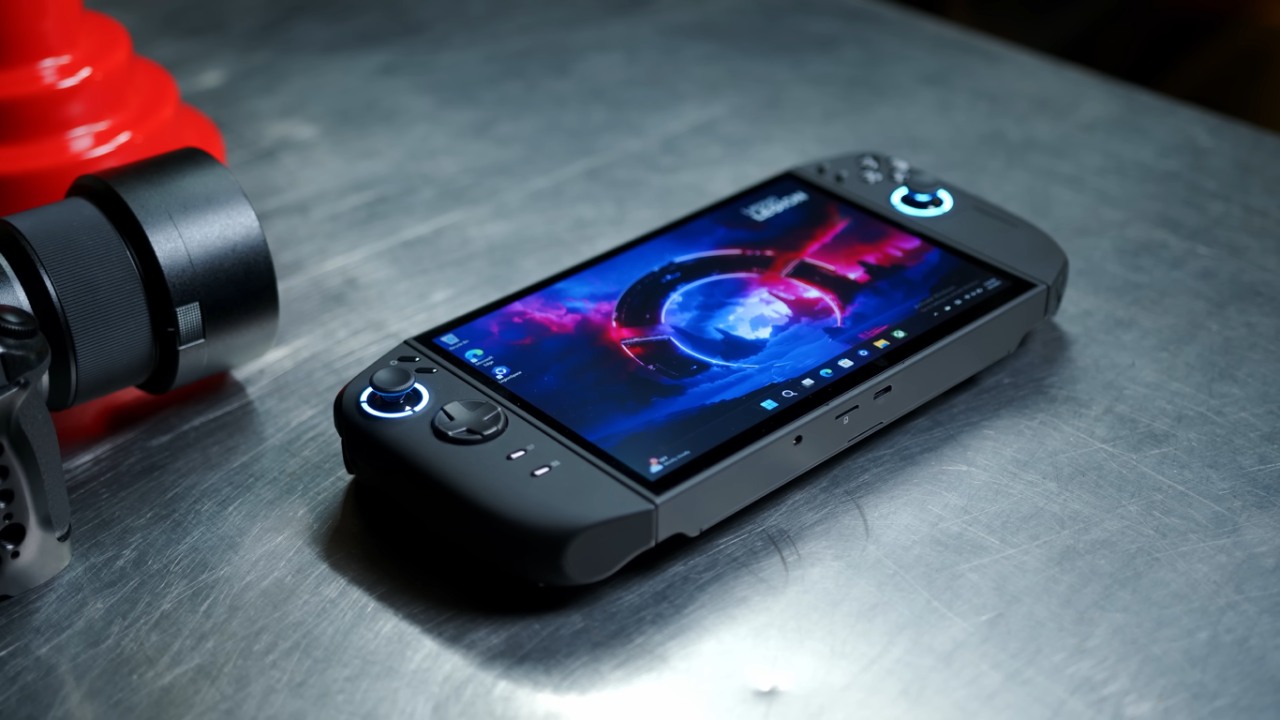
On the other hand, the Legion Go 2 is powered by the AMD Ryzen Z2 Extreme, built on Zen5 architecture. It's also an 8-core, 16-thread chip, but configured differently with 3 Zen 5 cores and 5 Zen 5C cores.
The base clock operates at 2 GHz, with Zen 5 cores capable of boosting up to 5 GHz and Zen 5C cores reaching 3.3 GHz. The iGPU here is a 16-compute unit RDNA3.5-based 890M GPU clocked up to 2900MHz, paired with 32GB of RAM running at 8000MT/s.
Driver maturity is another factor worth noting. The Z1 Extreme benefits from well-optimized drivers that have been developed over time, while the Z2 Extreme, although newer, continues to receive ongoing optimization improvements.
Synthetic Benchmark Results
We began with Geekbench 6 to evaluate CPU performance. Running both devices at 17W and 25W TDP levels, the ROG Ally X managed a single-core score of 1,795 and a multi-core score of 7,922 at 17W. Interestingly, it outperformed the Z2 Extreme in single-core performance but fell behind in multi-core tests.
When pushed to 25W, the Z2 Extreme reached a 2,775 single-core score and over 11,000 in multi-core, surpassing the Z1 Extreme in both categories.
For GPU testing, Geekbench 6's OpenCL benchmark showed the Z1 Extreme's 12CU RDNA3 iGPU scoring 27,887, while the Z2 Extreme's 16CU RDNA 3.5 GPU achieved 32,831.
The Ally X got 485 points at 4.86FPS in 3DMark Steel Nomad at 25W TDP, while the Legion Go 2 got 571 points at 5.72FPS. The Ally X got 2,539 points at 17W and 3,737 points at 25W in 3DMark Time Spy, whereas the Legion Go 2 got 2,5917 points and 3,528 points, respectively.
These results reveal that the Z2 Extreme makes small improvements, but they aren't game-changing.
In-Game Performance Benchmarks
When testing in real-world gaming scenarios, we ran both handhelds side by side at 25W and 17W TDPs. The Legion Go 2's advanced cooling system performed admirably, maintaining lower temperatures than the Ally X—however, results varied by title.
In Cyberpunk 2077, the ROG Ally X actually came out slightly ahead at 25W, averaging 42.66FPS compared to the Legion Go 2's 41.32FPS. At 17W, the tables turned, with the Legion Go 2 averaging 36FPS while the Ally X dropped to 32FPS.
For Shadow of the Tomb Raider (low settings, 1080p), the Legion Go 2 led with 64FPS at 25W compared to the Ally X's 59FPS. At 17W, both devices tied at 44FPS.
Forza Horizon 5, at medium settings and 1080p, showed a similar pattern. The Ally X achieved 76FPS at 25W, while the Legion Go 2 reached 80FPS. Dropping to 17W, the Ally X ran at 62FPS and the Legion Go 2 at 73FPS.
In Black Myth: Wukong, without frame generation enabled, the Legion Go 2 outperformed with 50FPS versus the Ally X's 44FPS at 25W. At 17W, the Legion Go 2 maintained 42FPS while the Ally X dropped to 33FPS.
Lastly, in Horizon Zero Dawn Remastered, both handhelds struggled due to the game's demanding graphics. The Ally X averaged 30FPS, while the Legion Go 2 slightly edged ahead at 31FPS.
Cooling and Power Efficiency
Thermals are quite important for how well portable games work. The Legion Go 2's cooling mechanism worked better, keeping temperatures lower even with the same 25W TDP as the Ally X.
This makes the boost clocks more stable and the performance more consistent, especially when playing games for a long time.
Display and Design Advantage
While performance differences may not justify an upgrade for many, the Legion Go 2 shines in display quality. Its 8.8-inch OLED panel supports up to 144Hz with variable refresh rate (VRR), making it one of the most visually impressive handheld screens available.
Combined with detachable controllers, it provides versatility and immersion that the Ally X lacks.
.jpg)
Final Thoughts
After extensive testing, we found that the AMD Ryzen Z2 Extreme does not deliver a major generational leap in performance over the Z1 Extreme.
Depending on the title, results can swing either way. If you already own the ROG Ally X or the original Ally, upgrading purely for performance reasons isn't necessary.
Legion Go 2's OLED screen and detachable controller design, on the other hand, let it stand out if display quality and construction versatility are more significant.
Both handhelds are great for gaming on the go, but the difference in performance between the Z1 Extreme and Z2 Extreme is still smaller than expected.
Check our Other Handheld Articles :
- ASUS ROG Ally X Handheld Review: Double the Battery, Double the Comfort
- Nintendo Switch 2 Vs. Original Switch 1: A Full Comparison
- How To Connect A Camera And Join Voice Chat With Nintendo Switch 2
- Nintendo Switch 2 Review: Handheld Performance, Features & Value Breakdown
- ROG Xbox Ally X Vs. ROG Ally X: Display, Battery & Controls
- ASUS ROG Ally X vs. Steam Deck OLED: Display, Battery & Gaming Benchmarks
- MSI Claw 8 AI+ Review: Display, Controls & Gaming
- Nintendo Switch 2 vs. Steam Deck OLED: Gaming, Performance, Battery, Display and Value
- PlayStation Portal Review: Remote Play, Cloud Streaming & Travel Gaming
- PlayStation Portal vs. Lenovo Legion Go: Best Portable Gameplay
- Cyberpunk 2077 Patch 2.3 FPS Test on MSI Claw 8 AI+
Editor, NoobFeed
Gaming Hardware Updates
No Data.