
Valve's 2025 Success Story: The $16.2B Platform that Outruns Tech Giants
Valve’s Steam platform achieves unparalleled revenue growth by combining platform dominance, efficient operations, and constant innovation in PC gaming distribution.
Hardware by Masaru Hoshino on Nov 26, 2025
With 3.6 billion users, the global games market is expected to reach $188.8 billion in 2025. But there is one gaming company that is more efficient, profitable, and likely to stay on top for a long time than all the others. This year, Valve's Steam platform has already generated more than $16.2 billion, surpassing the $15.3 billion it made in all of 2024.
With an estimated headcount of roughly 350 employees, the company's implied gross platform sales revenue per employee is approaching $50M. This level of productivity outclasses even the biggest tech giants, demonstrating the unparalleled financial engine Valve has built.

Steam's Market Strength and the 30% Cut
Valve's success is based on Steam's dominant control over PC game distribution. This year, the PC segment is predicted to bring in $39.9 billion. Steam has a 74–75% market share, making it the clear leader. We see the real influence of this dominance in Valve's simple yet incredibly effective platform cut: a 30% commission on every game sale, skin, and microtransaction, scaling down to 20% for the biggest titles.
Developers may critique this model, but the truth is that most players stay because the service is excellent. That loyalty is why we continue choosing Steam, and why devs want access to its huge paying audience. Valve has already earned more than $4B from Steam commissions and its own titles in 2025 alone—without having to create the majority of games on the platform. The infrastructure does the work, and the cash flow never stops.
Why Competitors Struggle to Catch Up
When we compare this with the Epic Games Store, the gap becomes dramatic. Epic's generous 88–12 split and strategy of giving away hundreds of free games have built nearly 300M registered accounts. Yet, they captured only 3% of third-party revenue in 2024. Most people use Epic only to claim free titles or play Fortnite.
Steam's 132M monthly active users, however, are paying customers. The friends list, game library, achievements, and community features create a network effect that is extremely difficult for any competitor to break. And according to documents from Valve's antitrust lawsuit, even major companies like Ubisoft, Microsoft, and Epic admitted their strategies failed to compete with Steam. They wanted to hide these details because revealing them would concern their shareholders.
Continuous Improvements That Keep Users Locked In
Critics often say Valve doesn't innovate enough, but the platform's constant refinement proves otherwise. Steam Beta and Steam Labs introduce experimental features that help us discover games more easily and stay engaged.
One recent example is the personal calendar, which tracks upcoming releases, wish-listed games, and new titles based on play activity. Instead of searching for what to play next, we automatically organize everything for you.
Even more important is Steam's evolving discovery engine. The machine-learning-powered interactive recommender analyzes play history and behavior to surface relevant games. Steam frequently tests new algorithms, with improvements resulting in up to a 15% increase in click-through rates and a massive 75% rise in the number of unique games visited. Better discovery means more sales, more revenue for developers, and a stronger ecosystem that keeps you inside Steam.
How 79 People Manage an Empire
A shocking revelation from court documents showed that, as of 2021, just 79 employees managed the entire Steam platform—from sales and support to networking and security. This level of efficiency is only possible because of Valve's flat hierarchy. There's no complex chain of command to slow down development. People work on what matters, and the results translate into staggering productivity.
That efficiency helps explain the estimated average employee compensation of $1.3M. Valve hires the best talent and pays for it because high-level contributors produce high-level results.
With gross margins reaching 80%, the revenue they generate per employee far exceeds what companies like Apple, Microsoft, or Meta achieve. At this point, Valve's only real competition in profitability per employee is OnlyFans.
Private Ownership and the Long Game
Valve's private ownership is another major reason behind its success. Without shareholder pressure, we make consumer-focused decisions rather than short-term financial strategies. Valve can afford to take creative risks—like investing heavily in VR, R&D, and new hardware such as the Steam Deck—because Steam's revenue covers it all.
Employees don't answer to investors; they answer to the customer. When a change is shipped, players can use it within minutes. That direct feedback loop keeps the platform evolving quickly.
Gabe Newell has explained that being public would introduce unnecessary complications. By staying private, Valve can focus entirely on what will make the ecosystem better rather than what will make shareholders happy.
Flat Structure and Talent Philosophy
Valve's famously boss-free structure still shapes the company today. We've heard many stories about people literally rolling their desks to whichever project they want to work on. While some projects now receive priority when needed, the core philosophy remains intact: talent should flow to where it will have the biggest impact.
Because Valve hires exceptionally skilled people, the contributions are enormous. They prefer to recruit top-tier developers, even if it costs more, because those individuals bring unmatched productivity. When you combine talent, freedom, and massive revenue inflow, you get one of the most efficient companies ever created.
Preparing for an Ecosystem War
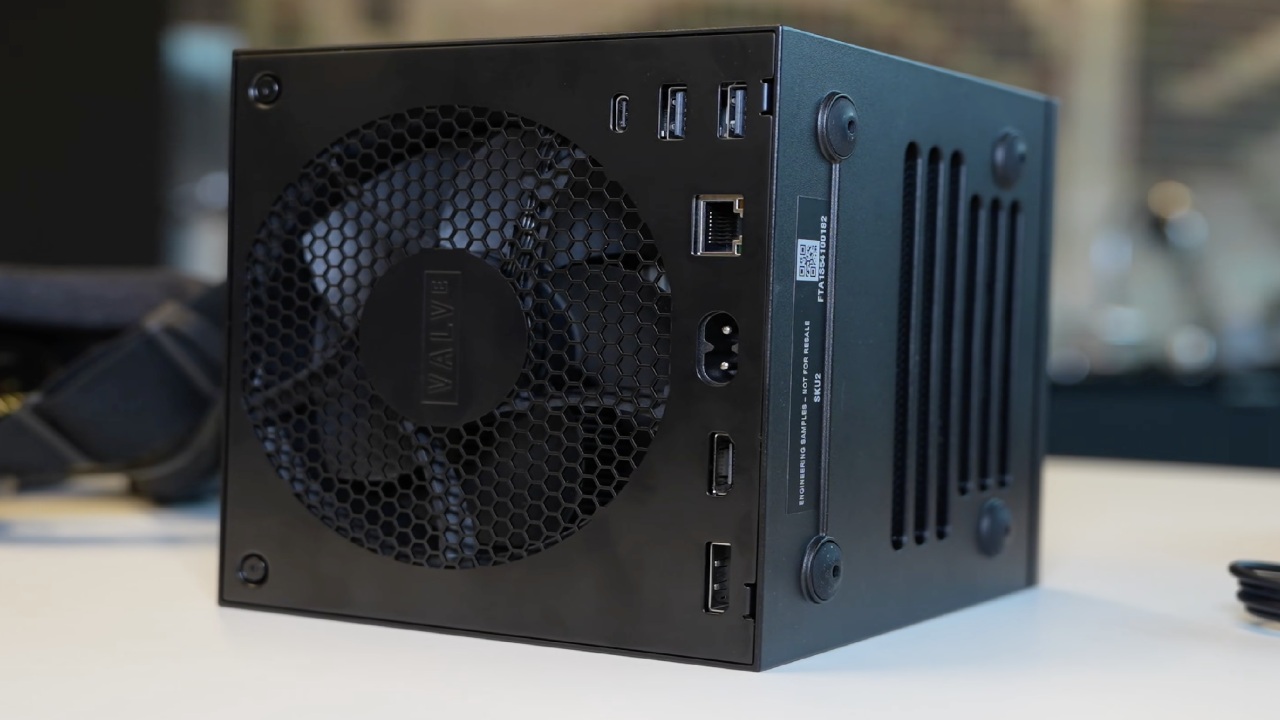
Although Valve could simply sit atop its 75% market share, the company continues to expand strategically. The announcement of the Steam Machine for 2026 positions Valve as a direct rival to traditional consoles and signals the shift toward an ecosystem war rather than a hardware battle.
Ironically, PlayStation's strategy of releasing games on Steam has only strengthened Valve. PlayStation studios have generated over $1.5B in gross revenue on Steam. Titles like Helldivers 2 reached incredible success, selling an estimated 12.7M copies and generating around $400M on Steam alone.
Steam's role as the premier game distribution platform grows with each major publisher that joins.
.jpg)
Power of Player Data
Valve's understanding of player data is perhaps its final advantage. Steam processes enormous amounts of information about buying habits, playtime, and engagement.
This data powers recommendations, helps developers understand their audiences, and guides Valve's decisions about new features or tools. Each improvement compounds their dominance.
A Company Built for Sustainable Supremacy
Valve's $16.2B revenue in 2025 is the product of a perfect combination: a near-monopoly platform, a lucrative 30% cut, world-class talent, a flat structure, constant iteration, and freedom from shareholder control. These elements create an ultra-profitable machine that few companies worldwide can match.
It's also why people misinterpret Gabe Newell's new $500M vessel, the Leviathan. It isn't a personal luxury toy but part of Inkfish, his marine research organization. The wealth generated by Steam fuels far more than just gaming—it supports scientific exploration and long-term innovation.
Also, check our other Handheld articles below :
- ASUS ROG Ally X Handheld Review: Double the Battery, Double the Comfort
- Nintendo Switch 2 Vs. Original Switch 1: A Full Comparison
- How To Connect A Camera And Join Voice Chat With Nintendo Switch 2
- Nintendo Switch 2 Review: Handheld Performance, Features & Value Breakdown
- ROG Xbox Ally X Vs. ROG Ally X: Display, Battery & Controls
- ASUS ROG Ally X vs. Steam Deck OLED: Display, Battery & Gaming Benchmarks
- MSI Claw 8 AI+ Review: Display, Controls & Gaming
- Nintendo Switch 2 vs. Steam Deck OLED: Gaming, Performance, Battery, Display and Value
- PlayStation Portal Review: Remote Play, Cloud Streaming & Travel Gaming
- PlayStation Portal vs. Lenovo Legion Go: Best Portable Gameplay
- Cyberpunk 2077 Patch 2.3 FPS Test on MSI Claw 8 AI+
Editor, NoobFeed
Gaming Hardware Updates
No Data.