
AMD Ryzen X3D Gaming CPUs Compared: 9850X3D 9800X3D 7800X3D
Benchmark results reveal real-world differences between Ryzen 9850X3D, 9800X3D, and 7800X3D at 1080p testing
Hardware by Nahe Yan on Jan 31, 2026
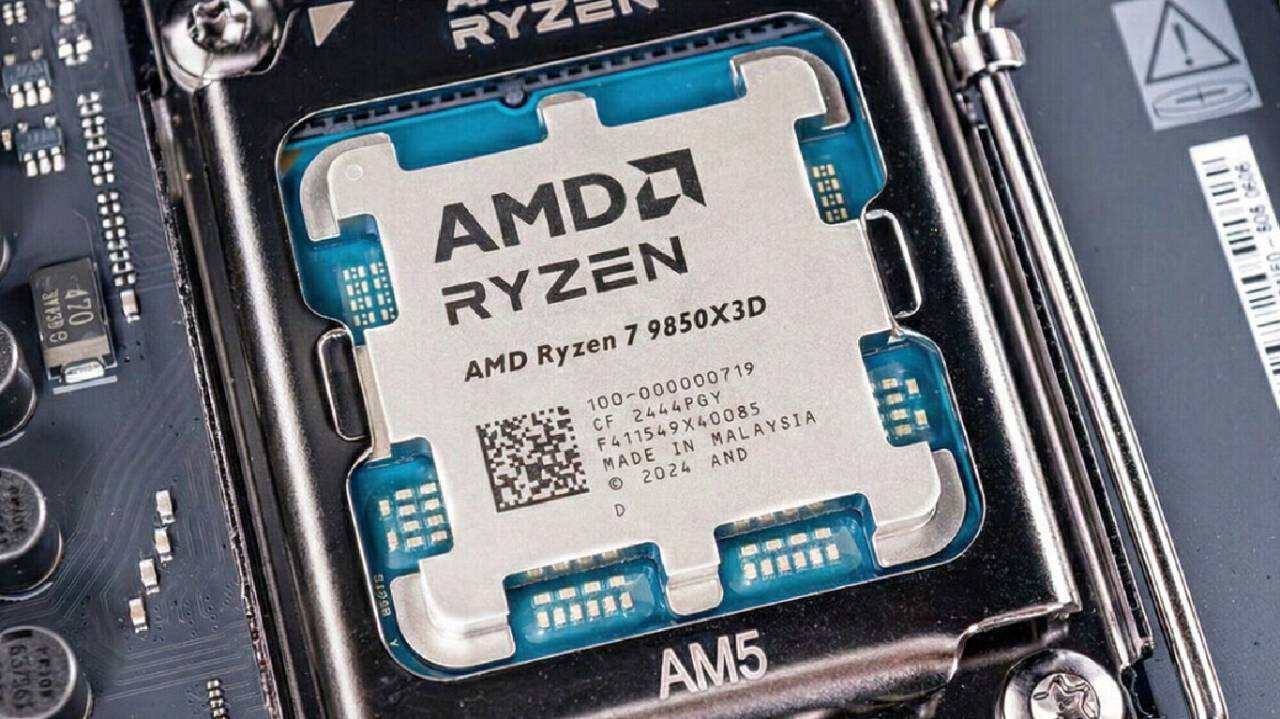
A three-way comparison shows how the new Ryzen 7 9850X3D stacks up against the older but still relevant 7800X3D and the prior flagship 9800X3D. We tested all CPUs on the MSI X870 Carbon motherboard and used an RTX 5090 to eliminate GPU limits. We tested each game at 1080p to determine how fast the CPU could run before the workload shifted to the graphics card.
The first half compares gameplay directly across several games. In contrast, the second half examines performance using graphs that combine data from many games and considers the system as a whole.
How well Fortnite Works
We used the high preset to test Fortnite. 9850X3D obviously wins in this title, with an average of almost 20 fps higher than the 9800X3D. The 1% lows are still about the same for both, but the 9850X3D has a little lead. 7800X3D still runs well, averaging 324 fps, but the difference between it and the 9850X3D is clear. Aside from the price, the 9850X3D is clearly the better choice because of its higher performance.
Results for ARC Raiders
ARC Raiders, which runs at the high preset, has a smaller gap because it loads more graphics. 9850X3D averages only 4 additional fps over the 9800X3D, which isn't much. 7800X3D is 14 fps behind the 9850X3D. The 1% lows, on the other hand, reveal a different tale. 9850X3D has about 30fps higher lows than the 7800X3D, which makes the frame delivery smoother, even if all results are over 200fps.
Benchmarks for Cyberpunk 2077
The extreme preset was used to test Cyberpunk 2077. 9850X3D and 9800X3D are quite similar in performance here, with an average difference of only 6 fps. 9800X3D really beats the 1% lows in some settings. These findings are affected by the scene's complexity, the number of NPCs, and the number of vehicles. The 9850X3D acts more like a faster version of the 9800X3D than a new generation.
The Veil Guard in Dragon Age
When the extreme preset is turned on, Dragon Age: The Veil Guard gives the 9800X3D a little average FPS victory. There isn't much of a difference between the two ninth-generation CPUs, and it's probably within the range of run-to-run variation. 7800X3D falls behind in this title, especially when paired with an RTX 5090. This shows that scaling doesn't work well at the high end.
A Look at Hogwarts Legacy
We tried Hogwarts Legacy with the extreme preset, focusing on the Hogsmeade section, which puts a lot of strain on the CPU. 9850X3D is about 10fps faster than the 9800X3D in both average FPS and 1% lows. 7800X3D drops significantly, averaging about 150 fps compared to 188 fps and 198 fps from the ninth-generation CPUs. This test runs at 1080p, although higher resolutions reduce CPU load and close these gaps.
Results for Horizon Forbidden West
At the highest level, Horizon Forbidden West doesn't show much difference between the three CPUs. 9850X3D and 9800X3D switch places depending on the scene, but the 7800X3D stays a little behind and still averages over 200 fps. The 1% lows are higher on the ninth-generation CPUs, at about 160 fps, than on the 7800X3D, which is at 145 fps. However, all of the findings are still well within the range of smooth gaming.
How well Returnal Works
Ray tracing was enabled for the Epic preset in Returnal. 9850X3D and 9800X3D have almost identical average FPS, but the 7800X3D is a little behind. When you enable ray tracing, the GPU has to do more work, making the CPU less important. In this case, all three CPUs work well enough, with no real difference between them.
Benchmarks for Counter Strike 2
Counter Strike 2 makes CPU scaling more noticeable. 9850X3D averages around 90 fps more than the 7800X3D on the Anubis map's high preset. The 1% lows are the same for all CPUs, but the 9850X3D is still ahead by a wide margin. The performance difference between the 9850X3D and 9800X3D is minimal; upgrading from one to the other for this game alone isn't as appealing.
The Price Situation
7800X3D costs about $375, the 9800X3D costs about $450, and the 9850X3D is estimated to cost $499. With a high-end GPU, the 9800X3D can give you a big boost over the 7800X3D in several games. 9850X3D, on the other hand, costs about $50 more than the 9800X3D and offers only modest performance gains.
Comparisons Based on Graphs
In Counter-Strike2, all ninth-generation Ryzen CPUs beat the 7800X3D, even though the 9700X has higher average FPS but lower 1% lows. The 9850X3D wins by a lot in Fortnite, with an average of 18 fps more than the 9800X3D and 67 fps more than the 7800X3D. When combined with an RTX 5090, Hogwarts Legacy shows that the gap between the 7000-series and 9000-series X3D CPUs is widening.
Learning about CPU Ceilings
As the resolution and settings increase in graphically demanding games, the performance gap between CPUs narrows. This moves the bottleneck to the GPU. Testing at 1080p removes that constraint and shows the highest FPS a CPU can deliver. If a CPU can only handle 150 fps at 1080p, it won't be able to handle greater resolutions.
In this case, choosing the right monitor is really important. If the CPU ceiling is lower than 240 Hz or 360 Hz, the display can't be used to its full potential. Different game engines have different ceilings. Esports games like Counter-Strike2 let CPUs reach very high frame rates. On the other hand, big open-world games put more stress on AI, physics, and world simulation, which lowers the ceiling for those areas.
Finding the Right Balance between CPU and GPU Choices
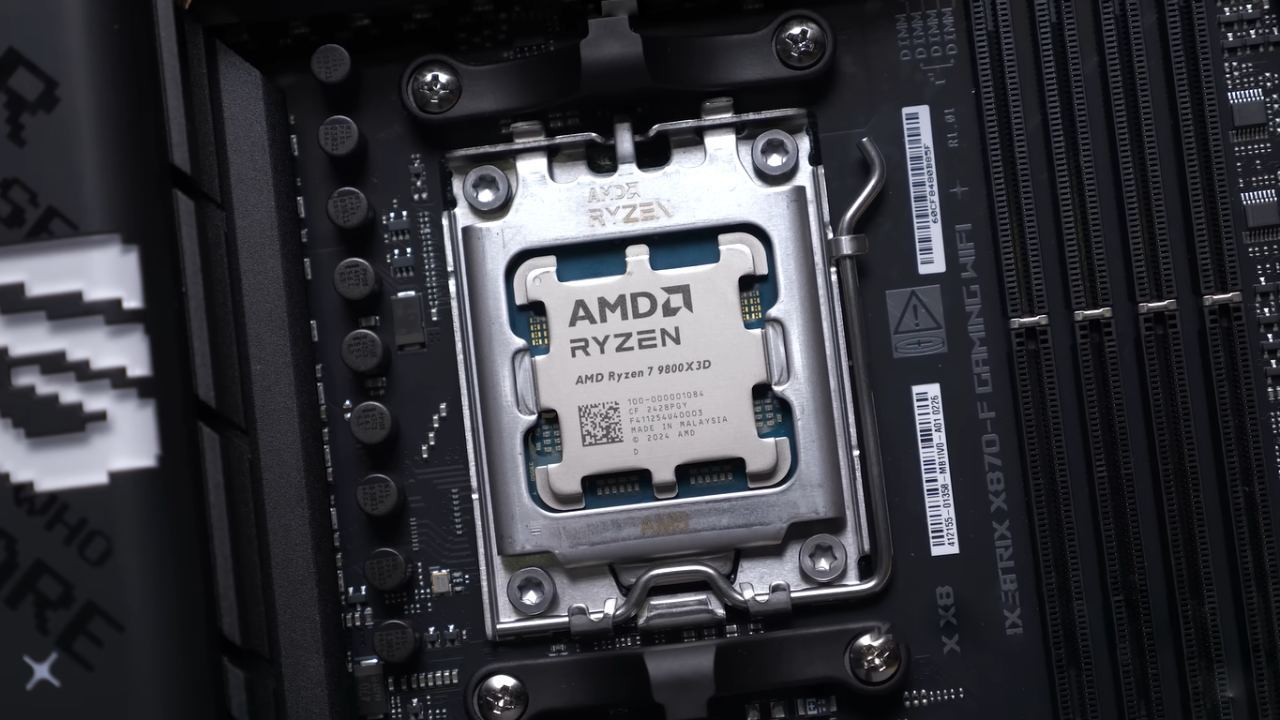
These numbers show the fastest CPU speed that an RTX5090 can achieve. It will be harder to tell the difference if your GPU is slower. 9850X3D is the fastest gaming CPU on the market, but it isn't the best bargain. When combined with mid-range GPUs, CPUs like the 9700X and 9600X frequently work well together.
If you spend $500 on a CPU, you might have to make compromises on the graphics card, such as choosing a lower-tier GPU. Most of the time, upgrading the GPU gives you better graphics right away than upgrading the CPU. When you have the greatest GPUs, high-end CPUs work best.
Final Thoughts
9850X3D is around 16% faster than the 7800X3D and about 3% faster than the 9800X3D on average. It also costs about 11% more than the 9800X3D. Instead of being a big change in generations, it works well as a slightly improved 9800X3D.
Also, check our other AMD articles below:
- AMD Ryzen 9 9950X3D Review: Setting The Standard For 2025 Gaming CPU
- AMD Ryzen 7 9800X3D Review: 3D V-Cache Goes God Mode with Stunning Gaming Performance
- AMD RX 9070 Performance Review: Thermals, Clocks, and Real-World FPS
- AMD Ryzen 5 7600 Review: Best Budget Gaming CPU of 2025?
- AMD Radeon RX 7800 XT Review: RDNA 3 Power For Midrange Gaming
- Sapphire NITRO+ AMD Radeon RX 9070 XT Review: The Ultimate 4K Gaming GPU
- AMD Ryzen 7 7800X3D: Delivers Gaming Performance Far Beyond Expectations
- AMD Ryzen 9 7900X Review: Powering the AM5 Era with DDR5 & PCIe 5.0
- Intel Core i9‑14900K vs. AMD Ryzen 7 7800X3D: Power Profiles & Gaming Benchmarks
Editor, NoobFeed
Gaming Hardware Updates
No Data.