
Lenovo Confirms Legion Go Z1 Extreme Will Receive Updates Until October 2029
Lenovo confirms continued Legion Go driver and BIOS support until October 2029 following rumors about AMD Z1 Extreme support ending.
Hardware by Tanvir Kabbo on Mar 10, 2026
Recent talks about AMD's Z1 Extreme devices and whether they will still be supported in the future have left the portable gaming community confused.
Online rumors said that these devices would soon stop getting driver updates and long-term maintenance. But new information indicates that support will continue for several more years, especially for the Legion Go platform.
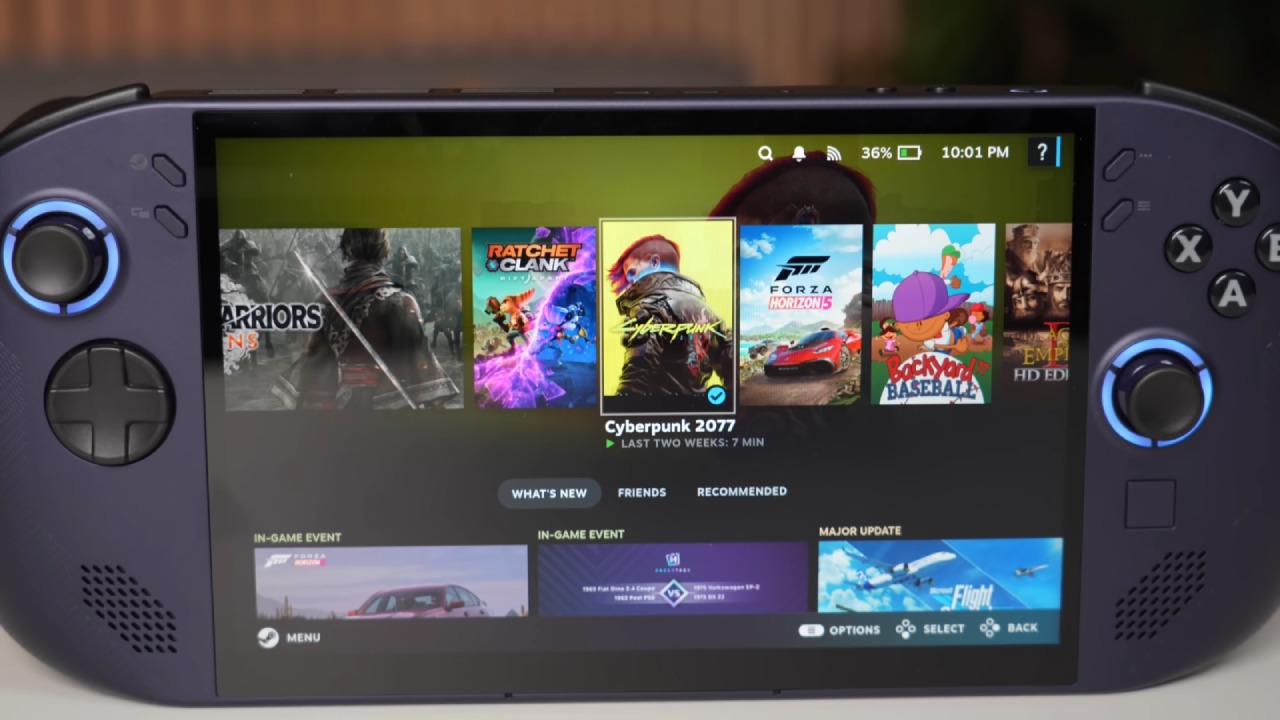
Rumors About Support Ending
Last week, there was a lot of discussion about Lenovo and AMD potentially ending support for Z1 Extreme chips and devices for driver updates and related software. When we talked about this earlier, we mentioned that the claims should be taken with a grain of salt because the information came from only a couple of sources.
One source was a customer support post, and the other came from Reddit discussions about AMD. At the time, the information appeared vague and region-specific, which made it difficult to confirm whether support was actually ending.
Now it looks like Lenovo is clarifying the situation. According to new statements, the company is not planning to stop support for the Legion Go. Instead, Lenovo says the device will continue receiving driver and BIOS updates through October 2029, which aligns with the support window originally mentioned when the device launched.
Where the Confusion Started
The rumors about the original Legion Go losing driver support began after a translated customer service message circulated on forums and Reddit. Some posts even claimed that AMD was ending driver development for Ryzen Z1 Extreme devices.
However, the original message itself was vague and appeared to be specific to a certain region. When we looked at it earlier, it was already clear that the wording did not necessarily confirm a full end of support. The message mainly stemmed from a single customer support response, leaving room for misinterpretation.
As the discussion spread online, many articles began reporting that AMD was cancelling support for the Z series chips, even though that claim largely stemmed from speculation rather than the original message.
AMD's Role in Driver Support
It is also important to understand how AMD has handled these chips historically. AMD has never directly supported the Z series chips with public driver updates, unlike desktop graphics cards.
The Z1 Extreme and other Z-series chips typically rely on OEMs like Lenovo to package and distribute drivers after testing and validation. Because of that structure, driver availability has always depended on the OEM update cycle rather than AMD's direct release schedule.
So when people started saying AMD was ending support, it didn't make much sense, because AMD had never directly supported these devices with consumer-downloadable drivers in the first place.

Lenovo Confirms Ongoing Support
A clearer picture emerged after a journalist contacted Lenovo directly and received an official statement. Lenovo confirmed that the Legion Go has not been discontinued and that driver and BIOS updates will continue through October 2029.
According to the statement, Lenovo is still actively supporting the Legion Go with necessary driver and BIOS updates. The company also confirmed that it works closely with AMD when preparing these updates.
The process involves coordination with AMD, followed by Lenovo's internal testing and validation before the drivers are released publicly.
Driver Release Cadence Concerns
While the confirmation of long-term support is good news, it does not necessarily mean that updates will arrive quickly. Lenovo's driver update track record for the Legion Go has historically been slow.
In fact, the most recent AMD graphics driver package listed on the Lenovo support portal for the Legion Go is dated September 1, 2025. That same driver was already mentioned earlier this year during a broader update discussion about the device.
If you buy handheld gaming PCs expecting frequent Windows driver updates similar to desktop GPUs, the OEM driver path rarely matches that pace. Updates for these devices often arrive months apart rather than on a rapid release schedule.
Comparison With Direct AMD Driver Support
Devices using newer chips that AMD supports directly offer a different experience. For example, platforms using newer processors allow users to download drivers straight from AMD's website without waiting for an OEM.
That approach means you can update through AMD's software or download the newest drivers immediately after release. There is no need to wait for a manufacturer to test and publish a separate package.
Unfortunately, the Legion Go does not follow that model because the Z series chips rely on OEM-validated drivers.
Risks of Installing Generic Drivers
Some users attempt to install AMD's universal drivers directly as a workaround for slow updates. While that option technically exists, it is not recommended for the Legion Go.
Installing generic drivers bypasses Lenovo's testing process and can lead to compatibility problems or unexpected behavior. In some cases, users may need to manually clean up driver installations if issues occur.
Earlier guidance from customer support even mentioned using AMD's generic drivers as a potential solution. Still, the recommendation came with warnings about unsupported configurations.
.jpg)
AMD Restrictions on Sideloaded Drivers
AMD has also made sideloading drivers more difficult compared to earlier methods. In the past, some users installed drivers intended for other chips, such as the 7840U, to improve compatibility.
Now most of those workarounds have been blocked, and the remaining universal drivers do not always work well with the Legion Go. As a result, relying on unofficial driver installations is generally unreliable.
Long-Term Support Does Not Guarantee Frequent Updates
Lenovo's confirmation of support through October 2029 does not automatically mean the device will receive frequent updates. Historically, GPU driver releases for the Legion Go have appeared every 6–9 months at best.
At that pace, the device could receive only a handful of driver updates over the next few years. In 3 years, users might see only 3–5 GPU driver releases if the current pattern continues.
That slow cadence can create problems for newer games that require updated drivers or performance optimizations.
Similar Issues With Other Z Series Devices
The slow update cycle is not limited to the original Legion Go. Other handheld devices using Z series chips face similar challenges because they rely on OEM-validated driver packages.
Even newer devices in the lineup have launched with older driver versions and have not yet received rapid updates. As of March 2026, some models are still running drivers from September.
This suggests that the issue is not limited to a single manufacturer but affects the broader Z-series handheld gaming PC ecosystem.
What Needs to Improve
Ideally, AMD and the OEM manufacturers would find a better way to deliver updates more frequently. Even a quarterly update schedule would help ensure that newer games work properly and receive necessary optimizations.
Faster driver updates could prevent compatibility issues and keep handheld gaming PCs running smoothly as new titles are released.
For now, though, the key takeaway is that the Legion Go is still supported and will continue receiving updates through October 2029, even if those updates arrive less frequently than many users would prefer.
Also, check our other hardware articles:
- AMD Ryzen 9 9950X3D Review: Setting The Standard For 2025 Gaming CPU
- Amazon Luna 2025 Review: Is Prime Gaming's Cloud Service Your Go-To For Casual Fun?
- AMD RX 9070 XT Review: AMD's RDNA 4 Champion for 1440p Gaming
- GeForce Now Ultimate: Ditching Your Gaming PC For Cloud RTX 4080 Power?
- NVIDIA GeForce RTX 5080 Review (2025): Still A 4K Gaming Powerhouse?
- Intel Core Ultra 9 285K Review And Performance Breakdown (2025)
- AMD Ryzen 7 9800X3D Review: 3D V-Cache Goes God Mode with Stunning Gaming Performance
- Intel Core Ultra 9 285K vs AMD Ryzen 7 9800X3D: In-Depth Gaming Performance and Benchmark Comparison
- NVIDIA GeForce RTX 5080 Super Performance In Cyberpunk 2077: Path Tracing & DLSS 4.0 Tested
- AMD Radeon RX 9070 XT In Cyberpunk 2077: Ray Tracing & FSR 4.0 Tested
- Intel Arc B580 Review: The $250 GPU Revolutionizing 1440p Gaming
- Intel Arc B570 Vs. B580: Value, Specs, And Real-World Gaming Performance
- RTX 5090 Laptop Vs. M4 Max MacBook Pro: Ultimate Raw Performance Vs. Battery Endurance
- Intel Arc b580 Vs. RTX 4060: Game Performance And Value Analysis
- RTX5090 Hell Is Us Demo 4K Ultra Benchmark: DLSS Vs. Native Performance Guide
- NVIDIA RTX 5070 Review: Mid-Range Muscle or Marketing Hype?
- Nintendo Switch 2 Review: Handheld Performance, Features & Value Breakdown
- RTX 5070 Ti Review: Performance, Thermals & Power Efficiency Tested
- Samsung Odyssey OLED G81SF Review 2025: Ultimate 32-Inch QD-OLED Gaming Monitor
- AMD RX 9070 Performance Review: Thermals, Clocks, and Real-World FPS
- AMD Ryzen 5 7600 Review: Best Budget Gaming CPU of 2025?
- AMD Radeon RX 7800 XT Review: RDNA 3 Power For Midrange Gaming
- Asus ROG RTX 5090 Astral OC Vs. Founders Edition: The 4K Gaming Benchmark
Senior Editor, NoobFeed
Gaming Hardware Updates
No Data.