
The Rogue Prince of Persia Review
PlayStation 5
You’re not just fighting enemies—you’re mastering movement in one of the most fluid action roguelites in years.
Reviewed by Mahi Araf on Mar 22, 2026
You don’t walk into The Rogue Prince of Persia expecting subtlety—you walk in expecting speed, precision, and that addictive “one more run” loop. And if you’ve spent any time with Dead Cells, you already know why that expectation exists. Evil Empire, the team that helped shape modern roguelite classics through their work on Dead Cells, is back again, this time working with Ubisoft to reimagine Prince of Persia in a way that leans heavily into movement, replayability, and fast‑paced combat.
In the traditional sense, it's not a sequel, but it does feel like a continuation of ideas, like the next step in a formula that has already been shown to work. The Prince of Persia identity changes things, which is what makes this interesting. The game doesn't just build on Dead Cells; it also goes deeper into platforming, parkour, and environmental combat.
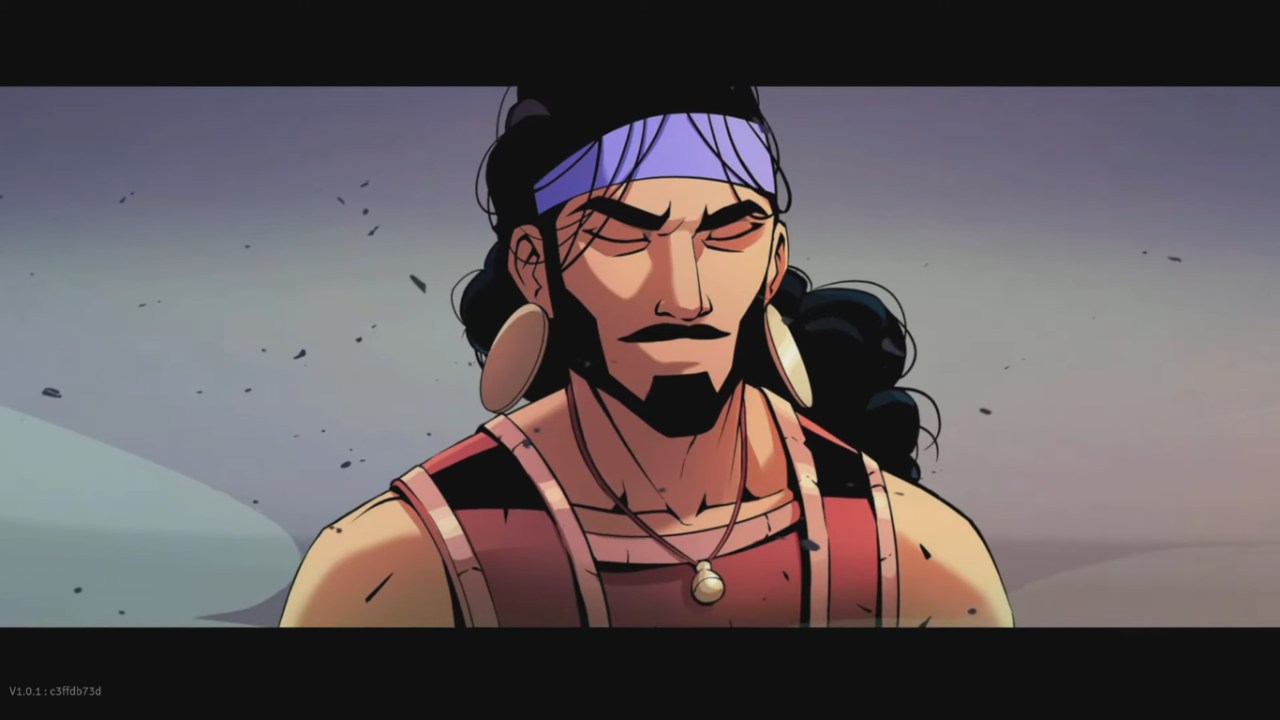
It tries to make its own space while still keeping that familiar DNA. This isn't just another roguelike game with a Prince of Persia theme. It's a game that really tries to answer the question, "What happens when movement isn't just a tool, but the main event?" And for the most part, it works.
The narrative establishes a mood that is both timeless and marginally unconventional. Rather than gradually raising the stakes, you are thrown into failure too soon. When you confront the Huns' leader, King Noai, things don't go well. Very, very badly. Pachchi, an enigmatic character, is the only reason you survive after being vanquished and on the verge of death.
The central mechanic comes into play at this point. In keeping with the roguelite structure, you are brought back through a magical bola that allows you to rewind time after death. Every run is a part of the narrative, not just a retry.
As you move through different biomes, you start collecting clues, meeting characters, and gradually piecing together what’s happening to Persia. The mind map system helps track all of this, giving you direction between runs instead of leaving you guessing. You’ll encounter allies like a blacksmith who can turn blueprints into weapons for future attempts, and you’ll slowly build out a hub area that reflects your progress.
The structure is smart, but it doesn't always work perfectly.
Sometimes the story doesn't seem to go in the right direction. You might find something important in one run, but the game will act like it's new information the next time you play. This does make it harder to believe that the choices you make and the things you find out are really changing the story in a big way. The Prince himself talks about places and memories throughout the story.
These parts are nice, but they don't always have the same impact as they could. The story works, but that's not why you're here. The key appeal of a roguelite, especially from the team behind Dead Cells, is the combat. The prince is proficient in several different arms, from the hard‑hitting Tibar to the royal sword for quick and easy melee combos.
Each weapon also has a special attack that’s unleashed by charging the button, resulting in all kinds of unique effects, from dashing through enemies to poisoning them from afar.
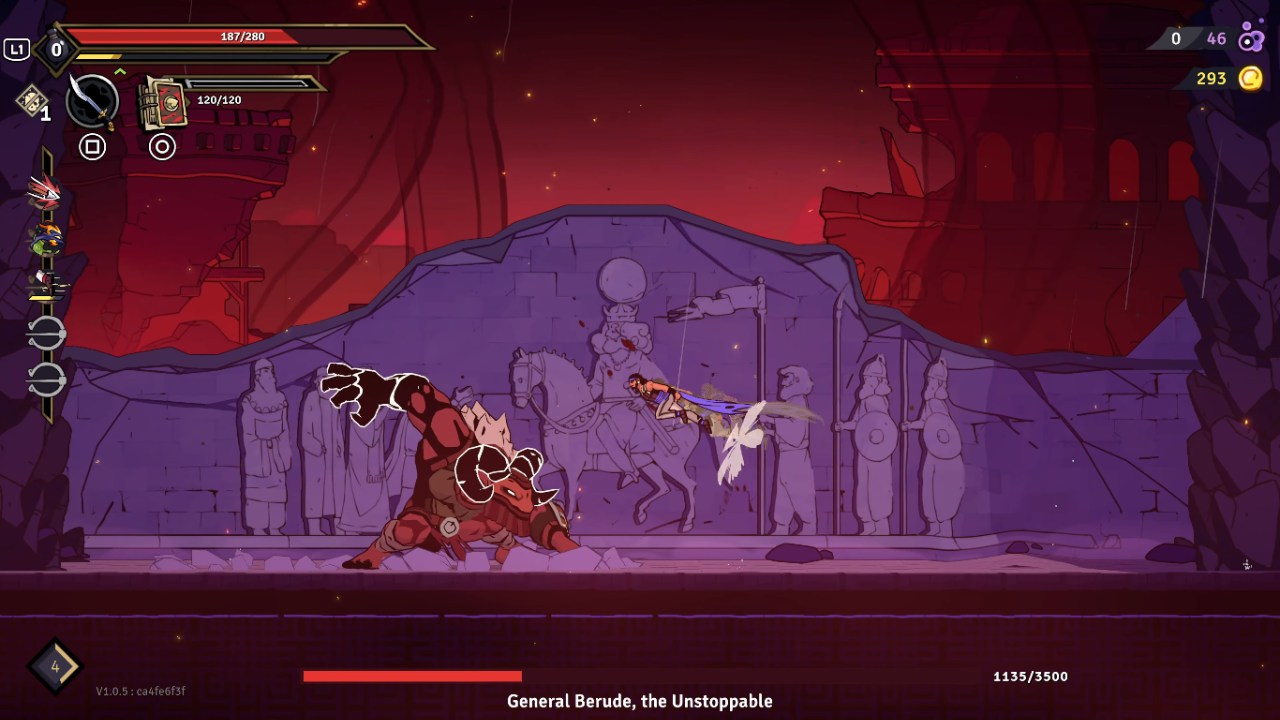
But there are some big differences between this game and Dead Cells, even though they have a lot of the same bones, such as the ground slam from midair. You can kick your enemies into danger or each other, which is important for getting past their defenses quickly. The Prince doesn't just dodge past them; he jumps over them in an acrobatic way, which lets him attack and move around in midair.
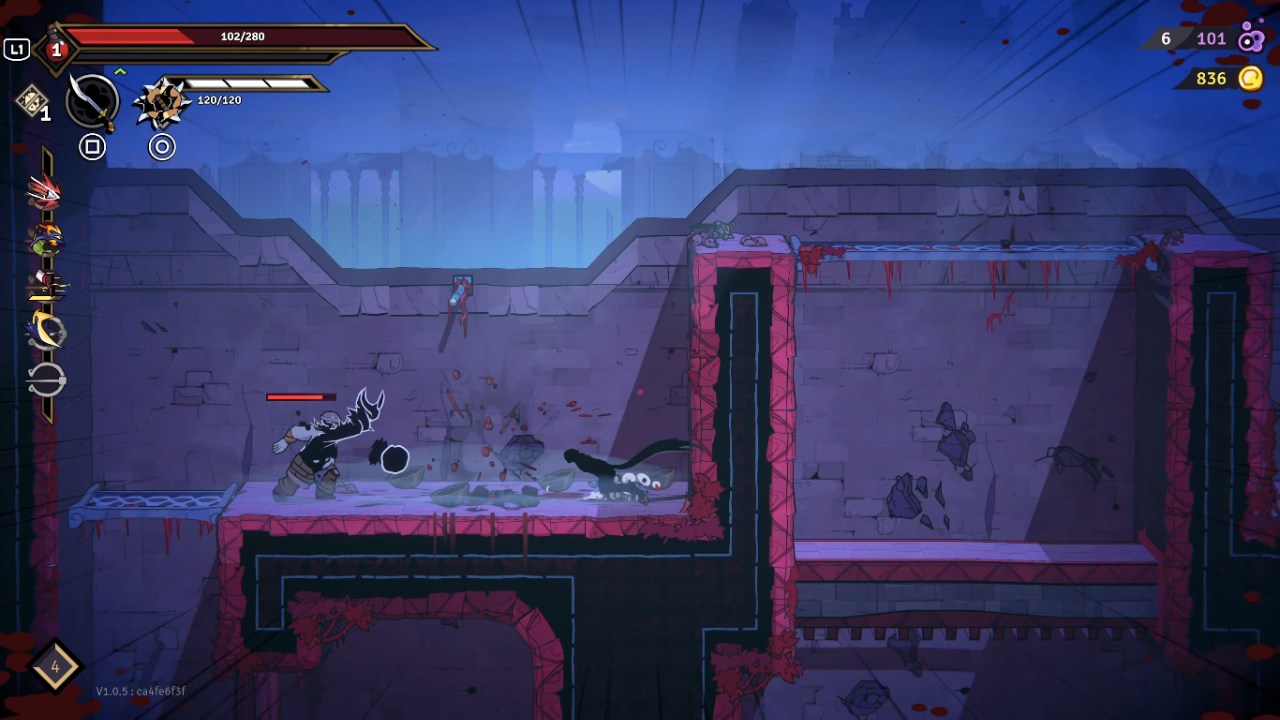
There’s a heavier emphasis on leveraging the environment and outwitting your enemies. From their exploding projectiles to the lack of self‑preservation, it can take some getting used to, especially when attempting to interrupt a combo mid‑slice because your opponent didn’t outright die from the last one, and you should have vaulted over them to dodge their next attack.
The other difference is the lack of a second main weapon.
Instead, you have tools, from a bow and arrow and a chakram to a saw blade and even armaments from bosses, which all rely on energy. Main weapon attacks restore that energy. But this overall setup, even with so many options available, does feel like a step back from Dead Cells’ build variety.
That’s even more apparent when equipping medallions, which bestow passive benefits. While you no longer have to rearrange their positioning or calculate ahead of time where each medallion should slot in, the current system feels like it’s lacking something. I don’t mind increased weapon damage, increased special damage, or my favorite, more damage dealt and received. It’s just picking up a left and right medallion to stack certain benefits, which feels too basic.
There are some strong synergies, but I kind of miss the risk of strongly pivoting from one build to another in Dead Cells because you happen to find a higher-level weapon or something that feels better. Such instances are reserved for hyper-specific builds leveraging statuses like poison or fire damage over time.
As annoying as balancing three core stats could be, the additional layer of strategy they lent to build crafting and mutations is also missed. Instead of the latter, you have more traditional skills unlocked across runs with skill points, offering the usual increased health, an additional healing potion, and the chance, once on death, to revive with half HP, a la Hades.
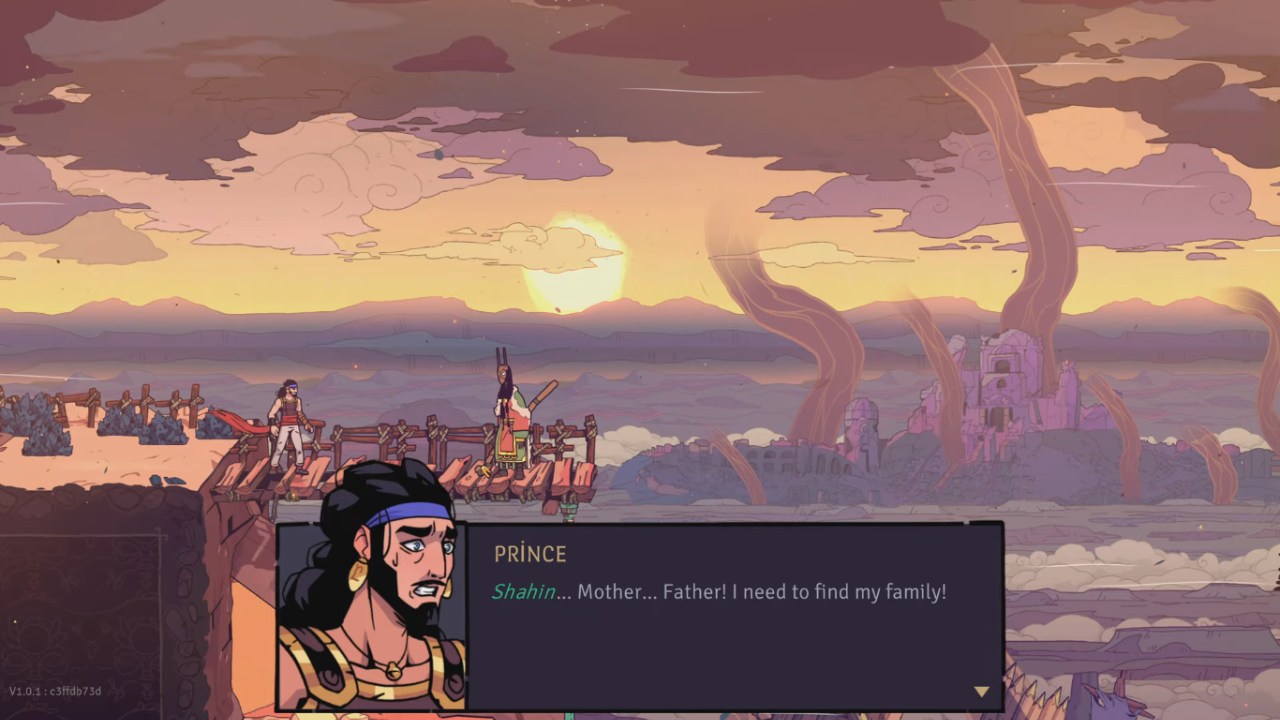
It’s straightforward and slowly increases your odds of venturing further on the next run.
Wall running and dashing, used to dodge most enemy attacks, will become your go-to traversal methods, with the prince picking up speed as you execute them flawlessly and kill enemies. Entering that flow state of seamless parkour can feel great, especially when quickly dispatching enemies and avoiding traps.
Wall running can sometimes feel a tad slow, but it’s made up for by midair dashing. Some iffy interactions tend to play spoiler, including enemies not quite landing and environmental hazard sections requiring a specific combination of wall climbing and air dashing, but they’re only occasionally apparent.
What’s more annoying is the awkwardness of sometimes vaulting over an armored enemy to kick their friend into them and failing because of their positioning, or attempting to vault over multiple enemies in a row, where the second attack may miss, but the third definitely won’t.
The level design facilitates the extensive acrobatics incredibly well, as you’re dodging buzz saws, collapsing ground, and spikes to progress.
These can get especially devious in the side areas, which challenge your platforming prowess, and it was fun figuring out the least harmful path forward. Some more variety in side areas, alongside fewer empty, inconsequential rooms in the biome, would be appreciated. As it stands, the distinction between each biome, from the water slides of the ruined aqueduct to the machinations of the Grand Academy and the mutant plants of the flooded gardens, is excellent.
Each location also feels well‑paced, offering a significant amount to explore without overstaying its welcome. The presentation is also amazing, really adding more vibrancy and detail to the environments, including their backgrounds, while retaining the game’s animated feel. Assad’s music also remains as sublime as ever, and I’ll be really disappointed if it doesn’t get some nominations before this year is up.
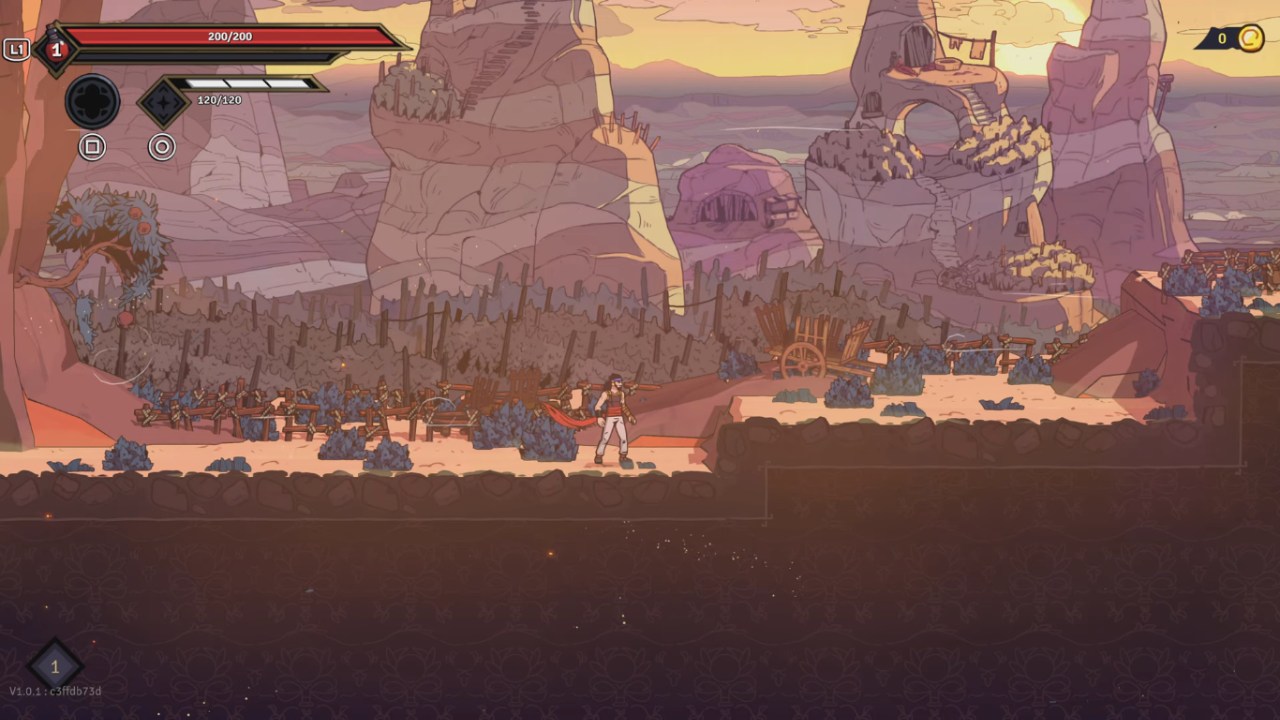
Unlike Dead Cells or many other roguelites, The Rogue Prince of Persia feels like it’s geared more towards its conclusion, which isn’t a bad thing, but it does hinder the replay value in comparison. It’s still an incredibly crafted, gorgeous title that leverages the Prince of Persia license to deliver one of the strongest combinations of movement and traversal, even with its hang-ups.
Here’s hoping that, just like with Dead Cells, Evil Empire puts in the time to transform it from quite good to something truly legendary. The Prince would certainly settle for nothing less. The Rogue Prince of Persia runs smoothly and consistently on PlayStation 5, which is very important because the action is all about movement.
Other reviews and player reports say that the game runs at a steady 60 frames per second on PS5 in most situations. The console's SSD also cuts down on load times, which is great when you're jumping into runs over and over.
You can really see this stability when there are a lot of things happening at once on the screen, like enemy attacks, particle effects, and environmental hazards. The frame rate hardly ever drops, so the game stays responsive, even when things get crazy. This smooth performance on PS5 is important because any stutter or slowdown would obviously take away from the game's focus on quick reflexes and smooth movement.
Graphics on PS5 maintain the vibrant and hand-drawn art style described earlier, but with sharper textures and smoother animations thanks to the hardware’s power.
Compared to last year’s Early Access builds or console ports on lower-powered systems, the PS5 version feels more refined—animations pop more consistently, visual transitions between areas feel smoother, and the overall visual presentation has a level of polish that makes exploration and combat feel more dynamic. Some online players also say that PS5 has fewer screen-tearing artifacts than older consoles, which helps keep the game's fast motion smooth.
The PS5 version also supports DualSense, which is another plus. Adaptive trigger resistance on weapon swings and interactions with the environment doesn't change the game, but it does add subtle tactile feedback that makes it more immersive. It's not a big change, but it does make fights feel a little more serious without taking away from the main action. If you already own the game on another platform, these benefits make it worth playing on PS5.
For players wondering about content parity, The Rogue Prince of Persia on PS5 includes all major updates that were added during its early access period—multiple biomes, additional enemy types, balance tweaks, and performance enhancements—meaning you’re getting the most complete version available at launch.
The PS5's hardware also makes it possible for faster screen transitions and a smoother overall feel when moving from hub areas to combat arenas. This supports the "one more run" philosophy that roguelites are known for. In practical terms, this makes grinding less frustrating and more natural; since runs are designed to be bite-sized and frequent, you spend less time waiting for loading screens and more time mastering the game’s action.
It's very easy to recommend Rogue Prince of Persia on PS5, even easier than I thought it would be.
The movement is great, the combat is smooth, the art direction really stands out, the music is great, and the roguelite structure works better for this series than I thought it would. This is a no-brainer if you like roguelites.
If you like Prince of Persia, this is a new but respectful evolution. And if you want a game that feels great to play every second, this one definitely does. At $29.99, it's a great deal and works perfectly with the PS5. You keep this game installed because it's always fun to play again.
Senior Editor, NoobFeed
Verdict
The Rogue Prince of Persia is a fast, fluid roguelite that makes movement the main attraction. On PS5 this delivers smooth performance, satisfying combat, and an addictive loop that’s hard to put down.
85
Related News
No Data.