
BOOK OF HOURS Review
PC
A meditative chronicle of knowledge, craft, and quiet mystery.
Reviewed by Subaiyta Jahan on Dec 05, 2025
Book of Hours was made by Weather Factory, known for Cultist Simulator, a story-driven, ritual-filled game. This new release moves away from the intense, frenzied card-shuffling of its predecessor and toward something more subdued, dense, and very evocative.
The game emerges as a spiritual sibling rather than a traditional sequel—a game built around the quiet rhythm of cataloging, restoring, and uncovering secrets in the decaying Hush House. It has a more compassionate approach, while Cultist Simulator thrived on escalation, danger, and quickly growing obligations.
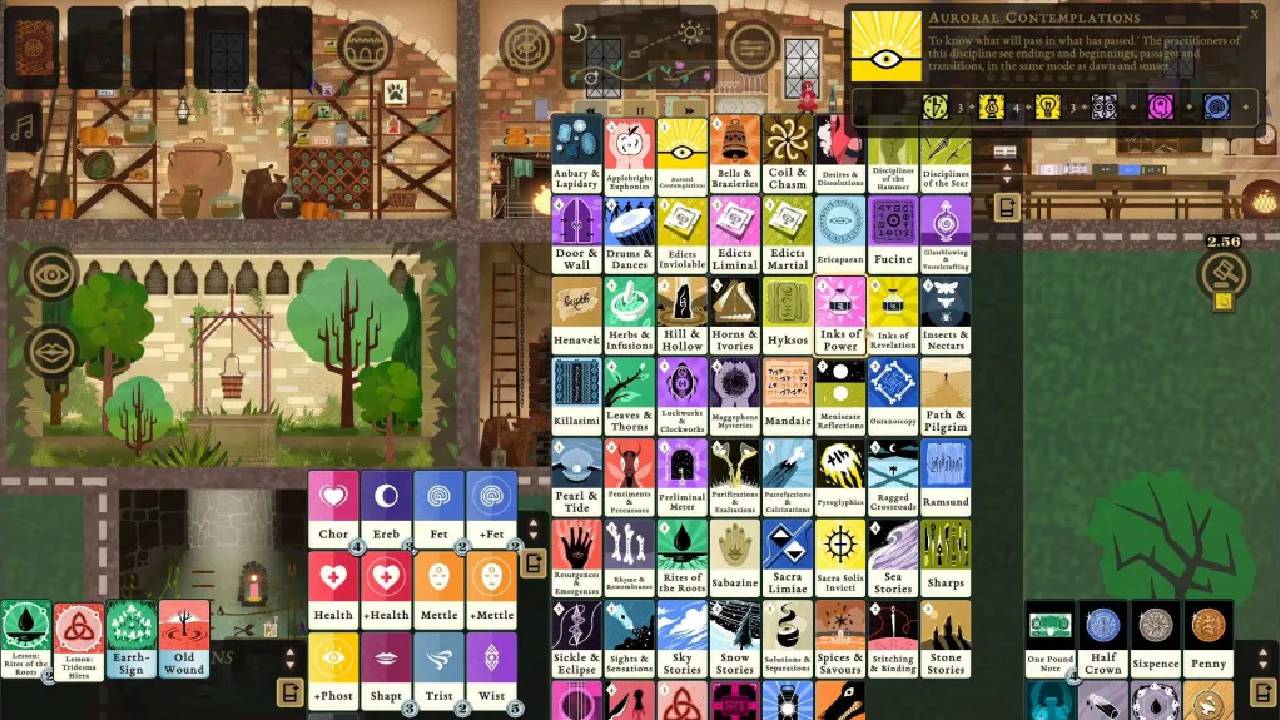
It welcomes quiet puzzles, leisurely study, and a universe that emerges one book, memory, or craft at a time. It provides reflection rather than pandemonium. It offers patience rather than rushing. And as a result of this change, a unique experience is produced—one in which knowledge becomes the central focus of inquiry.
Fundamentally, Book of Hours is a contemplative story about the reconstruction of Hush House, a vast, once-famous library now in ruins. The default Librarian begins as an exile—someone defined by absence and loss. And gradually rebuilds a life through knowledge, ritual, and the return to fulfilling work.
Stories are woven throughout the planet itself. Every book has its own tale, and every room recounts the story of the librarians who used to work there. Every recollection from daily life adds to the journey of knowledge. The novel doesn't have a traditional plot. Instead, it develops through little clues, literary allusions, and the continuous rebuilding of the numerous wings of the house.
The narrative of Book of Hours achieves a literary pacing uncommon in video games.
The structure, which explores, restores, reads, crafts, and uncovers, is soft yet functional. The narrative develops more like a mosaic assembled over time than like a typical story. Nothing pushes forward or rushes, yet everything gradually becomes deeper. In this approach, the story, driven by research, introspection, and curiosity, achieves a literary pacing rarely found in video games.
Book of Hours is a slow craft-and-study simulation built on the careful use of cards, aspects, and workstations. Each action draws on memories, skills, clues, or books to advance cataloging or unlock new areas. The rhythm is almost ritualistic:
Look into things to learn more. Restore to keep the library working.
Get the things and information you need to complete problems. Learn more by exploring the house.
The experience is like a complex ecology. The house, the duties, and the Librarian's growth all work together to create a cycle of gentle productivity. There is no punishment for waiting, no pressure to act quickly, and no severe consequences for experiments. Time is soft, forgiving, and built around contemplation.
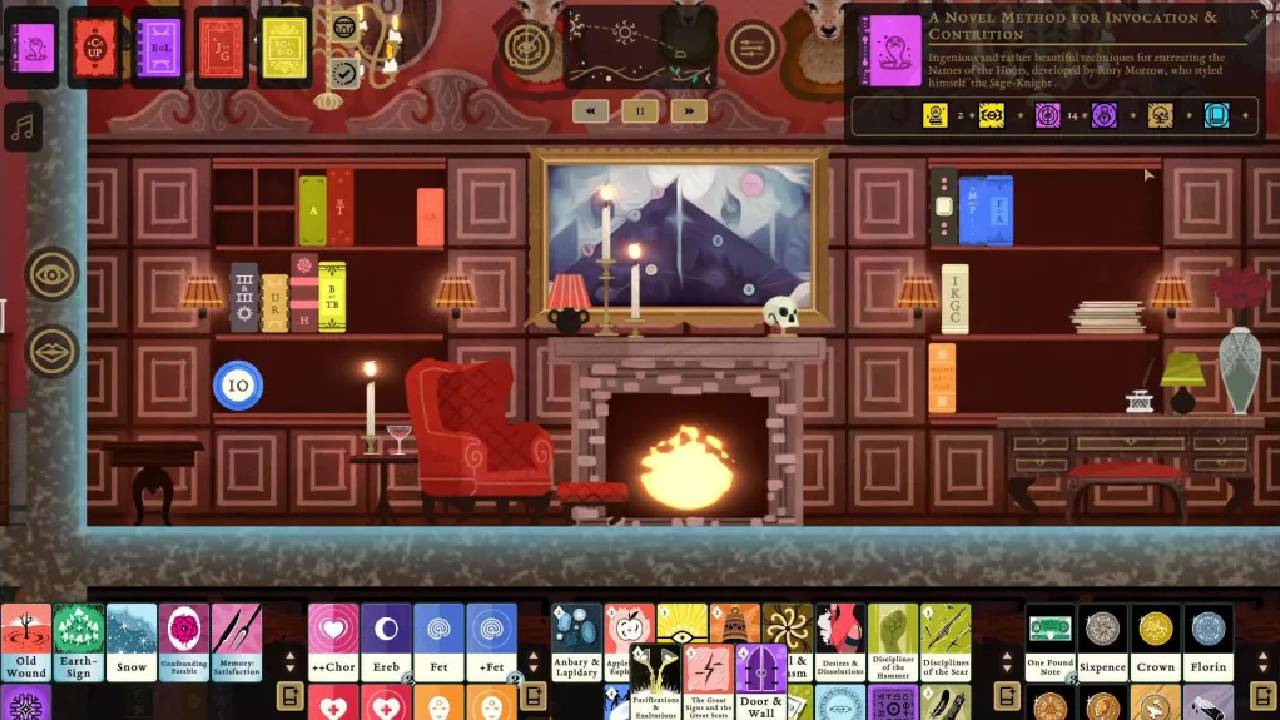
The deeper the house opens, the more complex the ecosystems become. New rooms introduce specialized workstations with unique demands, more books with layered aspects, and additional crafting opportunities. The systems expand slowly but cohesively, encouraging methodical thinking and experimentation rather than trial-and-error chaos.
Puzzles in Book of Hours are built entirely around aspects—small symbolic representations of knowledge, emotions, temperaments, and mystic forces. Each puzzle asks for the right combination of aspects in the correct amounts, using memories, skills, tools, or books to satisfy the requirement.
Traditional puzzles are replaced in the Book of Hours by something more conceptual, which feels rewarding.
This approach replaces a more intellectual problem with a conventional puzzle. Identifying theme connections is the focus of tasks rather than cracking codes or solving logic grids. Something chilly, motionless, and soft can be requested by a closed cabinet that needs Winter and Heart. A ritual requiring Lantern and Edge may need insight balanced by great accuracy.
Thematic thinking and observation are rewarded by the system. Additionally, it produces a gradual learning curve in which each problem becomes more natural as the symbolic language becomes more familiar.
The aspect approach successfully transforms mechanical obstacles into interpretive acts. Because it results from recognizing the universe's symbolic rules rather than making educated guesses or flipping switches, solving a problem feels significant.
Certain aspects, like abstraction, can be frustrating, which can be a drawback.
The abstraction can, however, be overwhelming in the early hours. Certain puzzles require precise aspect counts that demand tools or memories not yet available, leading to moments of uncertainty. The game rarely signals whether the correct solution is in reach or whether the required tools simply haven't been found yet.
Yet even when opaque, the puzzle structure fits the game's tone. It invites slow, rather than quick, comprehension.
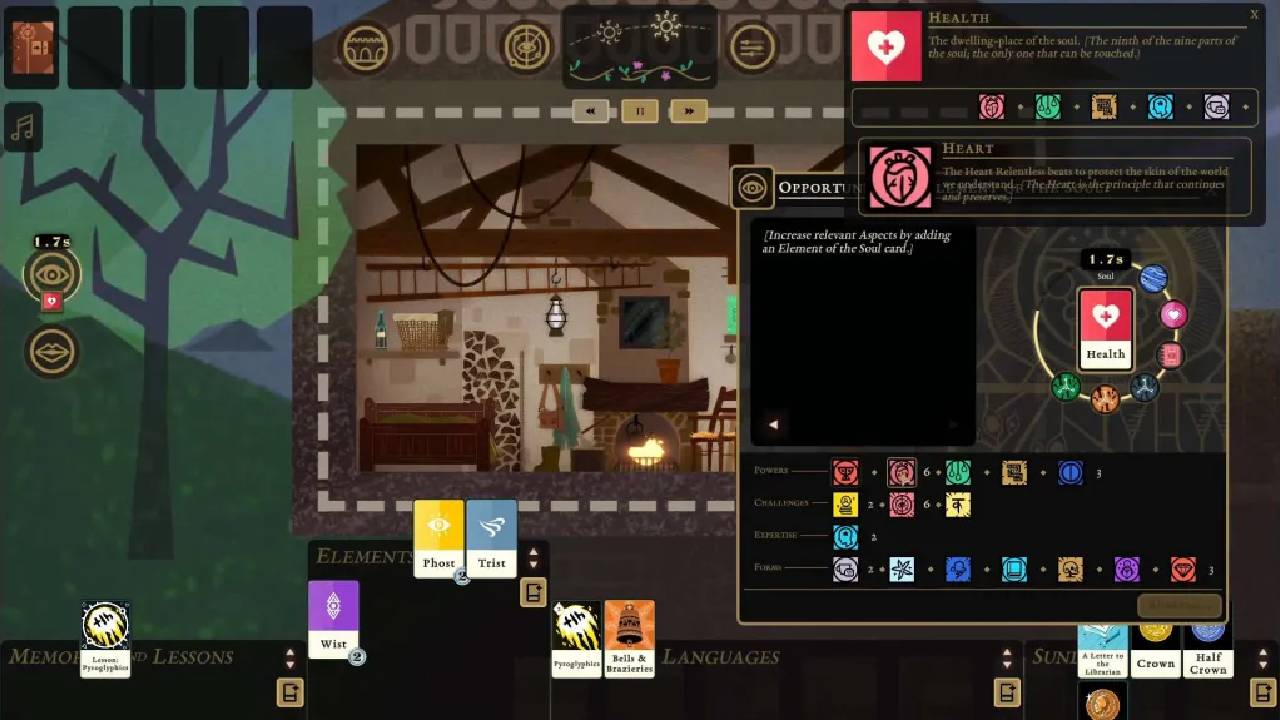
Book of Hours advances through the growth and enhancement of skills. Memories from daily life may be used to enhance each ability. Skills serve as long-term improvements. Instead of the usual XP bars, growth occurs via quiet rituals of study and reflection.
Gaining a skill boosts one's ability to solve puzzles, fix books, and interact with environments that need certain symbolic powers. Expanded talents, in turn, grant access to more intricate crafts, deeper Hush House wings, and uncommon lore sources.
This method fosters a pressure-free, organic sense of growth. Nothing causes advancement, but the Librarian is gradually shaped by every action. The choice to focus on certain skills shapes how quickly different parts of the house open, giving a gentle layer of strategy to progression.
The art direction is one of Book of Hours' most distinctive strengths. The game's style is a mix of illuminated manuscripts, museum exhibits, and strange infographics. It has a handcrafted, slightly old-fashioned look. The soft colors, elegant linework, and subtle movements of Hush House give it a feeling of quiet elegance.
There are minor things in each room that are worth seeing, which makes them look like thoughtfully chosen tabletop dioramas. The palette features warm earth tones, soft blues, and subtle golds that really stand out. It has a peaceful, grown-up feel to it. Nothing is great, but everything seems organized and pretty.
The visual language also serves a purpose: aspect symbols, color coding, and icons all assist you in figuring out what the puzzle needs and how to make things. The interface occasionally becomes dense, but its beauty and clarity compensate for its complexity.
The audio is deliberately minimal and subtle. Book of Hours creates a mood with soothing chimes, ambient tones, and ambient noises. The quiet of a library, the rustle of pages, the clink of tools, and the soft murmur of invisible forces serve as the only soundtrack.
This choice fits with the game's deep concept. Every sound makes the feeling of being alone and focused on school work stronger. The sound rarely stands out on its own, but it ties everything together and makes each activity part of a calm soundscape.
Unlike other puzzle games, Book of Hours is a unique combination of calm tone, symbolic puzzles, and patient scholarship.
Book of Hours is a rare mix of a calm setting, slow-paced learning, and puzzles with meanings. It is more about knowledge, ceremony, and healing than fighting or speed. The game's story is told in layers, the pacing is sluggish, and the art style is different, all of which contribute to creating a sense of peaceful discovery that rewards players for being curious and sticking with it.
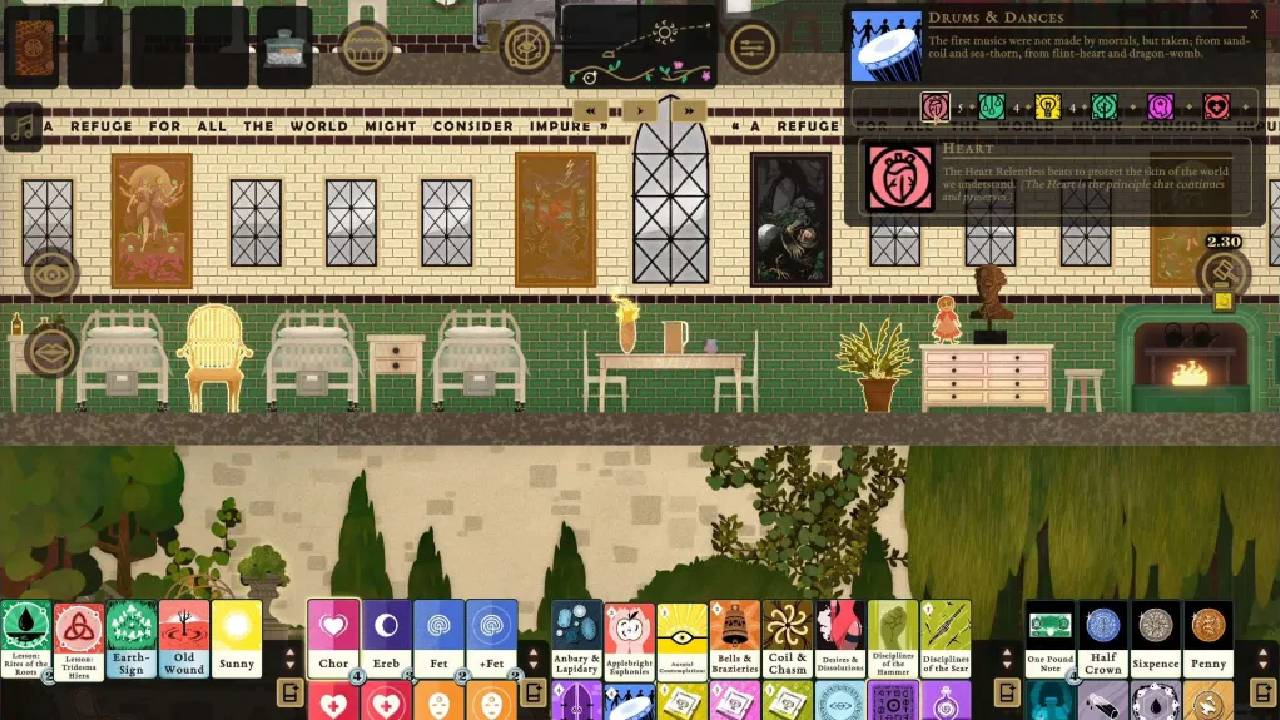
At first, the complicated design could appear too much, especially when you're attempting to figure out which instruments you need for some problems or grasp some aspects. But this depth is what makes it so valuable. Every indication, memory, and skill eventually adds to a whole tapestry—a library of meaning that grows with every action.
Anyone who enjoys meditative experiences, peaceful puzzles, and worlds made up of words and symbols will find something very special in Book of Hours. It works because it makes people think, and information becomes both the trip and the reward, not just a rush of adrenaline.
Contributor, NoobFeed
Verdict
A lovely library restoration experience that is peaceful and based on symbols and calm exploration. Book of Hours is an uncommon and thought-provoking adventure for people who like to take their time and think things through rather than rush things.
88
Related News
No Data.